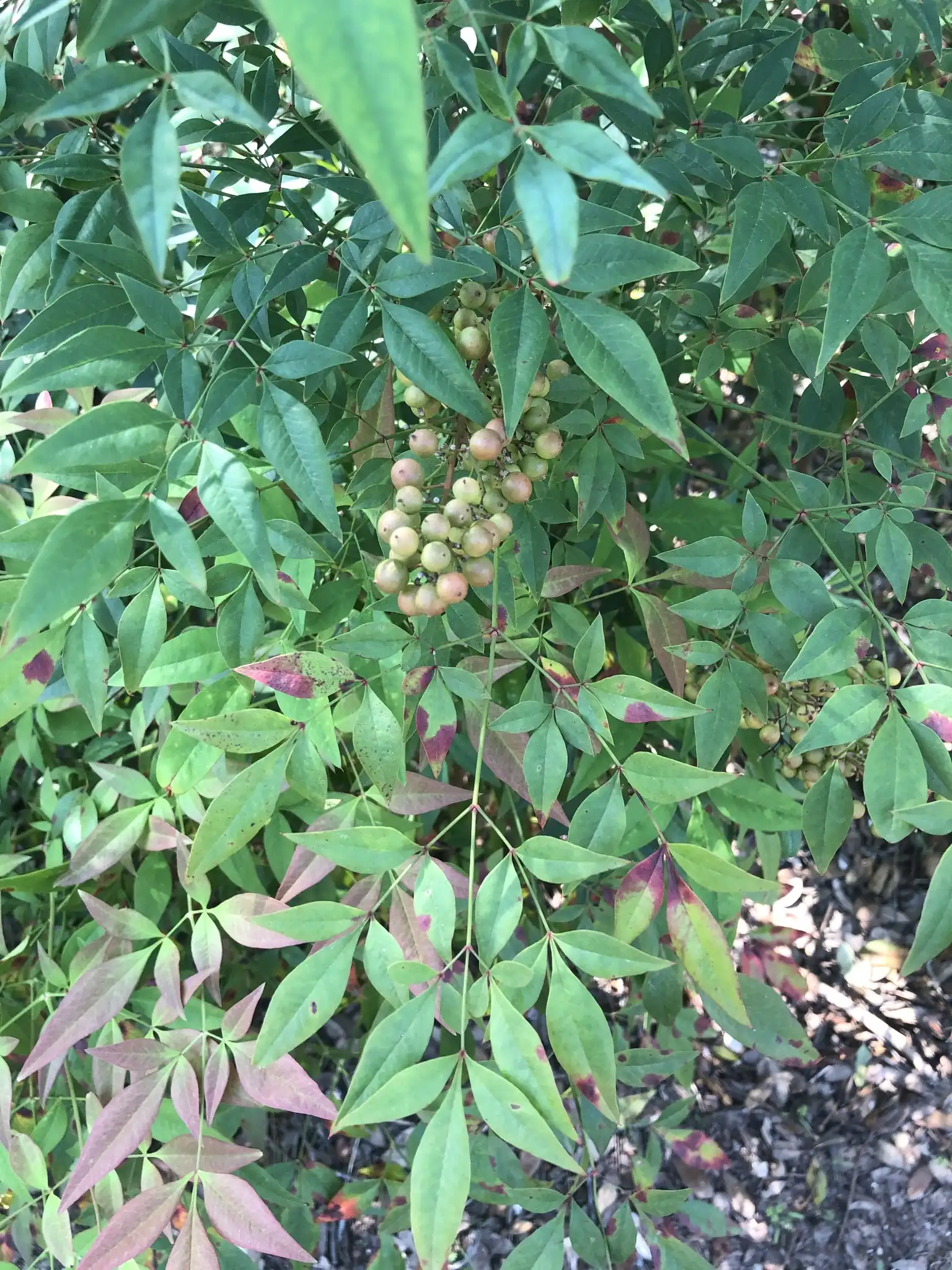
11 named cultivars
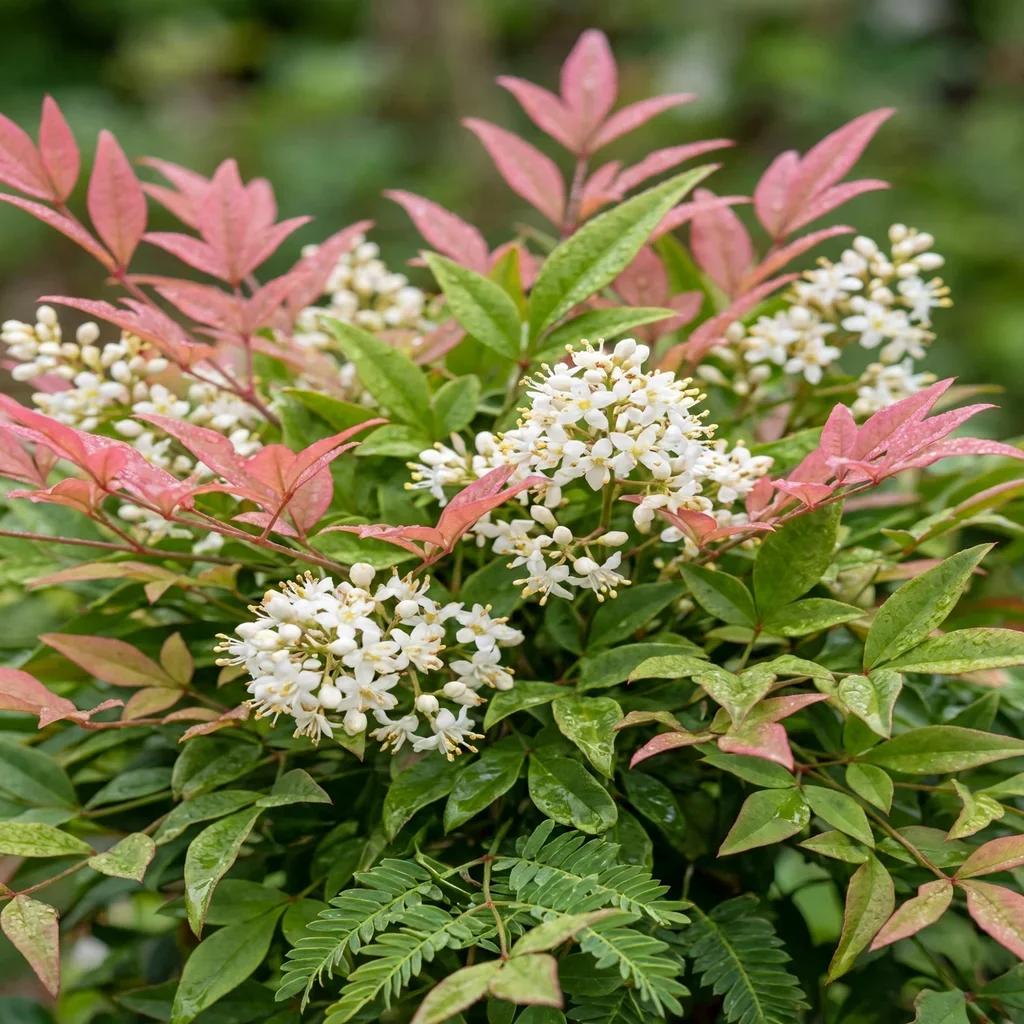 ‘Blush Pink’Blush Pink Heavenly Bamboo
 ‘Gulf Stream’Gulf Stream Nandina
 ‘Seika’Obsession Nandina
 ‘Harbor Dwarf’Heavenly Bamboo
 ‘Jaytee’Harbor Dwarf Heavenly Bamboo
 ‘Compacta’Compact Heavenly Bamboo
 ‘Aka’Aka Blush Pink Heavenly Bamboo
 ‘Fire Power’Heavenly Bamboo
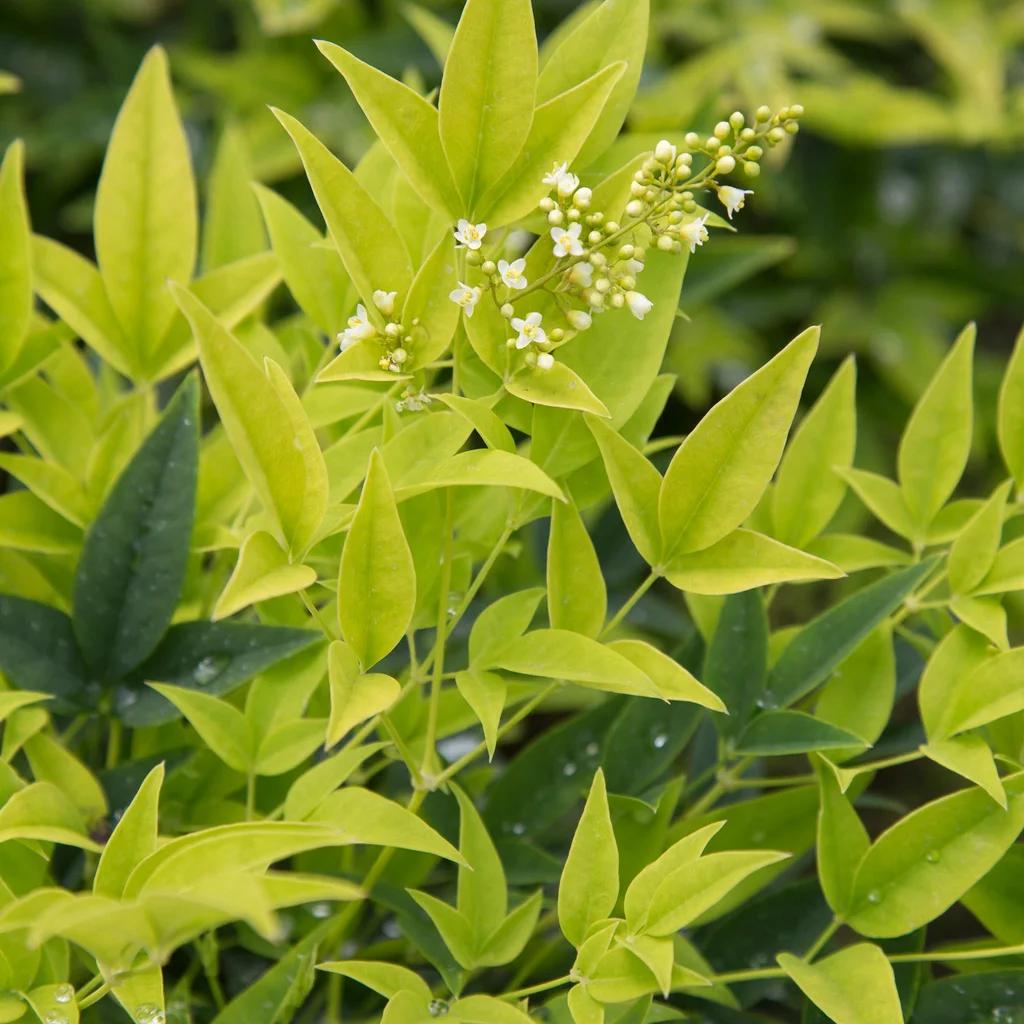 ‘Lemon and Lime’Heavenly Bamboo
 ‘Moon Bay’Heavenly Bamboo
 ‘Flirt’Flirt Nandina
The Story
Plant Bio
Nandina domestica, heavenly bamboo, is an erect broadleaf evergreen shrub from central and southern China and Japan, growing 3 to 8 ft tall and 2 to 5 ft wide. Despite the name it is not a bamboo; upright unbranched canes carry finely divided compound leaves that flush red-bronze in cold weather. Growth is rapid.
White flower panicles in spring are followed by large terminal clusters of bright red 8 mm berries that hold right through winter. Those berries contain cyanogenic compounds and have been linked to poisoning in cedar waxwings, which gorge on them. NCSU also classes the plant as a weed; it seeds into woodland in the southeast.
Uses & Benefits:
Essentials
At a Glance
Plant Type
Shrub
Height
66"
Width
36"
Light
Full Sun, Partial Sun
Zones
6, 7, 8, 9, 10
Water
Low once established; drought tolerant
Humidity
Adaptable; tolerates humid summers
Lifespan
Long-lived; decades with cane renewal
Native To
Central and southern China and Japan
Toxicity
Berries are poisonous if eaten
Marketplace
Where to Buy
Shipping costs Year-round shipping Free shipping
Planting
How to Grow
- Check local invasive listings before planting the fruiting species.
- Choose full sun to shade; leaf colour is strongest in sun.
- Plant into any well-drained soil, acid through to alkaline.
- Water in well and keep moist through the first season.
- Thin one third of the oldest canes to the ground each spring.
- Cut remaining canes to varying heights so the plant refills low.
Pro Tip
Never shear it as a mass; cut individual canes to staggered heights so new growth breaks low instead of leaving bare legs.
Keep It Thriving
Care Guide
Do
- Cut the oldest canes right to the base each spring 🪓
- Grow it in sun for the strongest winter leaf colour 🔥
- Choose a low-fruiting cultivar in invasive-risk regions 🌿
- Use it in dry shade where little else stays evergreen 🌑
Don't
- Do not shear the whole plant flat; it goes bare at the base ❌
- Do not let birds strip heavy berry clusters unmonitored ❌
- Do not eat the berries; they are poisonous ❌
Seasonal Care Calendar
| Task | Jan | Feb | Mar | Apr | May | Jun | Jul | Aug | Sep | Oct | Nov | Dec |
|---|---|---|---|---|---|---|---|---|---|---|---|---|
| Berry Check | ||||||||||||
| Cane Renewal |
Watch Out For
Pests & Diseases
Common Pests
Common Diseases
In the Garden
Landscape Uses & Companions
Landscape Uses
Multiply
Propagation Methods
Good to Know
Common Questions
Heavenly Bamboo questions
What zones can Heavenly Bamboo grow in?
Heavenly Bamboo is hardy in USDA Zones 6–10. Inside that range it survives winter in the ground; outside it, grow it as an annual or a container plant you protect.
Is Heavenly Bamboo deer resistant?
Yes — Heavenly Bamboo is rated deer-resistant. Deer typically pass it over, though extreme hunger can override any plant's defenses.
When does Heavenly Bamboo bloom?
Heavenly Bamboo typically blooms in spring, white panicles through early summer. Exact timing shifts a week or two with your zone — Sow's bloom calendar maps it to your garden.
Does Heavenly Bamboo need full sun?
Heavenly Bamboo does best in full sun to part shade. In hot climates, afternoon shade keeps blooms fresher longer.
Is Heavenly Bamboo drought tolerant?
Yes — once established (usually after the first full season), Heavenly Bamboo handles dry spells with minimal watering. Water deeply its first year to build the root system that makes that possible.
More Nandina to compare
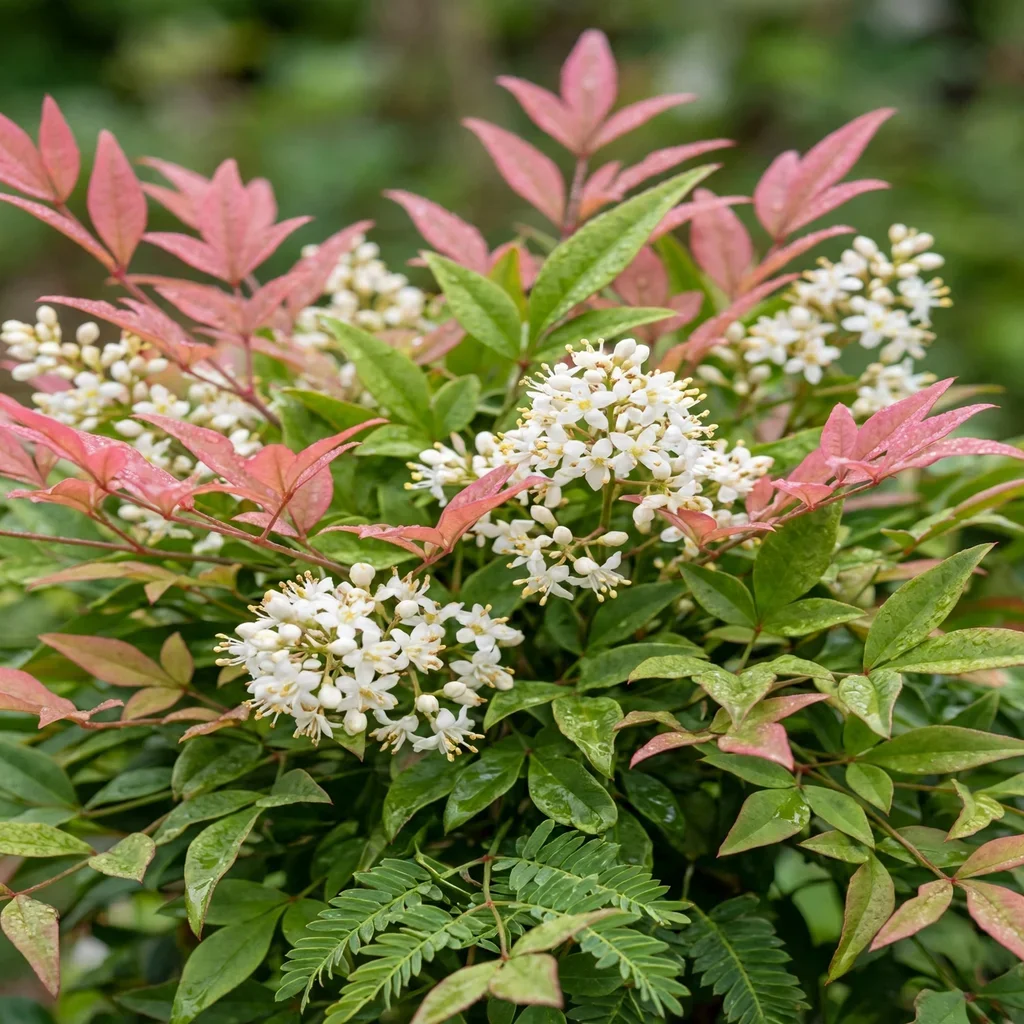
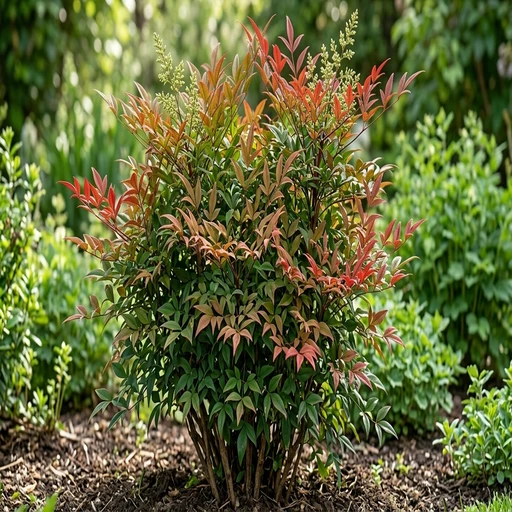
Blush Pink Heavenly Bamboo
Nandina domestica 'Blush Pink'
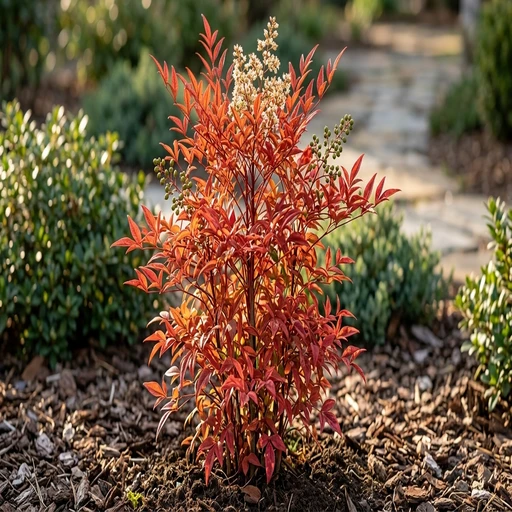
Gulf Stream Nandina
Nandina domestica 'Gulf Stream'
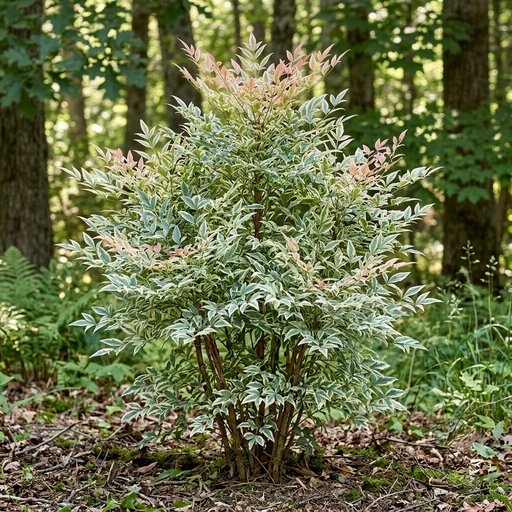
Obsession Nandina
Nandina domestica 'Seika'
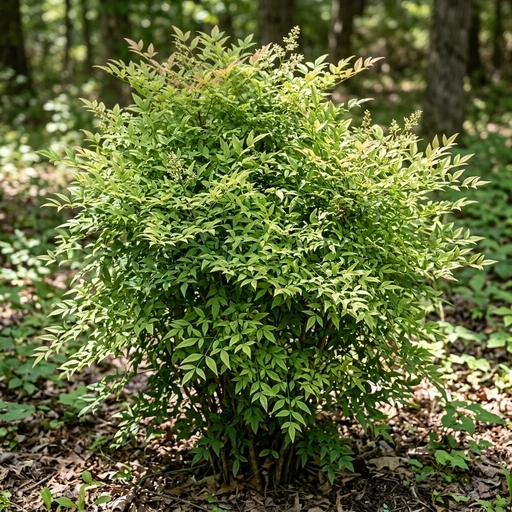
Harbor Dwarf Heavenly Bamboo
Nandina domestica 'Jaytee'
Compact Heavenly Bamboo
Nandina domestica 'Compacta'
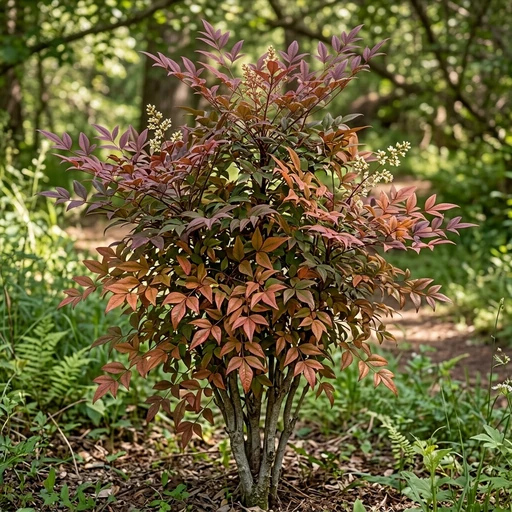
Aka Blush Pink Heavenly Bamboo
Nandina domestica 'Aka'
Keep exploring
Explore the genus
Hardy in your zone?
Grow Heavenly Bamboo with confidence
See it in a design of your actual yard, get zone-matched care reminders, and track it season by season in your garden journal.