
Species
 Nandina domesticaHeavenly Bamboo
10 other cultivars




The Story
Plant Bio
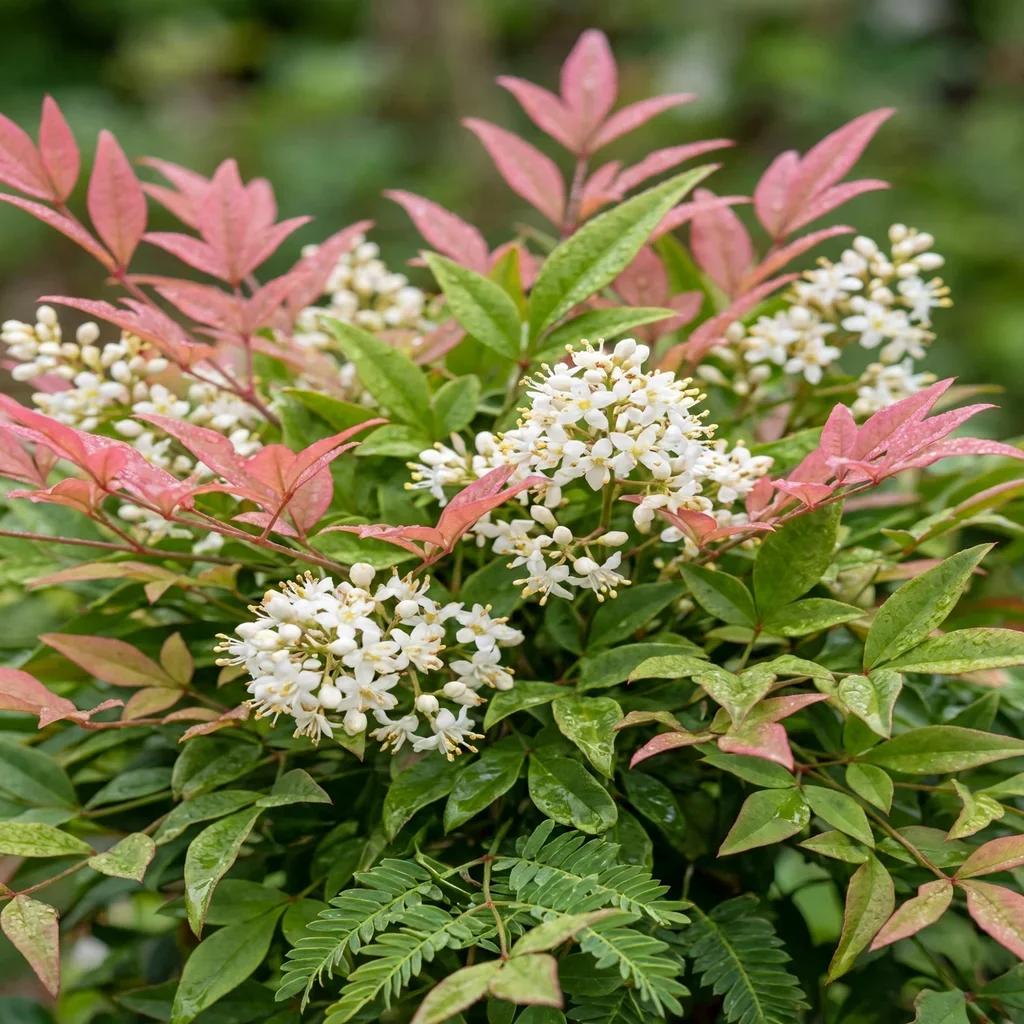
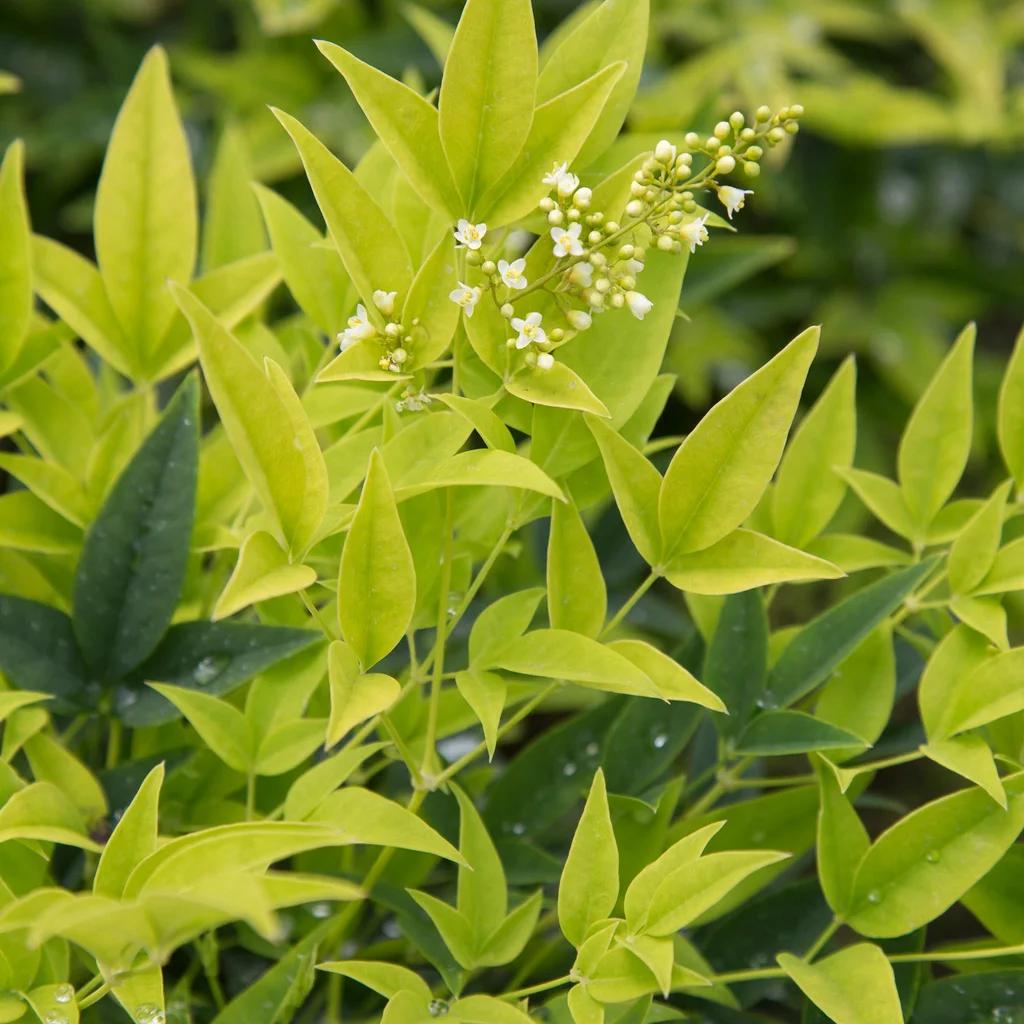
Nandina domestica is an evergreen shrub known for its fine-textured, bamboo-like foliage and multi-season interest. Despite its common name, it is not a true bamboo but a member of the barberry family.
'Compacta' is a dwarf variety that maintains a dense, rounded form without extensive pruning. It is noted for its excellent foliage color, with new growth emerging with a bronze tint, turning green in summer, and taking on reddish-purple hues in winter.
Uses & Benefits:
Essentials
At a Glance
Plant Type
Shrub
Height
54"
Width
42"
Light
Full Sun, Partial Sun, Shade
Zones
6, 7, 8, 9
Water
Low to medium
Humidity
Adaptable
Lifespan
Long-lived shrub
Native To
Eastern Asia
Toxicity
All parts, especially berries, are toxic if ingested. Berries contain cyanide and can be fatal to birds.
Bloom period
Late spring – Early summer
In flower about 2 months of the year
Planting
How to Grow
- Select a site with well-drained soil; amend with compost if needed.
- Dig a hole twice as wide as the plant's container.
- Gently remove the plant and loosen any circling roots.
- Set the plant in the hole with the root crown at soil level.
- Backfill with soil and water in well to remove air pockets.
- Mulch around the base to conserve moisture.
Pro Tip
For the best winter color, plant in a location that receives full sun. The red and purple tones are much more intense with sun exposure.
Keep It Thriving
Care Guide
Do
- Water deeply during establishment and in periods of extreme drought.
- Prune out the tallest, oldest canes at the base to encourage new growth.
- Consider newer sterile cultivars to avoid invasive spread and harm to birds.
- Provide slightly acidic soil for best performance.
Don't
- Do not plant in soggy, poorly drained soils.
- Avoid shearing the plant, which destroys its natural graceful form.
- Do not allow it to escape into natural areas, as it is invasive in the Southeast US.
- Do not assume the berries are safe for wildlife; they are toxic to birds.
Seasonal Care Calendar
| Task | Jan | Feb | Mar | Apr | May | Jun | Jul | Aug | Sep | Oct | Nov | Dec |
|---|---|---|---|---|---|---|---|---|---|---|---|---|
| Fertilize | ||||||||||||
| Plant | ||||||||||||
| Prune |
Watch Out For
Pests & Diseases
Common Pests
Common Diseases
In the Garden
Landscape Uses & Companions
Landscape Uses
Multiply
Propagation Methods
Good to Know
Common Questions
Compact Heavenly Bamboo questions
What zones can Compact Heavenly Bamboo grow in?
Compact Heavenly Bamboo is hardy in USDA Zones 6–9. Inside that range it survives winter in the ground; outside it, grow it as an annual or a container plant you protect.
Is Compact Heavenly Bamboo deer resistant?
Yes — Compact Heavenly Bamboo is rated deer-resistant. Deer typically pass it over, though extreme hunger can override any plant's defenses.
When does Compact Heavenly Bamboo bloom?
Compact Heavenly Bamboo typically blooms in late spring through early summer. Exact timing shifts a week or two with your zone — Sow's bloom calendar maps it to your garden.
Does Compact Heavenly Bamboo need full sun?
Compact Heavenly Bamboo does best in full sun to part shade. In hot climates, afternoon shade keeps blooms fresher longer.
Is Compact Heavenly Bamboo drought tolerant?
Yes — once established (usually after the first full season), Compact Heavenly Bamboo handles dry spells with minimal watering. Water deeply its first year to build the root system that makes that possible.
More Nandina to compare
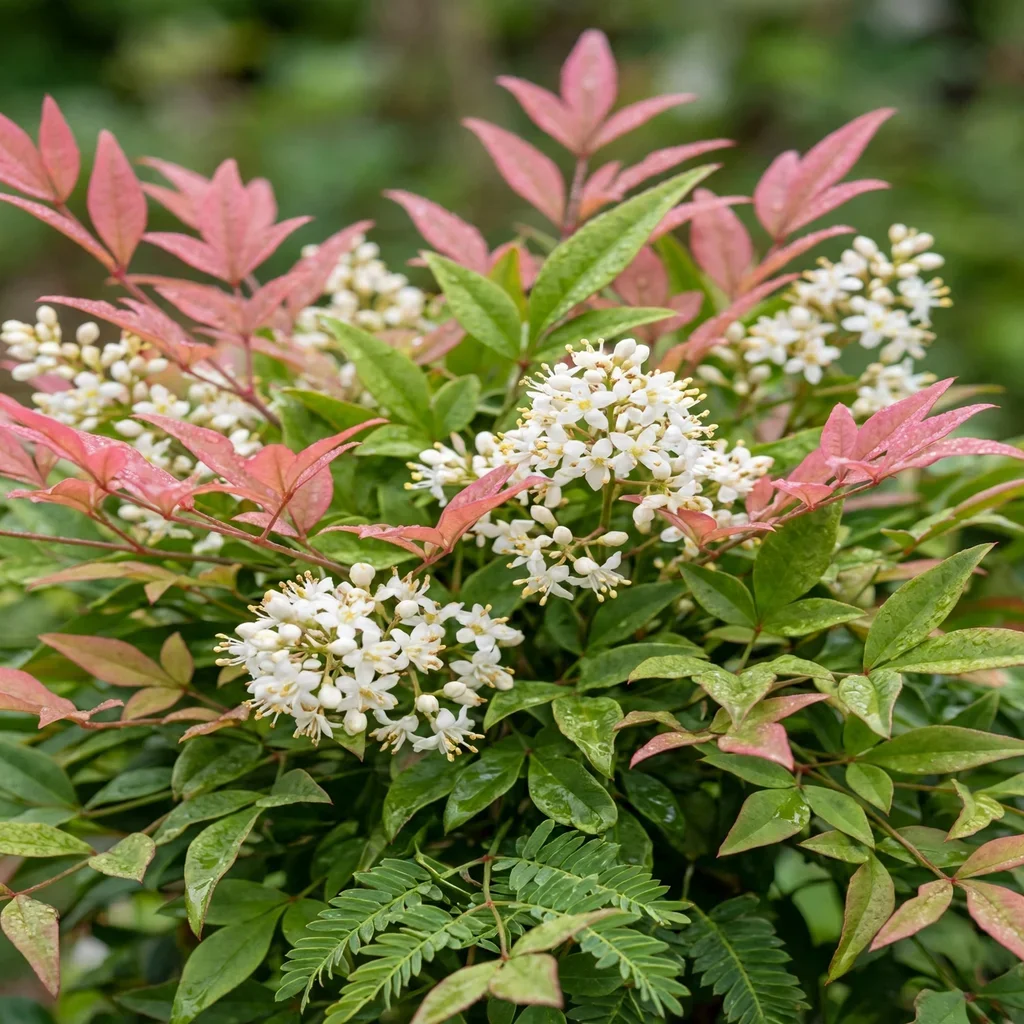
Blush Pink Heavenly Bamboo
Nandina domestica 'Blush Pink'
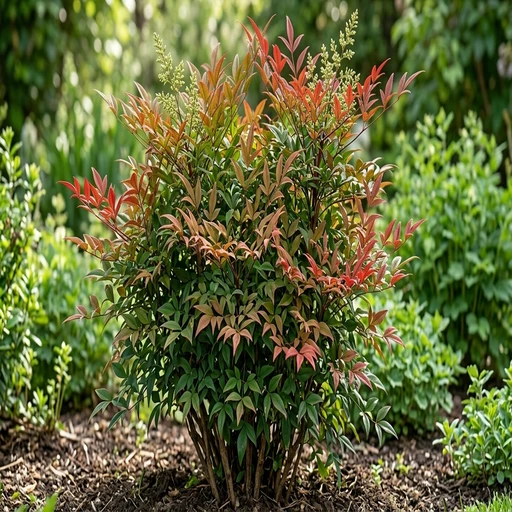
Gulf Stream Nandina
Nandina domestica 'Gulf Stream'
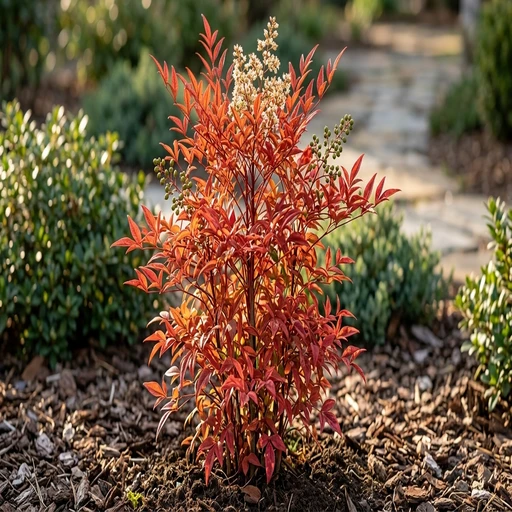
Obsession Nandina
Nandina domestica 'Seika'
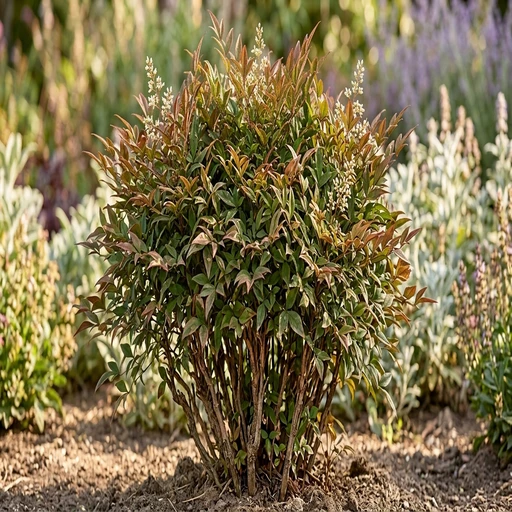
Heavenly Bamboo
Nandina domestica 'Harbor Dwarf'
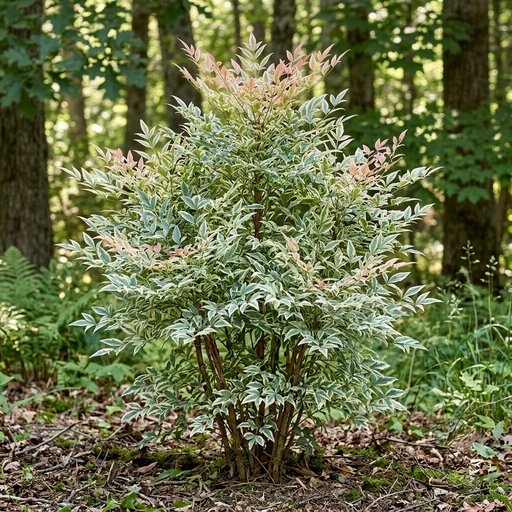
Harbor Dwarf Heavenly Bamboo
Nandina domestica 'Jaytee'
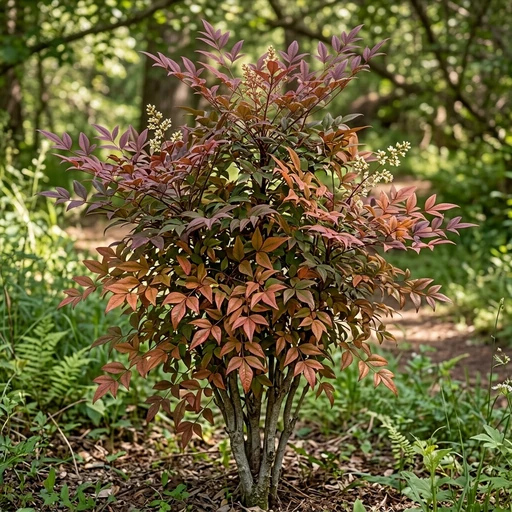
Aka Blush Pink Heavenly Bamboo
Nandina domestica 'Aka'
Keep exploring
Explore the genus
Hardy in your zone?
Grow Compact Heavenly Bamboo with confidence
See it in a design of your actual yard, get zone-matched care reminders, and track it season by season in your garden journal.