The Story
Plant Bio
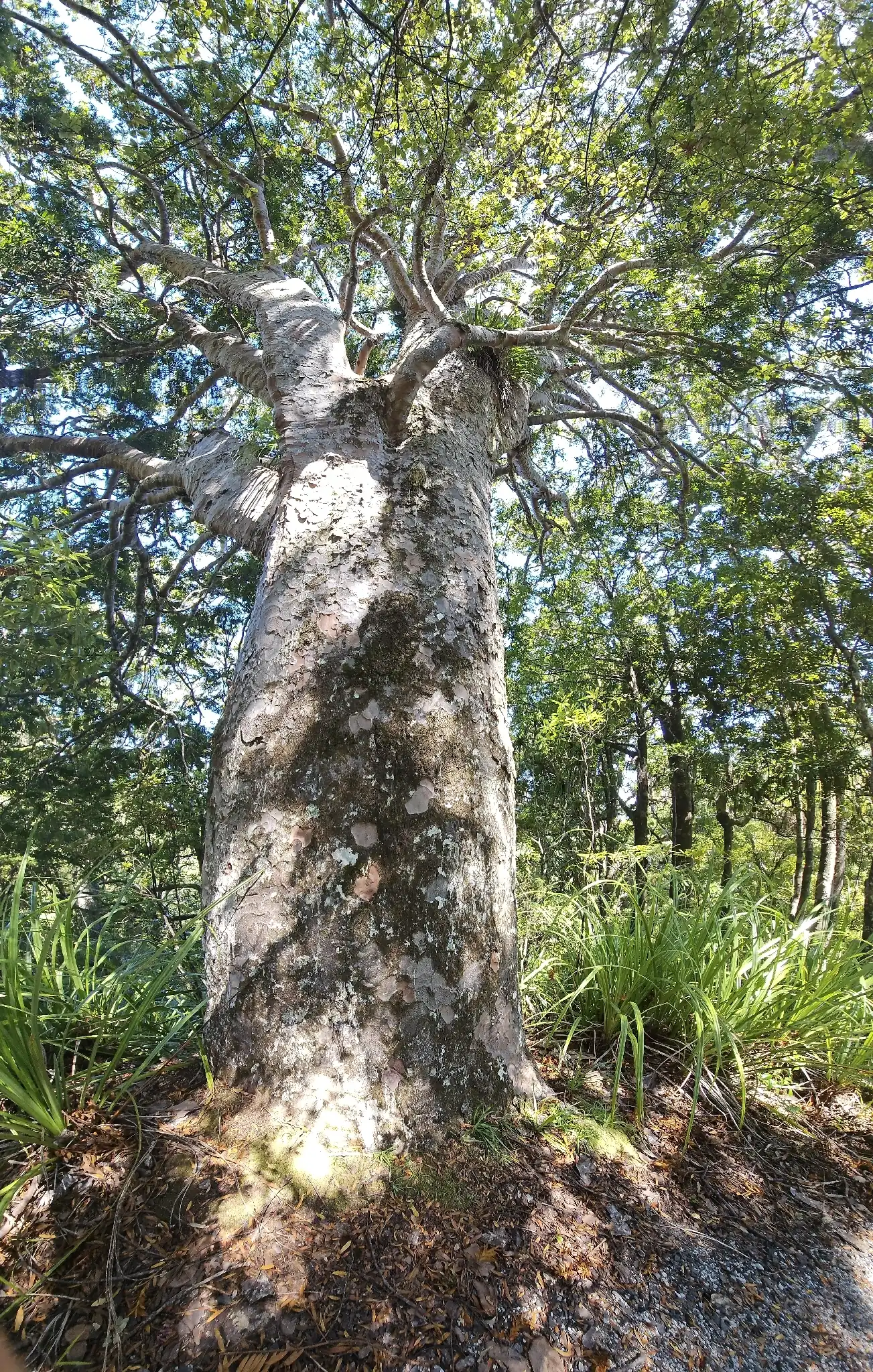
Agathis australis, commonly known as Kauri, is a massive evergreen conifer native to the subtropical and temperate rainforests of northern New Zealand. In its juvenile stage, the tree maintains a slender, pyramidal form with coppery-green foliage, eventually developing a colossal columnar trunk and a broad, domed crown of thick branches.
This gymnosperm produces distinct, leathery, parallel-veined leaves that transition from lanceolate on young plants to small, scale-like structures on mature wood. The reproductive structures consist of solitary, cylindrical male catkins and globose, woody female seed cones that mature on stout stalks.
Uses & Benefits:
Essentials
At a Glance
Plant Type
Tree
Height
1968"
Width
1181"
Light
Full Sun, Partial Sun
Zones
9, 10
Water
Moderate
Humidity
High
Lifespan
Long-lived
Native To
New Zealand
Toxicity
Non-toxic
Bloom period
Spring – Summer
In flower about 6 months of the year
Planting
How to Grow
- Select a planting site with deep, fertile, acidic to neutral sandy loam or volcanic loam that drains rapidly.
- Provide partial shade for young trees to mimic their natural forest understory habitat and protect them from drying winds.
- Water regularly during the first several years to maintain consistent soil moisture without allowing the roots to sit in waterlogged soil.
- Apply a thick layer of organic mulch around the root zone to conserve moisture and keep soil temperatures cool.
Pro Tip
Young trees require understory protection from scorching sun and freezing winter winds; plant them in partial shade and transition them to full sun only as they mature.
Keep It Thriving
Care Guide
Do
- Protect young trees from heavy frosts and freezing winter winds.
- Ensure the soil drains exceptionally well to prevent root rot.
- Provide light shade for juvenile specimens during their first few years.
Don't
- Do not prune into old, leafless wood, as the tree will not regenerate from dormant tissue.
- Do not apply heavy, high-phosphorus chemical fertilizers.
- Do not plant in heavy clay or poorly drained, waterlogged soils.
Seasonal Care Calendar
| Task | Jan | Feb | Mar | Apr | May | Jun | Jul | Aug | Sep | Oct | Nov | Dec |
|---|---|---|---|---|---|---|---|---|---|---|---|---|
| Fertilize | ||||||||||||
| Pest Check | ||||||||||||
| Prune | ||||||||||||
| Winter Prep |
Watch Out For
Pests & Diseases
Common Pests
Common Diseases
In the Garden
Landscape Uses & Companions
Landscape Uses
Companion Plants
Multiply
Propagation Methods
Good to Know
Common Questions
Kauri questions
What zones can Kauri grow in?
Kauri is hardy in USDA Zones 9–10. Inside that range it survives winter in the ground; outside it, grow it as an annual or a container plant you protect.
Is Kauri deer resistant?
Not reliably. Deer may browse Kauri, especially tender spring growth — plan on repellents or fencing where pressure is high.
When does Kauri bloom?
Kauri typically blooms in spring through summer. Exact timing shifts a week or two with your zone — Sow's bloom calendar maps it to your garden.
Does Kauri need full sun?
Kauri does best in full sun to part shade. In hot climates, afternoon shade keeps blooms fresher longer.
Keep exploring
Explore the genus
Hardy in your zone?
Grow Kauri with confidence
See it in a design of your actual yard, get zone-matched care reminders, and track it season by season in your garden journal.