
The Story
Plant Bio
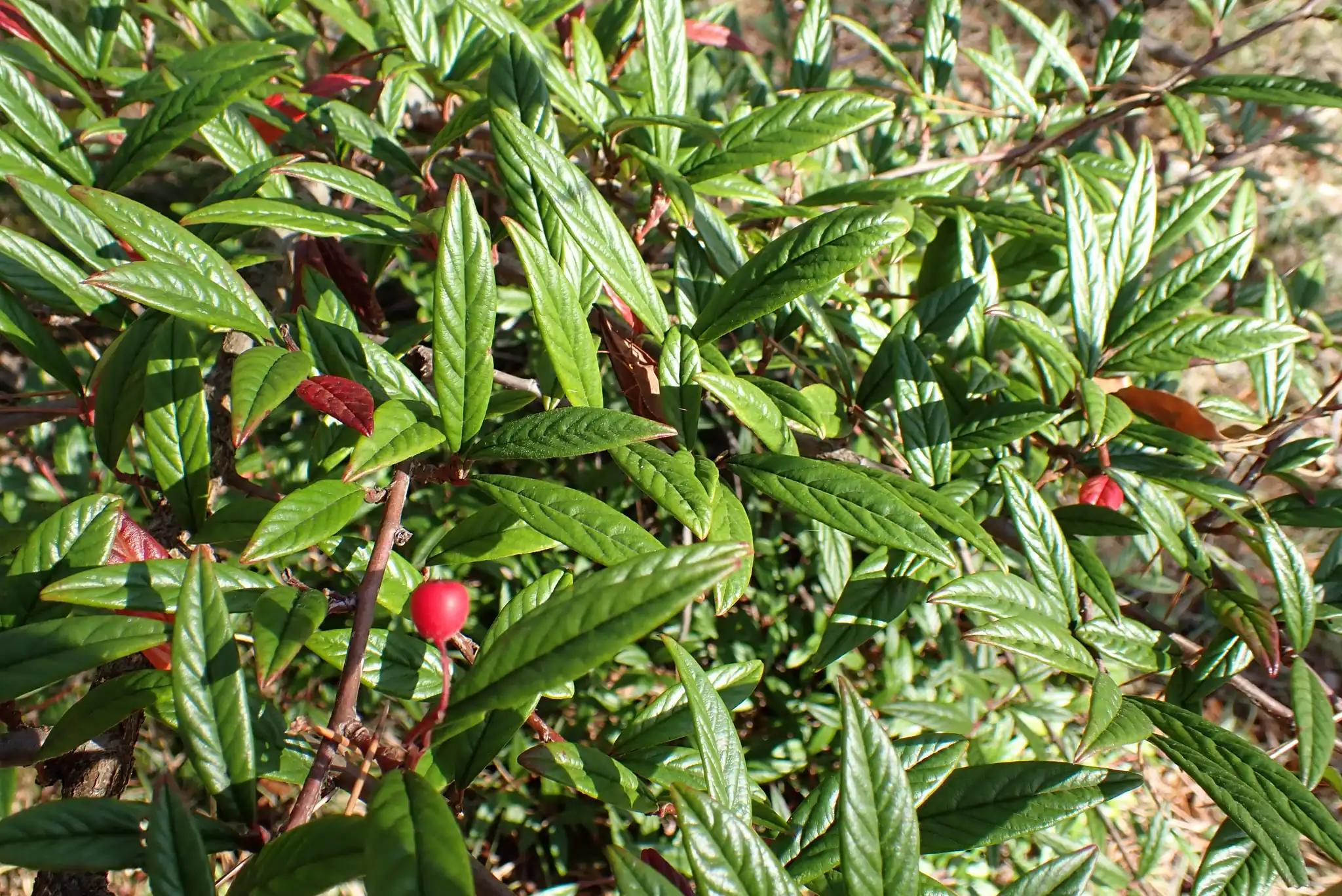
Cotoneaster salicifolius is a vigorous, evergreen or semi-evergreen shrub with long, arching branches and narrow, willow-like, glossy dark green leaves. It produces clusters of white flowers followed by masses of red berries.
'Scarlet Leader' is a low-growing, fast-spreading groundcover form. It creates a dense mat of foliage that is excellent for suppressing weeds and holds its glossy green leaves through winter, often taking on a purplish tinge in cold weather.
Uses & Benefits:
Essentials
At a Glance
Plant Type
Groundcover
Height
12"
Width
96"
Light
Full Sun, Partial Sun
Zones
6, 7, 8
Water
Low
Humidity
Average
Lifespan
Long-lived
Native To
Western China
Toxicity
Berries are mildly toxic if ingested in quantity.
Bloom period
Late spring
In flower about 1 month of the year
Planting
How to Grow
- Select a site in sun or part shade with well-drained soil.
- Space plants 4-6 feet apart for groundcover use.
- Dig a hole and plant at the same depth as the container.
- Water well after planting and for the first season.
- Once established, it is highly drought tolerant.
- Pruning is only needed to keep it in bounds.
Pro Tip
Plant on a slope or bank and let it spread. Its fast growth and dense nature make it an ideal, low-maintenance solution for covering large areas.
Keep It Thriving
Care Guide
Do
- Give it plenty of room to spread.
- Use it to cover large, difficult-to-mow areas.
- Provide good drainage.
- Plant in fall or spring.
Don't
- Don't plant it in a small, confined space.
- Avoid planting in poorly drained, wet soils.
- Be aware of its potential invasiveness in certain climates.
- Don't overwater once established.
Seasonal Care Calendar
| Task | Jan | Feb | Mar | Apr | May | Jun | Jul | Aug | Sep | Oct | Nov | Dec |
|---|---|---|---|---|---|---|---|---|---|---|---|---|
| Pest Check | ||||||||||||
| Prune |
Watch Out For
Pests & Diseases
Common Pests
Common Diseases
In the Garden
Landscape Uses & Companions
Landscape Uses
Multiply
Propagation Methods
Good to Know
Common Questions
Scarlet Leader Willowleaf Cotoneaster questions
What zones can Scarlet Leader Willowleaf Cotoneaster grow in?
Scarlet Leader Willowleaf Cotoneaster is hardy in USDA Zones 6–8: in that range it survives winter in the ground. Colder than Zone 6, grow it in a container you can move to shelter for the winter, or as an annual. Warmer than Zone 8, winter isn't the problem: it prefers colder winters, and summer heat can shorten its life.
Is Scarlet Leader Willowleaf Cotoneaster deer resistant?
Yes — Scarlet Leader Willowleaf Cotoneaster is rated deer-resistant. Deer typically pass it over, though extreme hunger can override any plant's defenses.
When does Scarlet Leader Willowleaf Cotoneaster bloom?
Scarlet Leader Willowleaf Cotoneaster typically blooms in late spring. Exact timing shifts a week or two with your zone — Sow's bloom calendar maps it to your garden.
Does Scarlet Leader Willowleaf Cotoneaster need full sun?
Scarlet Leader Willowleaf Cotoneaster does best in full sun to part shade. In hot climates, afternoon shade keeps blooms fresher longer.
Is Scarlet Leader Willowleaf Cotoneaster drought tolerant?
Yes — once established (usually after the first full season), Scarlet Leader Willowleaf Cotoneaster handles dry spells with minimal watering. Water deeply its first year to build the root system that makes that possible.
More Cotoneaster to compare
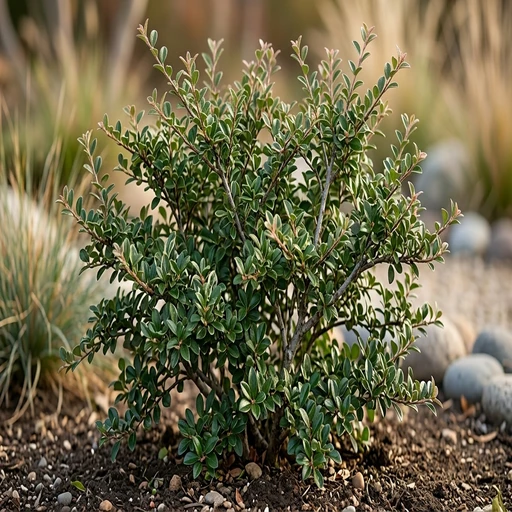
Streibs Findling Cotoneaster
Cotoneaster dammeri 'Streibs Findling'
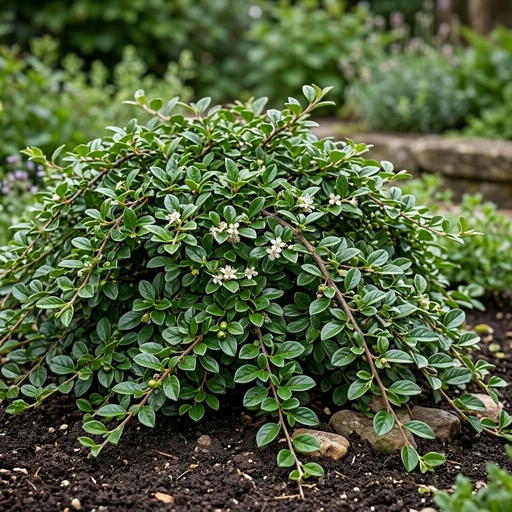
Autumn Inferno Cotoneaster
Cotoneaster salicifolius 'Autumn Inferno'
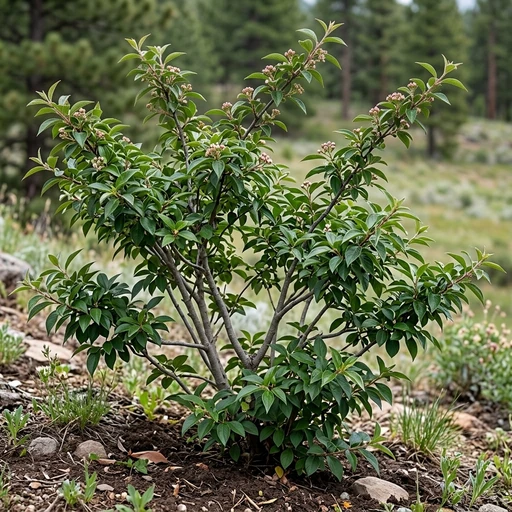
Lowfast Bearberry Cotoneaster
Cotoneaster dammeri 'Lowfast'
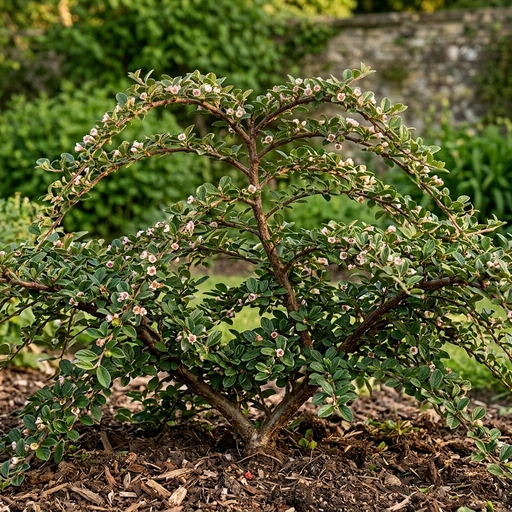
Peking Cotoneaster
Cotoneaster acutifolius
Hessei Rockspray Cotoneaster
Cotoneaster horizontalis 'Hessei'
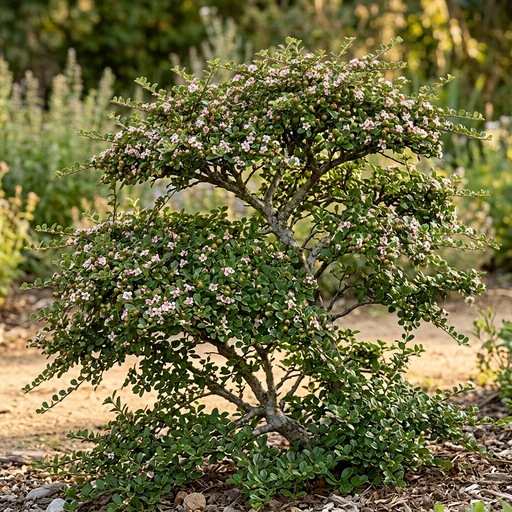
Rockspray Cotoneaster
Cotoneaster horizontalis
Keep exploring
Explore the genus
Hardy in your zone?
Grow Scarlet Leader Willowleaf Cotoneaster with confidence
See it in a design of your actual yard, get zone-matched care reminders, and track it season by season in your garden journal.