The Story
Plant Bio
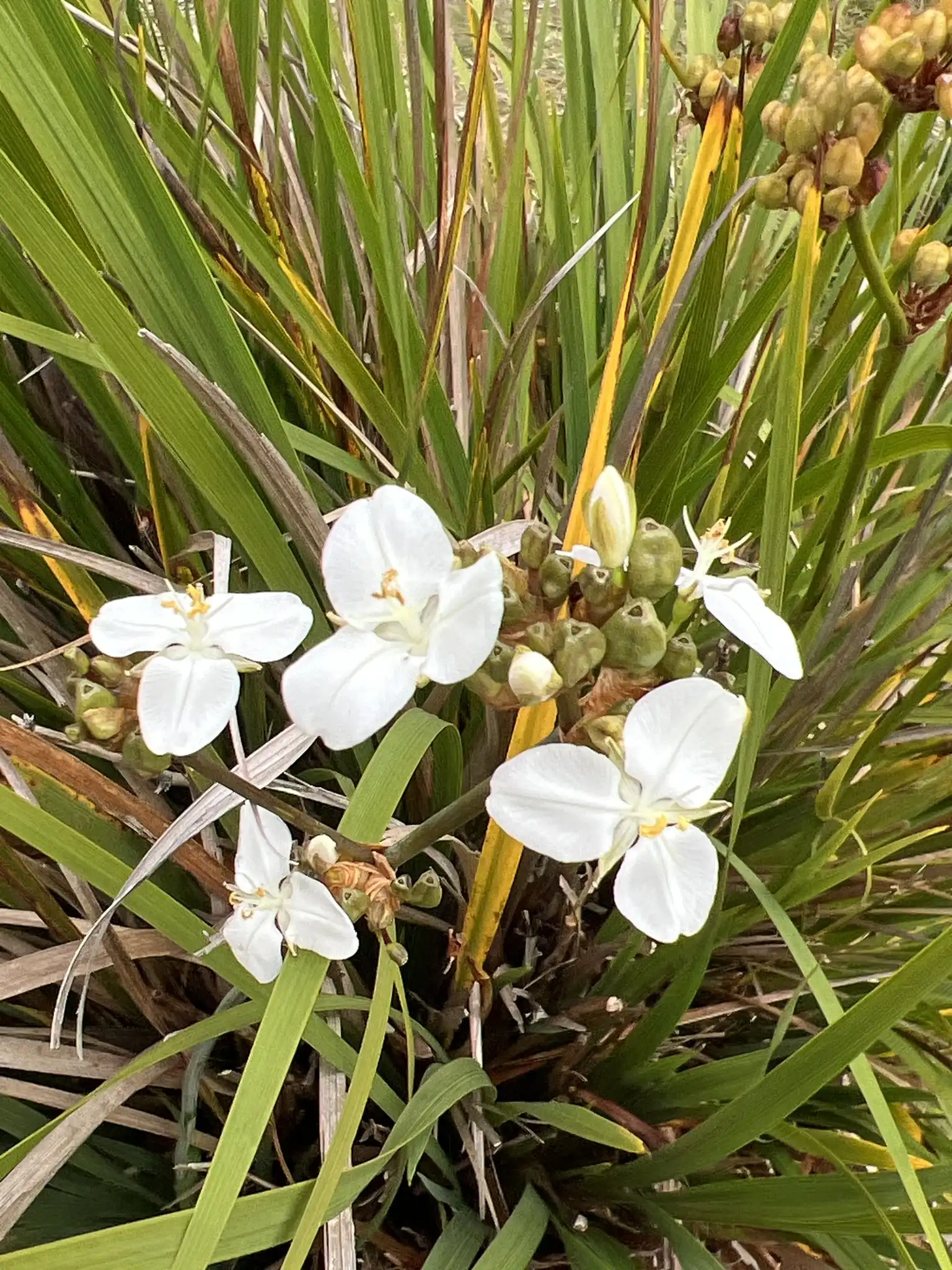
Libertia chilensis is an evergreen, clump-forming perennial native to South America, characterized by its stiff, upright fan of sword-shaped, deep green leaves. In spring and summer, rigid stems rise above the foliage to bear clusters of three-petaled, pure white flowers with pale yellow anthers.
The foliage contains calcium oxalate crystals that deter deer and rabbits, making it highly resistant to grazing. The symmetrical, vertical habit provides year-round structure in coastal gardens and mixed borders.
Uses & Benefits:
Essentials
At a Glance
Plant Type
Perennial
Height
36"
Width
40"
Light
Full Sun, Partial Sun
Zones
8, 9, 10
Water
Moderate
Humidity
Moderate
Lifespan
Perennial
Native To
South America
Toxicity
Mildly toxic / Skin irritant
Bloom period
Spring – Summer
In flower about 6 months of the year
Planting
How to Grow
- Select a planting site in full sun to partial shade with moist, humus-rich, well-draining soil.
- Dig a hole twice the width of the root ball and set the plant so the crown sits level with the surrounding soil.
- Water thoroughly after planting and maintain consistent soil moisture, especially during dry summer periods.
- Apply a light layer of organic mulch around the base to retain root moisture without burying the crown.
Pro Tip
Avoid shearing the clump back like an ornamental grass; instead, comb out dead brown leaves by hand in early spring to maintain the clean, vertical form.
Keep It Thriving
Care Guide
Do
- Provide regular irrigation during dry spells to prevent foliage tip burn.
- Hand-pull or comb out dead, brown leaves from the base of the clump in early spring.
- Wear gloves when handling the foliage to avoid skin irritation from calcium oxalate crystals.
Don't
- Do not shear the foliage down to the ground annually, as this severely delays recovery.
- Do not plant in heavy, poorly drained clay soils where standing water causes root rot.
- Do not apply heavy doses of fertilizer, which encourages weak, floppy growth.
Seasonal Care Calendar
| Task | Jan | Feb | Mar | Apr | May | Jun | Jul | Aug | Sep | Oct | Nov | Dec |
|---|---|---|---|---|---|---|---|---|---|---|---|---|
| Fertilize | ||||||||||||
| Pest Check | ||||||||||||
| Propagate | ||||||||||||
| Spring Cleanup |
Watch Out For
Pests & Diseases
Common Pests
Common Diseases
In the Garden
Landscape Uses & Companions
Landscape Uses
Multiply
Propagation Methods
Good to Know
Common Questions
Chilean Iris questions
What zones can Chilean Iris grow in?
Chilean Iris is hardy in USDA Zones 8–10. Inside that range it survives winter in the ground; outside it, grow it as an annual or a container plant you protect.
Is Chilean Iris deer resistant?
Yes — Chilean Iris is rated deer-resistant. Deer typically pass it over, though extreme hunger can override any plant's defenses.
When does Chilean Iris bloom?
Chilean Iris typically blooms in spring through summer. Exact timing shifts a week or two with your zone — Sow's bloom calendar maps it to your garden.
Does Chilean Iris need full sun?
Chilean Iris does best in full sun to part shade. In hot climates, afternoon shade keeps blooms fresher longer.
More Libertia to compare
Keep exploring
Explore the genus
Hardy in your zone?
Grow Chilean Iris with confidence
See it in a design of your actual yard, get zone-matched care reminders, and track it season by season in your garden journal.