The Story
Plant Bio
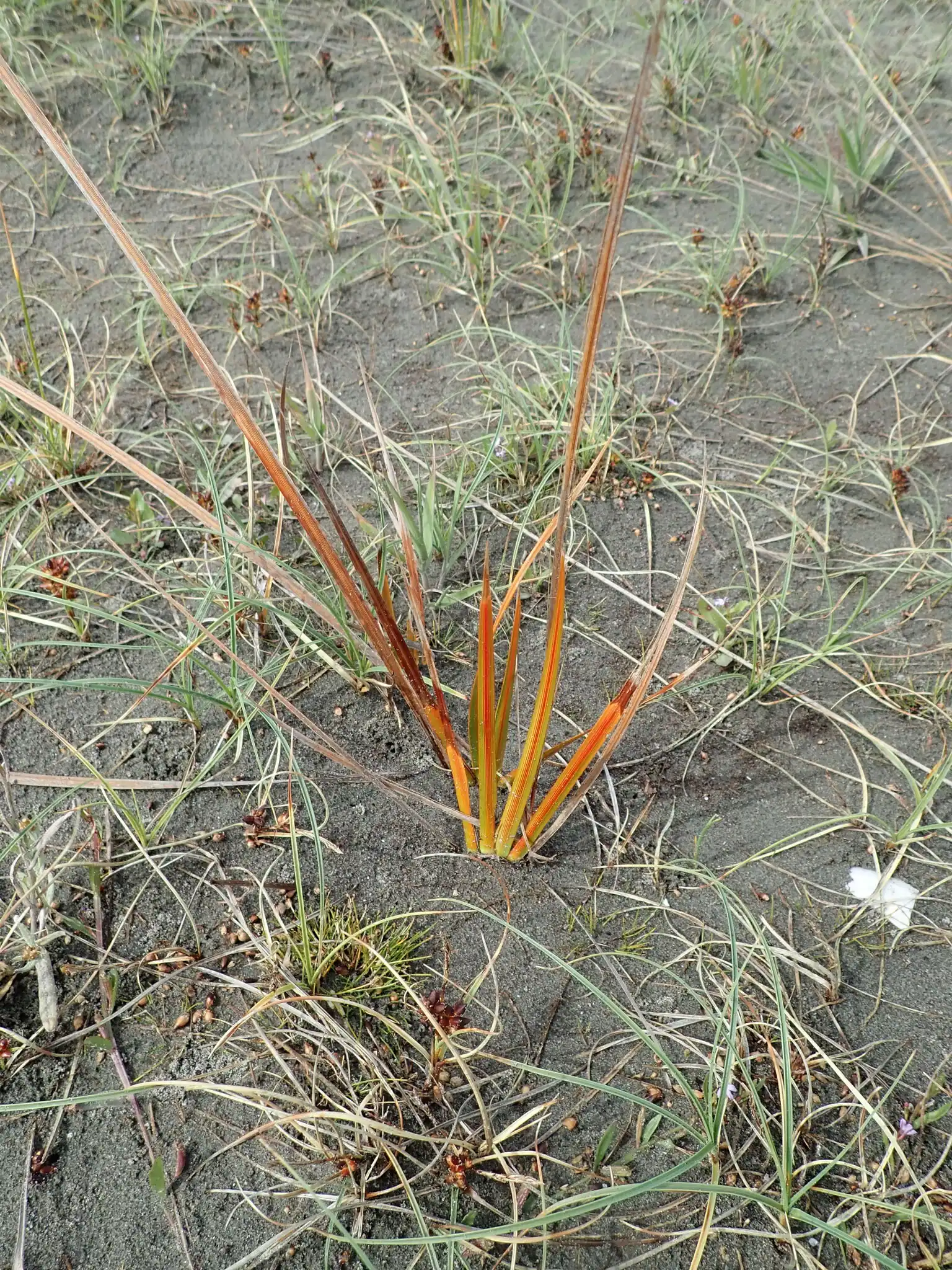
Libertia peregrinans is an evergreen perennial from New Zealand that spreads slowly via underground rhizomes to form stiff, upright fans of sword-like foliage. The narrow leaves feature a green center flanked by copper-orange margins and a bright orange-red midrib, with the coloration intensifying under high light or environmental stress.
This species is distinguished by its far-creeping stoloniferous habit and the brilliant orange tones of its foliage, which contrast with the small, three-petaled white flowers that appear on short, branched panicles in late spring. Unlike other members of the genus, it naturally inhabits coastal dunes and margins, giving it exceptional tolerance to salt spray and sandy soils.
Uses & Benefits:
Essentials
At a Glance
Plant Type
Perennial
Height
24"
Width
24"
Light
Full Sun, Partial Sun
Zones
8, 9, 10
Water
Low to moderate
Humidity
Moderate
Lifespan
Perennial
Native To
New Zealand
Toxicity
Mildly toxic to humans (sap may irritate skin; ingestion causes mild upset)
Bloom period
Late spring – Summer
In flower about 4 months of the year
Planting
How to Grow
- Select a planting site in full sun with sharp, well-drained soil to maximize foliage color and prevent crown rot.
- Dig a hole twice the width of the root ball and set the plant at the same depth it was growing in the container.
- Water moderately during the first growing season to establish the root system, allowing the soil to dry slightly between waterings.
- Apply a very light application of balanced, slow-release fertilizer in spring only if growth is sluggish, as lean soils produce better color.
Pro Tip
Plant in lean, well-drained soil under full sun to trigger the most vivid copper-orange foliage coloration; rich, damp soils and heavy shade cause the leaves to revert to a dull green and invite root rot.
Keep It Thriving
Care Guide
Do
- Grow in full sun to develop the brightest orange and copper foliage tones.
- Ensure the soil drains rapidly to prevent root and crown rot.
- Remove individual dead or tattered leaves at the base by hand to keep the clump tidy.
Don't
- Do not shear or prune the clumps back hard into old wood, which ruins the growth habit and causes patchy regrowth.
- Do not overwater or plant in heavy, waterlogged soils where stagnant water collects.
- Do not over-fertilize, as excess nutrients encourage lush green growth at the expense of orange coloration.
Seasonal Care Calendar
| Task | Jan | Feb | Mar | Apr | May | Jun | Jul | Aug | Sep | Oct | Nov | Dec |
|---|---|---|---|---|---|---|---|---|---|---|---|---|
| Divide | ||||||||||||
| Fertilize | ||||||||||||
| Pest Check | ||||||||||||
| Spring Cleanup |
Watch Out For
Pests & Diseases
Common Pests
Common Diseases
In the Garden
Landscape Uses & Companions
Landscape Uses
Companion Plants
Multiply
Propagation Methods
Good to Know
Common Questions
Orange Libertia questions
What zones can Orange Libertia grow in?
Orange Libertia is hardy in USDA Zones 8–10. Inside that range it survives winter in the ground; outside it, grow it as an annual or a container plant you protect.
Is Orange Libertia deer resistant?
Yes — Orange Libertia is rated deer-resistant. Deer typically pass it over, though extreme hunger can override any plant's defenses.
When does Orange Libertia bloom?
Orange Libertia typically blooms in late spring through summer. Exact timing shifts a week or two with your zone — Sow's bloom calendar maps it to your garden.
Does Orange Libertia need full sun?
Orange Libertia does best in full sun to part shade. In hot climates, afternoon shade keeps blooms fresher longer.
Is Orange Libertia drought tolerant?
Yes — once established (usually after the first full season), Orange Libertia handles dry spells with minimal watering. Water deeply its first year to build the root system that makes that possible.
More Libertia to compare
Keep exploring
Explore the genus
Hardy in your zone?
Grow Orange Libertia with confidence
See it in a design of your actual yard, get zone-matched care reminders, and track it season by season in your garden journal.