

The Story
Plant Bio
Lonicera japonica is a vigorous, twining semi-evergreen woody vine native to East Asia that climbs by scrambling over supporting structures. The species features opposite, dark green oval leaves and highly fragrant, tubular, two-lipped flowers that open white and fade to yellow.
'Repens' is distinguished by its creeping habit and distinct purplish-red coloration on the stems and young foliage, especially during spring or cooler weather. The tubular flowers open white or cream with a deep red-purple flush before maturing to soft pink and yellow.
Uses & Benefits:
Essentials
At a Glance
Plant Type
Vine
Height
315"
Width
197"
Light
Full Sun, Partial Sun
Zones
4, 5, 6, 7, 8, 9
Water
Moderate
Humidity
Moderate
Lifespan
Perennial
Native To
East Asia
Toxicity
Toxic to humans and pets
Bloom period
Spring – Late summer
In flower about 6 months of the year
Planting
How to Grow
- Select a planting site in full sun to partial shade with moist, well-drained soil.
- Dig a hole twice the width of the root ball and incorporate organic compost.
- Install a sturdy trellis or support structure for the twining stems to climb.
- Water thoroughly after planting and apply a thick layer of organic mulch around the base.
Pro Tip
Install physical root barriers or prune trailing stems before they touch the ground to prevent nodes from rooting and escaping cultivation.
Keep It Thriving
Care Guide
Do
- Prune annually in early spring to control size and remove congested growth.
- Apply a thick organic mulch around the base in spring to retain soil moisture.
- Maintain physical barriers to prevent stems from rooting where they touch the ground.
Don't
- Do not apply heavy synthetic fertilizers, which encourage excessive, unmanageable vegetative growth.
- Avoid planting near natural woodland borders or unmanaged areas where the vine can easily escape.
- Do not allow the soil to become waterlogged or completely dried out for extended periods.
Seasonal Care Calendar
| Task | Jan | Feb | Mar | Apr | May | Jun | Jul | Aug | Sep | Oct | Nov | Dec |
|---|---|---|---|---|---|---|---|---|---|---|---|---|
| Mulch | ||||||||||||
| Pest Check | ||||||||||||
| Propagate | ||||||||||||
| Prune |
Watch Out For
Pests & Diseases
Common Pests
Common Diseases
In the Garden
Landscape Uses & Companions
Landscape Uses
Companion Plants
Multiply
Propagation Methods
Good to Know
Common Questions
Japanese Honeysuckle questions
What zones can Japanese Honeysuckle grow in?
Japanese Honeysuckle is hardy in USDA Zones 4–9. Inside that range it survives winter in the ground; outside it, grow it as an annual or a container plant you protect.
Is Japanese Honeysuckle deer resistant?
Not reliably. Deer may browse Japanese Honeysuckle, especially tender spring growth — plan on repellents or fencing where pressure is high.
When does Japanese Honeysuckle bloom?
Japanese Honeysuckle typically blooms in spring through late summer. Exact timing shifts a week or two with your zone — Sow's bloom calendar maps it to your garden.
Does Japanese Honeysuckle need full sun?
Japanese Honeysuckle does best in full sun to part shade. In hot climates, afternoon shade keeps blooms fresher longer.
Is Japanese Honeysuckle drought tolerant?
Yes — once established (usually after the first full season), Japanese Honeysuckle handles dry spells with minimal watering. Water deeply its first year to build the root system that makes that possible.
More Lonicera to compare
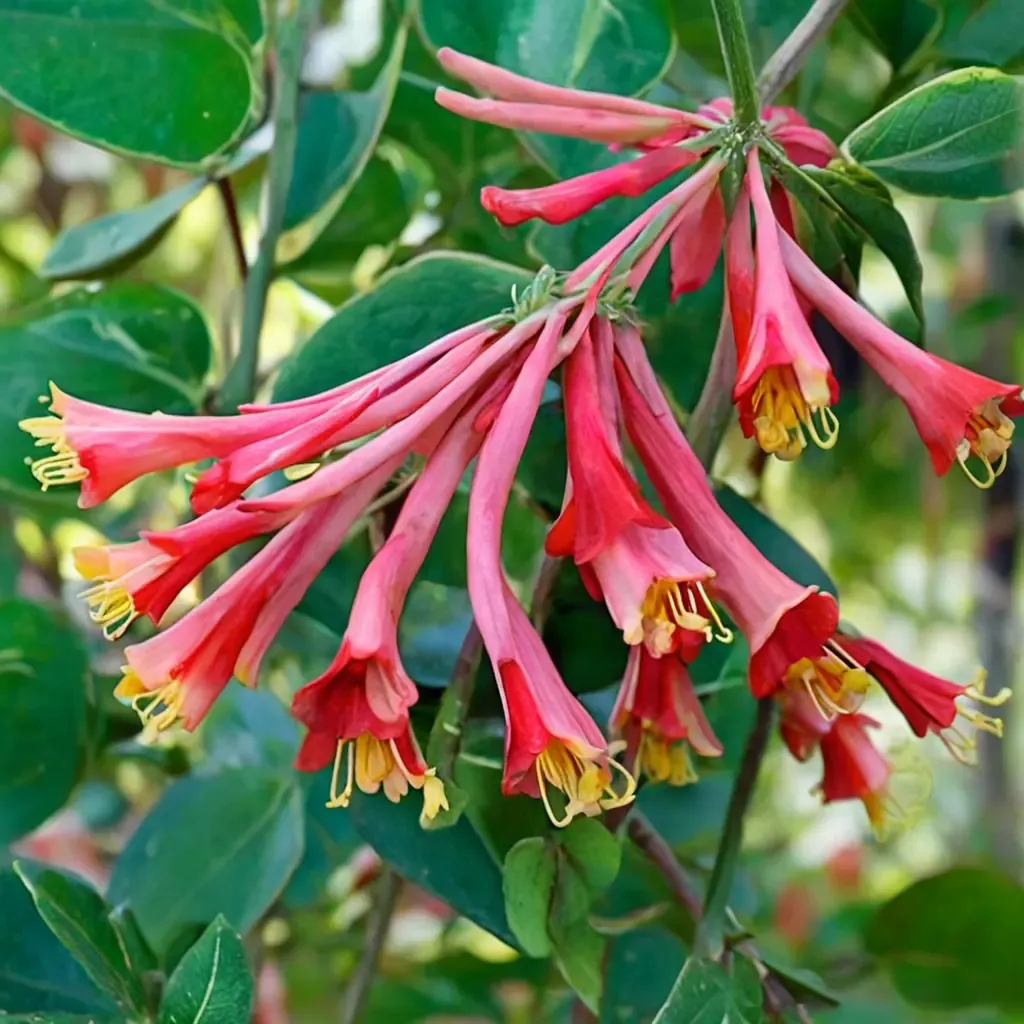
Coral Honeysuckle
Lonicera sempervirens 'Coral Honeysuckle'
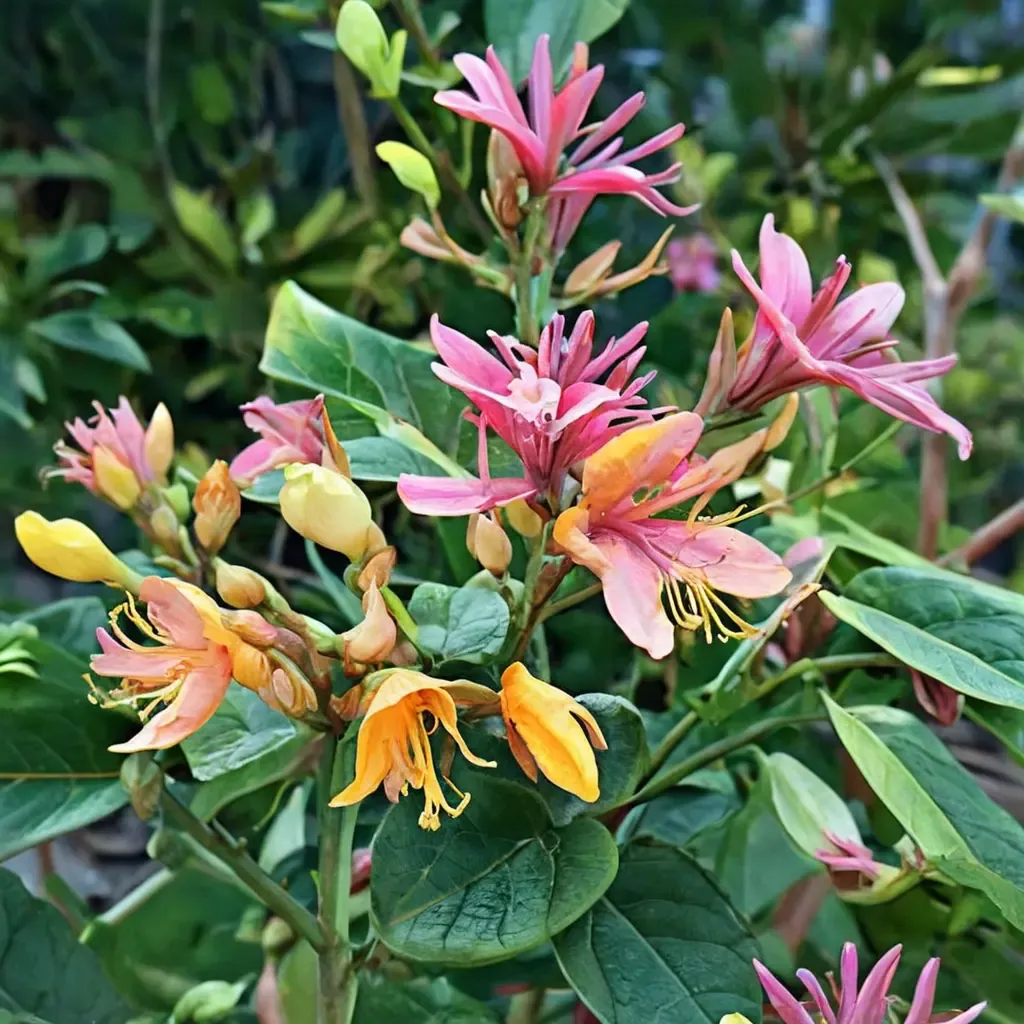
Goldflame Honeysuckle
Lonicera x heckrottii 'Goldflame'
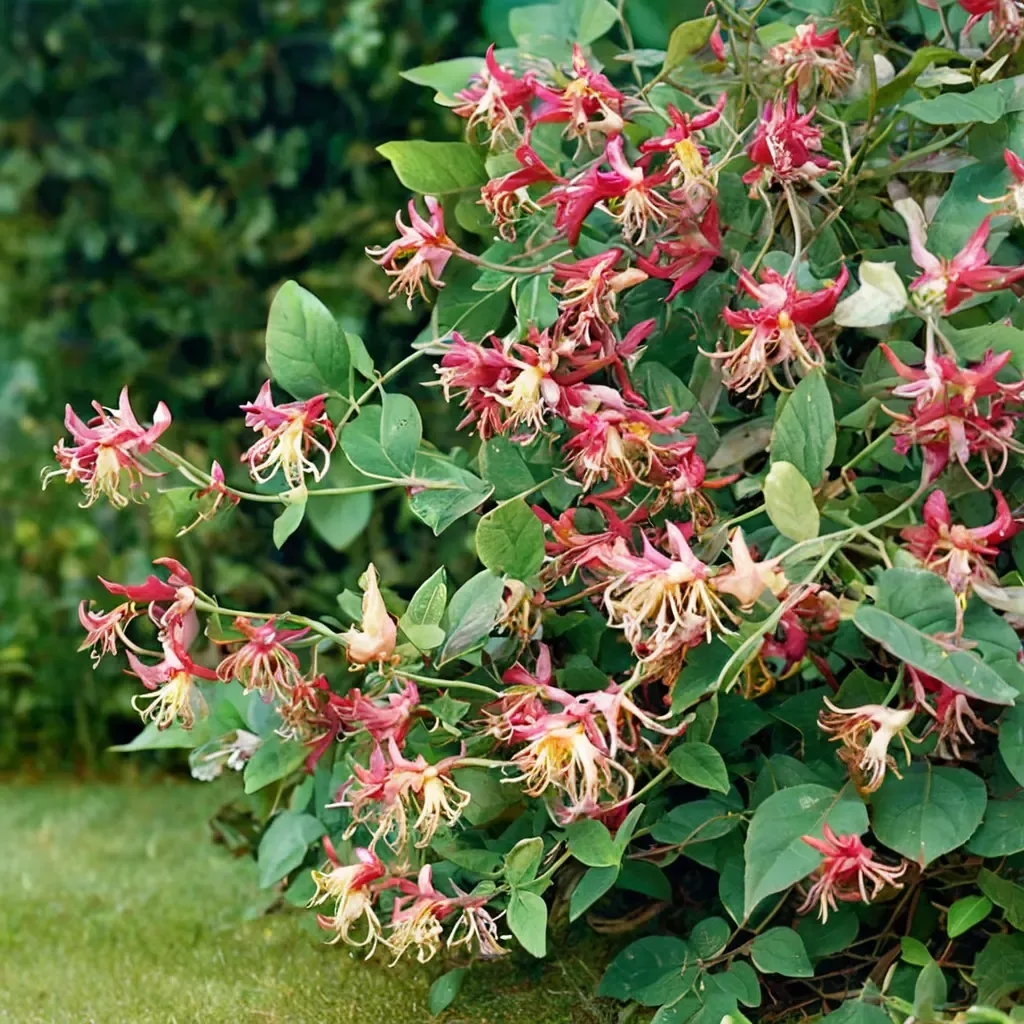
Late Dutch Honeysuckle
Lonicera serotina
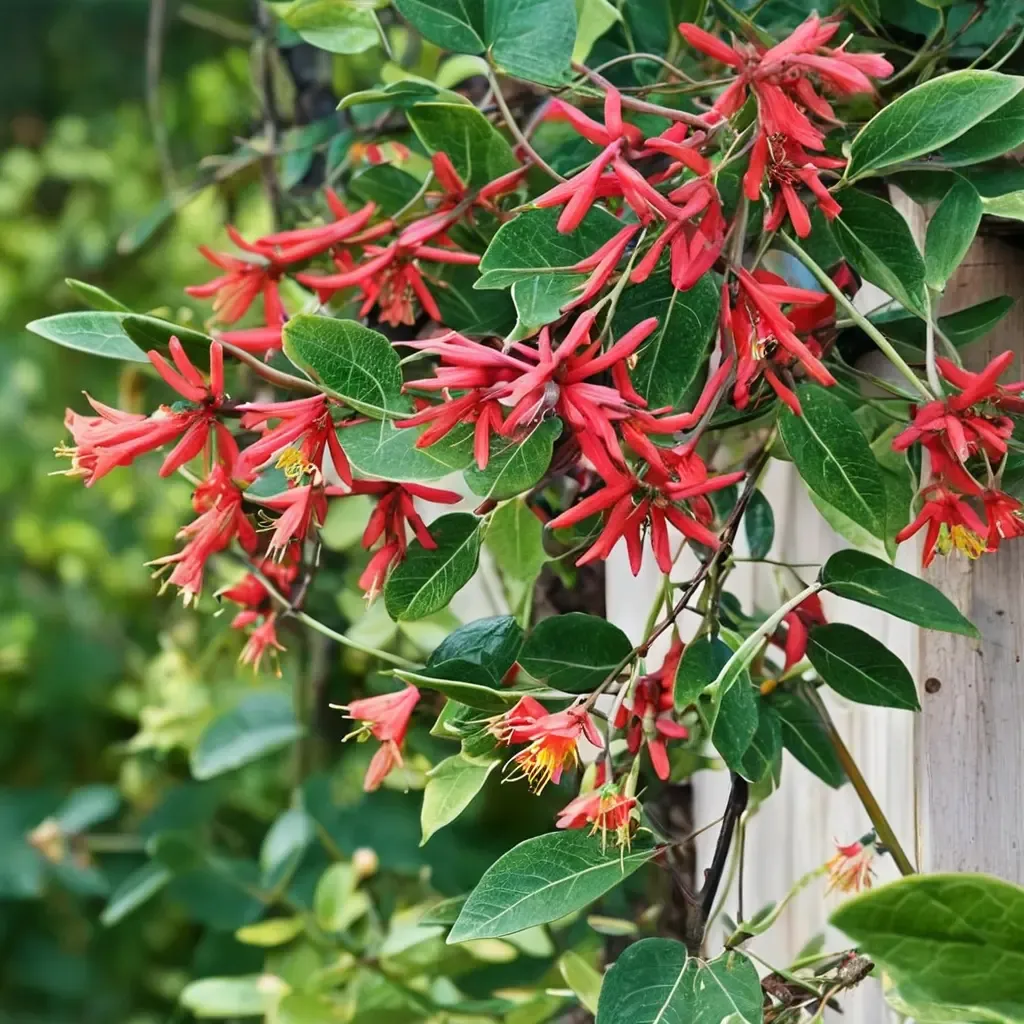
Major Wheeler honeysuckle
Lonicera sempervirens 'Major Wheeler'
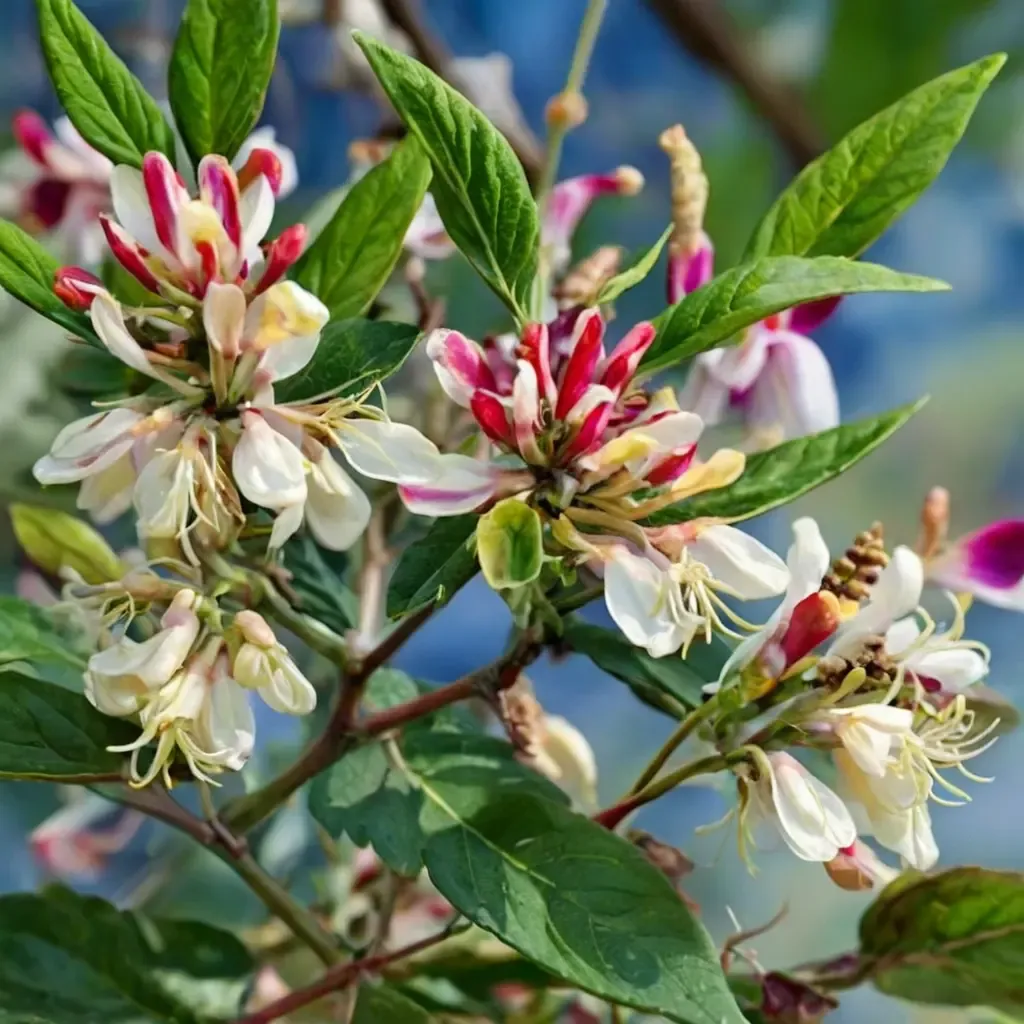
Winter Honeysuckle
Lonicera fragrantissima 'Fragrant Cloud'
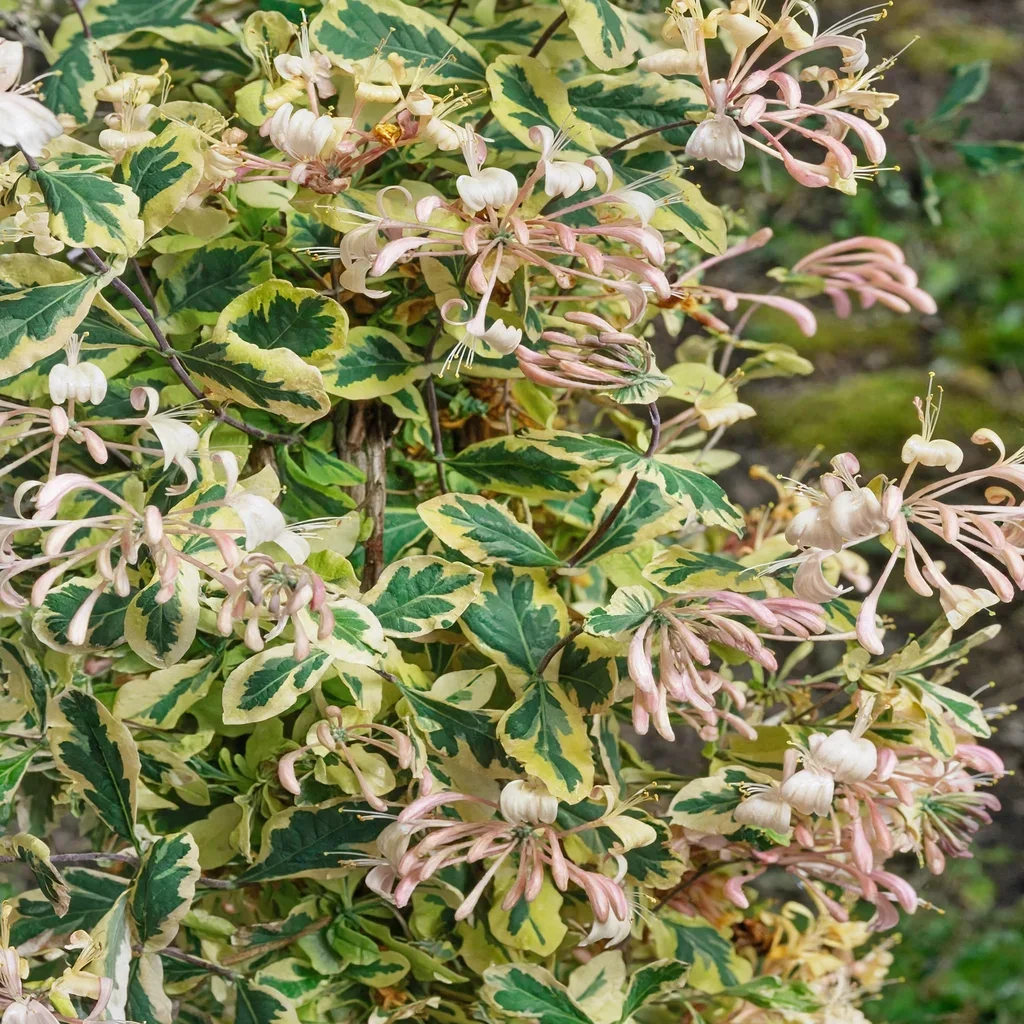
Aurora Honeyberry
Lonicera caudata 'Tundra Aurora'
Keep exploring
Explore the genus
Grow Japanese Honeysuckle with confidence
See it in a design of your actual yard, get zone-matched care reminders, and track it season by season in your garden journal.