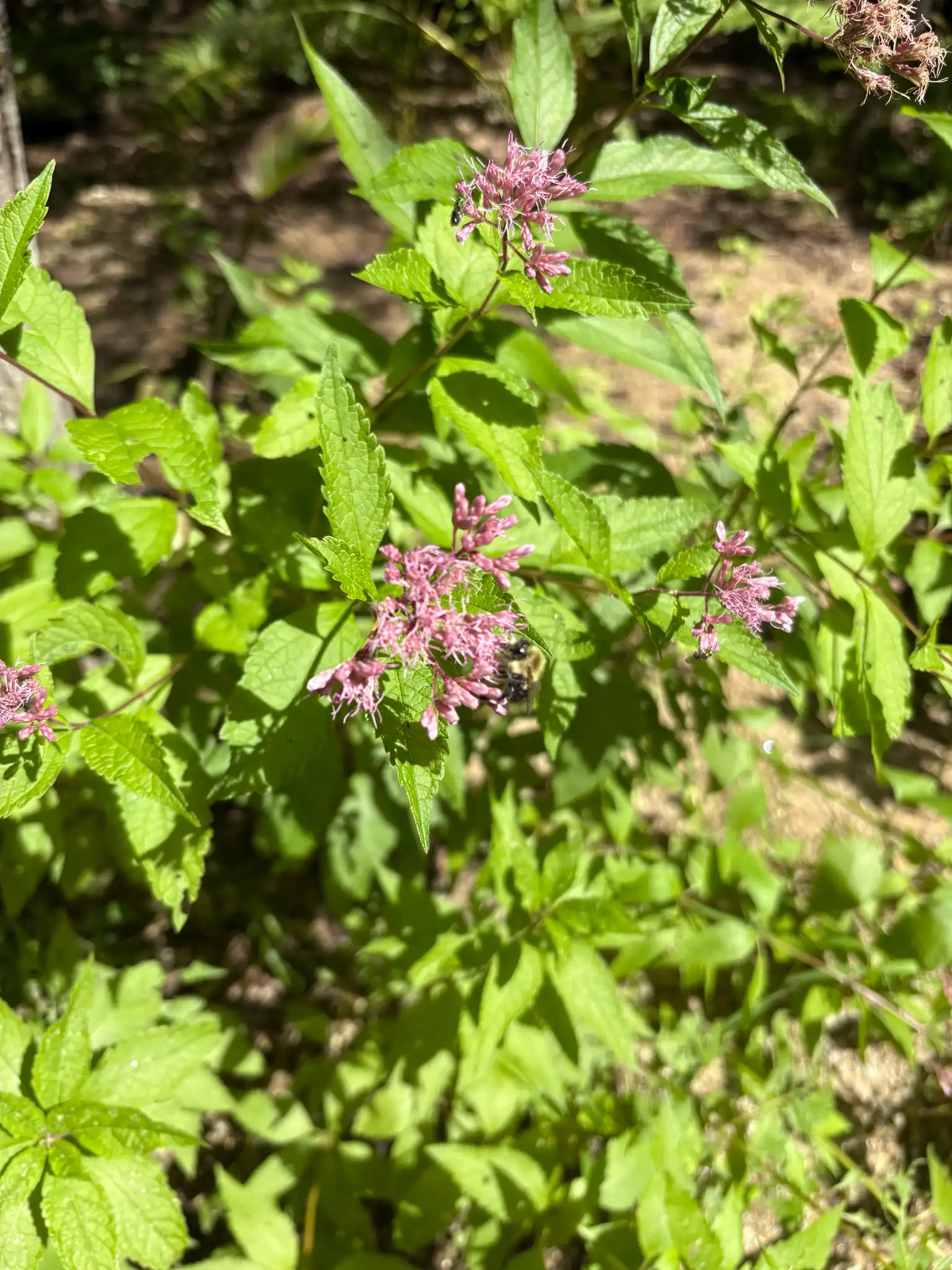
2 named cultivars
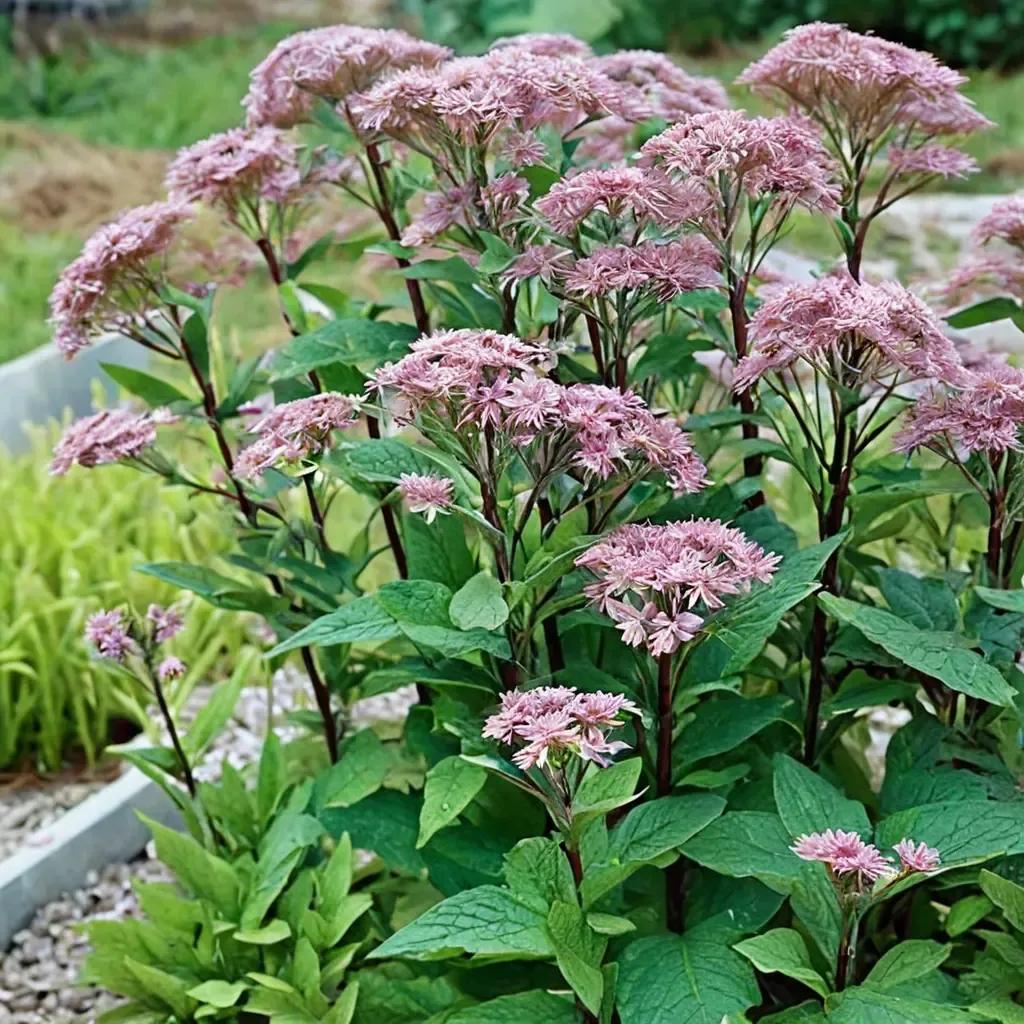

The Story
Plant Bio
Eutrochium dubium, coastal plain Joe Pye weed, is a clumping perennial native to eastern coastal plains and wetlands from Maine to South Carolina, reaching three to six feet. Serrated ovate leaves are carried in whorls of three or four, each with three prominent veins, and domed clusters of small fragrant pink-purple florets open from midsummer into autumn.
It is the shortest and most garden-manageable of the Joe Pye weeds, which is why the compact selection 'Little Joe' is so widely planted. The three-veined leaf is the reliable way to separate it from its taller relatives, and like them it is a heavyweight butterfly plant in late summer.
Uses & Benefits:
Essentials
At a Glance
Plant Type
Perennial
Height
54"
Width
36"
Light
Full Sun, Partial Sun
Zones
4, 5, 6, 7, 8
Water
Moderate to high
Humidity
Moderate
Lifespan
Perennial
Native To
Eastern coastal plain from Maine to South Carolina
Toxicity
Non-toxic
Planting
How to Grow
- Plant in spring in moist, fertile soil.
- Choose full sun to partial shade.
- Allow two to four feet of width.
- Keep the soil moist through summer.
- Cut back by a third in late spring to reduce height.
- Divide every three or four years.
Pro Tip
Check the leaf veins to be sure what you have — three main veins per leaf marks this species out from the taller spotted and hollow Joe Pye weeds.
Keep It Thriving
Care Guide
Do
- Keep the soil moist 💧
- Plant in full sun for the best flowering ☀️
- Leave seed heads standing over winter 🐦
- Divide every three or four years ✂️
Don't
- Let it dry out; leaves scorch ❌
- Plant in deep shade ❌
- Cut it down in autumn ❌
Seasonal Care Calendar
| Task | Jan | Feb | Mar | Apr | May | Jun | Jul | Aug | Sep | Oct | Nov | Dec |
|---|---|---|---|---|---|---|---|---|---|---|---|---|
| Divide | ||||||||||||
| Prune |
Watch Out For
Pests & Diseases
Common Pests
Common Diseases
In the Garden
Landscape Uses & Companions
Landscape Uses
Multiply
Propagation Methods
Good to Know
Common Questions
Coastal Plain Joe-Pye Weed questions
What zones can Coastal Plain Joe-Pye Weed grow in?
Coastal Plain Joe-Pye Weed is hardy in USDA Zones 4–8. Inside that range it survives winter in the ground; outside it, grow it as an annual or a container plant you protect.
Is Coastal Plain Joe-Pye Weed deer resistant?
Yes — Coastal Plain Joe-Pye Weed is rated deer-resistant. Deer typically pass it over, though extreme hunger can override any plant's defenses.
When does Coastal Plain Joe-Pye Weed bloom?
Coastal Plain Joe-Pye Weed typically blooms in midsummer to fall through late summer. Exact timing shifts a week or two with your zone — Sow's bloom calendar maps it to your garden.
Does Coastal Plain Joe-Pye Weed need full sun?
Coastal Plain Joe-Pye Weed does best in full sun to part shade. In hot climates, afternoon shade keeps blooms fresher longer.
Is Coastal Plain Joe-Pye Weed drought tolerant?
Yes — once established (usually after the first full season), Coastal Plain Joe-Pye Weed handles dry spells with minimal watering. Water deeply its first year to build the root system that makes that possible.
More Eutrochium to compare
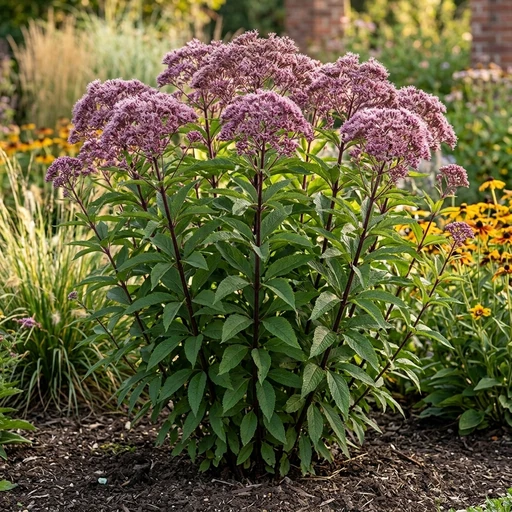
Joe Pye Weed
Eutrochium maculatum 'Gateway'
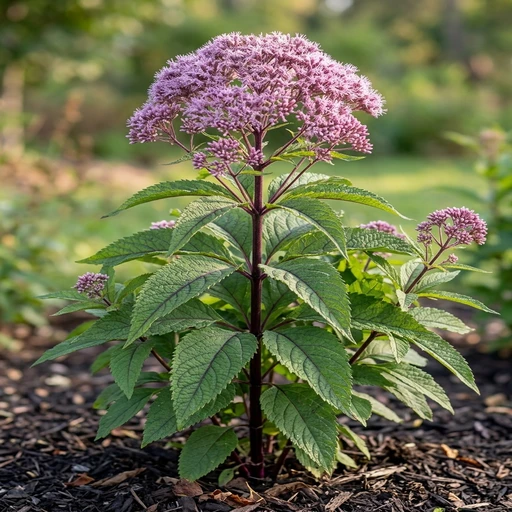
Sweet Joe-Pye Weed
Eutrochium purpureum
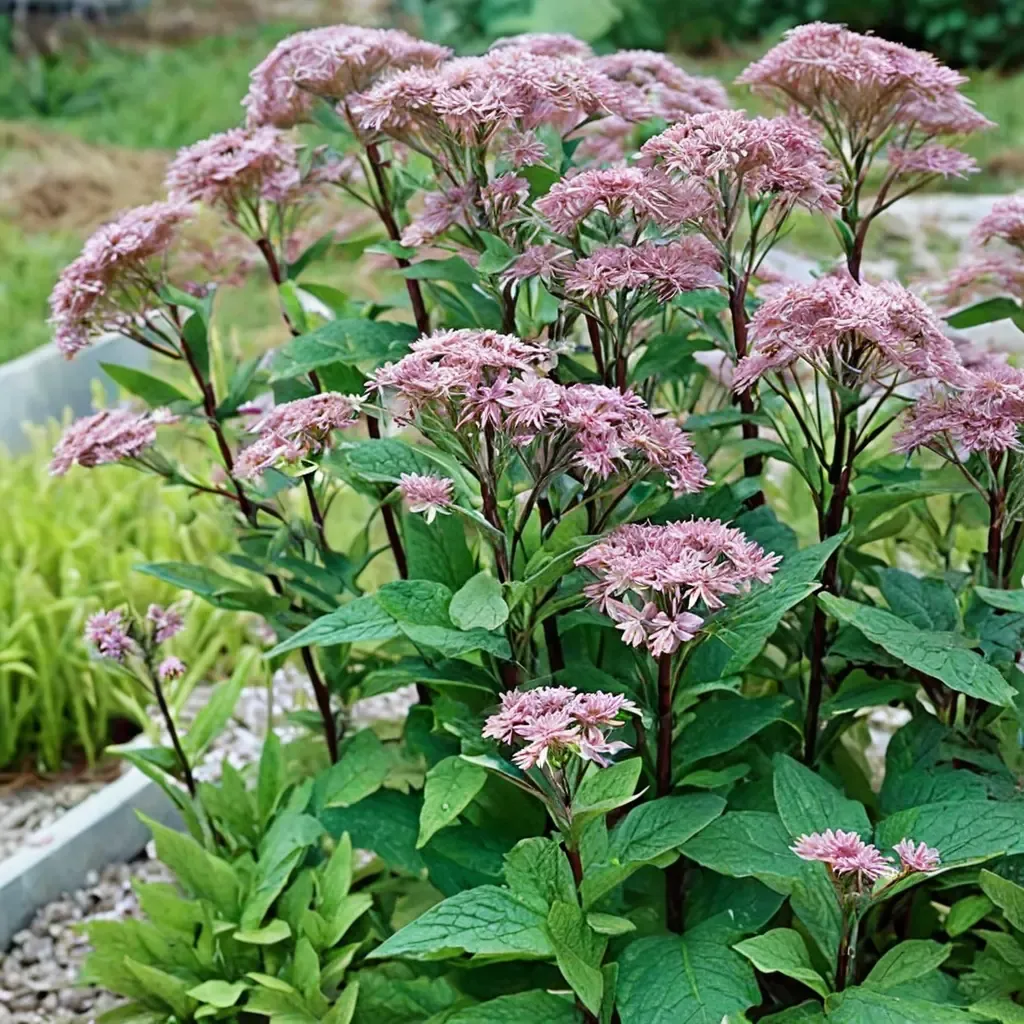
Little Joe Pye Weed
Eutrochium dubium 'Little Joe'
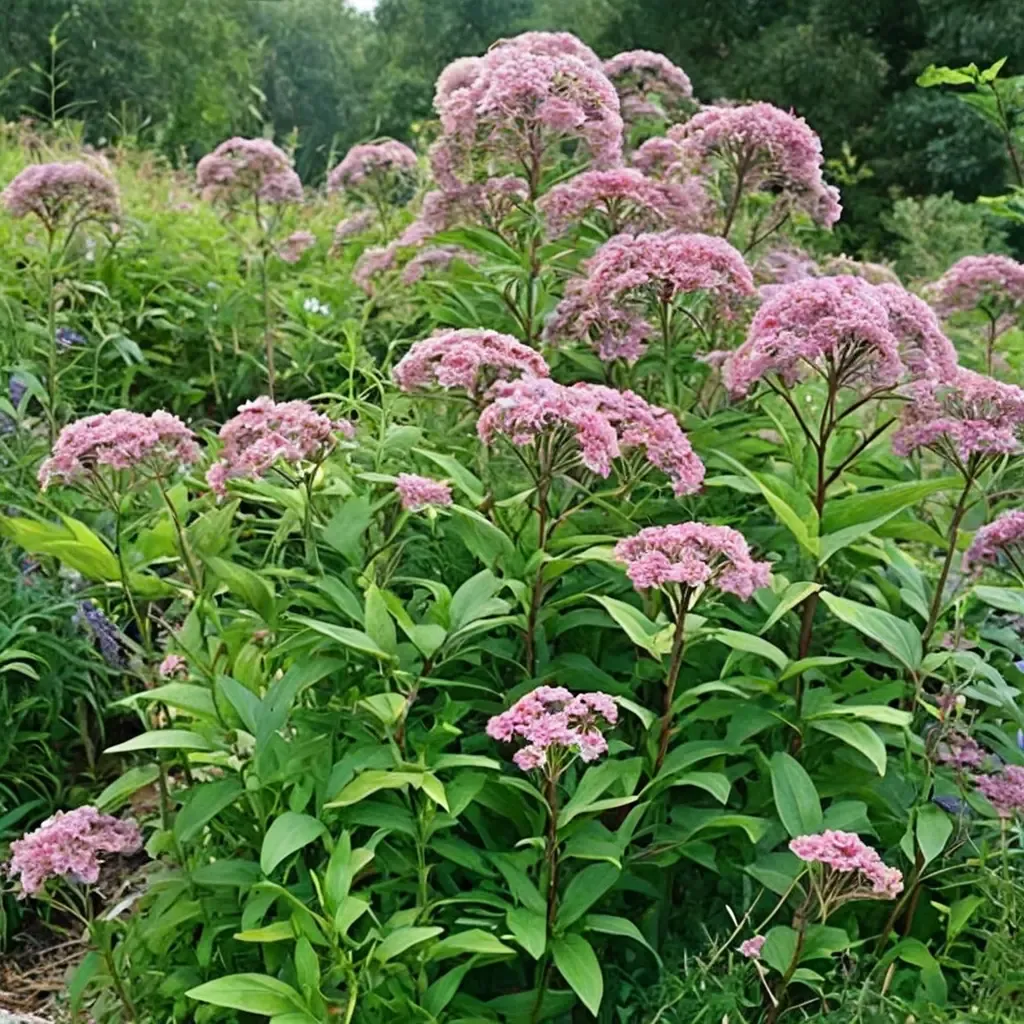
Hollow Joe-Pye Weed
Eutrochium fistulosum
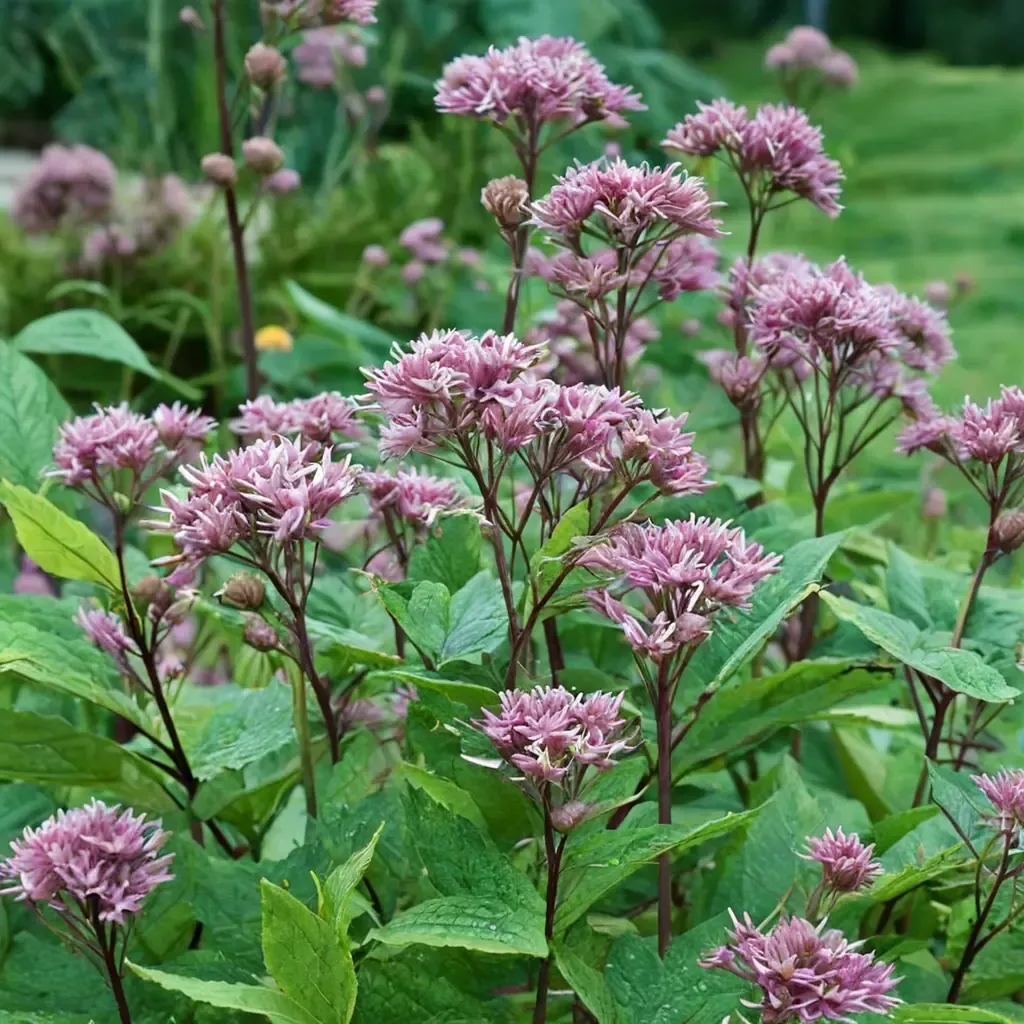
Red Dwarf Joe-Pye Weed
Eutrochium maculatum 'Red Dwarf'
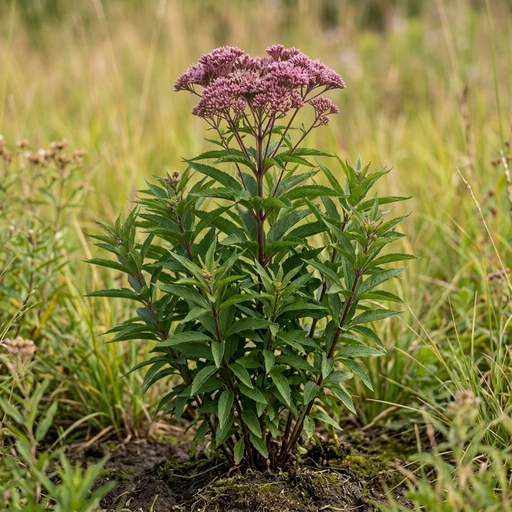
Baby Joe Pye Weed
Eutrochium dubium 'Baby Joe'
Keep exploring
Explore the genus
Hardy in your zone?
Grow Coastal Plain Joe-Pye Weed with confidence
See it in a design of your actual yard, get zone-matched care reminders, and track it season by season in your garden journal.