The Story
Plant Bio
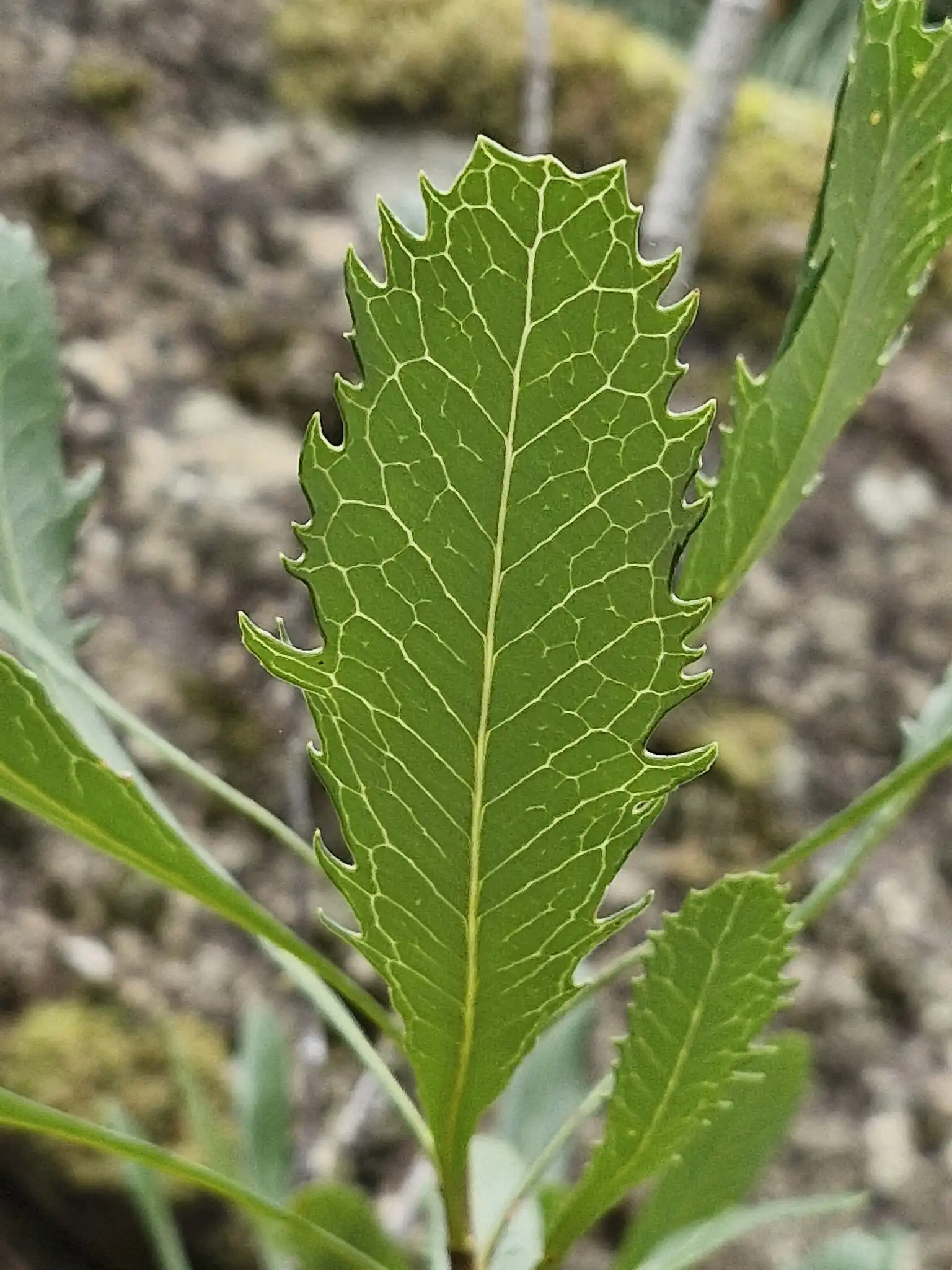
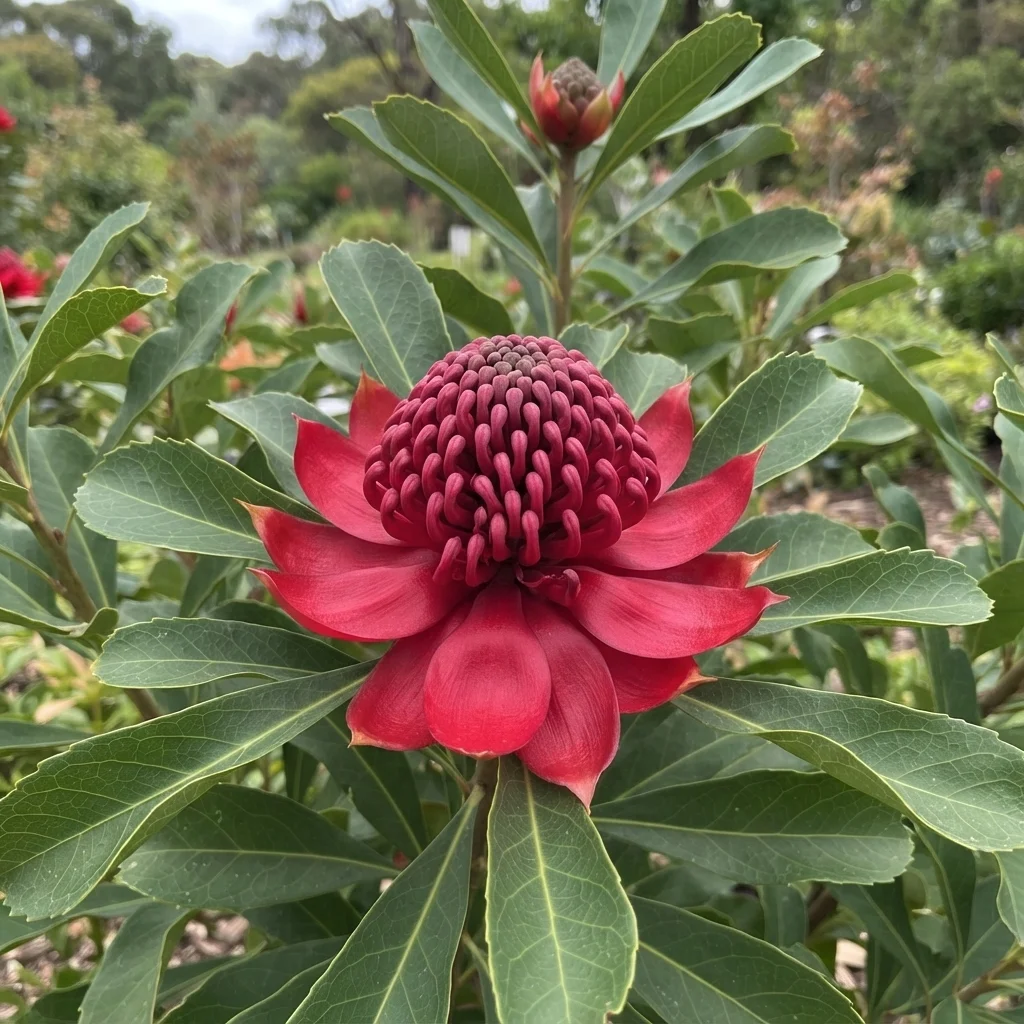
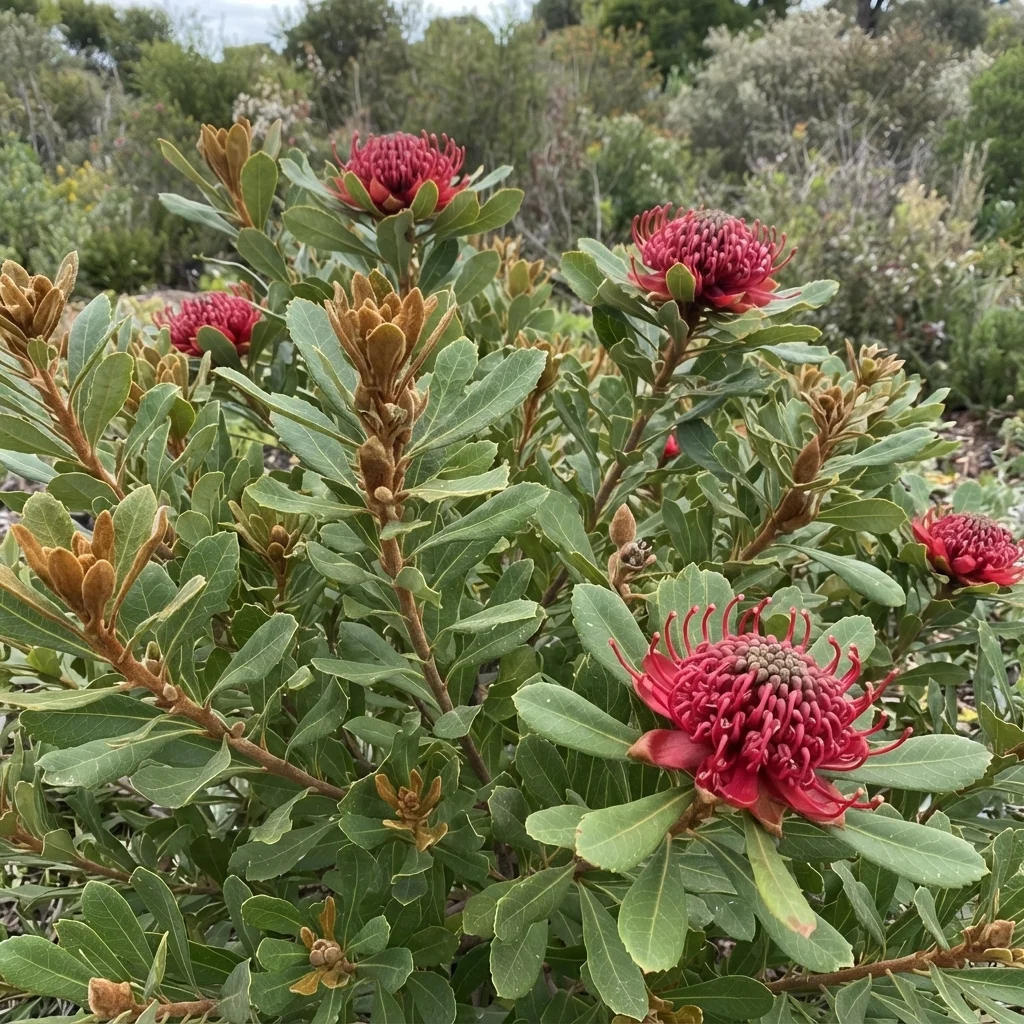
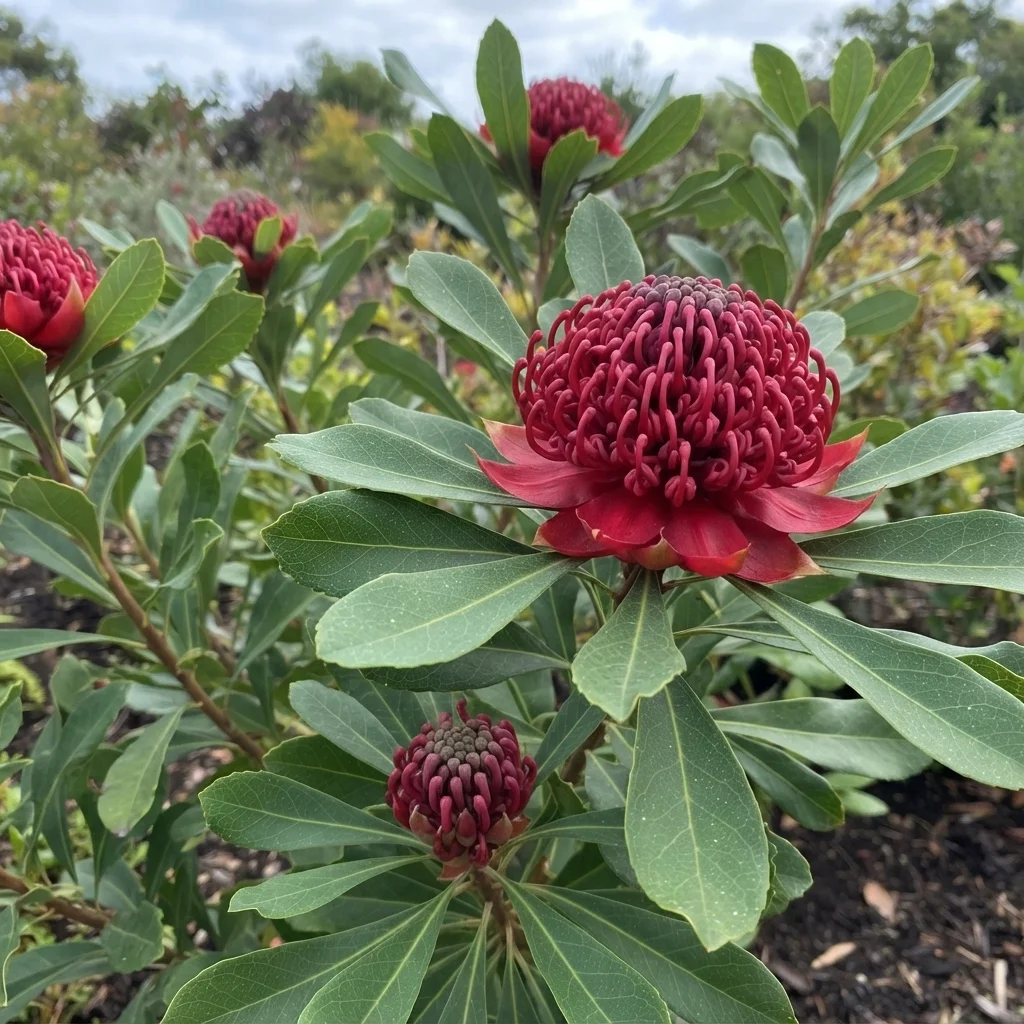
Telopea speciosissima, the New South Wales waratah, is an upright, woody evergreen shrub native to southeastern Australia, reaching up to ten feet tall in its natural habitat. It is distinguished by its leathery, coarsely serrated dark green leaves and massive, dome-shaped spring flower heads composed of densely packed crimson florets surrounded by a collar of stiff, colorful bracts.
This species regenerates from a woody underground lignotuber after fire, allowing it to recover from severe physical damage. The terminal flower heads can reach up to four inches in diameter, serving as a primary nectar source for foraging birds and insects.
Uses & Benefits:
Essentials
At a Glance
Plant Type
Shrub
Height
118"
Width
59"
Light
Full Sun, Partial Sun
Zones
9, 10
Water
Moderate
Humidity
Moderate
Lifespan
Perennial
Native To
Australia
Toxicity
Non-toxic
Bloom period
Spring
In flower about 3 months of the year
Planting
How to Grow
- Select a planting site with exceptional, sharp drainage, such as a raised bed, sloping bank, or sandy loam soil.
- Ensure the soil is acidic to neutral and completely free of heavy, compacted clay.
- Dig a hole twice as wide as the root ball but no deeper, keeping the crown level with the surrounding soil surface.
- Water deeply during the establishment phase, allowing the soil to dry slightly between waterings to prevent root rot.
Pro Tip
Never prune back into old, leafless brown wood, as the stems lack active buds and will fail to regenerate; instead, cut back hard into active green growth immediately after flowering to stimulate dense new stems.
Keep It Thriving
Care Guide
Do
- Prune the plant hard annually immediately after flowering to encourage multi-stemmed growth.
- Use only low-phosphorus, slow-release fertilizers formulated specifically for native Proteaceae.
- Maintain a clean ring of fine tilth around the base to eliminate weed and turf competition.
Don't
- Do not apply standard garden fertilizers, as high phosphorus levels are highly toxic to the roots.
- Do not plant in heavy, poorly drained clay soils or low-lying areas prone to waterlogging.
- Do not prune deep into old, leafless brown wood where there are no active buds.
Seasonal Care Calendar
| Task | Jan | Feb | Mar | Apr | May | Jun | Jul | Aug | Sep | Oct | Nov | Dec |
|---|---|---|---|---|---|---|---|---|---|---|---|---|
| Fertilize | ||||||||||||
| Mulch | ||||||||||||
| Pest Check | ||||||||||||
| Prune |
Watch Out For
Pests & Diseases
Common Pests
Common Diseases
In the Garden
Landscape Uses & Companions
Landscape Uses
Companion Plants
Multiply
Propagation Methods
Good to Know
Common Questions
New South Wales Waratah questions
What zones can New South Wales Waratah grow in?
New South Wales Waratah is hardy in USDA Zones 9–10. Inside that range it survives winter in the ground; outside it, grow it as an annual or a container plant you protect.
Is New South Wales Waratah deer resistant?
Not reliably. Deer may browse New South Wales Waratah, especially tender spring growth — plan on repellents or fencing where pressure is high.
When does New South Wales Waratah bloom?
New South Wales Waratah typically blooms in spring through spring. Exact timing shifts a week or two with your zone — Sow's bloom calendar maps it to your garden.
Does New South Wales Waratah need full sun?
New South Wales Waratah does best in full sun to part shade. In hot climates, afternoon shade keeps blooms fresher longer.
Is New South Wales Waratah drought tolerant?
Yes — once established (usually after the first full season), New South Wales Waratah handles dry spells with minimal watering. Water deeply its first year to build the root system that makes that possible.
More Telopea to compare
Keep exploring
Explore the genus
Hardy in your zone?
Grow New South Wales Waratah with confidence
See it in a design of your actual yard, get zone-matched care reminders, and track it season by season in your garden journal.