The Story
Plant Bio
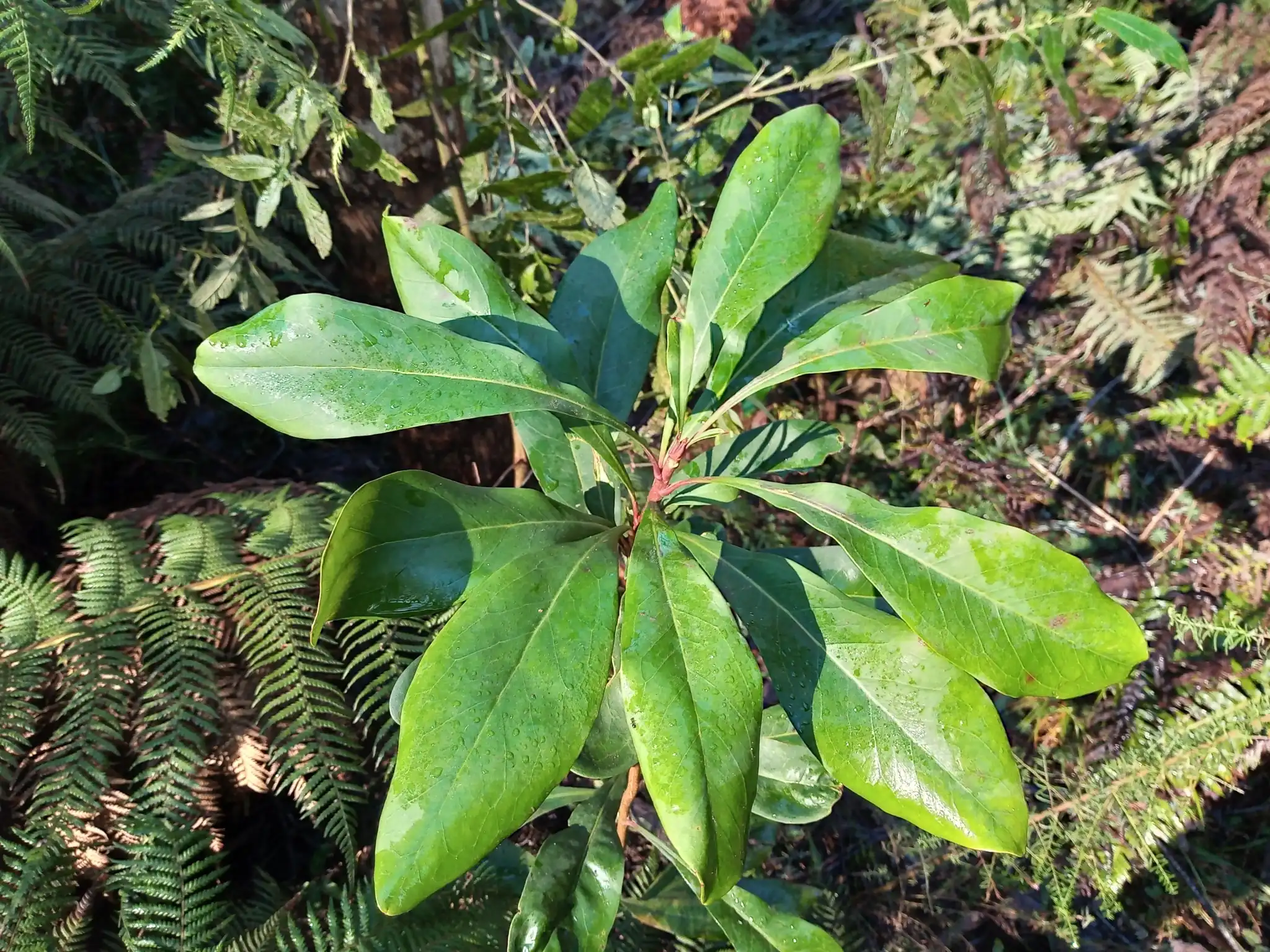
Telopea oreades, the Gippsland waratah, is an upright evergreen shrub or small tree native to the cool, wet forests of southeastern Australia. It develops a single or multi-stemmed trunk from an underground lignotuber, carrying dark green, leathery, oblanceolate leaves up to eight inches long.
The summer-blooming flower heads consist of dense, flattened clusters of bright red tubular flowers that lack the large, showy bracts of the more common New South Wales waratah. Rare white-flowered forms exist in the wild, including the cultivars 'Errinundra White' and 'Plateau View White'.
Uses & Benefits:
Essentials
At a Glance
Plant Type
Shrub
Height
390"
Width
160"
Light
Full Sun, Partial Sun
Zones
8, 9, 10
Water
Medium
Humidity
Moderate to High
Lifespan
Long-lived
Native To
Australia
Toxicity
Non-toxic
Bloom period
Summer
In flower about 3 months of the year
Planting
How to Grow
- Select a planting site with excellent, sharp drainage and acidic, organic-rich sandy loam.
- Provide partial shade for young plants, gradually transitioning them to full sun as they establish.
- Water regularly during the first few seasons to maintain consistent soil moisture, especially during dry summer spells.
- Apply a thick layer of organic mulch around the root zone to conserve moisture and keep roots cool.
Pro Tip
Prune only within the active green canopy immediately after flowering; cutting back into bare, brown wood destroys the branch framework as these old stems lack dormant buds to regenerate.
Keep It Thriving
Care Guide
Do
- Use only specialized low-phosphorus fertilizers formulated for native Australian plants.
- Provide excellent drainage by planting on a slope or in raised mounds if soil is heavy.
- Water deeply during dry summer periods to prevent root desiccation.
Don't
- Do not apply standard garden fertilizers, as high phosphorus levels will kill the proteoid roots.
- Do not prune into old, leafless brown wood, which lacks dormant buds to reshoot.
- Do not allow the soil to waterlog, which rapidly induces Phytophthora root rot.
Seasonal Care Calendar
| Task | Jan | Feb | Mar | Apr | May | Jun | Jul | Aug | Sep | Oct | Nov | Dec |
|---|---|---|---|---|---|---|---|---|---|---|---|---|
| Fertilize | ||||||||||||
| Mulch | ||||||||||||
| Pest Check | ||||||||||||
| Prune |
Watch Out For
Pests & Diseases
Common Pests
Common Diseases
In the Garden
Landscape Uses & Companions
Landscape Uses
Companion Plants
Multiply
Propagation Methods
Good to Know
Common Questions
Gippsland Waratah questions
What zones can Gippsland Waratah grow in?
Gippsland Waratah is hardy in USDA Zones 8–10. Inside that range it survives winter in the ground; outside it, grow it as an annual or a container plant you protect.
Is Gippsland Waratah deer resistant?
Not reliably. Deer may browse Gippsland Waratah, especially tender spring growth — plan on repellents or fencing where pressure is high.
When does Gippsland Waratah bloom?
Gippsland Waratah typically blooms in summer through summer. Exact timing shifts a week or two with your zone — Sow's bloom calendar maps it to your garden.
Does Gippsland Waratah need full sun?
Gippsland Waratah does best in full sun to part shade. In hot climates, afternoon shade keeps blooms fresher longer.
More Telopea to compare
Keep exploring
Explore the genus
Hardy in your zone?
Grow Gippsland Waratah with confidence
See it in a design of your actual yard, get zone-matched care reminders, and track it season by season in your garden journal.