The Story
Plant Bio
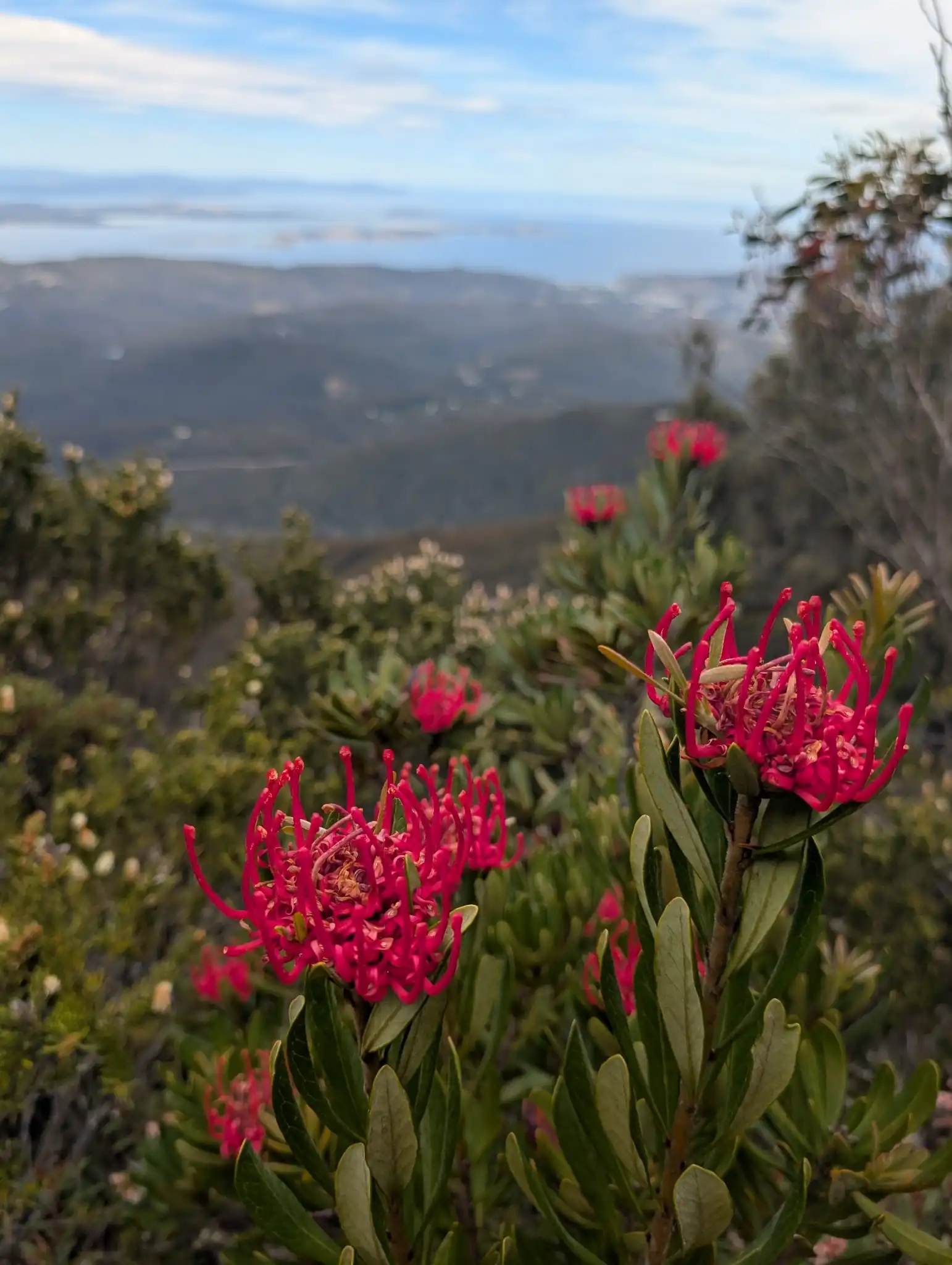
Telopea truncata, the Tasmanian waratah, is an upright, multi-stemmed evergreen shrub native to the moist mountain forests of Tasmania. It produces terminal clusters of ten to thirty-five tubular red flowers that lack the large, showy bracts of its mainland relatives.
This species is distinguished by its narrow, leathery, deep green leaves and fine brownish hairs on young branchlets and unopened buds. It is the most cold-tolerant of the waratahs, adapting well to cool, damp oceanic climates with acidic soils.
Uses & Benefits:
Essentials
At a Glance
Plant Type
Shrub
Height
140"
Width
90"
Light
Full Sun, Partial Sun
Zones
8, 9, 10
Water
Medium
Humidity
High
Lifespan
Long-lived
Native To
Australia (Tasmania)
Toxicity
Non-toxic
Bloom period
Spring – Summer
In flower about 6 months of the year
Planting
How to Grow
- Select a planting site with exceptional drainage and acidic soil (pH 5.0 to 6.0) rich in organic matter.
- Provide full sun to partial shade, ensuring protection from hot afternoon sun in warmer microclimates.
- Water consistently to maintain even moisture, as the root system will collapse under severe dry spells.
- Apply a certified low-phosphorus or native-formulated slow-release fertilizer sparingly once a year in spring.
Pro Tip
Prune spent flowering stems back by half immediately after blooming to stimulate vigorous branching; cutting into old, leafless wood that lacks dormant buds will prevent regrowth.
Keep It Thriving
Care Guide
Do
- Prune spent stems back by half immediately after flowering to maintain a bushy habit.
- Provide consistent moisture and afternoon shade in warmer microclimates.
- Use only low-phosphorus or zero-phosphorus fertilizers to avoid toxicity.
Don't
- Do not plant in heavy clay or poorly drained soils where water can pool.
- Do not prune hard into old, leafless wood lacking dormant buds.
- Do not use standard garden composts or fertilizers containing high phosphorus levels.
Seasonal Care Calendar
| Task | Jan | Feb | Mar | Apr | May | Jun | Jul | Aug | Sep | Oct | Nov | Dec |
|---|---|---|---|---|---|---|---|---|---|---|---|---|
| Fertilize | ||||||||||||
| Mulch | ||||||||||||
| Pest Check | ||||||||||||
| Prune |
Watch Out For
Pests & Diseases
Common Pests
Common Diseases
In the Garden
Landscape Uses & Companions
Landscape Uses
Companion Plants
Multiply
Propagation Methods
Good to Know
Common Questions
Tasmanian Waratah questions
What zones can Tasmanian Waratah grow in?
Tasmanian Waratah is hardy in USDA Zones 8–10. Inside that range it survives winter in the ground; outside it, grow it as an annual or a container plant you protect.
Is Tasmanian Waratah deer resistant?
Not reliably. Deer may browse Tasmanian Waratah, especially tender spring growth — plan on repellents or fencing where pressure is high.
When does Tasmanian Waratah bloom?
Tasmanian Waratah typically blooms in spring through summer. Exact timing shifts a week or two with your zone — Sow's bloom calendar maps it to your garden.
Does Tasmanian Waratah need full sun?
Tasmanian Waratah does best in full sun to part shade. In hot climates, afternoon shade keeps blooms fresher longer.
More Telopea to compare
Keep exploring
Explore the genus
Hardy in your zone?
Grow Tasmanian Waratah with confidence
See it in a design of your actual yard, get zone-matched care reminders, and track it season by season in your garden journal.