
The Story
Plant Bio
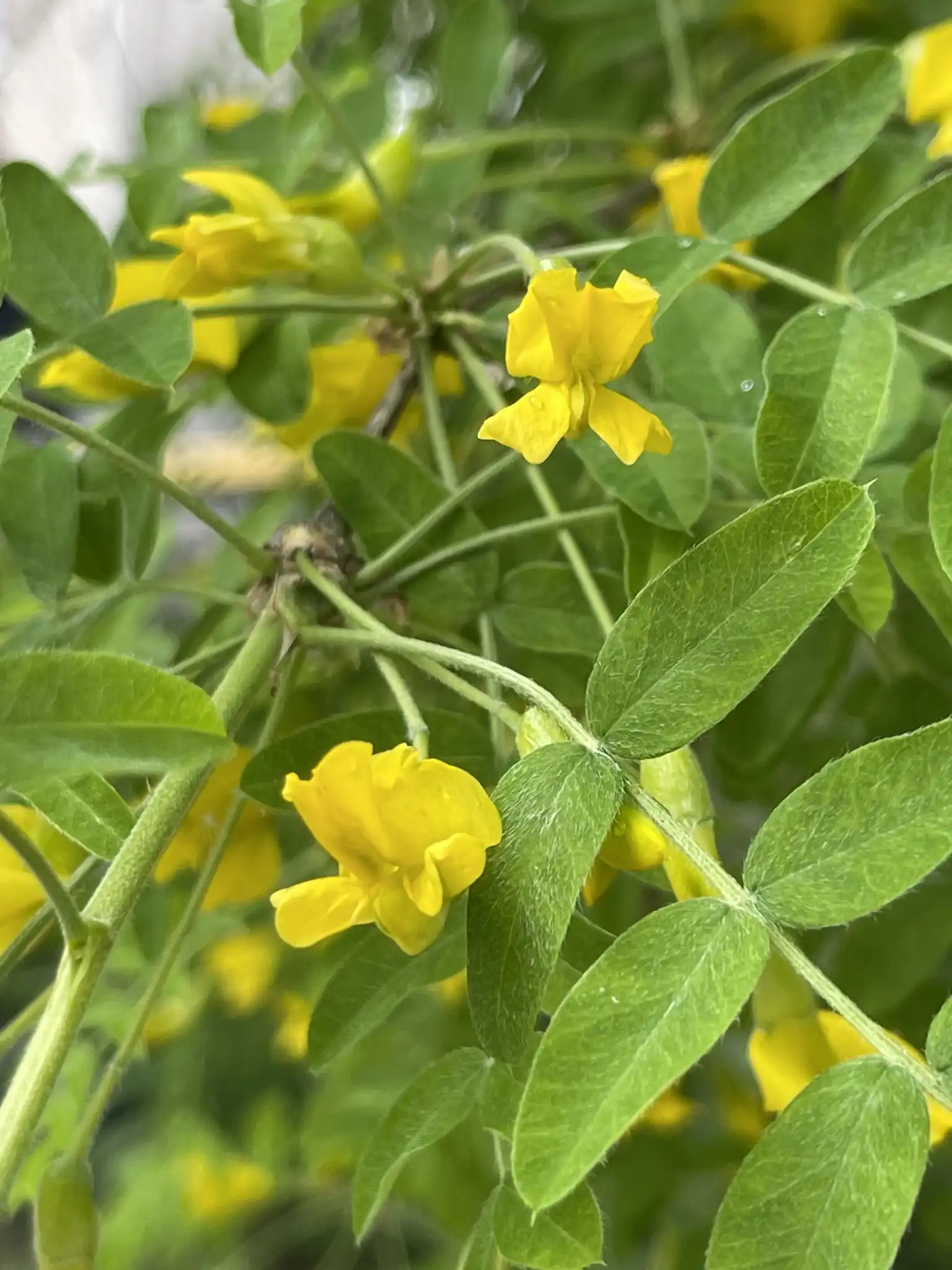
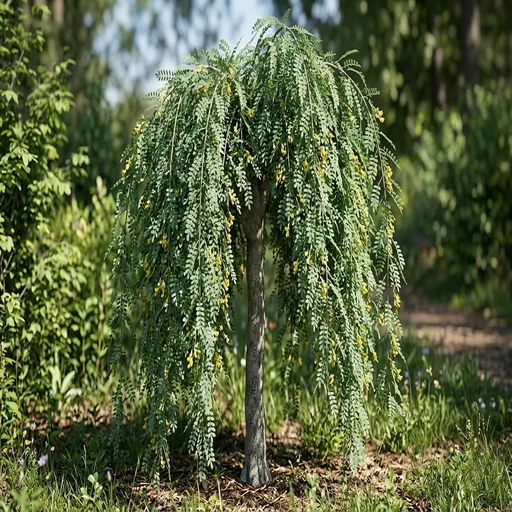
Caragana arborescens, the Siberian pea shrub, is a large multi-stemmed deciduous shrub from Siberia and Manchuria, growing fifteen to twenty feet high and twelve to fifteen across on upright branching. Small bright green pinnate leaves clothe the stems, and yellow pea flowers open along them in May, followed by slim seed pods.
It is a survival plant rather than a showpiece: it takes drought, poor soil, hard cold to zone 2 and constant wind, and is used for shelterbelts where nothing else will hold. It also self-seeds and has become invasive in parts of the upper Midwest, so in those regions a native shrub such as chokeberry is the better windbreak choice.
Uses & Benefits:
Essentials
At a Glance
Plant Type
Shrub
Height
210"
Width
162"
Light
Full Sun
Zones
4, 5, 6, 7
Water
Low to medium
Humidity
Low
Lifespan
Perennial
Native To
Eastern Russia and northern China
Toxicity
Non-toxic
Planting
How to Grow
- Check local invasive listings before planting.
- Plant in autumn or spring in full sun.
- Choose average, dry to medium, well-drained soil.
- Water only through the first season.
- Prune after flowering if a hedge shape is wanted.
- Remove seedlings appearing around the parent plant.
Pro Tip
It fixes its own nitrogen, so feeding is wasted; poor ground gives a tougher, denser plant than improved soil does.
Keep It Thriving
Care Guide
Do
- Use it where conditions defeat other shrubs 🌬️
- Plant it in full sun and free-draining soil ☀️
- Prune after flowering for a hedge ✂️
- Pull up self-sown seedlings 🌱
Don't
- Plant it near natural areas in the upper Midwest ❌
- Feed it; it fixes its own nitrogen ❌
- Expect it to be an ornamental focal point ❌
Seasonal Care Calendar
| Task | Jan | Feb | Mar | Apr | May | Jun | Jul | Aug | Sep | Oct | Nov | Dec |
|---|---|---|---|---|---|---|---|---|---|---|---|---|
| Control | ||||||||||||
| Prune |
Watch Out For
Pests & Diseases
Common Pests
Common Diseases
In the Garden
Landscape Uses & Companions
Landscape Uses
Multiply
Propagation Methods
Good to Know
Common Questions
Siberian Peashrub questions
What zones can Siberian Peashrub grow in?
Siberian Peashrub is hardy in USDA Zones 4–7. Inside that range it survives winter in the ground; outside it, grow it as an annual or a container plant you protect.
Is Siberian Peashrub deer resistant?
Yes — Siberian Peashrub is rated deer-resistant. Deer typically pass it over, though extreme hunger can override any plant's defenses.
When does Siberian Peashrub bloom?
Siberian Peashrub typically blooms in late spring through early summer. Exact timing shifts a week or two with your zone — Sow's bloom calendar maps it to your garden.
Does Siberian Peashrub need full sun?
Siberian Peashrub does best in full sun (6+ hours).
Is Siberian Peashrub drought tolerant?
Yes — once established (usually after the first full season), Siberian Peashrub handles dry spells with minimal watering. Water deeply its first year to build the root system that makes that possible.
More Caragana to compare
Keep exploring
Explore the genus
Hardy in your zone?
Grow Siberian Peashrub with confidence
See it in a design of your actual yard, get zone-matched care reminders, and track it season by season in your garden journal.