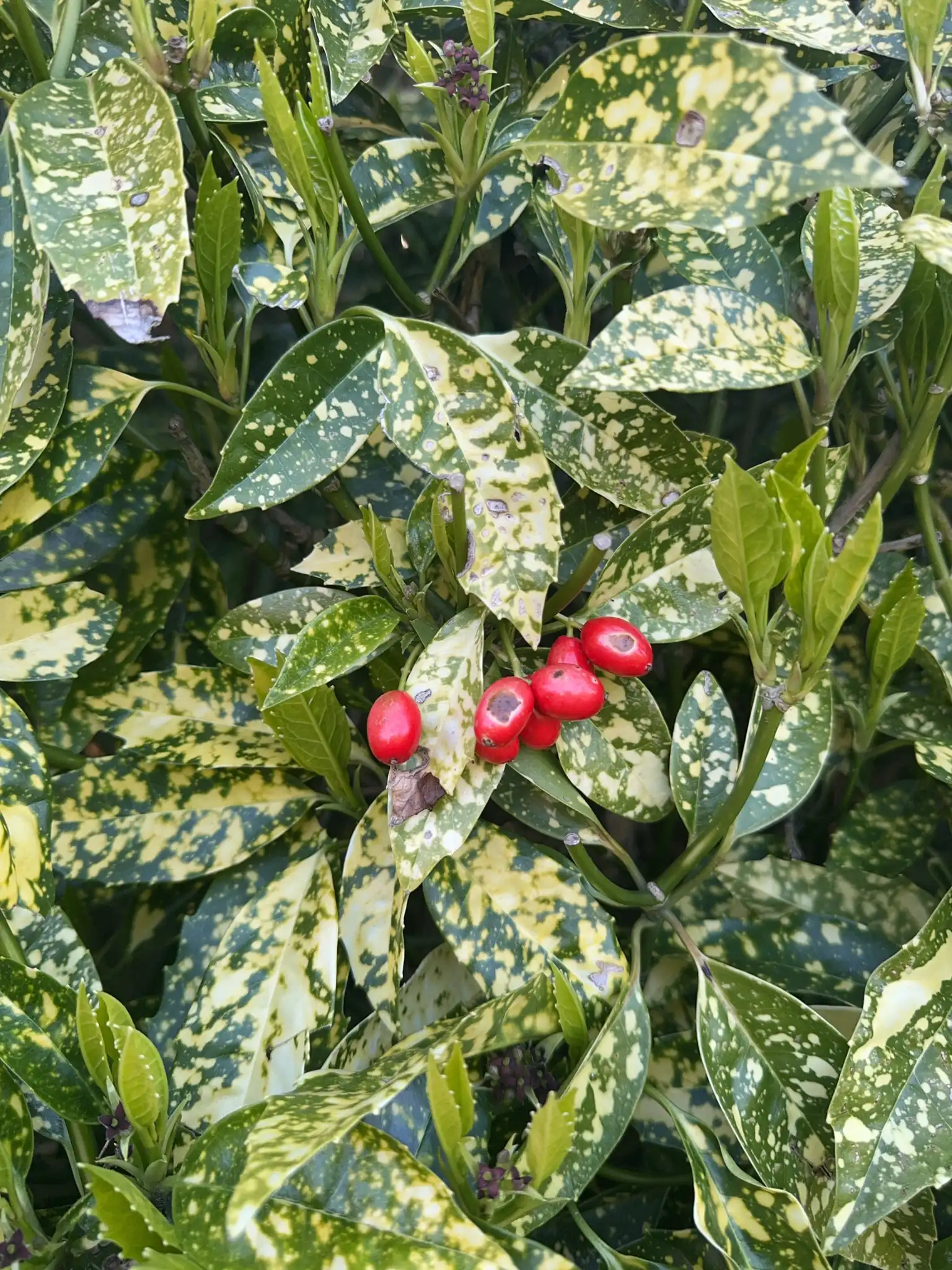
18 named cultivars
 ‘Lemon Flare’Lemon Flare Aucuba
 ‘Limbata’Gold-edged Japanese Laurel
 ‘Male Man’Male Man Japanese Laurel
 ‘Subaru’Japanese Aucuba Subaru
 ‘Bored Female’Bored Female Japanese Laurel
 ‘Sagama’Japanese Aucuba Sagama
 ‘Marmorata’Marmorata Japanese Laurel
 ‘Tatsumaki’Tatsumaki Japanese Laurel
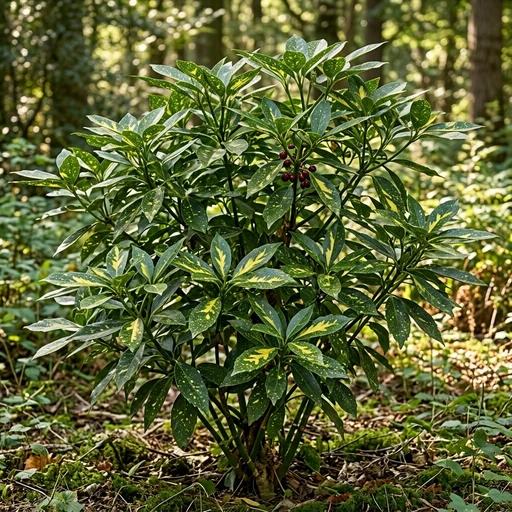 ‘Picturata’Picturata Aucuba
 ‘Variegata’Gold Dust Plant
 ‘Rozannie’Rozannie Japanese Aucuba
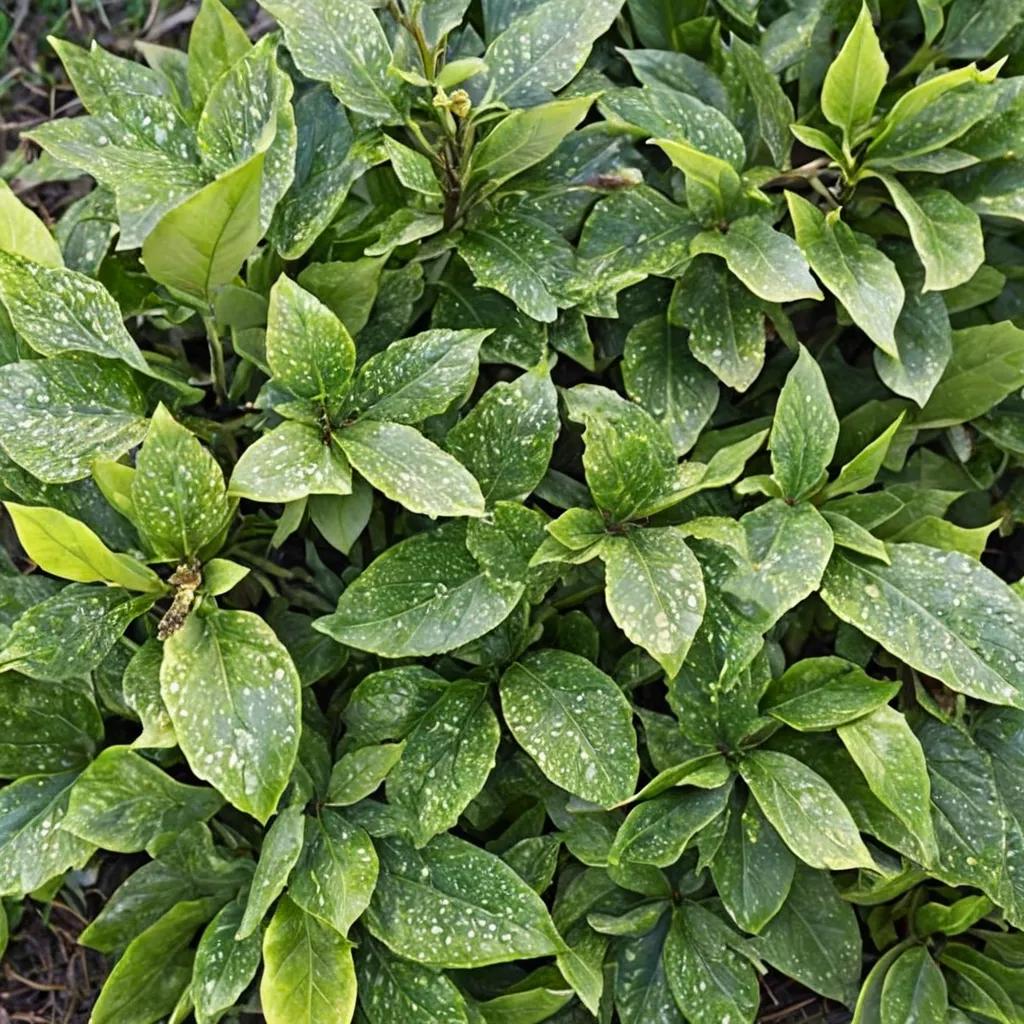 ‘Shilpot’Japanese Aucuba
 ‘Mr Gold Strike’Mr. Gold Strike Spotted Laurel
 ‘Arashiyama’
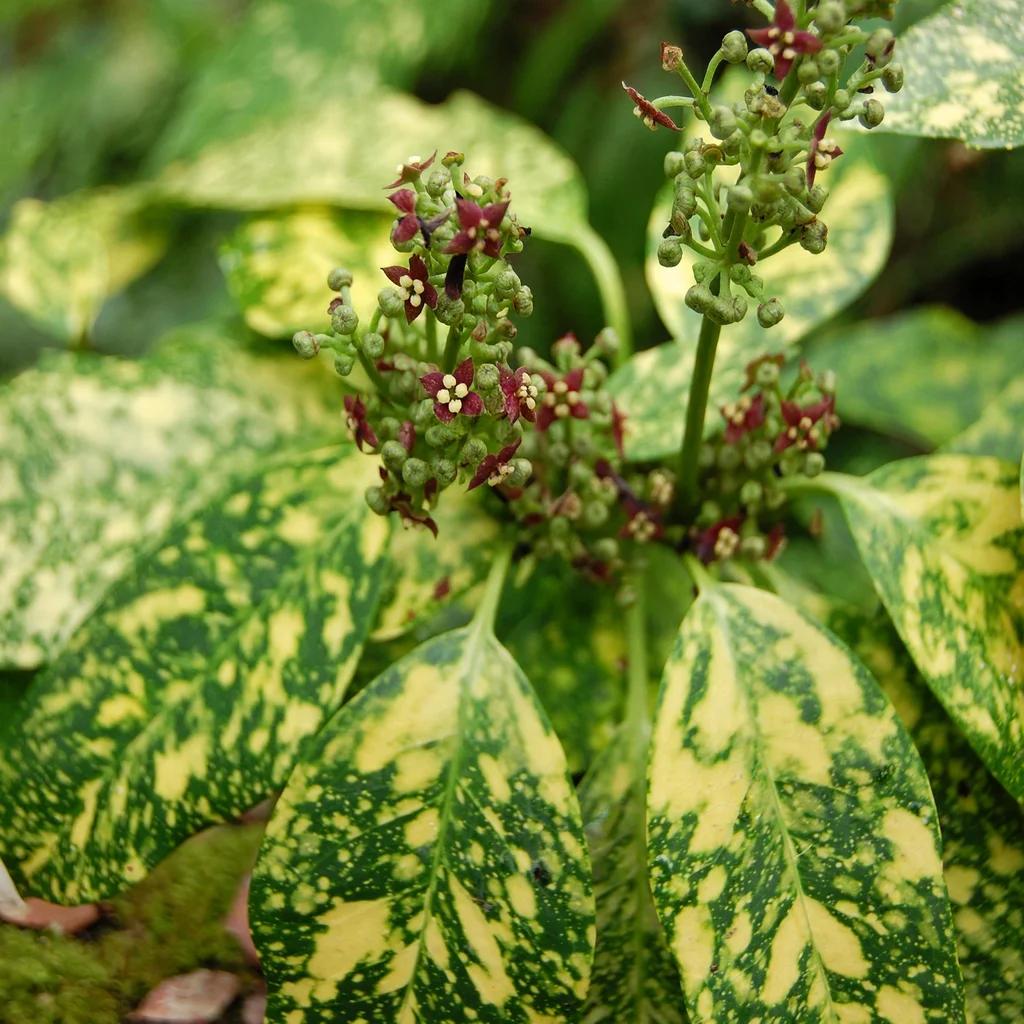 ‘Crotonifolia’Japanese Aucuba
 ‘Variegata Nana’Dwarf Gold Dust Plant
 ‘Hosoba Hoshifu’Japanese Laurel
 ‘Green’Japanese Laurel
The Story
Plant Bio
Aucuba japonica, or Japanese laurel, is a broadleaf evergreen shrub from East Asia and Japan, reaching roughly 6 to 10 ft tall and 4 to 6 ft wide. It forms an erect, rounded, densely arching mound of thick opposite leaves up to 8 in long, elliptic to ovate with teeth on the upper half. Growth is slow and the habit stays tidy without shaping.
It is one of the few shrubs that will hold good colour in deep shade, where dappled light keeps the leaves glossy rather than bleached. Plants are male or female, so a female needs a male nearby before it will carry its red half-inch drupes, which ripen in autumn and persist into spring.
Uses & Benefits:
Essentials
At a Glance
Plant Type
Shrub
Height
96"
Width
60"
Light
Partial Sun, Shade
Zones
7, 8, 9, 10
Water
Medium; keep evenly moist, never waterlogged
Humidity
Tolerates average to humid air
Lifespan
Long-lived; several decades in a settled site
Native To
East Asia and Japan
Toxicity
Toxic if eaten; NCSU lists it as poisonous
Planting
How to Grow
- Choose a site in deep to partial shade, sheltered from afternoon sun.
- Dig a hole twice the root ball width and no deeper than the root ball.
- Work leaf mould or compost into heavy clay before backfilling.
- Set the crown level with the surrounding soil and firm gently.
- Water deeply, then mulch 2-3 in deep, keeping mulch off the stems.
- Plant a male within about 50 ft if you want berries on a female.
Pro Tip
Leaves scorch black in direct sun long before the plant shows thirst, so read the site light before you blame watering.
Keep It Thriving
Care Guide
Do
- Site it in shade or dappled light under a canopy 🌳
- Keep the soil evenly moist through the first two summers 💧
- Prune out any blackened or scorched shoots in spring ✂️
- Plant male and female together if you want autumn berries 🍒
Don't
- Do not plant where midday or afternoon sun strikes the leaves ❌
- Do not let it sit in waterlogged soil over winter ❌
- Do not let children or pets eat the berries ❌
Seasonal Care Calendar
| Task | Jan | Feb | Mar | Apr | May | Jun | Jul | Aug | Sep | Oct | Nov | Dec |
|---|---|---|---|---|---|---|---|---|---|---|---|---|
| Prune And Tidy | ||||||||||||
| Mulch |
Watch Out For
Pests & Diseases
Common Pests
Common Diseases
In the Garden
Landscape Uses & Companions
Landscape Uses
Companion Plants
Multiply
Propagation Methods
Good to Know
Common Questions
Japanese Aucuba questions
What zones can Japanese Aucuba grow in?
Japanese Aucuba is hardy in USDA Zones 7–10. Inside that range it survives winter in the ground; outside it, grow it as an annual or a container plant you protect.
Is Japanese Aucuba deer resistant?
Yes — Japanese Aucuba is rated deer-resistant. Deer typically pass it over, though extreme hunger can override any plant's defenses.
When does Japanese Aucuba bloom?
Japanese Aucuba typically blooms in spring, small and insignificant through late fall. Exact timing shifts a week or two with your zone — Sow's bloom calendar maps it to your garden.
Does Japanese Aucuba need full sun?
Japanese Aucuba does best in part shade.
Is Japanese Aucuba drought tolerant?
Yes — once established (usually after the first full season), Japanese Aucuba handles dry spells with minimal watering. Water deeply its first year to build the root system that makes that possible.
More Aucuba to compare
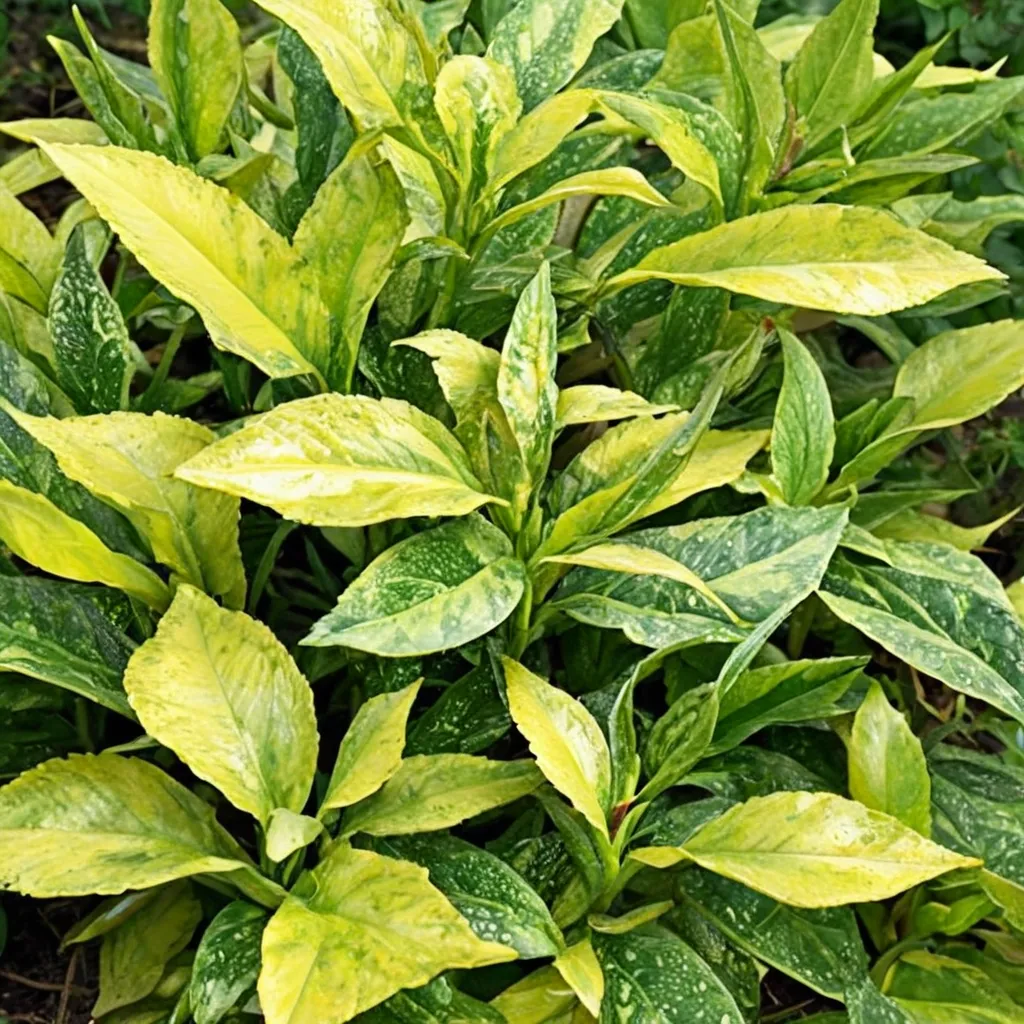
Lemon Flare Aucuba
Aucuba japonica 'Lemon Flare'
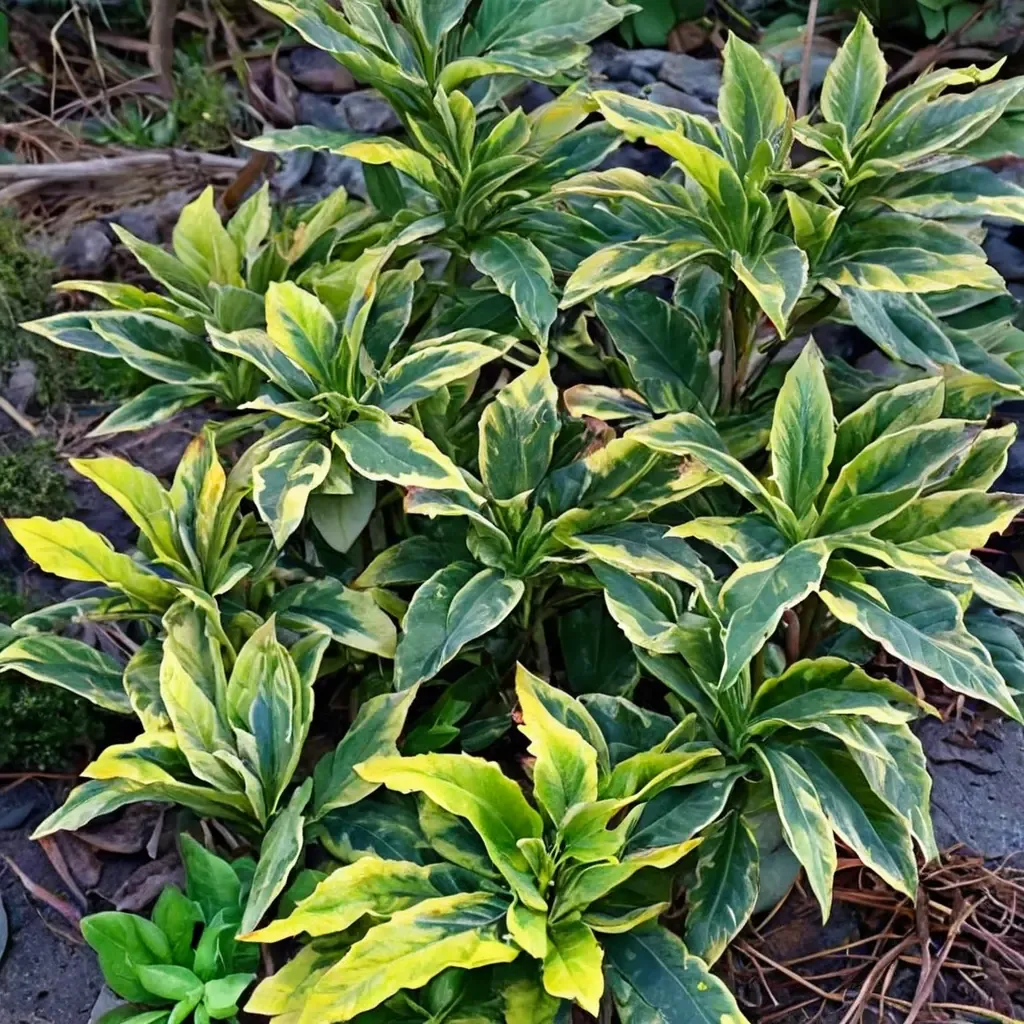
Gold-edged Japanese Laurel
Aucuba japonica 'Limbata'
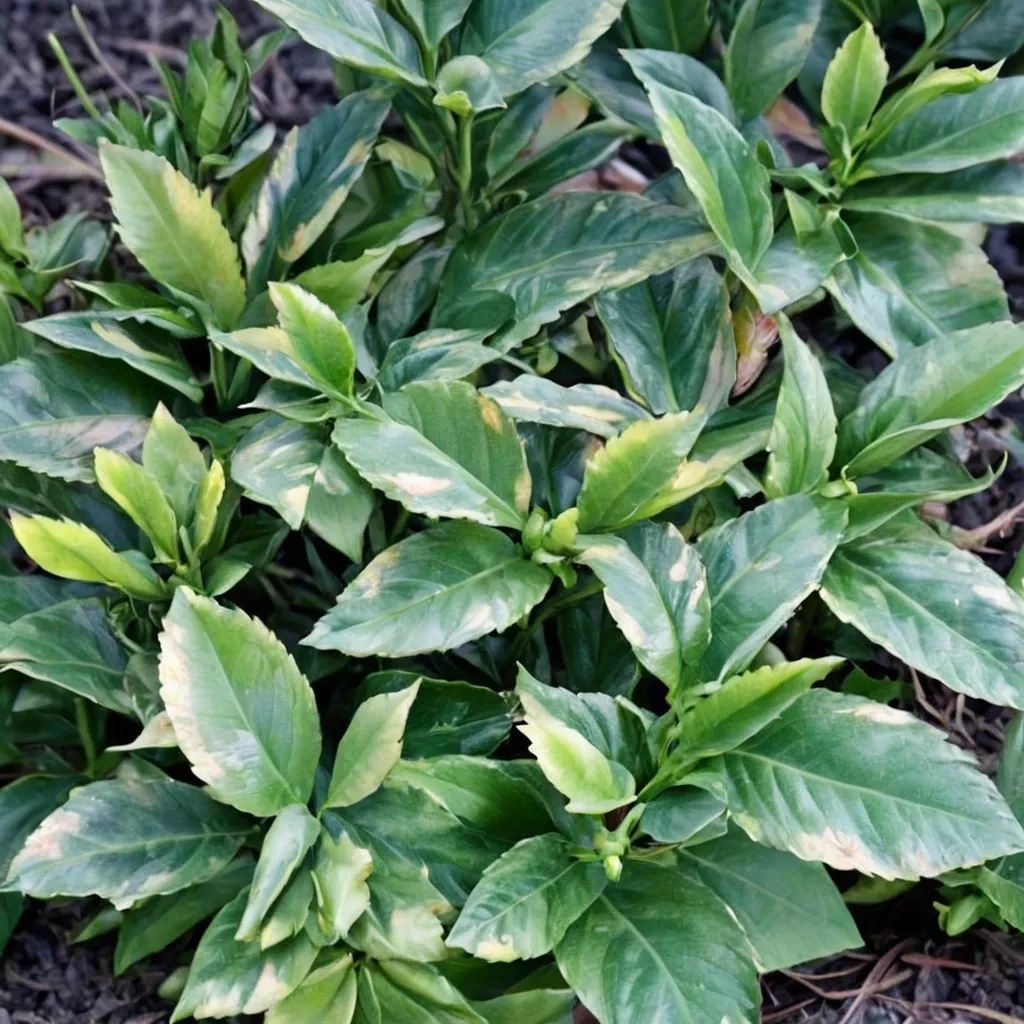
Male Man Japanese Laurel
Aucuba japonica 'Male Man'
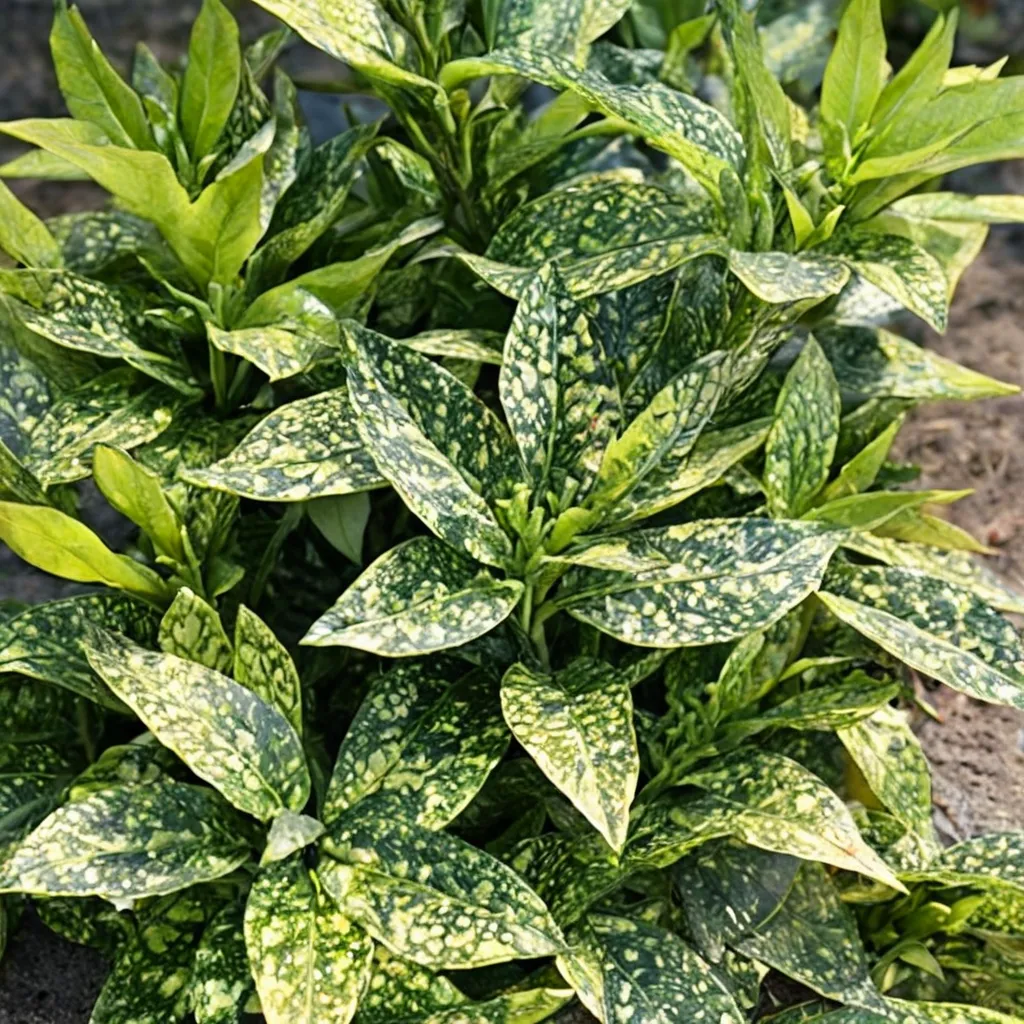
Japanese Aucuba Subaru
Aucuba japonica 'Subaru'
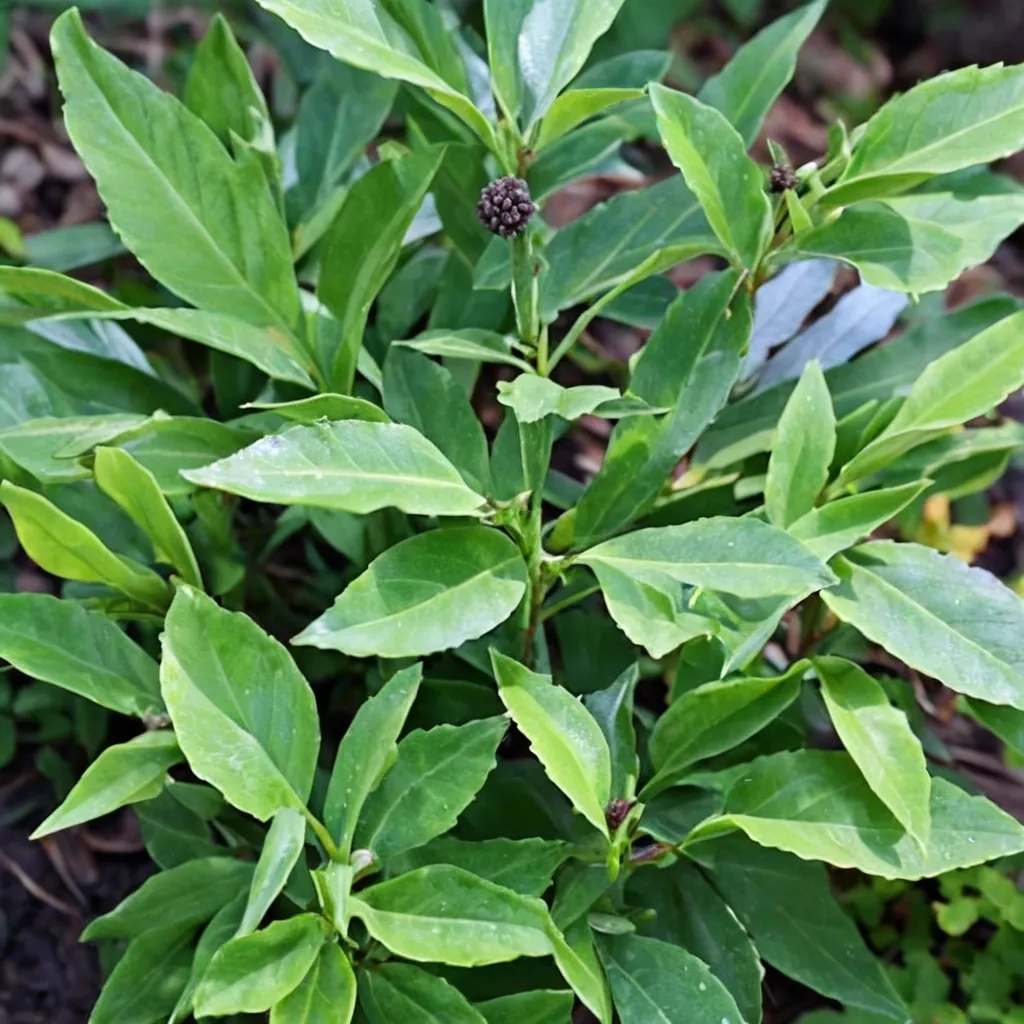
Bored Female Japanese Laurel
Aucuba japonica 'Bored Female'
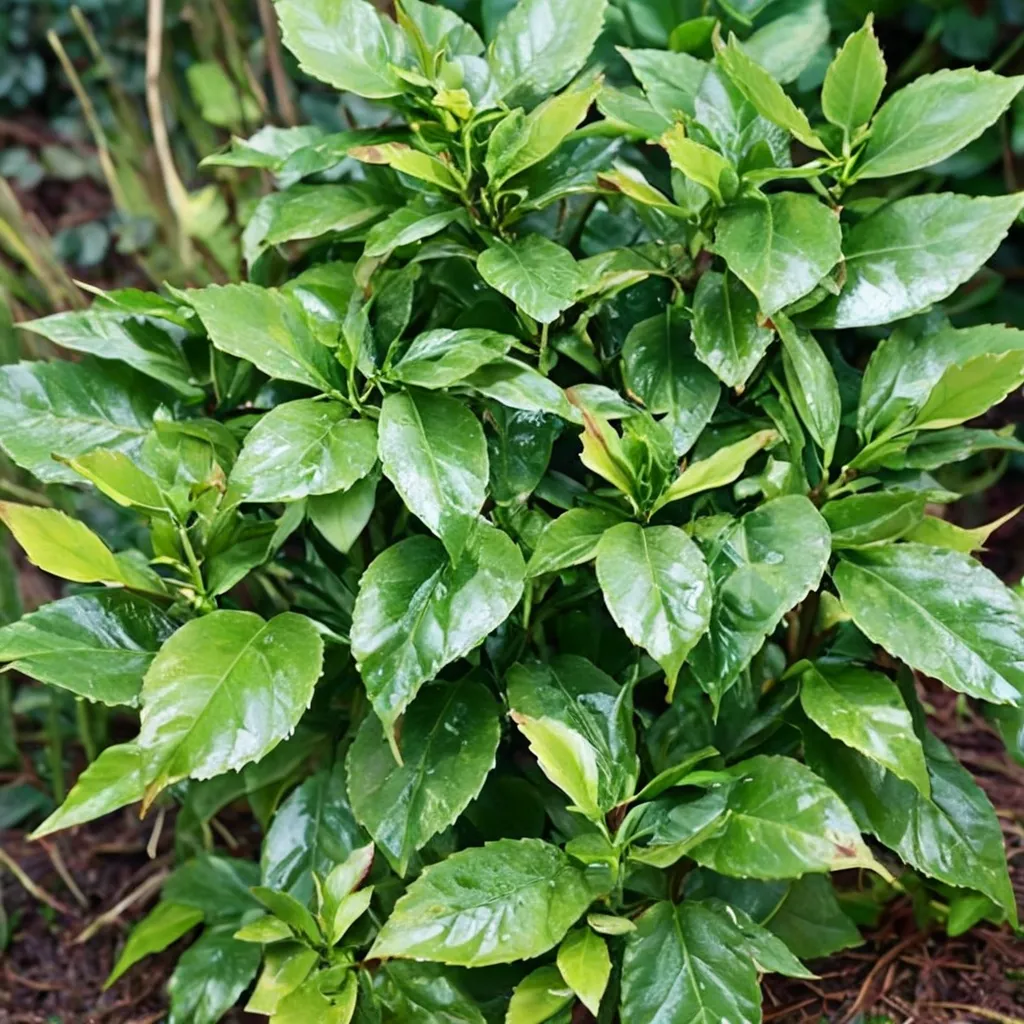
Japanese Aucuba Sagama
Aucuba japonica 'Sagama'
Keep exploring
Explore the genus
Hardy in your zone?
Grow Japanese Aucuba with confidence
See it in a design of your actual yard, get zone-matched care reminders, and track it season by season in your garden journal.