The Story
Plant Bio
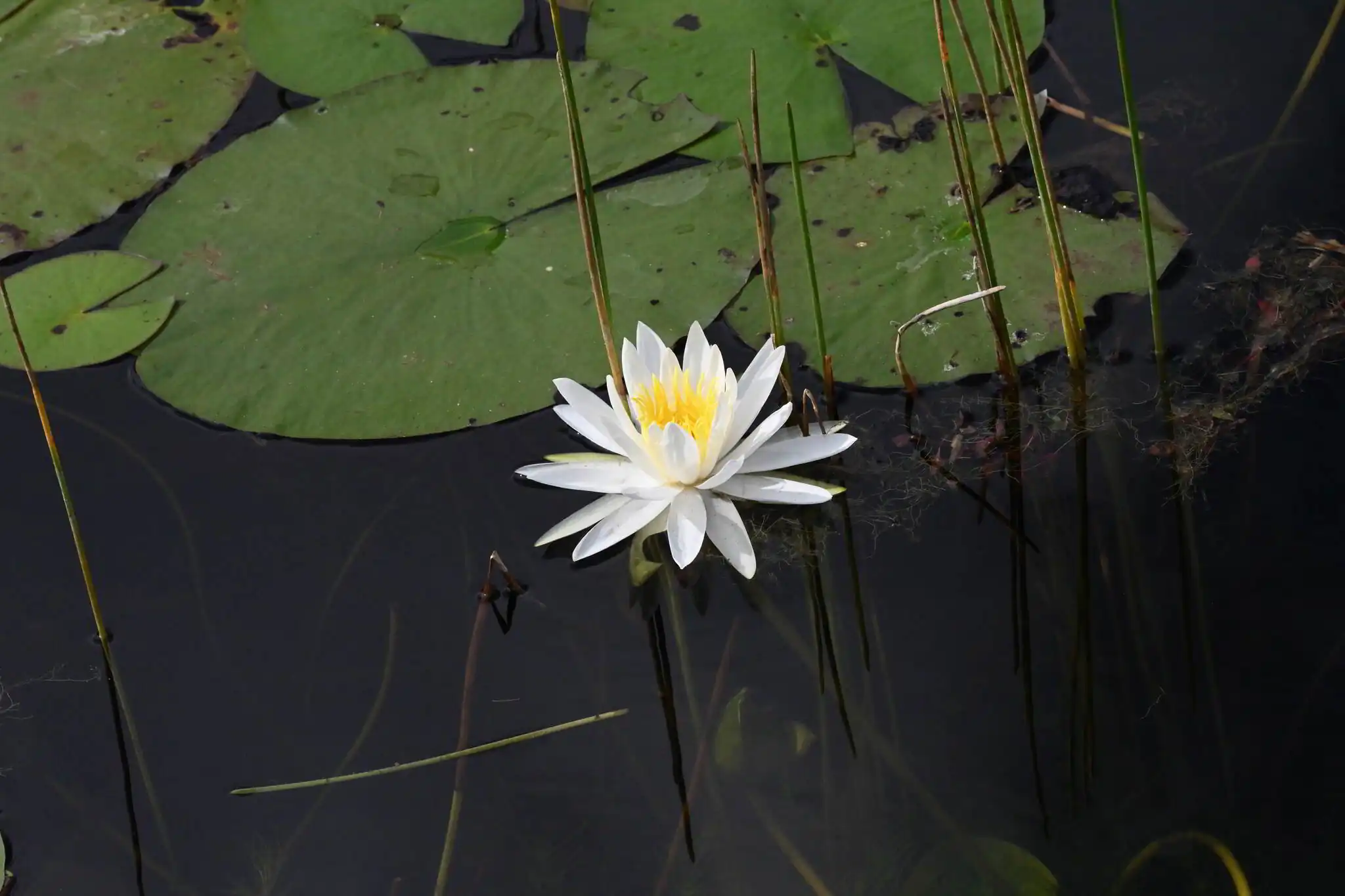
Nymphaea odorata is an aquatic perennial herb characterized by flat, circular green leaves that float on the water surface from creeping horizontal rhizomes. Highly fragrant, cup-shaped white flowers with prominent golden-yellow centers open during the day and close at night throughout the warmer months.
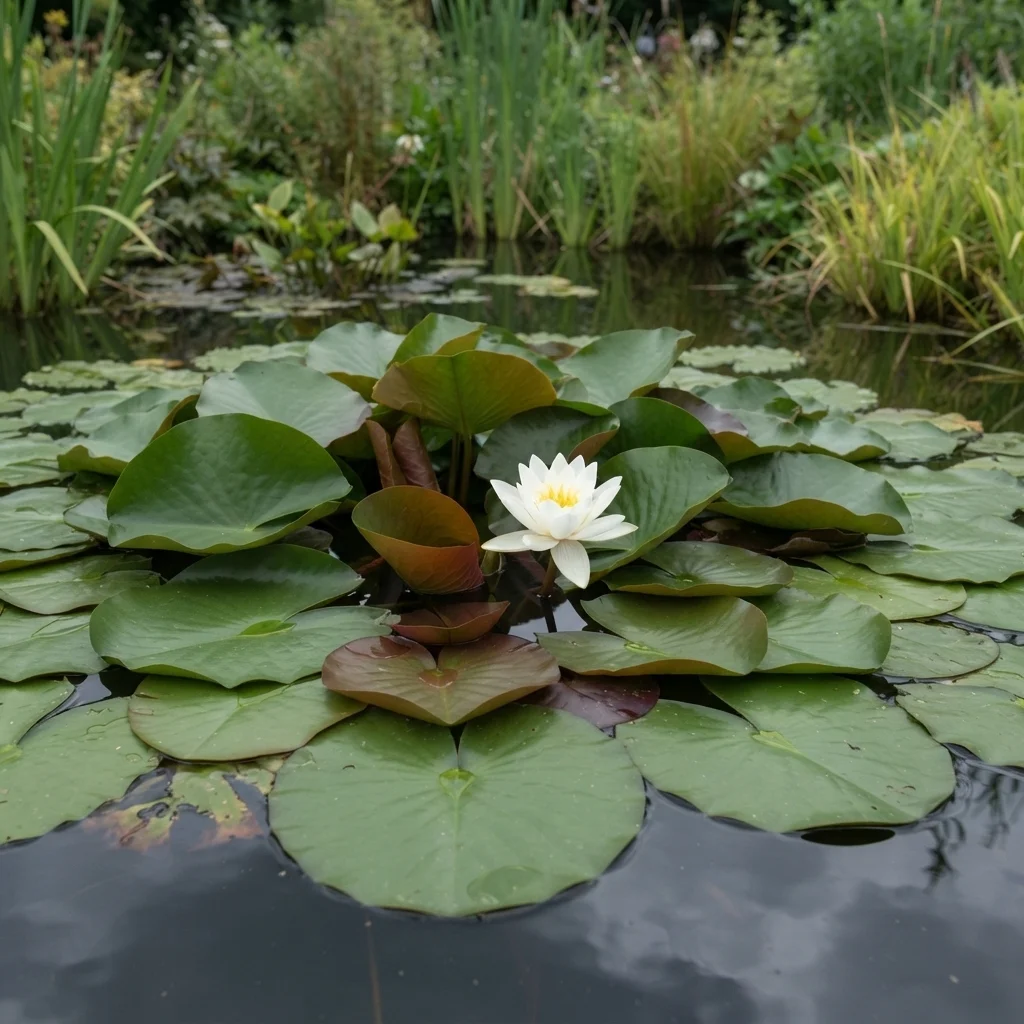
The glossy leaves feature a deep, narrow V-shaped cleft to the center and often display reddish or purplish undersides on new growth. Individual rhizome systems spread three to five feet wide, forming dense floating mats in still freshwater environments.
Uses & Benefits:
Essentials
At a Glance
Plant Type
Aquatic
Height
6"
Width
60"
Light
Full Sun
Zones
4, 5, 6, 7, 8, 9, 10
Water
Aquatic
Humidity
High
Lifespan
Perennial
Native To
North America
Toxicity
Non-toxic
Bloom period
Spring – Early fall
In flower about 7 months of the year
Planting
How to Grow
- Select a heavy, mineral-rich clay or organic loam soil and fill a wide, shallow aquatic planting container.
- Plant the horizontal rhizome at a slight angle with the growing tip exposed just above the soil surface, covering the soil with a layer of pea gravel to prevent fish from disturbing the roots.
- Submerge the container slowly into still freshwater, keeping the crown 12 to 48 inches below the surface.
- Position the container in a location receiving at least five to six hours of direct daily sunlight to ensure robust flowering.
Pro Tip
Press specialized slow-release aquatic fertilizer tablets deep into the soil surrounding the rhizome rather than broadcasting nutrients into the water column, which triggers aggressive algae blooms.
Keep It Thriving
Care Guide
Do
- Cut back yellowing leaves and spent flower stems to the base of the plant regularly to prevent organic rot.
- Use heavy clay or loam rather than standard potting mixes, which float and cloud the water.
- Keep the planting depth between 12 and 48 inches of non-turbid, still water.
Don't
- Do not allow the rhizomes to dry out during propagation or transplanting, as they desiccate rapidly.
- Do not plant in fast-moving or highly turbulent water, which disrupts leaf and flower development.
- Do not fertilize with standard garden fertilizers; use only specialized slow-release aquatic tablets.
Seasonal Care Calendar
| Task | Jan | Feb | Mar | Apr | May | Jun | Jul | Aug | Sep | Oct | Nov | Dec |
|---|---|---|---|---|---|---|---|---|---|---|---|---|
| Divide | ||||||||||||
| Fertilize | ||||||||||||
| Prune | ||||||||||||
| Spring Cleanup |
Watch Out For
Pests & Diseases
Common Pests
Common Diseases
In the Garden
Landscape Uses & Companions
Landscape Uses
Companion Plants
Multiply
Propagation Methods
Good to Know
Common Questions
Fragrant Water Lily questions
What zones can Fragrant Water Lily grow in?
Fragrant Water Lily is hardy in USDA Zones 4–10. Inside that range it survives winter in the ground; outside it, grow it as an annual or a container plant you protect.
Is Fragrant Water Lily deer resistant?
Not reliably. Deer may browse Fragrant Water Lily, especially tender spring growth — plan on repellents or fencing where pressure is high.
When does Fragrant Water Lily bloom?
Fragrant Water Lily typically blooms in spring through early fall. Exact timing shifts a week or two with your zone — Sow's bloom calendar maps it to your garden.
Does Fragrant Water Lily need full sun?
Fragrant Water Lily does best in full sun (6+ hours).
More Nymphaea to compare
Keep exploring
Explore the genus
Grow Fragrant Water Lily with confidence
See it in a design of your actual yard, get zone-matched care reminders, and track it season by season in your garden journal.