The Story
Plant Bio
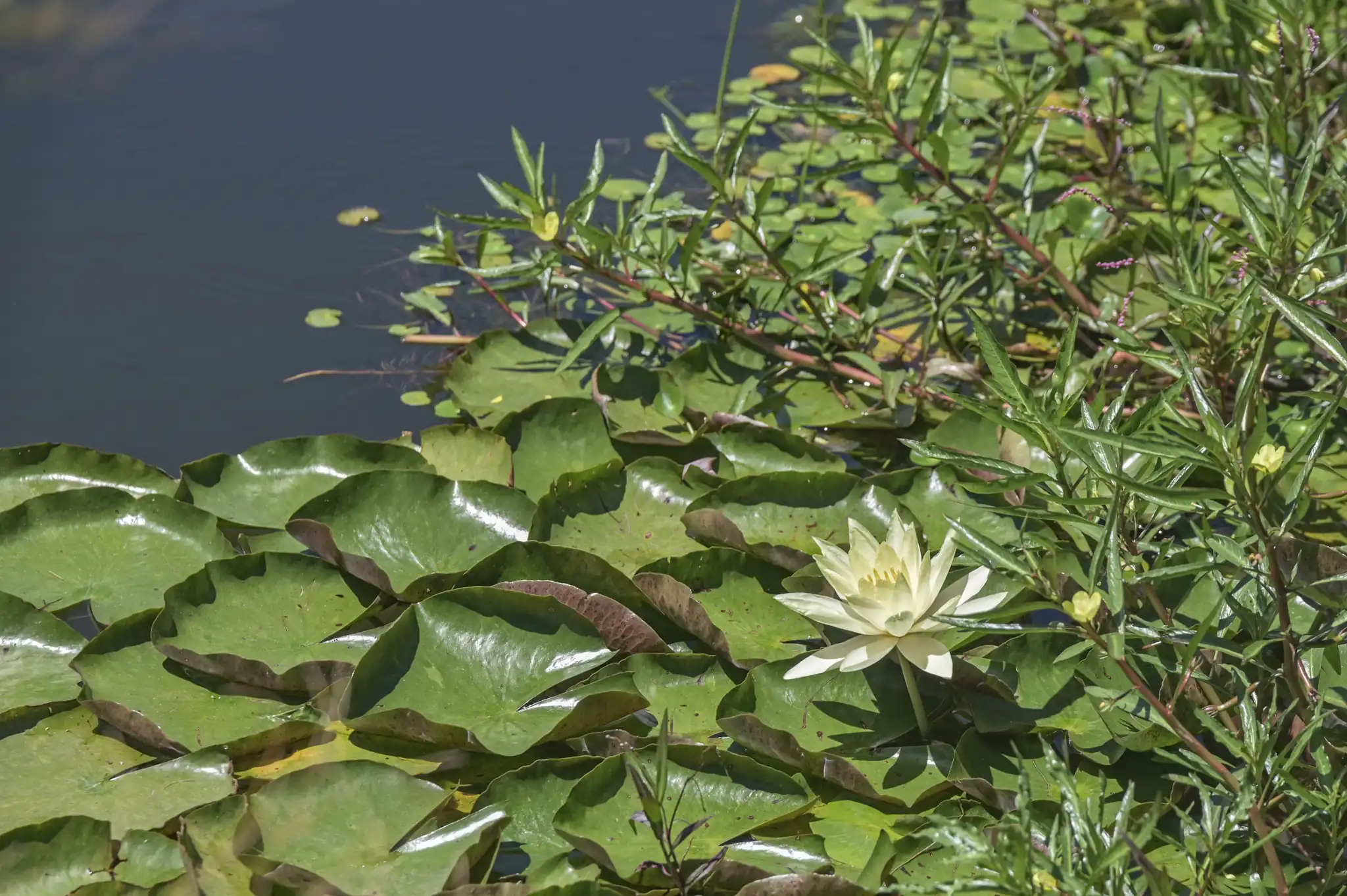
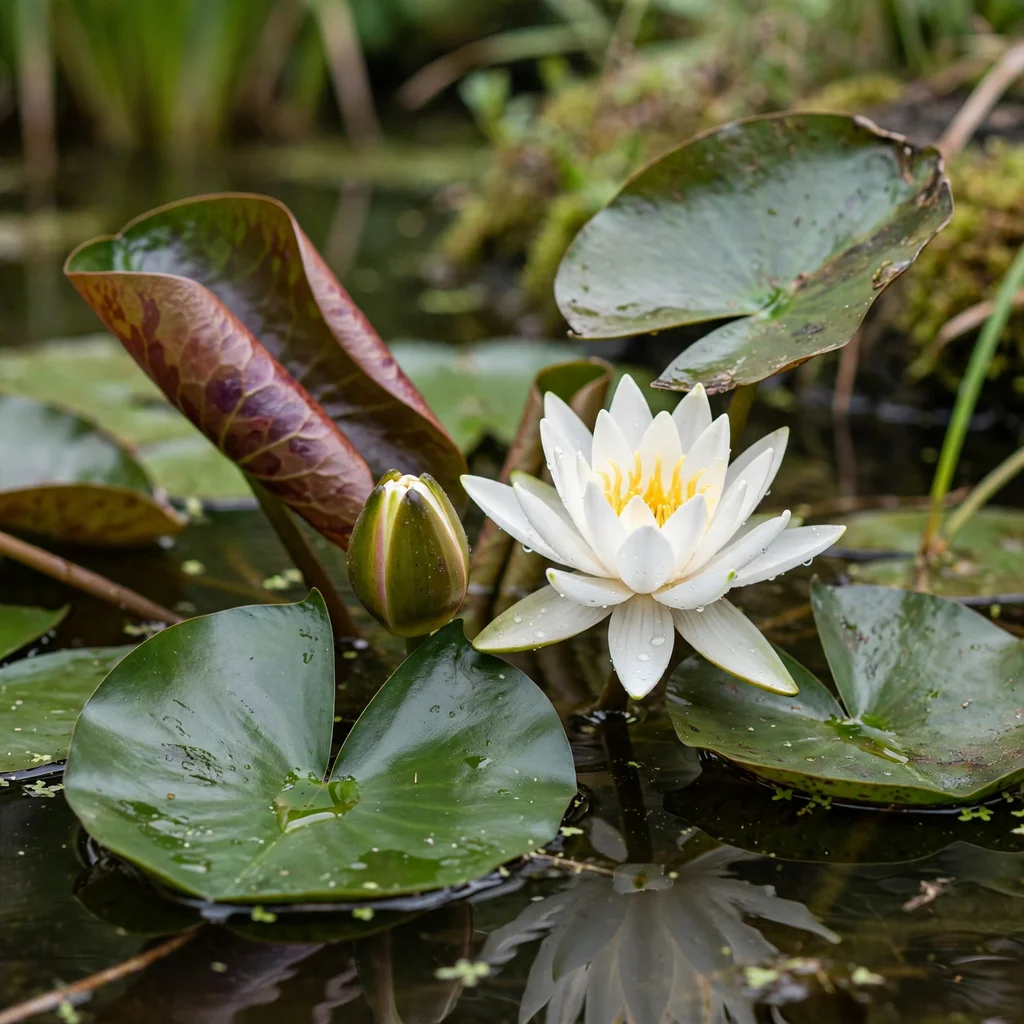
Nymphaea alba, the European white water lily, is an aquatic perennial characterized by broad, dark green leaves that float flat on the water surface from a mud-anchored rhizome. The fragrant, cup-shaped white flowers open during summer days, displaying numerous petals that transition to central yellow stamens.
This species is highly cold-hardy, surviving heavy winter freezes provided its creeping rhizome remains submerged below the ice line. New foliage emerges with a distinct reddish-bronze cast before maturing to deep green above and purplish-red beneath.
Uses & Benefits:
Essentials
At a Glance
Plant Type
Aquatic
Height
6"
Width
60"
Light
Full Sun, Partial Sun
Zones
4, 5, 6, 7, 8, 9, 10
Water
Wet / Submerged
Humidity
Adaptable
Lifespan
Perennial
Native To
Europe, North Africa, Middle East, Temperate Asia
Toxicity
Toxic if Ingested
Bloom period
Summer
In flower about 3 months of the year
Planting
How to Grow
- Select a heavy clay or dense loam substrate, avoiding lightweight potting soils or organic composts that float and cloud the water.
- Position the rhizome horizontally along the soil surface of an aquatic planting basket, leaving the growing tip exposed.
- Anchor the rhizome with a thin layer of pea gravel to prevent it from floating out of the container.
- Lower the container slowly into the pond, initially placing it at a shallow depth of 6 to 12 inches until new leaves reach the surface, then lower it to its permanent depth.
Pro Tip
Plant the creeping rhizome horizontally at the soil surface with the growing tip exposed to light; burying the crown vertically or too deeply in the substrate triggers crown rot.
Keep It Thriving
Care Guide
Do
- Press heavy aquatic fertilizer tablets deep into the root zone every two to three weeks during the active summer growing season.
- Prune yellowing leaves and spent flower stems at their base to prevent organic debris from decomposing in the water.
- Ensure the planting container remains deep enough in the pond to keep the rhizome below the winter freeze line.
Don't
- Do not use standard potting mixes or compost-rich soils, which float away and cause algal blooms.
- Do not bury the growing crown vertically or completely under the soil, as this leads to rhizome rot.
- Do not allow the rhizome to dry out at any point during handling, planting, or division.
Seasonal Care Calendar
| Task | Jan | Feb | Mar | Apr | May | Jun | Jul | Aug | Sep | Oct | Nov | Dec |
|---|---|---|---|---|---|---|---|---|---|---|---|---|
| Divide | ||||||||||||
| Fertilize | ||||||||||||
| Prune | ||||||||||||
| Winter Prep |
Watch Out For
Pests & Diseases
Common Pests
Common Diseases
In the Garden
Landscape Uses & Companions
Landscape Uses
Companion Plants
Multiply
Propagation Methods
Good to Know
Common Questions
European White Water Lily questions
What zones can European White Water Lily grow in?
European White Water Lily is hardy in USDA Zones 4–10. Inside that range it survives winter in the ground; outside it, grow it as an annual or a container plant you protect.
Is European White Water Lily deer resistant?
Not reliably. Deer may browse European White Water Lily, especially tender spring growth — plan on repellents or fencing where pressure is high.
When does European White Water Lily bloom?
European White Water Lily typically blooms in summer through summer. Exact timing shifts a week or two with your zone — Sow's bloom calendar maps it to your garden.
Does European White Water Lily need full sun?
European White Water Lily does best in full sun to part shade. In hot climates, afternoon shade keeps blooms fresher longer.
More Nymphaea to compare
Keep exploring
Explore the genus
Grow European White Water Lily with confidence
See it in a design of your actual yard, get zone-matched care reminders, and track it season by season in your garden journal.