The Story
Plant Bio
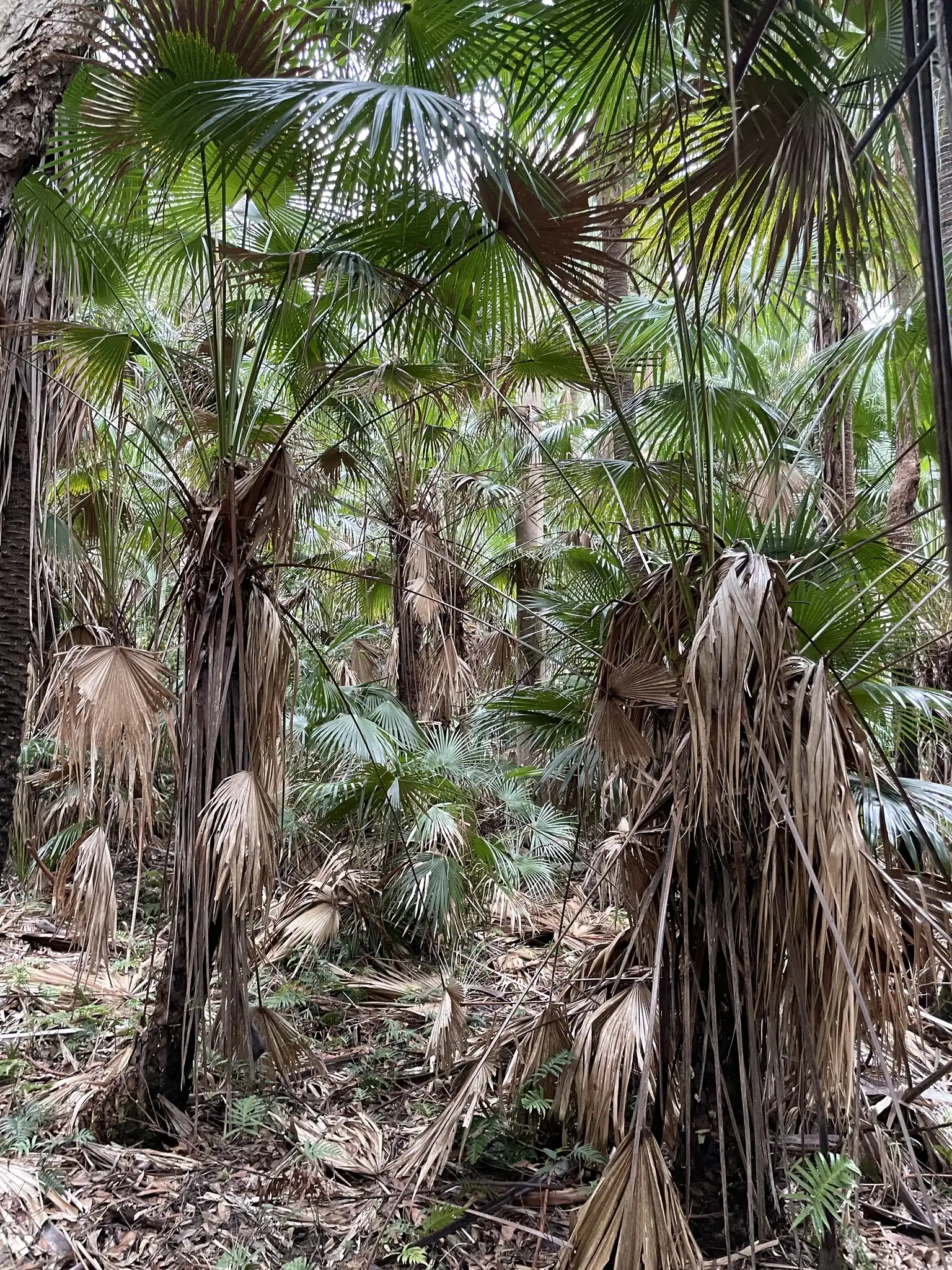
Livistona australis, the Australian cabbage palm, is a tall, solitary canopy palm featuring a slender, columnar trunk ringed with narrow leaf scars. It is crowned with a dense, rounded head of large, glossy dark green fan-shaped leaves that are deeply divided into segments with pendulous tips.
This species is distinguished by its long petioles armed with short, curved black spines along the margins and its large, cream-white to pale yellow summer inflorescences. Once established, it exhibits moderate frost tolerance down to 20 to 25 degrees Fahrenheit, making it one of the hardier fan palms for warm-temperate landscapes.
Uses & Benefits:
Essentials
At a Glance
Plant Type
Tree
Height
984"
Width
2362"
Light
Full Sun, Partial Sun
Zones
9, 10
Water
Moderate
Humidity
High
Native To
Australia
Toxicity
Non-toxic
Bloom period
Summer
In flower about 3 months of the year
Planting
How to Grow
- Select a planting site in full sun to partial shade with moist, well-drained soil.
- Dig a hole twice as wide as the root ball and of equal depth, ensuring the trunk base sits level with the surrounding soil.
- Water deeply and regularly during the establishment phase to encourage a deep, wind-firm root system.
- Apply a balanced, slow-release palm fertilizer sparingly in the spring to support seasonal growth.
Pro Tip
Amateurs frequently commit the error of over-pruning by removing downward-curving fronds that still retain green energy, which starves the plant; professional growers know that this palm requires full sun to develop a strong, wind-firm trunk, as deep shade results in weak, structurally compromised stems.
Keep It Thriving
Care Guide
Do
- Do allow dead fronds to form a natural protective skirt or remove them cautiously by hand if a clean trunk is desired.
- Do provide regular moisture during dry spells to maintain optimal foliage appearance and plant health.
- Do protect young, newly planted specimens from hard frosts until they are fully established.
Don't
- Do not prune green fronds that hang below the horizontal level, as premature removal deprives the plant of essential energy.
- Do not plant in deep shade, which causes the trunk to become excessively leggy, weak, and structurally compromised.
- Do not allow container media or heavy soils to remain chronically waterlogged, which invites root rot.
Seasonal Care Calendar
| Task | Jan | Feb | Mar | Apr | May | Jun | Jul | Aug | Sep | Oct | Nov | Dec |
|---|---|---|---|---|---|---|---|---|---|---|---|---|
| Fertilize | ||||||||||||
| Pest Check | ||||||||||||
| Prune | ||||||||||||
| Winter Prep |
Watch Out For
Pests & Diseases
Common Pests
Common Diseases
In the Garden
Landscape Uses & Companions
Landscape Uses
Multiply
Propagation Methods
Good to Know
Common Questions
Australian Cabbage Palm questions
What zones can Australian Cabbage Palm grow in?
Australian Cabbage Palm is hardy in USDA Zones 9–10. Inside that range it survives winter in the ground; outside it, grow it as an annual or a container plant you protect.
Is Australian Cabbage Palm deer resistant?
Yes — Australian Cabbage Palm is rated deer-resistant. Deer typically pass it over, though extreme hunger can override any plant's defenses.
When does Australian Cabbage Palm bloom?
Australian Cabbage Palm typically blooms in summer through summer. Exact timing shifts a week or two with your zone — Sow's bloom calendar maps it to your garden.
Does Australian Cabbage Palm need full sun?
Australian Cabbage Palm does best in full sun to part shade. In hot climates, afternoon shade keeps blooms fresher longer.
Is Australian Cabbage Palm drought tolerant?
Yes — once established (usually after the first full season), Australian Cabbage Palm handles dry spells with minimal watering. Water deeply its first year to build the root system that makes that possible.
More Livistona to compare
Keep exploring
Explore the genus
Hardy in your zone?
Grow Australian Cabbage Palm with confidence
See it in a design of your actual yard, get zone-matched care reminders, and track it season by season in your garden journal.