The Story
Plant Bio
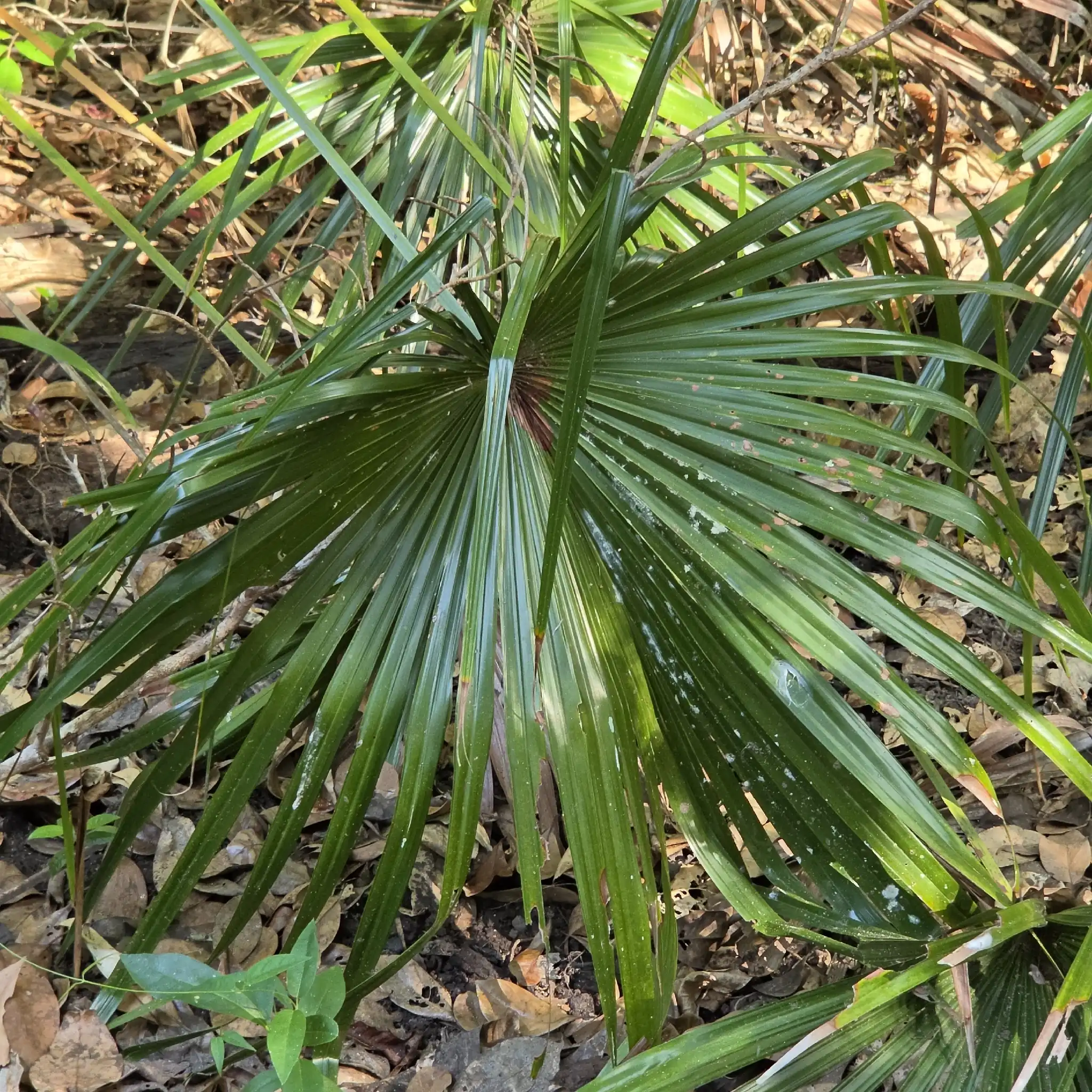
Livistona benthamii, commonly known as Bentham's fan palm, is a single-stemmed tropical palm native to northern Australia and parts of New Guinea. It develops a dense, rounded crown of glossy green, costapalmate leaves with gracefully drooping tips atop a straight trunk that retains its old petiole bases.
This species is distinguished by its heavily armed, greenish-yellow petioles lined with prominent, curved black spines. It is highly adapted to seasonally wet environments, tolerating waterlogged soils and high humidity far better than most other fan palms.
Uses & Benefits:
Essentials
At a Glance
Plant Type
Tropical
Height
708"
Width
1181"
Light
Full Sun, Partial Sun
Zones
10
Water
High
Humidity
High
Lifespan
Long-lived
Native To
Oceania (Northern Australia, New Guinea, Indonesia)
Toxicity
Non-toxic (but features extremely sharp spines)
Bloom period
Spring – Summer
In flower about 6 months of the year
Planting
How to Grow
- Select a planting site with rich, organic-heavy soil that receives partial shade when young, transitioning to full sun as the palm matures.
- Dig a hole twice the width of the root ball and set the palm at the same depth it was growing in its container.
- Water deeply and regularly to maintain consistent soil moisture, especially during the active spring and summer growing seasons.
- Apply a balanced, slow-release palm fertilizer containing essential micronutrients twice a year during the warm months.
Pro Tip
When growing in containers, use deep pots to accommodate the long initial taproot, and avoid overwatering during cooler months to prevent damping-off.
Keep It Thriving
Care Guide
Do
- Prune only completely dead or withered brown fronds to preserve the natural stepped trunk structure.
- Provide high humidity and regular moisture to mimic its native seasonal monsoon habitat.
- Protect young specimens from freezing temperatures below 32°F (0°C).
Don't
- Do not cut into green leaf tissue or attempt to shave the persistent petiole stubs from the trunk.
- Do not allow container-grown specimens to sit in stagnant, poorly drained water in temperate climates.
- Do not harvest the edible apical bud, as removing this single growing point will kill the palm.
Seasonal Care Calendar
| Task | Jan | Feb | Mar | Apr | May | Jun | Jul | Aug | Sep | Oct | Nov | Dec |
|---|---|---|---|---|---|---|---|---|---|---|---|---|
| Fertilize | ||||||||||||
| Pest Check | ||||||||||||
| Prune | ||||||||||||
| Winter Prep |
Watch Out For
Pests & Diseases
Common Pests
Common Diseases
In the Garden
Landscape Uses & Companions
Landscape Uses
Companion Plants
Multiply
Propagation Methods
Good to Know
Common Questions
Bentham's Fan Palm questions
What zones can Bentham's Fan Palm grow in?
Bentham's Fan Palm is hardy in USDA Zone 10. Inside that range it survives winter in the ground; outside it, grow it as an annual or a container plant you protect.
Is Bentham's Fan Palm deer resistant?
Yes — Bentham's Fan Palm is rated deer-resistant. Deer typically pass it over, though extreme hunger can override any plant's defenses.
When does Bentham's Fan Palm bloom?
Bentham's Fan Palm typically blooms in spring through summer. Exact timing shifts a week or two with your zone — Sow's bloom calendar maps it to your garden.
Does Bentham's Fan Palm need full sun?
Bentham's Fan Palm does best in full sun to part shade. In hot climates, afternoon shade keeps blooms fresher longer.
More Livistona to compare
Keep exploring
Explore the genus
Hardy in your zone?
Grow Bentham's Fan Palm with confidence
See it in a design of your actual yard, get zone-matched care reminders, and track it season by season in your garden journal.