Species
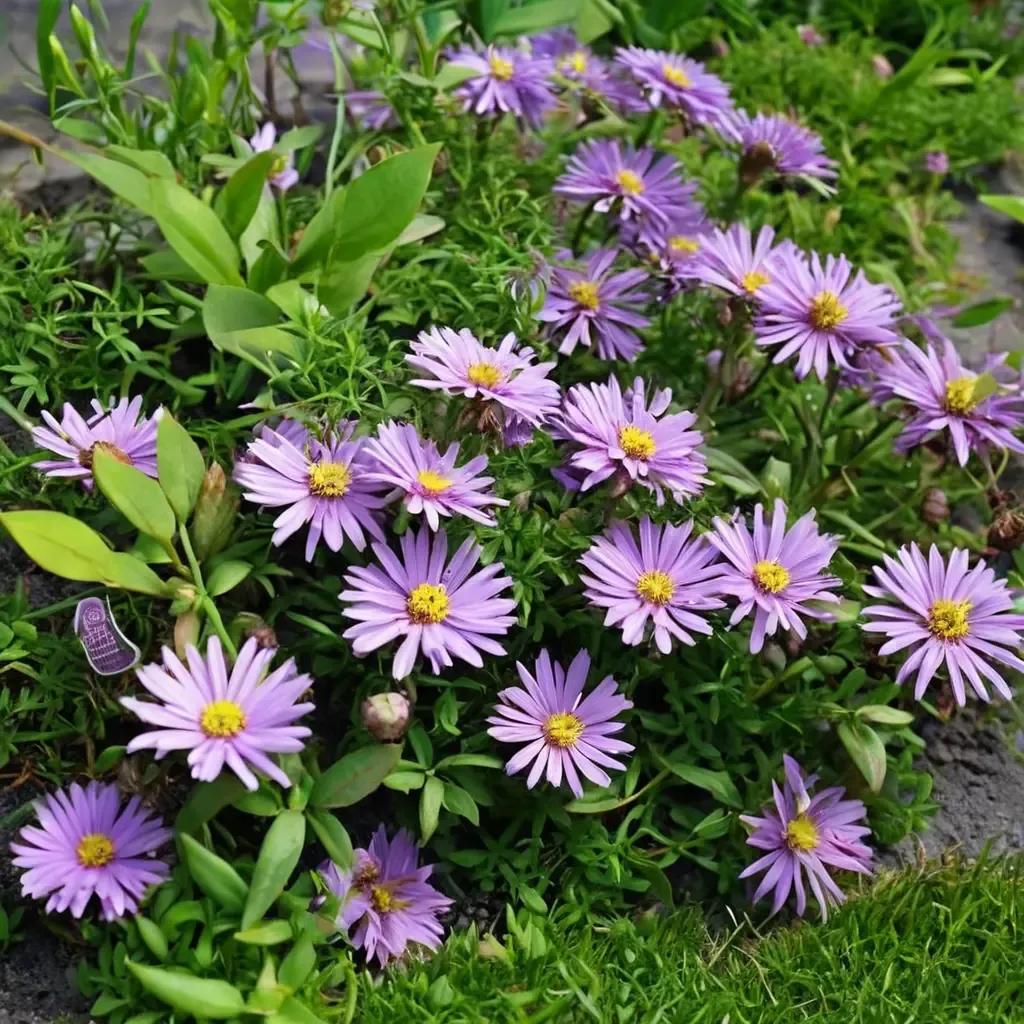 Aster dumosusBushy Aster
3 other cultivars


The Story
Plant Bio
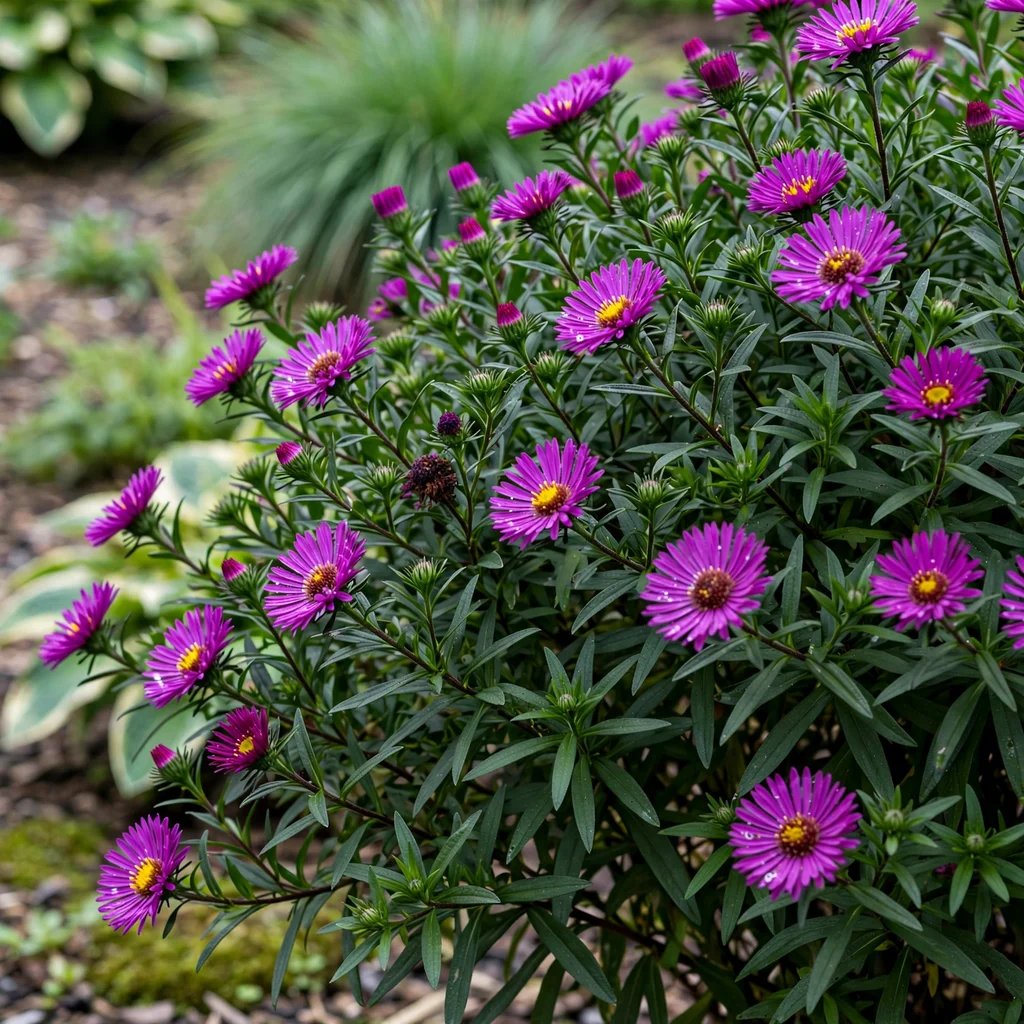
Symphyotrichum dumosum is a mounding herbaceous perennial native to eastern and central North America, where it colonizes open fields and meadows. The species features a dense, bushy framework of narrow, lanceolate leaves that support terminal clusters of daisy-like flower heads from late summer into fall.
'Jenny' is a compact, low-growing cultivar that forms neat, rounded cushions reaching twelve to twenty inches in height. It is distinguished by its half-double to double flower heads of deep red-purple ray florets surrounding bright yellow central discs.
Uses & Benefits:
Essentials
At a Glance
Plant Type
Perennial
Height
20"
Width
16"
Light
Full Sun, Partial Sun
Zones
4, 5, 6, 7, 8
Water
Moderate
Humidity
Moderate
Lifespan
Perennial
Native To
North America
Toxicity
Non-toxic
Bloom period
Late summer – Fall
In flower about 4 months of the year
Planting
How to Grow
- Select a planting site in full sun to very light shade with fertile, well-drained soil.
- Amend the planting area with organic compost to improve soil structure and moisture retention.
- Space plants twelve to sixteen inches apart to ensure adequate air circulation between mature clumps.
- Water deeply and regularly during the first growing season to establish a deep root system.
Pro Tip
Avoid high-nitrogen fertilizers, which stimulate weak, floppy stems susceptible to powdery mildew; instead, maintain consistent soil moisture and high air circulation around the foliage to prevent fungal outbreaks.
Keep It Thriving
Care Guide
Do
- Cut the entire plant back to ground level in late winter or early spring before new shoots emerge.
- Divide established clumps every three to four years in spring to maintain vigor and prevent center die-out.
- Apply a balanced, slow-release organic fertilizer or a thin layer of compost in early spring.
Don't
- Do not water the foliage directly; use drip irrigation or water at the base to minimize powdery mildew.
- Do not prune into old, leafless woody stems during the active growing season.
- Do not allow the soil to become waterlogged, especially during winter, as this induces root rot.
Seasonal Care Calendar
| Task | Jan | Feb | Mar | Apr | May | Jun | Jul | Aug | Sep | Oct | Nov | Dec |
|---|---|---|---|---|---|---|---|---|---|---|---|---|
| Divide | ||||||||||||
| Fertilize | ||||||||||||
| Pest Check | ||||||||||||
| Prune |
Watch Out For
Pests & Diseases
Common Pests
Common Diseases
In the Garden
Landscape Uses & Companions
Landscape Uses
Multiply
Propagation Methods
Good to Know
Common Questions
Bushy Aster questions
What zones can Bushy Aster grow in?
Bushy Aster is hardy in USDA Zones 4–8. Inside that range it survives winter in the ground; outside it, grow it as an annual or a container plant you protect.
Is Bushy Aster deer resistant?
Not reliably. Deer may browse Bushy Aster, especially tender spring growth — plan on repellents or fencing where pressure is high.
When does Bushy Aster bloom?
Bushy Aster typically blooms in late summer through fall. Exact timing shifts a week or two with your zone — Sow's bloom calendar maps it to your garden.
Does Bushy Aster need full sun?
Bushy Aster does best in full sun to part shade. In hot climates, afternoon shade keeps blooms fresher longer.
More Aster to compare
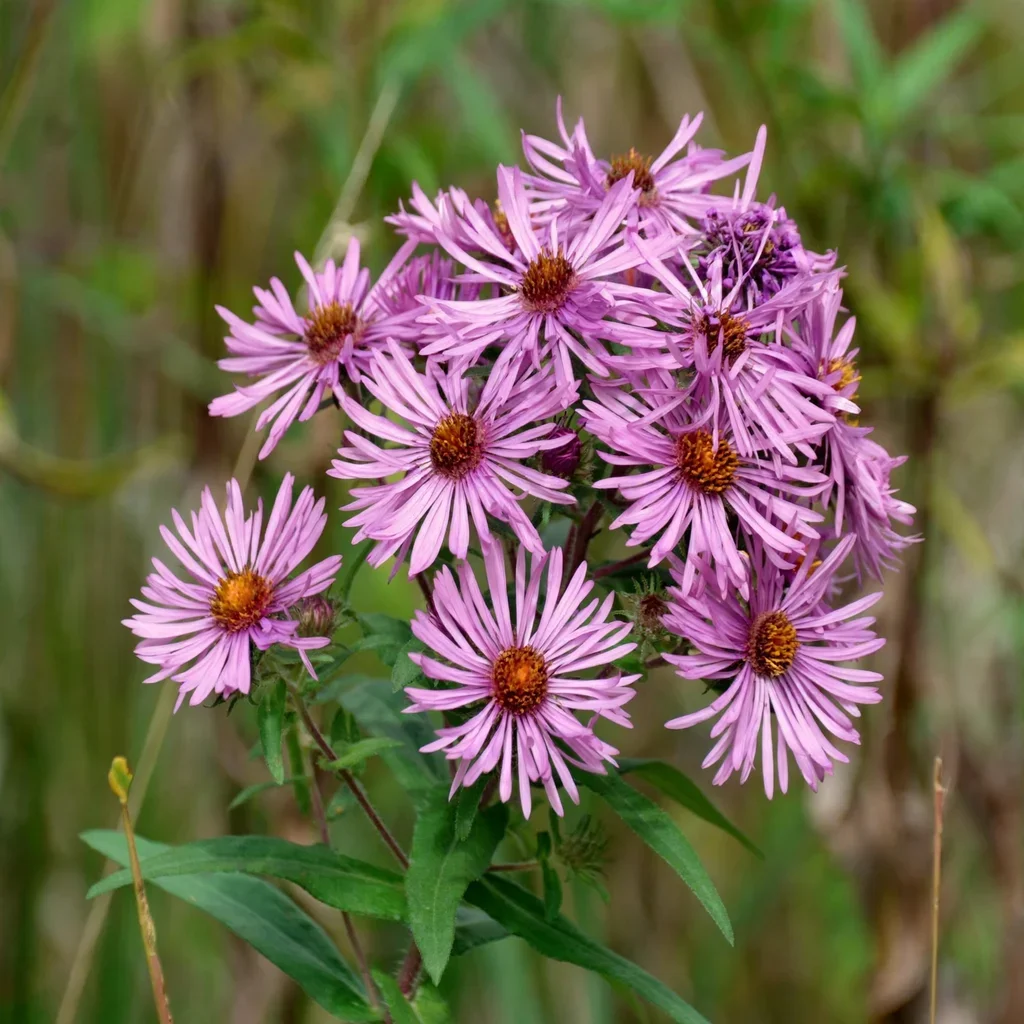
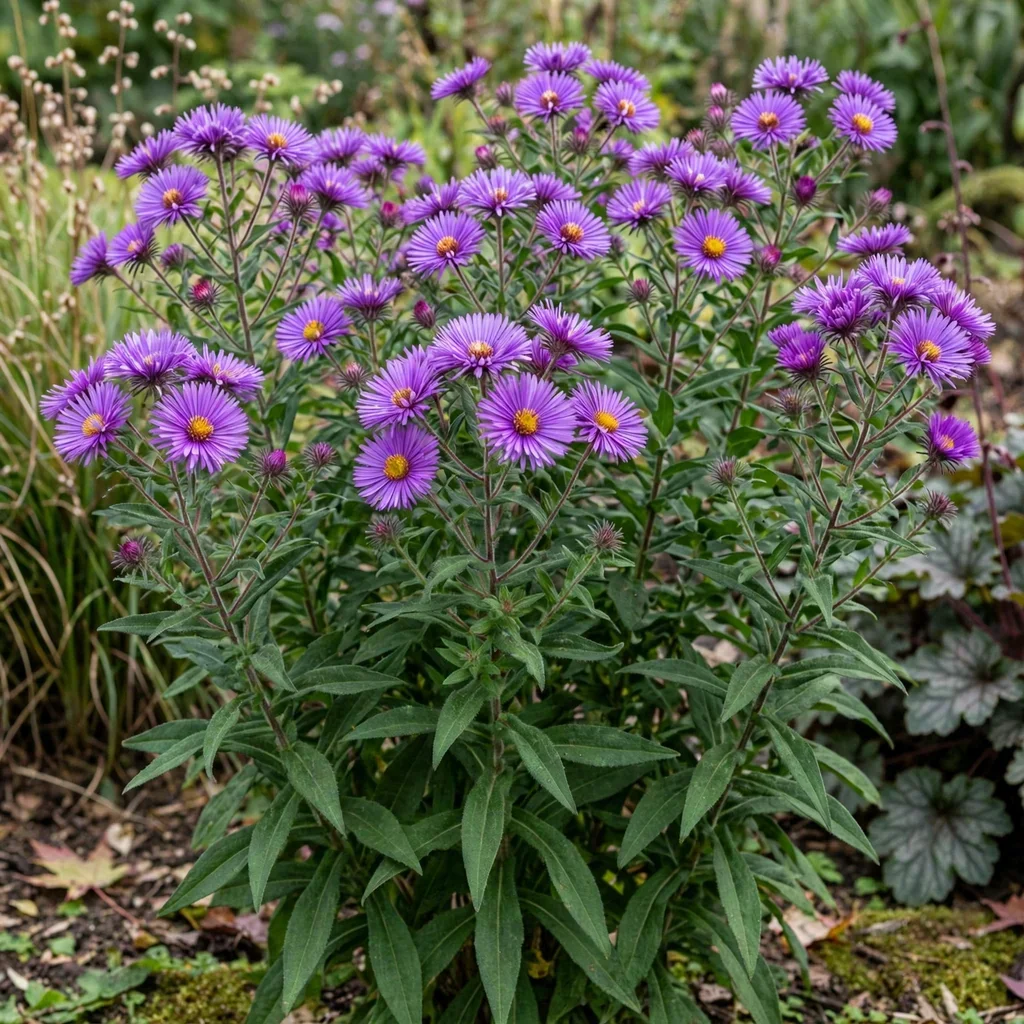
Lou Williams New England Aster
Aster novae-angliae 'Lou Williams'
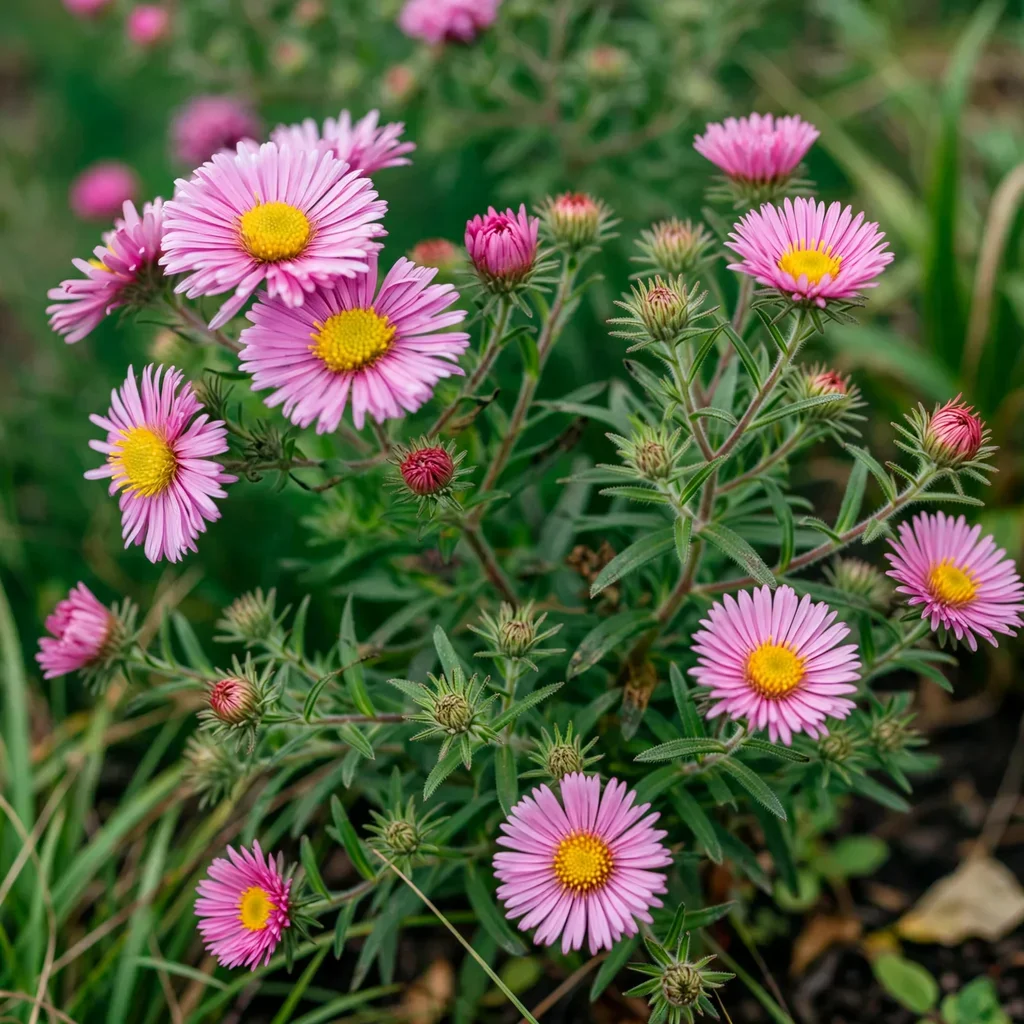
New England Aster 'Violetta'
Aster novae-angliae 'Violetta'
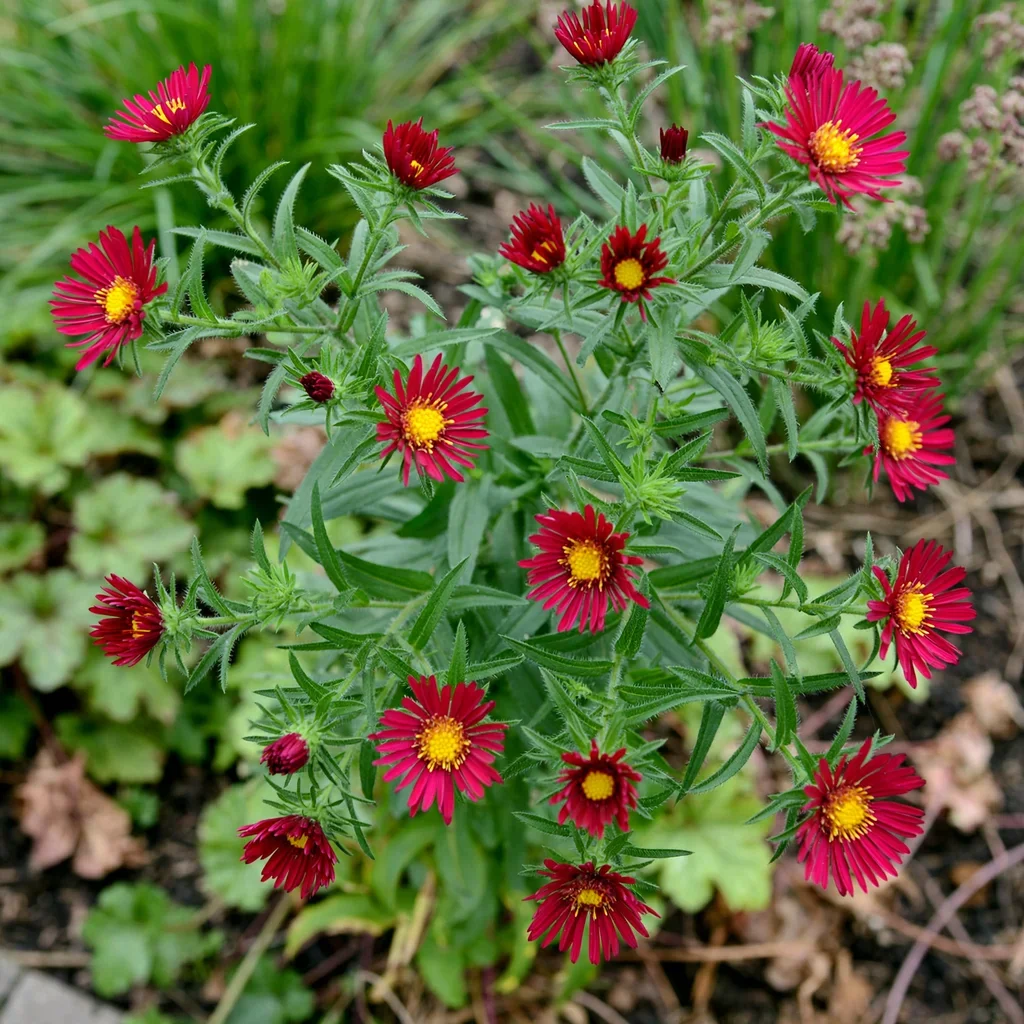
Rosa Sieger New England Aster
Aster novae-angliae 'Rosa Sieger'
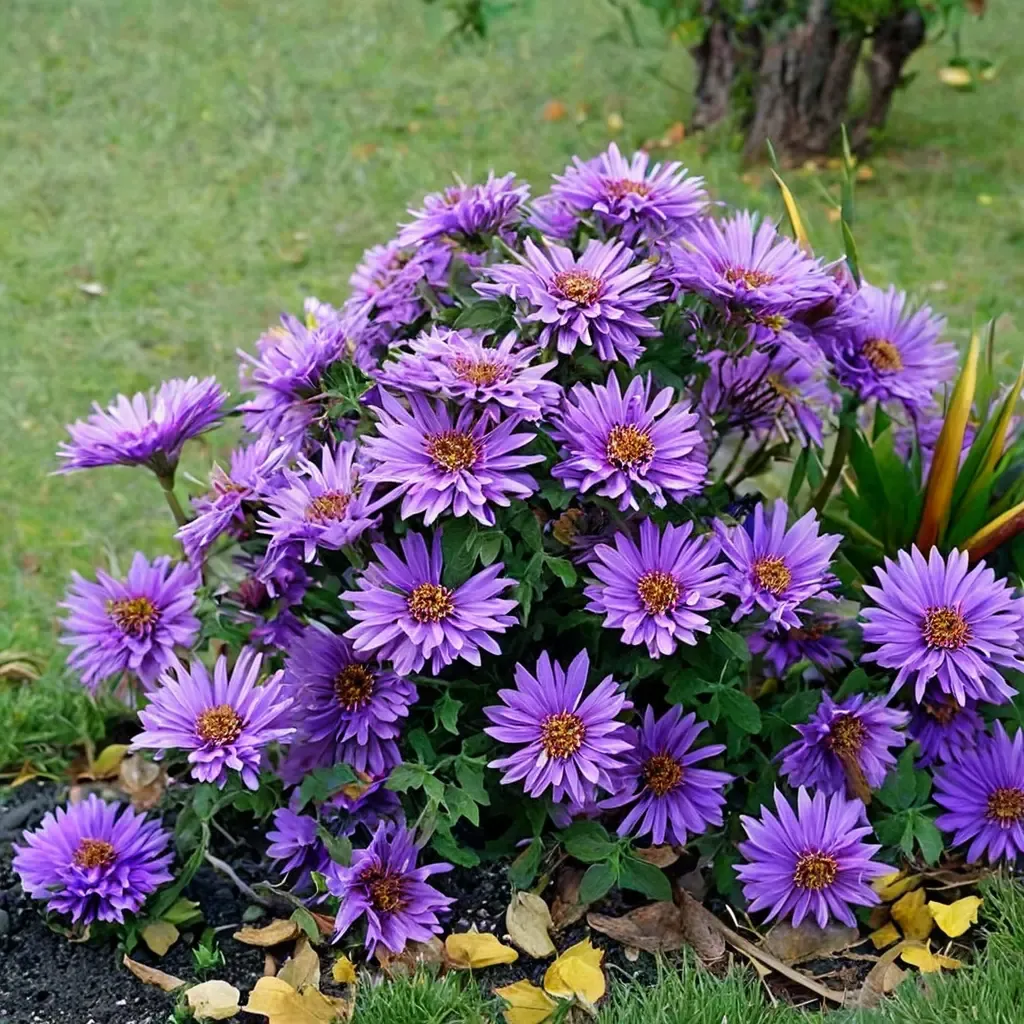
Crimson Brocade New England Aster
Aster x hybrida 'Crimson Brocade'
Purple Dome New England Aster
Aster novae-angliae 'Purple Dome'
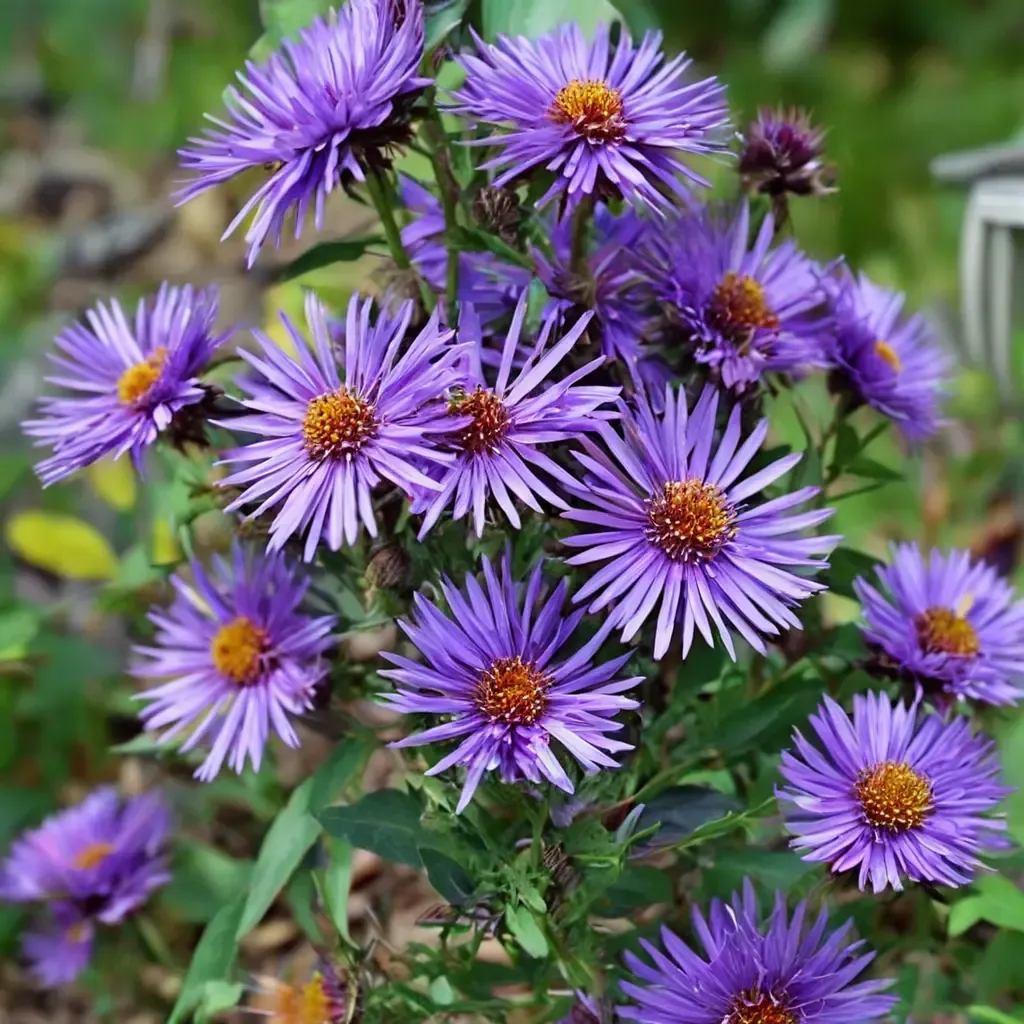
New England Aster
Aster novae-angliae
Keep exploring
Explore the genus
Hardy in your zone?
Grow Bushy Aster with confidence
See it in a design of your actual yard, get zone-matched care reminders, and track it season by season in your garden journal.