Species
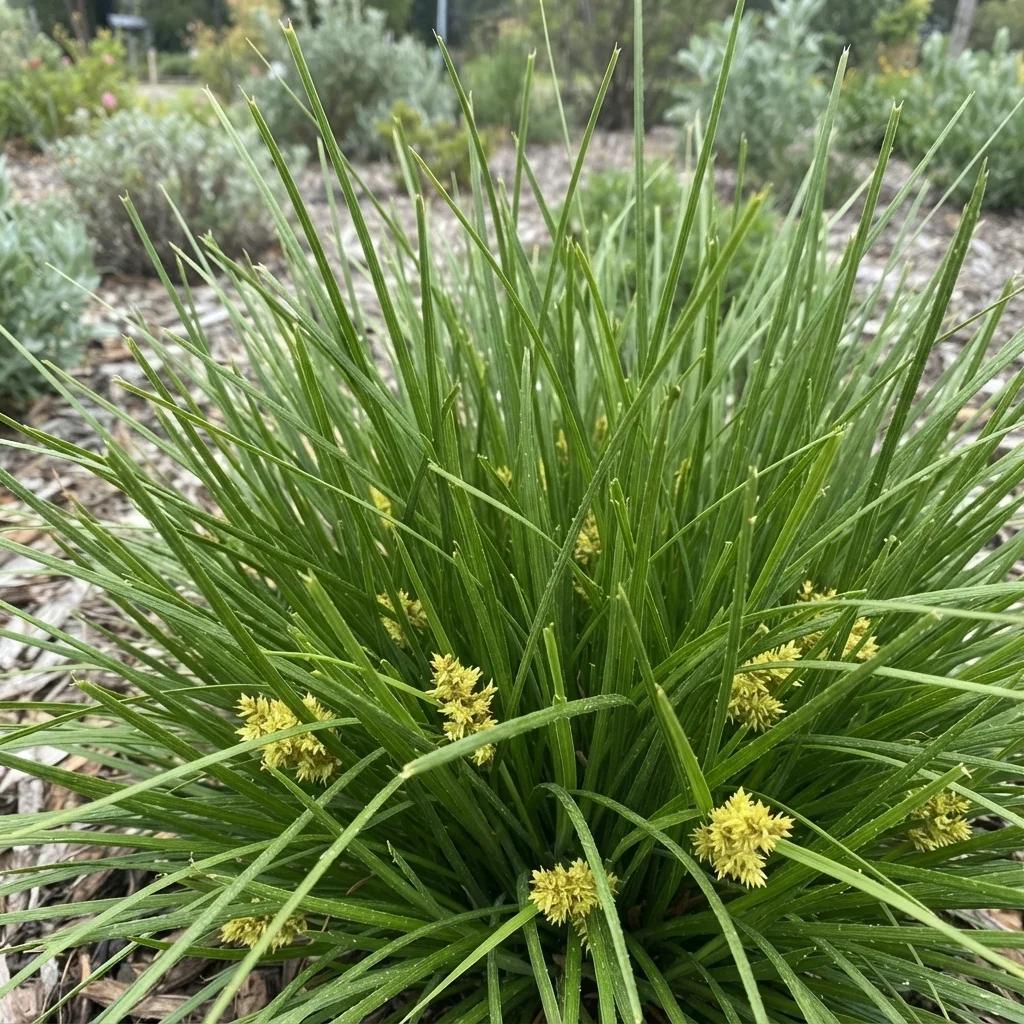 Lomandra confertifoliaMat Rush
2 other cultivars
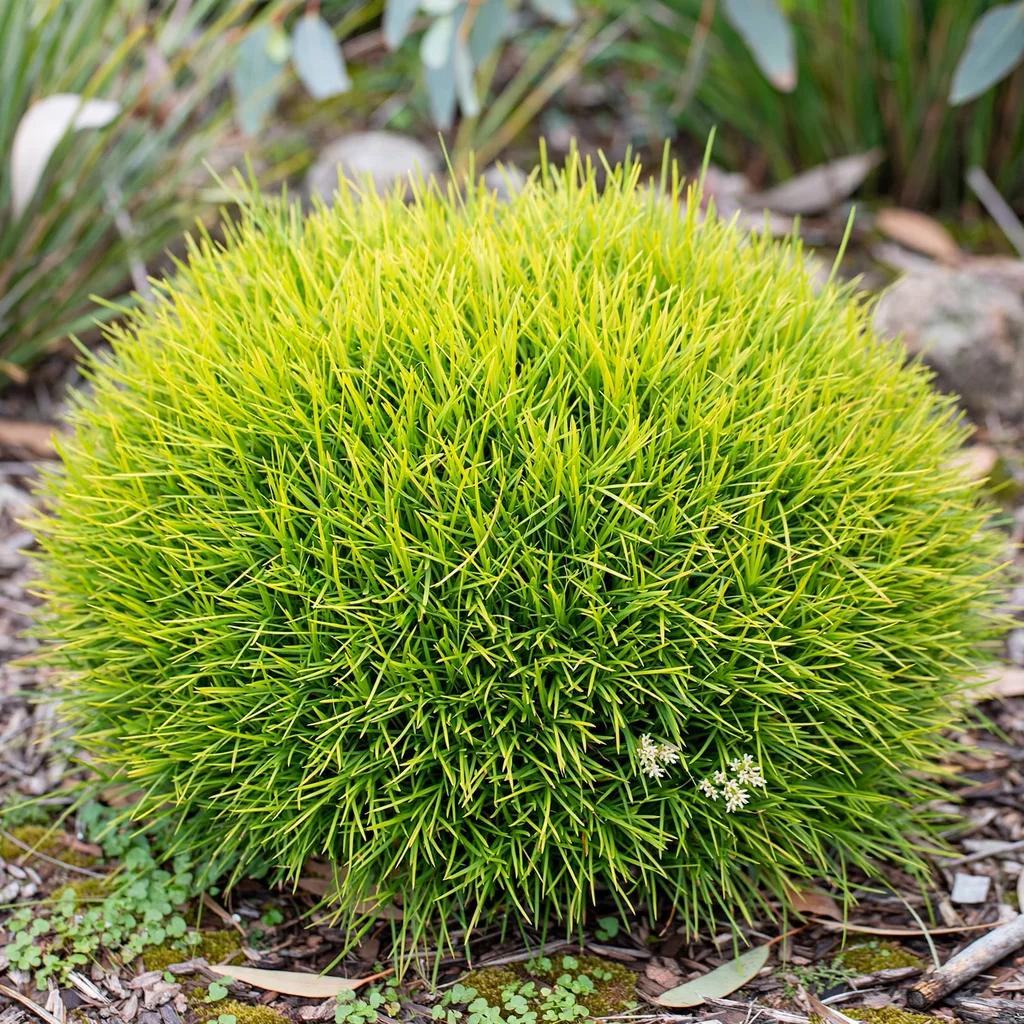

The Story
Plant Bio
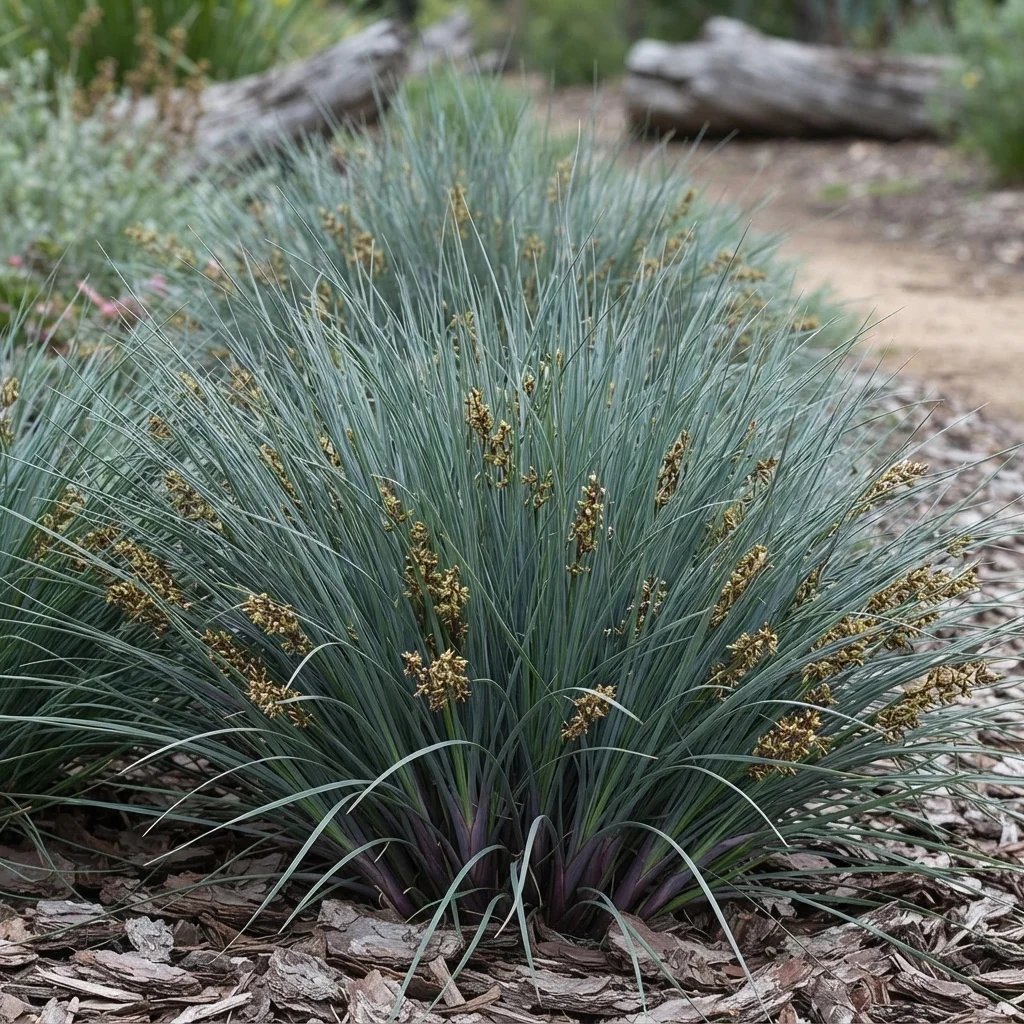
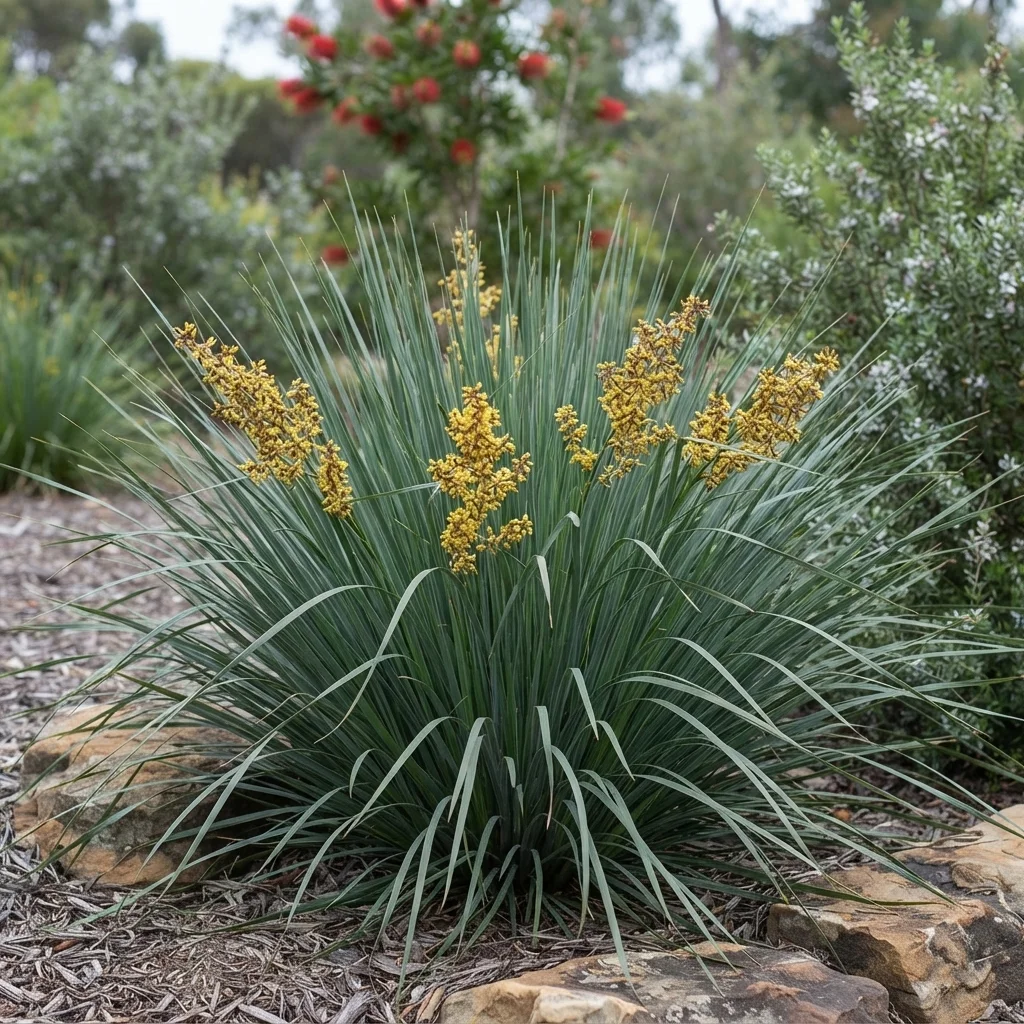
Lomandra confertifolia is an evergreen perennial native to the open forests and rocky slopes of eastern Australia. The species forms dense, grass-like tussocks of narrow, strap-like foliage and produces small, clustered inflorescences nestled within the leaves.
'Wingarra' is distinguished by its compact, weeping habit and fine-textured, glaucous blue-green foliage accented by purple basal sheaths. It possesses unusually large, deep rhizomes that provide enhanced drought tolerance and allow the plant to thrive in full sun, unlike wild forms of the species.
Uses & Benefits:
Essentials
At a Glance
Plant Type
Grass
Height
16"
Width
24"
Light
Full Sun, Partial Sun
Zones
8, 9, 10
Water
Low
Humidity
Moderate
Lifespan
Perennial
Native To
Australia
Toxicity
Non-toxic
Bloom period
Late spring – Summer
In flower about 4 months of the year
Planting
How to Grow
- Select a planting site with well-drained sandy loam, loam, or clay loam in full sun to partial shade.
- Dig a hole twice the width of the root ball and plant at the same depth as the nursery container, ensuring the crown is not buried.
- Water thoroughly upon planting and maintain regular irrigation until the deep rhizome system is fully established.
- Apply a low-phosphorus slow-release fertilizer once a year in early spring to support steady, compact growth.
Pro Tip
Avoid pruning into the old, leafless woody crown at the base of the clump, as this prevents the plant from regenerating new foliage.
Keep It Thriving
Care Guide
Do
- Provide excellent drainage to prevent soil waterlogging around the root system.
- Water regularly during the first summer to ensure deep root establishment.
- Use low-phosphorus fertilizers formulated for native plants.
Don't
- Do not plant in heavy, boggy soils that retain standing water.
- Do not prune the foliage back annually; only cut back hard every three to four years if refreshing is required.
- Do not bury the crown of the plant during planting or mulching.
Seasonal Care Calendar
| Task | Jan | Feb | Mar | Apr | May | Jun | Jul | Aug | Sep | Oct | Nov | Dec |
|---|---|---|---|---|---|---|---|---|---|---|---|---|
| Fertilize | ||||||||||||
| Mulch | ||||||||||||
| Pest Check | ||||||||||||
| Prune |
Watch Out For
Pests & Diseases
Common Pests
Common Diseases
In the Garden
Landscape Uses & Companions
Landscape Uses
Companion Plants
Multiply
Propagation Methods
Good to Know
Common Questions
Mat Rush questions
What zones can Mat Rush grow in?
Mat Rush is hardy in USDA Zones 8–10. Inside that range it survives winter in the ground; outside it, grow it as an annual or a container plant you protect.
Is Mat Rush deer resistant?
Not reliably. Deer may browse Mat Rush, especially tender spring growth — plan on repellents or fencing where pressure is high.
When does Mat Rush bloom?
Mat Rush typically blooms in late spring through summer. Exact timing shifts a week or two with your zone — Sow's bloom calendar maps it to your garden.
Does Mat Rush need full sun?
Mat Rush does best in full sun to part shade. In hot climates, afternoon shade keeps blooms fresher longer.
Is Mat Rush drought tolerant?
Yes — once established (usually after the first full season), Mat Rush handles dry spells with minimal watering. Water deeply its first year to build the root system that makes that possible.
More Lomandra to compare
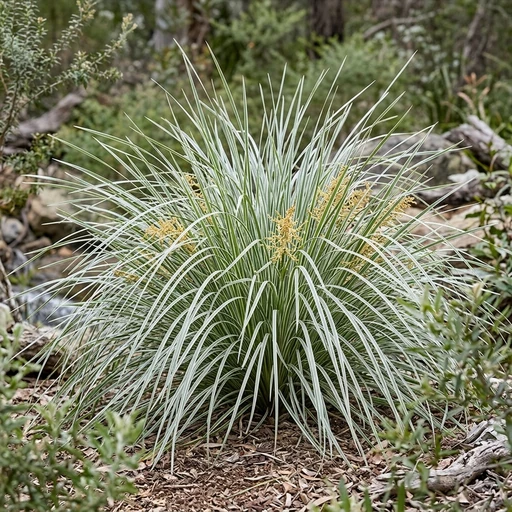
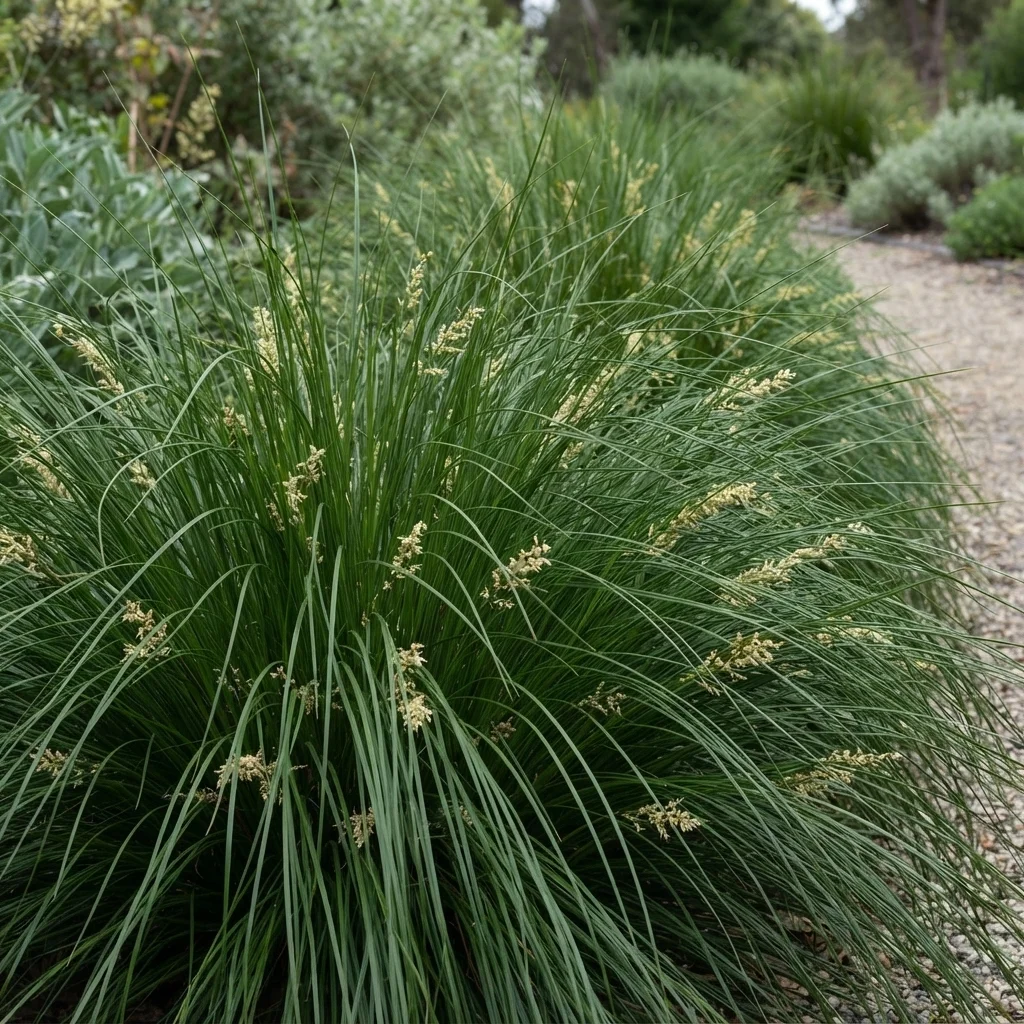
Platinum Beauty Lomandra
Lomandra longifolia 'Platinum Beauty'
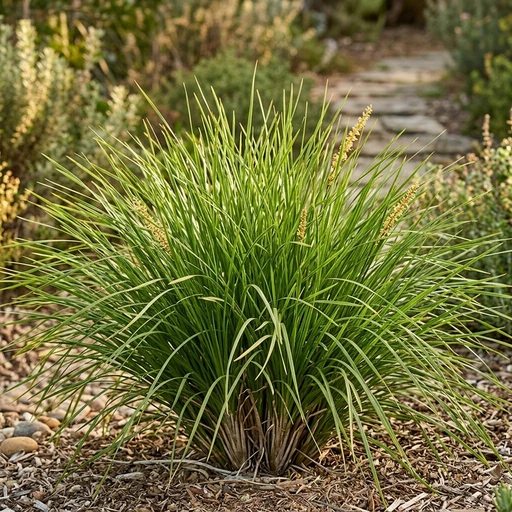
Tanika Mat-rush
Lomandra longifolia 'Tanika'
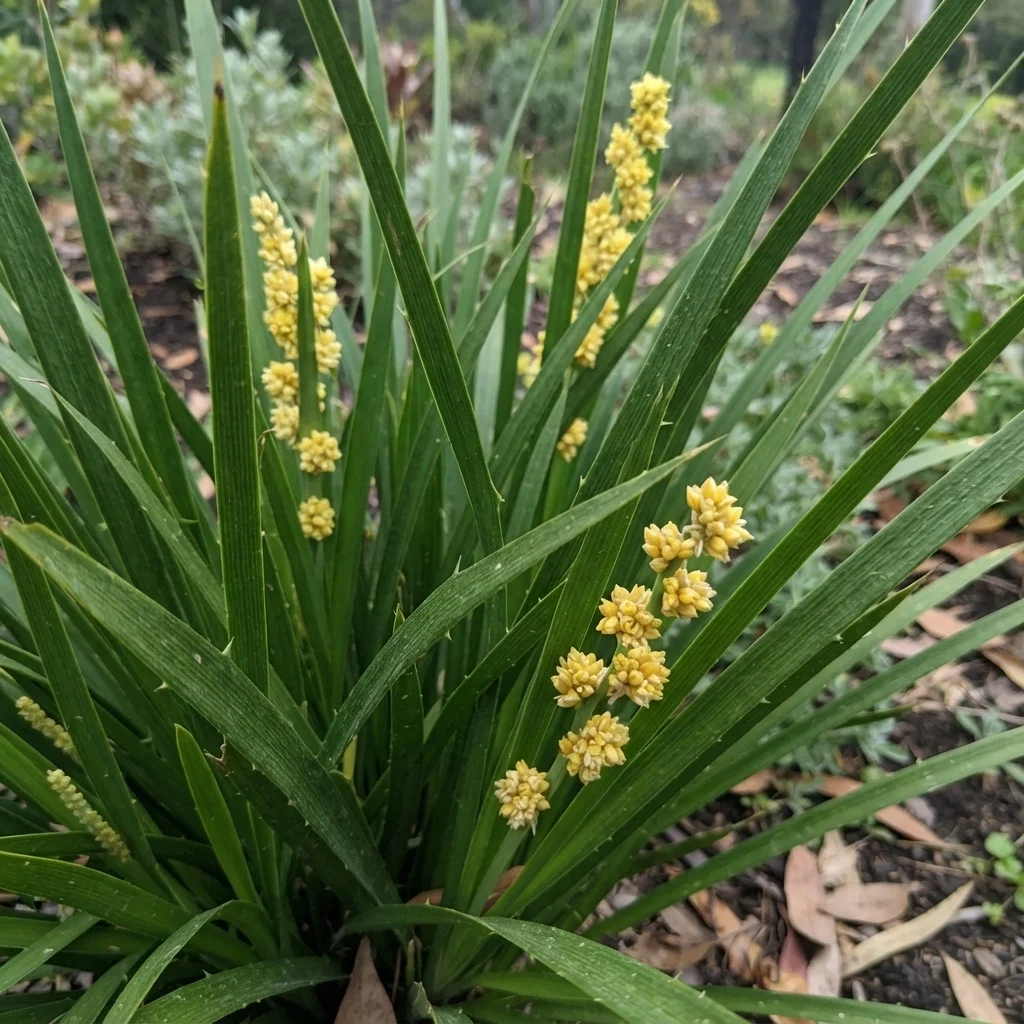
Dwarf Mat Rush
Lomandra longifolia 'Breeze Dwarf Mat Rush'
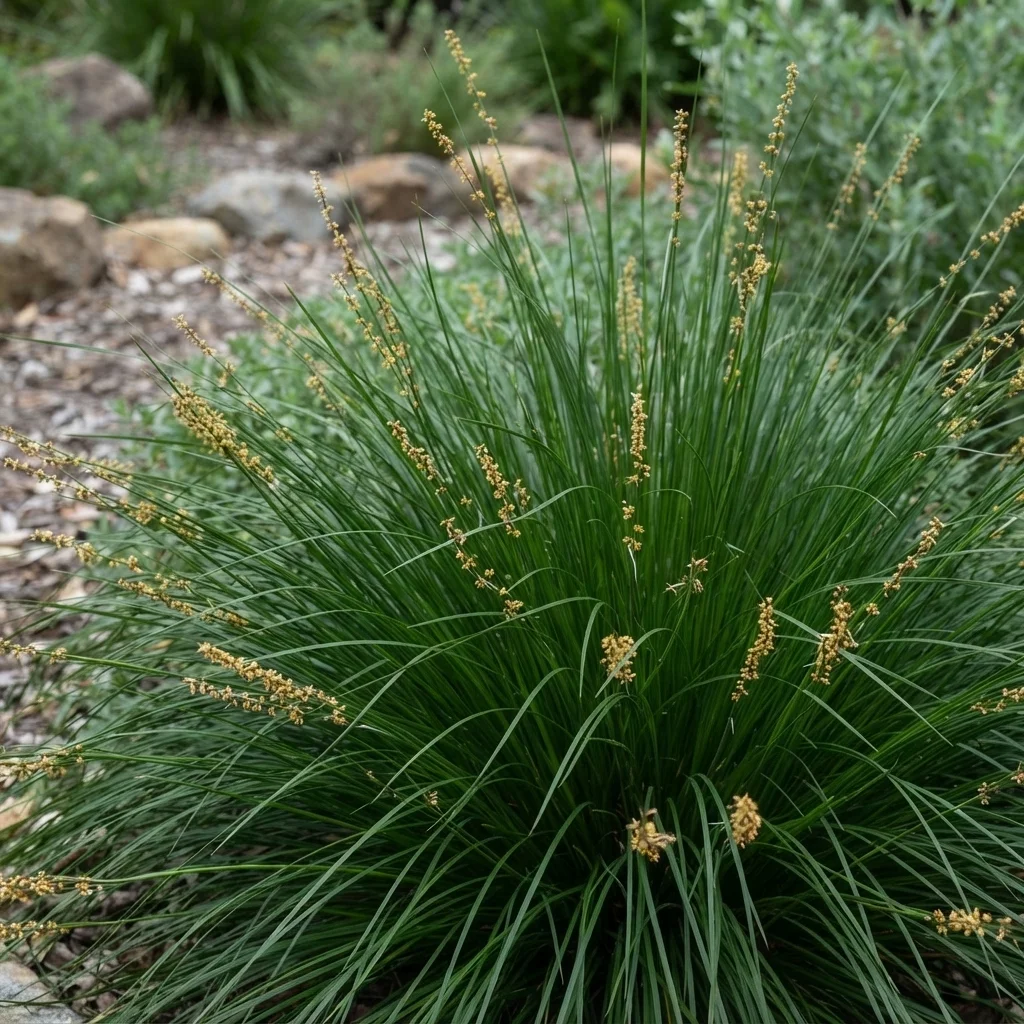
Australian Mat Rush
Lomandra longifolia
Spiny-headed Mat-rush
Lomandra longifolia 'Verday'
Nyalla Dwarf Mat Rush
Lomandra longifolia 'Nyalla'
Keep exploring
Explore the genus
Hardy in your zone?
Grow Mat Rush with confidence
See it in a design of your actual yard, get zone-matched care reminders, and track it season by season in your garden journal.