The Story
Plant Bio
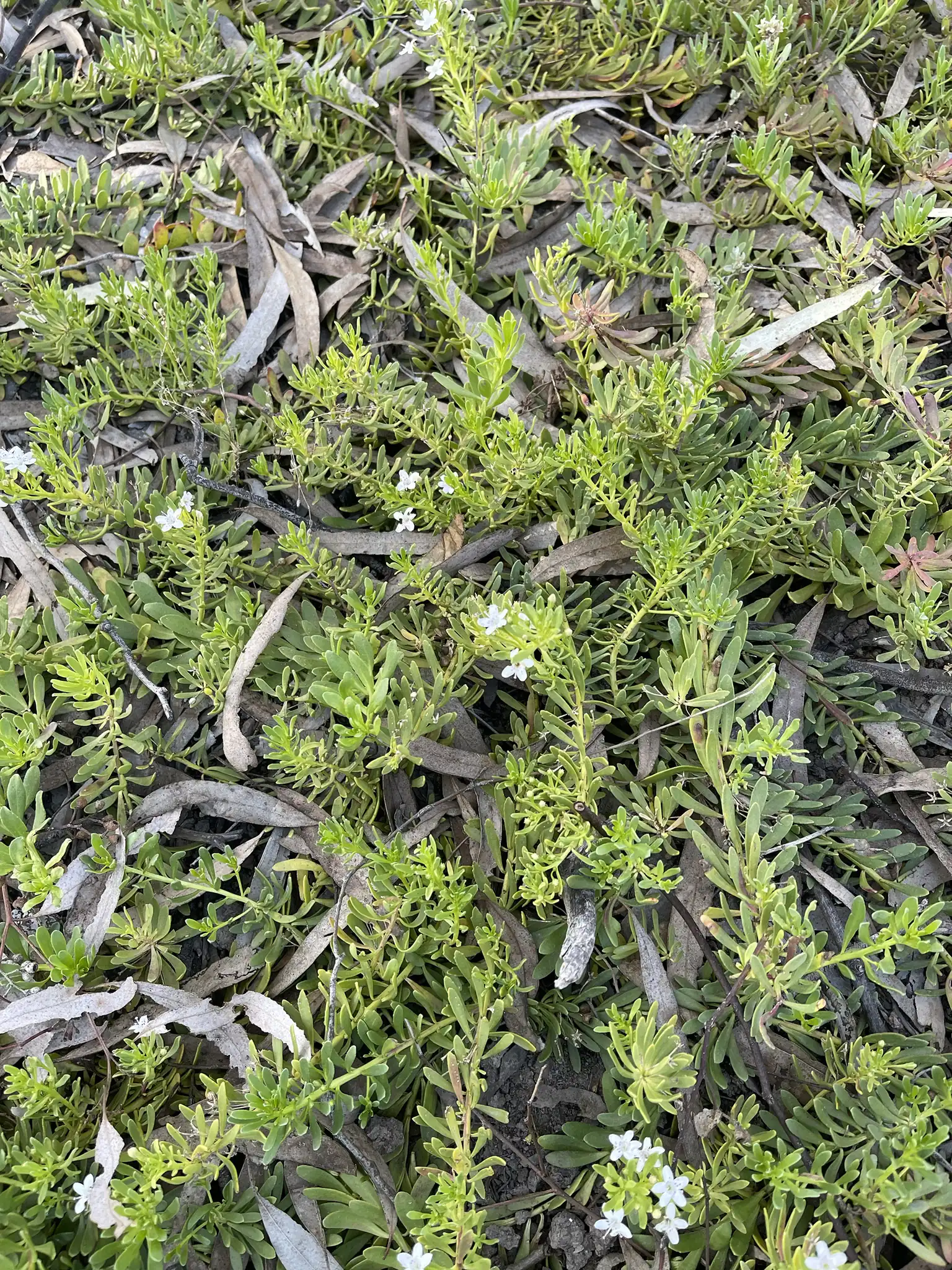
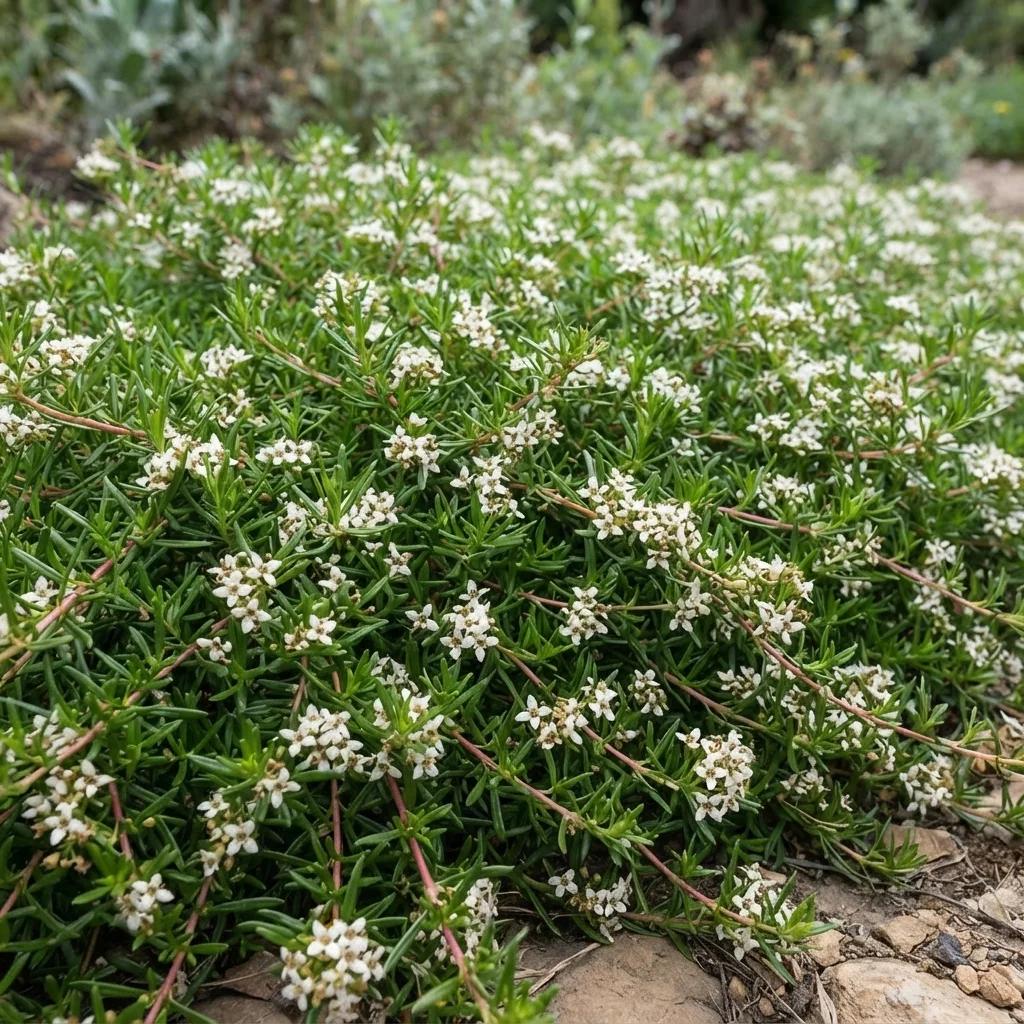
Myoporum parvifolium is a prostrate, mat-forming evergreen shrub native to southern Australia, where it inhabits woodlands, river flats, and coastal cliffs. The low-growing stems trail along the ground and root at the nodes, creating a dense, weed-suppressing carpet of semi-succulent foliage.
This species is distinguished by its narrow, linear leaves that reach up to two inches long and occasionally show bronze or purple tones on new growth. Small, star-shaped white or pale pink flowers with purple-spotted throats emerge from the leaf axils during spring and summer.
Uses & Benefits:
Essentials
At a Glance
Plant Type
Groundcover
Height
16"
Width
120"
Light
Full Sun, Partial Sun
Zones
9, 10
Water
Low
Humidity
Low to Moderate
Lifespan
Perennial
Native To
Australia
Toxicity
Non-toxic
Planting
How to Grow
- Select a planting site in full sun to partial shade with excellent, free-draining soil.
- Dig a hole twice as wide as the root ball but no deeper, ensuring the crown sits level with the surrounding soil.
- Water deeply immediately after planting to settle the soil, then reduce watering once the root system establishes.
- Space multiple plants five to ten feet apart to allow the trailing stems room to spread and layer naturally.
Pro Tip
Avoid planting this groundcover in high-traffic areas; the brittle trailing stems break easily underfoot and will leave bare patches in the mat.
Keep It Thriving
Care Guide
Do
- Plant in sandy or well-amended loam to ensure rapid drainage away from the roots.
- Prune lightly after the main summer flowering flush to shape the mat and control lateral spread.
- Apply a low-phosphorus fertilizer sparingly in spring if soil nutrients are poor.
Don't
- Do not plant in low-lying areas where water pools or soil remains chronically soggy.
- Do not shear aggressively into old, leafless wood, as regrowth from bare stems is extremely slow.
- Do not subject the plant to foot traffic, as the trailing stems are brittle and damage easily.
Seasonal Care Calendar
| Task | Jan | Feb | Mar | Apr | May | Jun | Jul | Aug | Sep | Oct | Nov | Dec |
|---|---|---|---|---|---|---|---|---|---|---|---|---|
| Fertilize | ||||||||||||
| Pest Check | ||||||||||||
| Propagate | ||||||||||||
| Prune |
Watch Out For
Pests & Diseases
Common Pests
Common Diseases
In the Garden
Landscape Uses & Companions
Landscape Uses
Companion Plants
Multiply
Propagation Methods
Good to Know
Common Questions
Creeping Boobialla questions
What zones can Creeping Boobialla grow in?
Creeping Boobialla is hardy in USDA Zones 9–10. Inside that range it survives winter in the ground; outside it, grow it as an annual or a container plant you protect.
Is Creeping Boobialla deer resistant?
Not reliably. Deer may browse Creeping Boobialla, especially tender spring growth — plan on repellents or fencing where pressure is high.
When does Creeping Boobialla bloom?
Creeping Boobialla typically blooms in spring through summer. Exact timing shifts a week or two with your zone — Sow's bloom calendar maps it to your garden.
Does Creeping Boobialla need full sun?
Creeping Boobialla does best in full sun to part shade. In hot climates, afternoon shade keeps blooms fresher longer.
Is Creeping Boobialla drought tolerant?
Yes — once established (usually after the first full season), Creeping Boobialla handles dry spells with minimal watering. Water deeply its first year to build the root system that makes that possible.
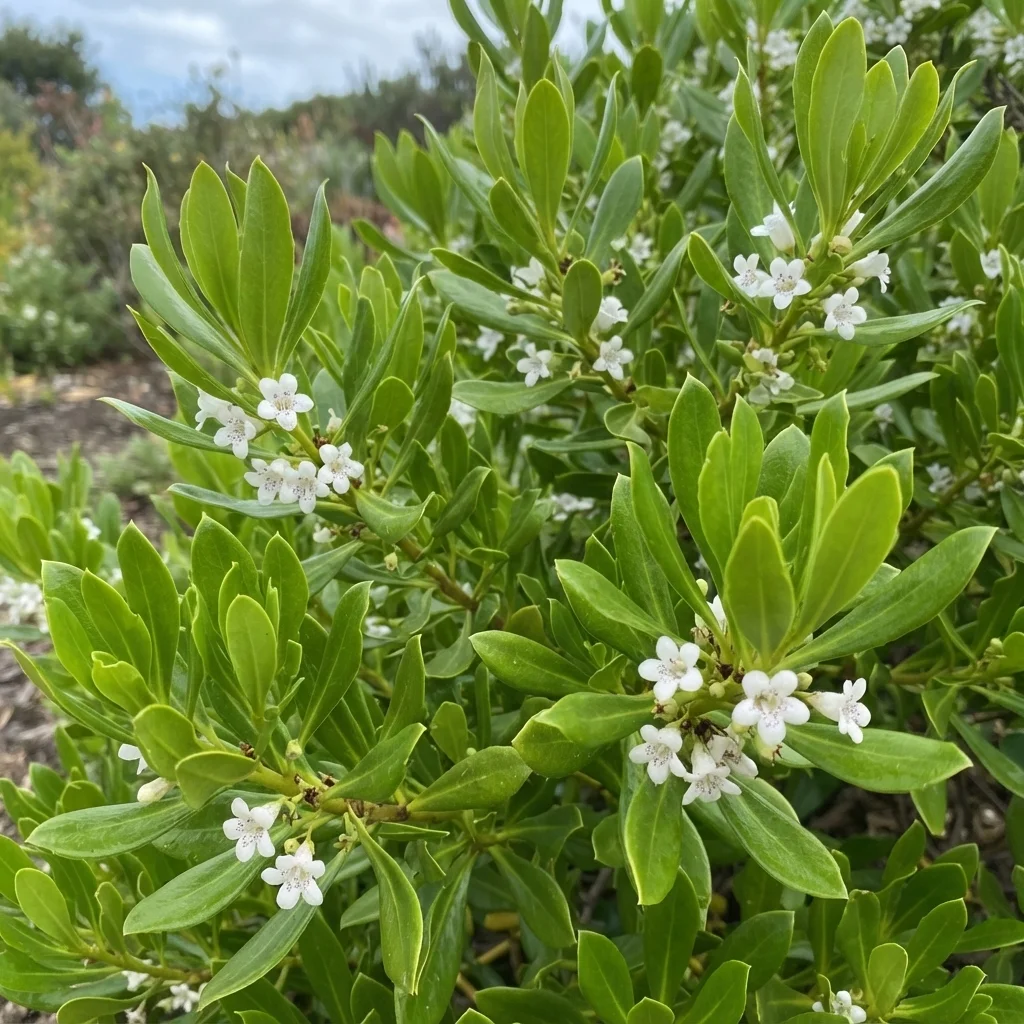
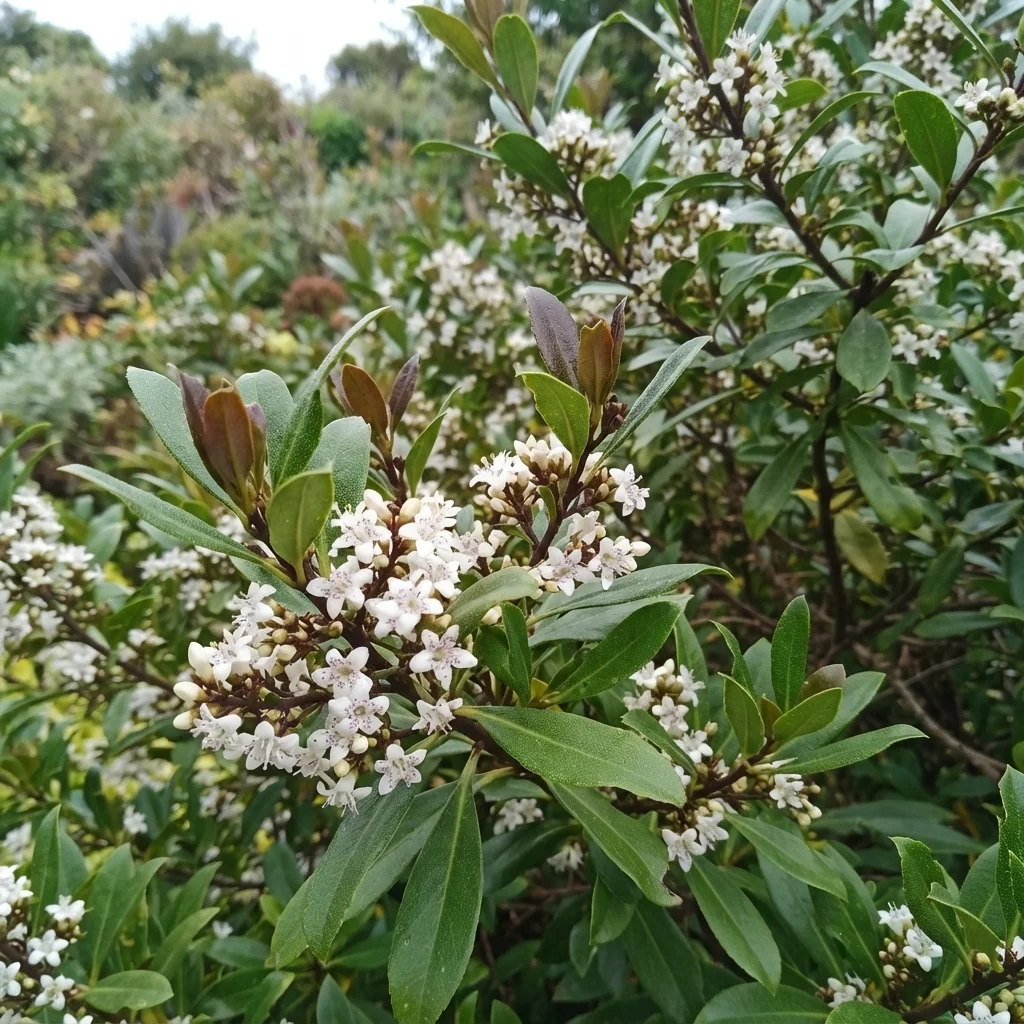
More Myoporum to compare
Keep exploring
Explore the genus
Hardy in your zone?
Grow Creeping Boobialla with confidence
See it in a design of your actual yard, get zone-matched care reminders, and track it season by season in your garden journal.