The Story
Plant Bio
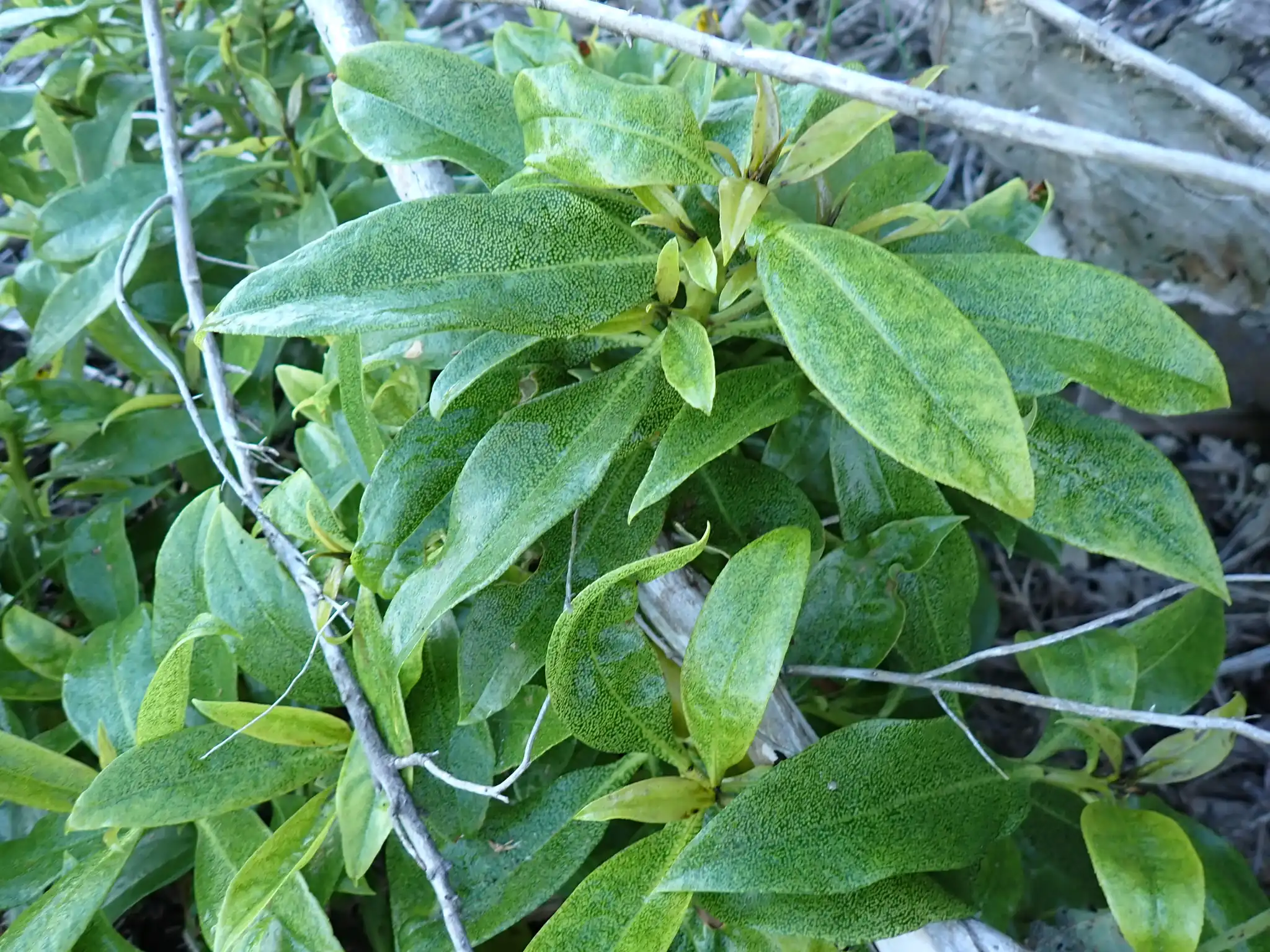
Myoporum laetum, the ngaio, is a fast-growing evergreen tree or large shrub native to New Zealand, characterized by its stout, spreading branches and a thick, furrowed trunk in maturity. The lanceolate leaves are fleshy and glossy, featuring distinctive translucent oil glands that appear as bright dots when held against the light.
Its sticky, dark bronze leaf buds and young branchlets provide striking structural contrast before opening into serrated green foliage. In summer, the plant produces small, bell-shaped white flowers speckled with purple spots, followed by reddish-purple fleshy drupes.
Uses & Benefits:
Essentials
At a Glance
Plant Type
Tree
Height
360"
Width
240"
Light
Full Sun, Partial Sun
Zones
9, 10
Water
Low
Humidity
High tolerance for maritime humidity
Lifespan
20-50 years
Native To
New Zealand
Toxicity
Highly toxic if ingested (contains ngaione)
Bloom period
Summer
In flower about 3 months of the year
Planting
How to Grow
- Select a planting site in full sun to light shade with excellent drainage, as waterlogged soil triggers root rot.
- Dig a hole twice as wide as the root ball and set the plant at its original container depth.
- Water deeply during the first growing season to establish a deep root system, then reduce frequency to rely on natural rainfall.
- Prune annually after flowering to maintain a dense, bushy habit, taking care to only cut into leafy stems.
Pro Tip
Avoid pruning heavily into old, leafless wood, as this species lacks dormant epicormic buds on bare stems and will fail to shoot back.
Keep It Thriving
Care Guide
Do
- Prune regularly to maintain a dense shape for hedges or windbreaks.
- Plant in well-drained, sandy, or coastal soils where salt spray is common.
- Wear gloves when handling the sticky foliage to avoid potential skin irritation.
Don't
- Do not cut back into old, bare wood, as the stems cannot regenerate new growth.
- Do not overwater or plant in heavy, poorly drained clay soils.
- Do not plant near livestock pastures due to the high toxicity of the leaves.
Seasonal Care Calendar
| Task | Jan | Feb | Mar | Apr | May | Jun | Jul | Aug | Sep | Oct | Nov | Dec |
|---|---|---|---|---|---|---|---|---|---|---|---|---|
| Mulch | ||||||||||||
| Pest Check | ||||||||||||
| Plant | ||||||||||||
| Prune |
Watch Out For
Pests & Diseases
Common Pests
Common Diseases
In the Garden
Landscape Uses & Companions
Landscape Uses
Multiply
Propagation Methods
Good to Know
Common Questions
Ngaio questions
What zones can Ngaio grow in?
Ngaio is hardy in USDA Zones 9–10. Inside that range it survives winter in the ground; outside it, grow it as an annual or a container plant you protect.
When does Ngaio bloom?
Ngaio typically blooms in summer through summer. Exact timing shifts a week or two with your zone — Sow's bloom calendar maps it to your garden.
Does Ngaio need full sun?
Ngaio does best in full sun to part shade. In hot climates, afternoon shade keeps blooms fresher longer.
Is Ngaio drought tolerant?
Yes — once established (usually after the first full season), Ngaio handles dry spells with minimal watering. Water deeply its first year to build the root system that makes that possible.
More Myoporum to compare
Keep exploring
Explore the genus
Hardy in your zone?
Grow Ngaio with confidence
See it in a design of your actual yard, get zone-matched care reminders, and track it season by season in your garden journal.