The Story
Plant Bio
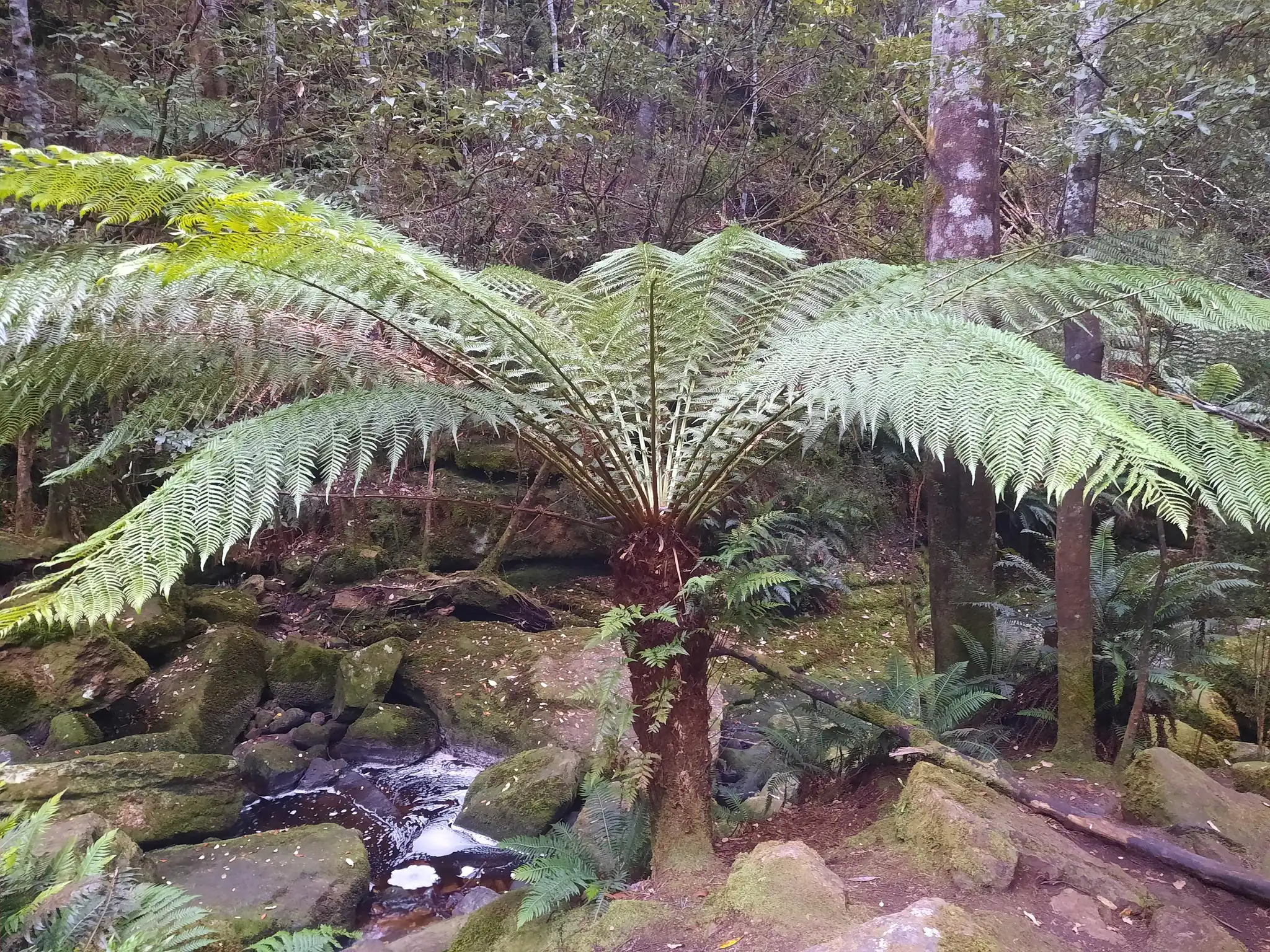
Dicksonia antarctica is an arborescent evergreen tree fern that develops a stout, upright trunk composed of a dense mass of aerial roots surrounding a slender rhizome. This fibrous trunk supports a broad, symmetrical canopy of arching, deep green, leathery fronds that can reach up to ten feet in length.
The rough-textured, highly divided fronds emerge as tightly furled fiddleheads densely covered in soft, lustrous golden-brown hairs. Unlike flowering plants, reproduction occurs entirely via microscopic spores borne in small, circular capsules along the margins of the fertile frond undersides.
Uses & Benefits:
Essentials
At a Glance
Plant Type
Fern
Height
177"
Width
118"
Light
Partial Sun, Shade
Zones
9, 10
Water
High
Humidity
High
Lifespan
Long-lived
Native To
Southeastern Australia, Tasmania
Toxicity
Non-toxic, but hairs cause skin irritation
Marketplace
Where to Buy
Shipping costs Year-round shipping Free shipping
Planting
How to Grow
- Select a site in partial to full shade, protected from hot midday sun and drying winds.
- Prepare a humus-rich, loamy, organically dense soil with a slightly acidic to neutral pH.
- Plant the trunk or container specimen at the same depth as its nursery pot, ensuring the soil is moisture-retentive but well-drained.
- Water the soil thoroughly upon planting, and establish a routine to keep the entire trunk damp.
Pro Tip
Amateurs frequently fail by watering only the soil; because the trunk is actually a column of living aerial roots, you must hose down the entire vertical trunk daily during dry summer spells to prevent dehydration.
Keep It Thriving
Care Guide
Do
- Water the fibrous trunk daily during hot, dry weather to maintain high humidity and moisture.
- Apply a balanced, diluted liquid organic fertilizer to both the soil and the moist trunk during the spring and summer.
- Wear gloves when handling the crown to avoid skin irritation from the dense golden-brown hairs.
Don't
- Never prune into the old, leafless woody trunk tissue, as this will permanently damage the plant.
- Do not allow the trunk or root zone to dry out completely at any time of the year.
- Avoid planting in areas subject to stagnant water, waterlogging, or strong coastal salt winds.
Seasonal Care Calendar
| Task | Jan | Feb | Mar | Apr | May | Jun | Jul | Aug | Sep | Oct | Nov | Dec |
|---|---|---|---|---|---|---|---|---|---|---|---|---|
| Fertilize | ||||||||||||
| Pest Check | ||||||||||||
| Prune | ||||||||||||
| Winter Prep |
Watch Out For
Pests & Diseases
Common Pests
Common Diseases
In the Garden
Landscape Uses & Companions
Landscape Uses
Companion Plants
Multiply
Propagation Methods
Good to Know
Common Questions
Soft Tree-Fern questions
What zones can Soft Tree-Fern grow in?
Soft Tree-Fern is hardy in USDA Zones 9–10. Inside that range it survives winter in the ground; outside it, grow it as an annual or a container plant you protect.
Is Soft Tree-Fern deer resistant?
Not reliably. Deer may browse Soft Tree-Fern, especially tender spring growth — plan on repellents or fencing where pressure is high.
Does Soft Tree-Fern need full sun?
Soft Tree-Fern does best in part shade.
Keep exploring
Explore the genus
Hardy in your zone?
Grow Soft Tree-Fern with confidence
See it in a design of your actual yard, get zone-matched care reminders, and track it season by season in your garden journal.