


The Story
Plant Bio
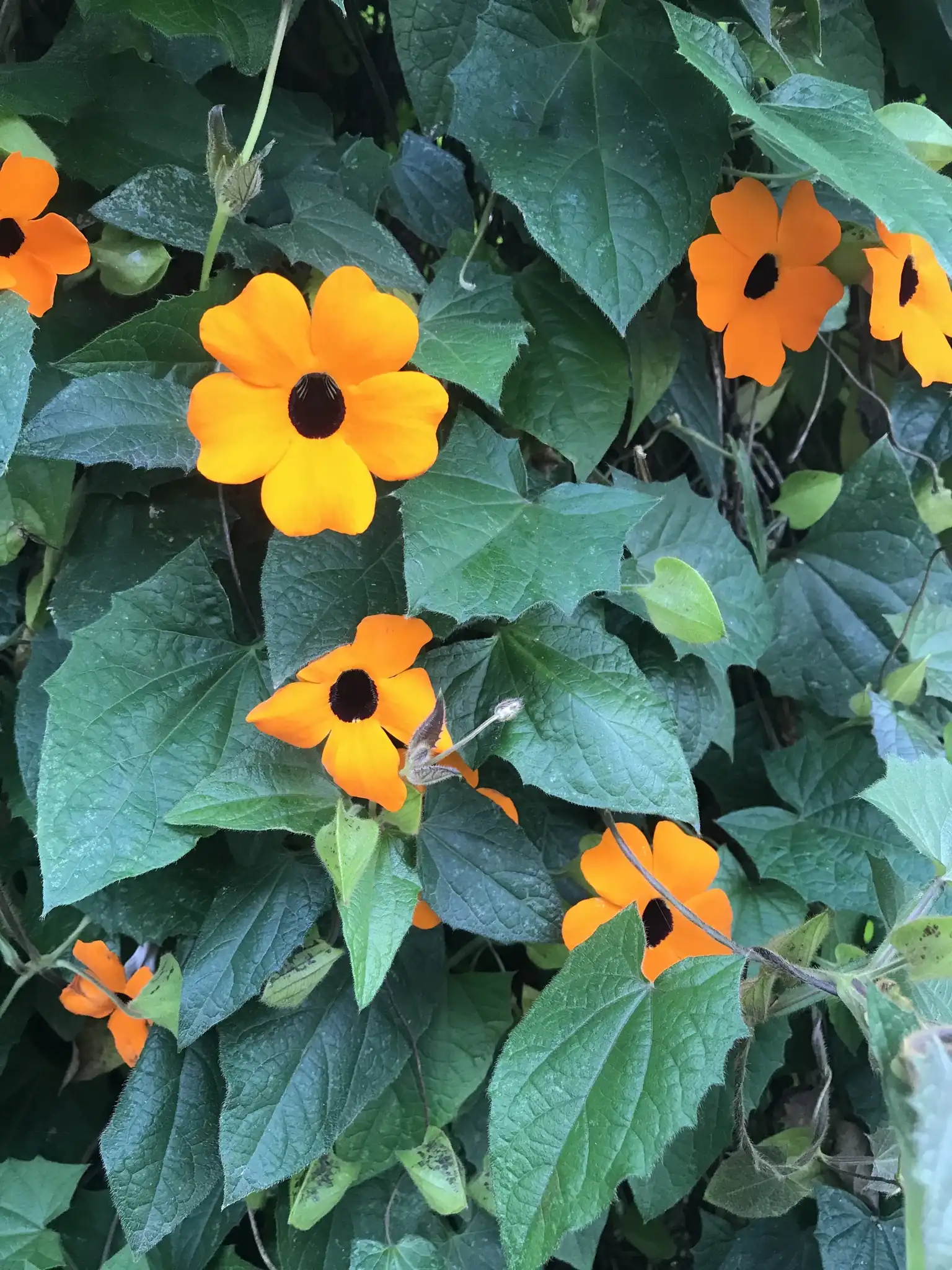
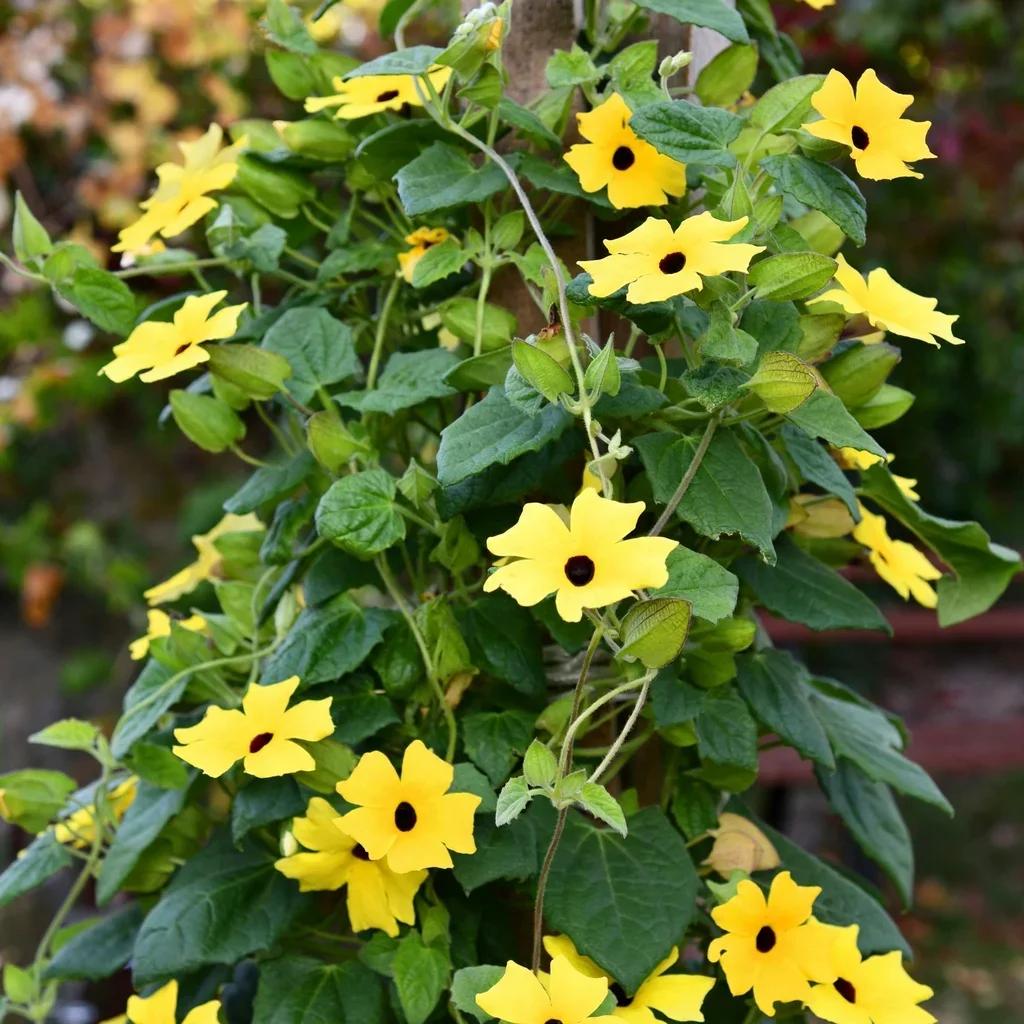
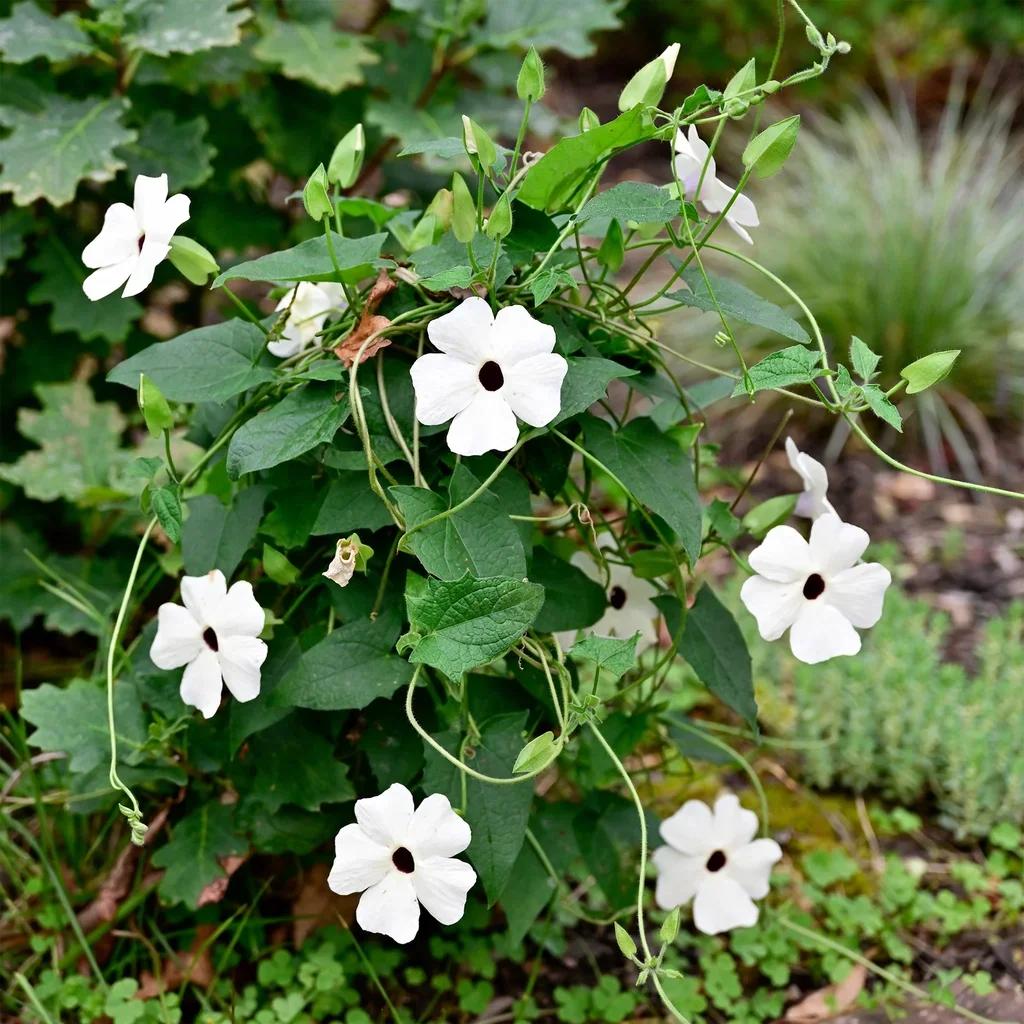
Thunbergia alata, black-eyed Susan vine, is a twining climber native to tropical and southern Africa and Madagascar, reaching three to eight feet in a season. Soft hairy triangular leaves are carried on winged stalks, and flat five-petalled flowers in orange, yellow, cream or apricot open continuously, each with a deep near-black throat that gives the plant its name.
It is a perennial in frost-free regions but is grown almost everywhere as an annual, reaching full size in a single season from seed. It climbs by twining rather than clinging, so it needs something thin to wrap around — string, wire or netting rather than a smooth post or wall.
Uses & Benefits:
Essentials
At a Glance
Plant Type
Vine
Height
66"
Width
54"
Light
Full Sun, Partial Sun
Zones
10
Water
Moderate
Humidity
Moderate
Lifespan
Annual
Native To
Tropical and southern Africa and Madagascar
Toxicity
Non-toxic
Planting
How to Grow
- Sow indoors six to eight weeks before the last frost.
- Plant out after frost in full sun to partial shade.
- Provide strings, wires or netting to twine around.
- Keep the soil evenly moist through the season.
- Feed lightly every few weeks in containers.
- Pinch young growth to encourage branching.
Pro Tip
Give it something thin to grip — it twines rather than clings, so a smooth trellis or wall leaves it flopping on the ground.
Keep It Thriving
Care Guide
Do
- Provide strings or netting to twine on 🪢
- Keep the soil evenly moist 💧
- Pinch young shoots to bush it out ✂️
- Use it trailing from baskets too 🪴
Don't
- Expect it to climb a smooth surface ❌
- Let it dry out in containers ❌
- Plant out before frost has passed ❌
Seasonal Care Calendar
| Task | Jan | Feb | Mar | Apr | May | Jun | Jul | Aug | Sep | Oct | Nov | Dec |
|---|---|---|---|---|---|---|---|---|---|---|---|---|
| Monitor |
Watch Out For
Pests & Diseases
Common Pests
Common Diseases
In the Garden
Landscape Uses & Companions
Landscape Uses
Companion Plants
Multiply
Propagation Methods
Good to Know
Common Questions
Black-eyed Susan Vine questions
What zones can Black-eyed Susan Vine grow in?
Black-eyed Susan Vine is hardy in USDA Zone 10. Inside that range it survives winter in the ground; outside it, grow it as an annual or a container plant you protect.
Is Black-eyed Susan Vine deer resistant?
Yes — Black-eyed Susan Vine is rated deer-resistant. Deer typically pass it over, though extreme hunger can override any plant's defenses.
When does Black-eyed Susan Vine bloom?
Black-eyed Susan Vine typically blooms in summer to frost through late summer. Exact timing shifts a week or two with your zone — Sow's bloom calendar maps it to your garden.
Does Black-eyed Susan Vine need full sun?
Black-eyed Susan Vine does best in full sun to part shade. In hot climates, afternoon shade keeps blooms fresher longer.
More Thunbergia to compare
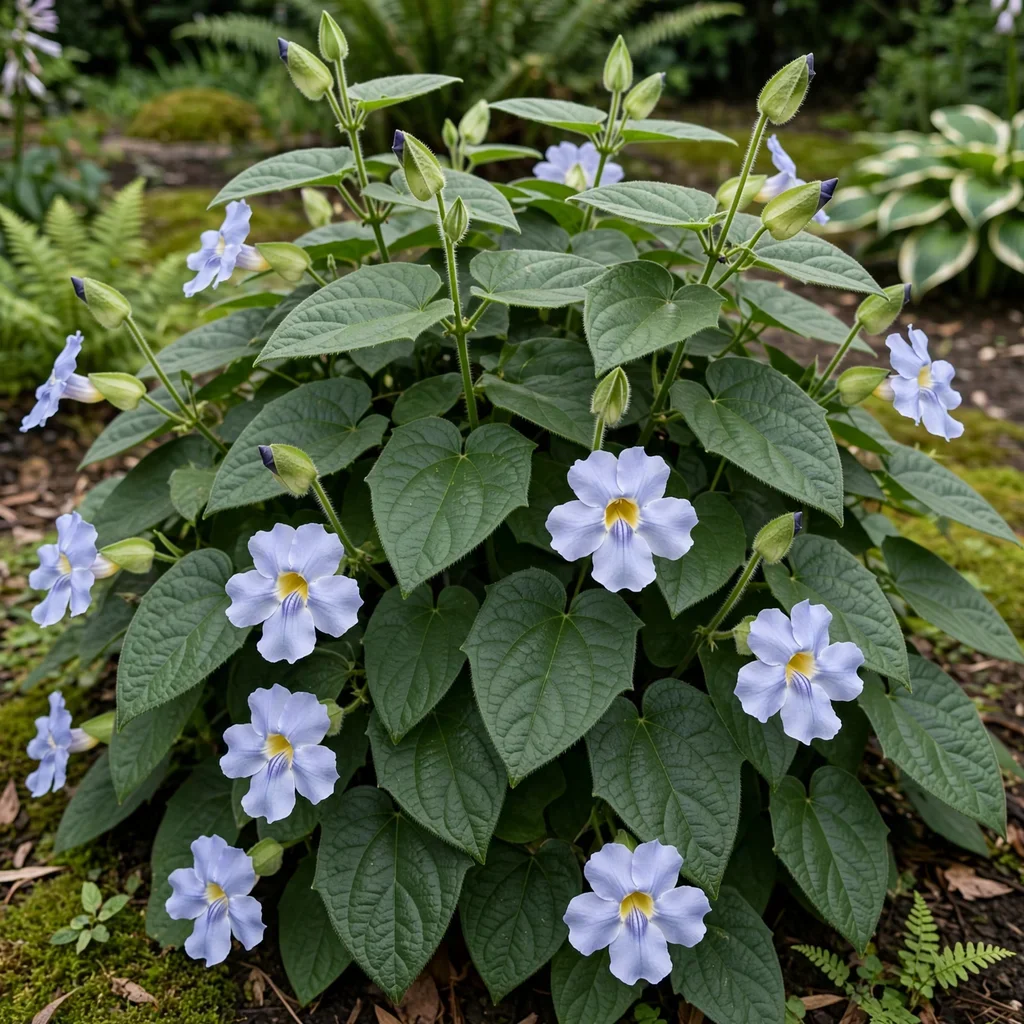
Natal Bluebell
Thunbergia natalensis
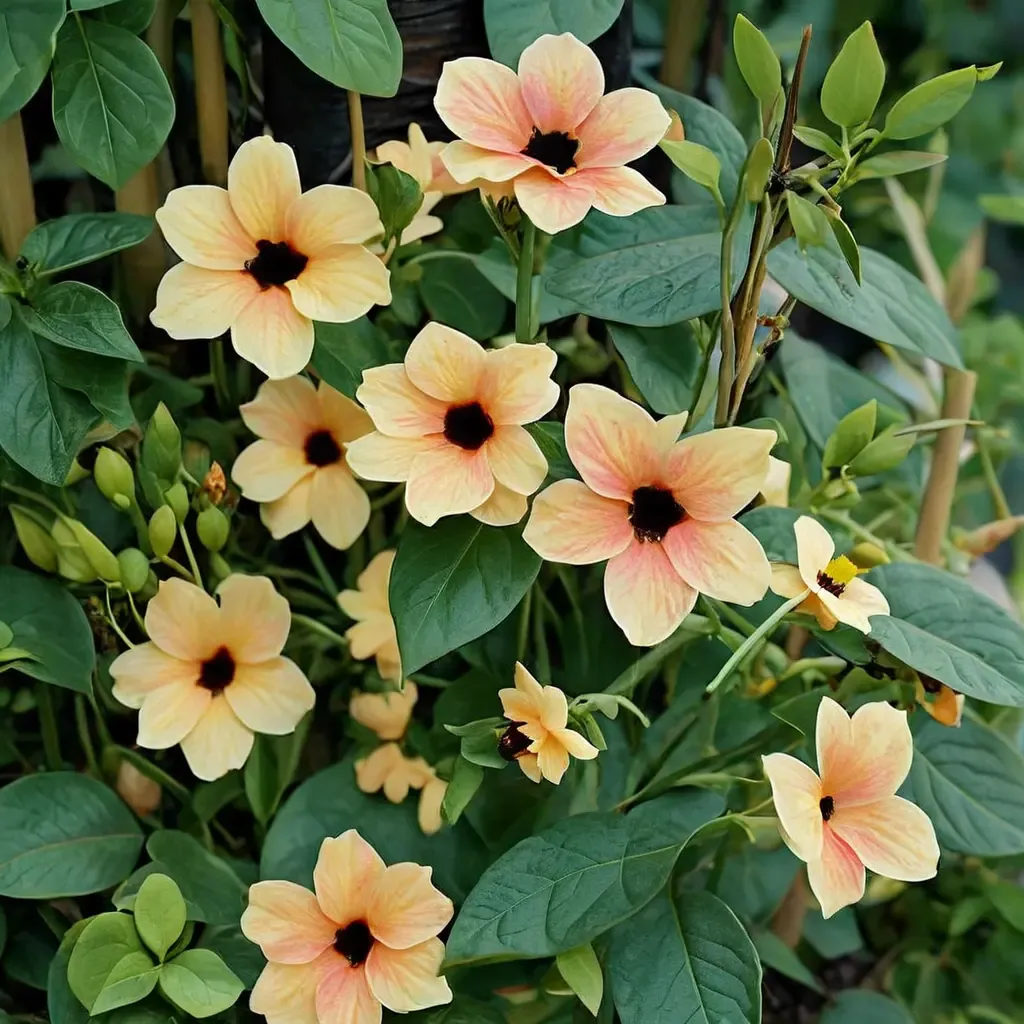
African Sunset Black-Eyed Susan Vine
Thunbergia alata 'African Sunset'
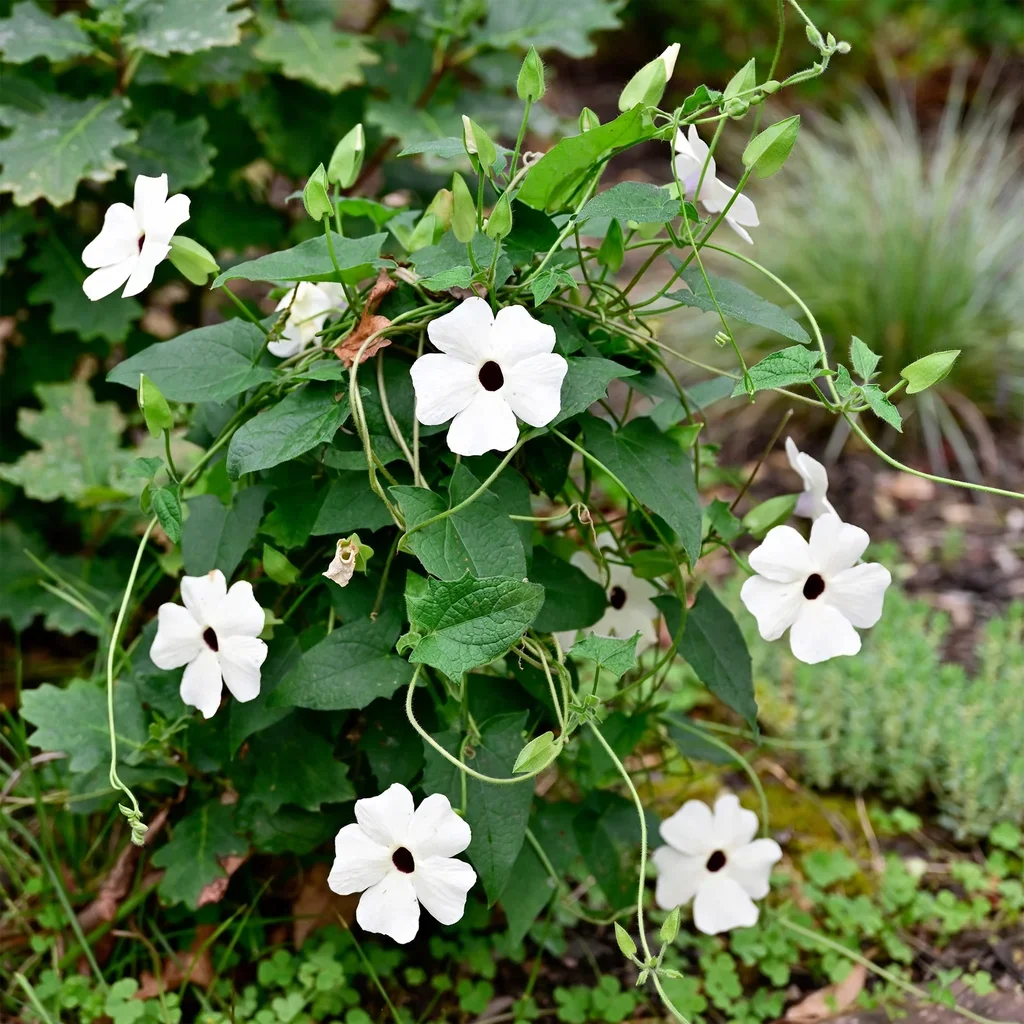
White Halo Black-eyed Susan Vine
Thunbergia alata 'White Halo'
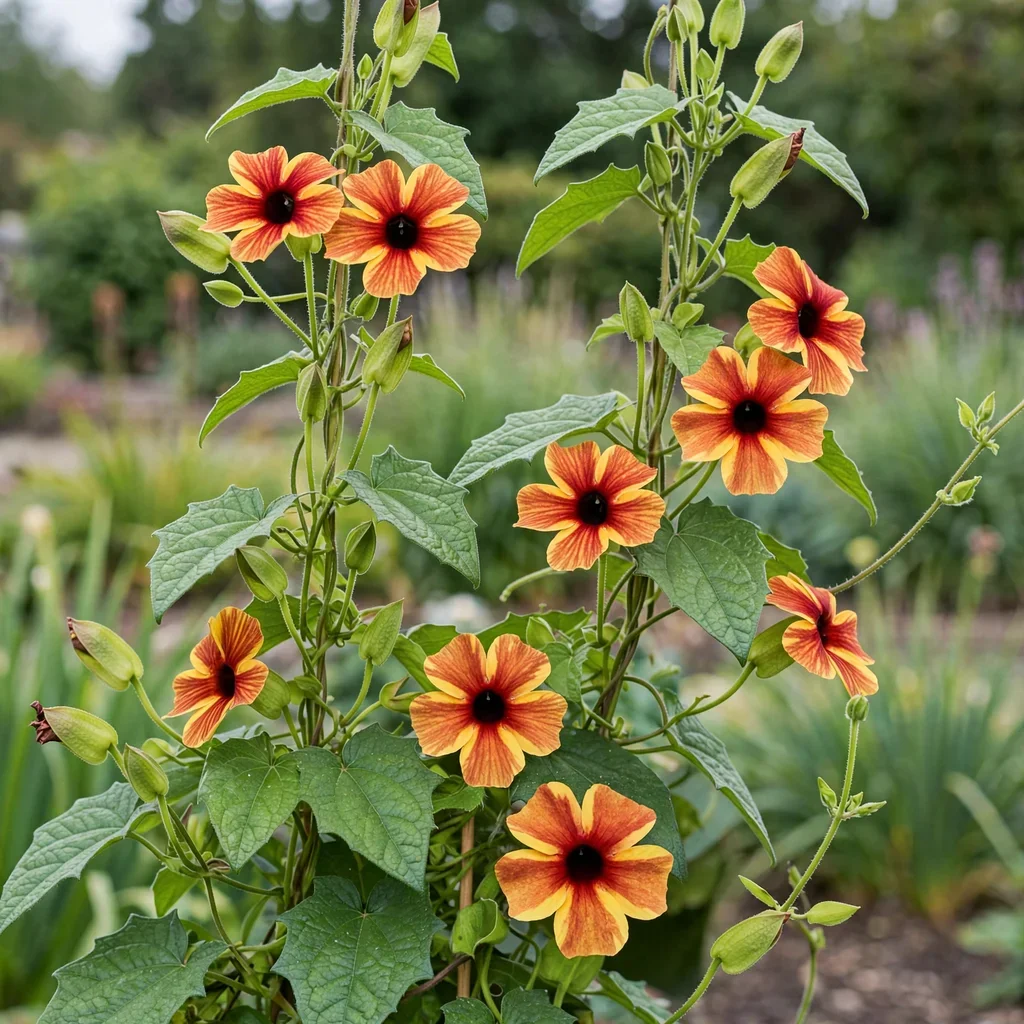
Black-eyed Susan Vine Thunbergia Amber Stripes
Thunbergia alata 'Amber Stripes'
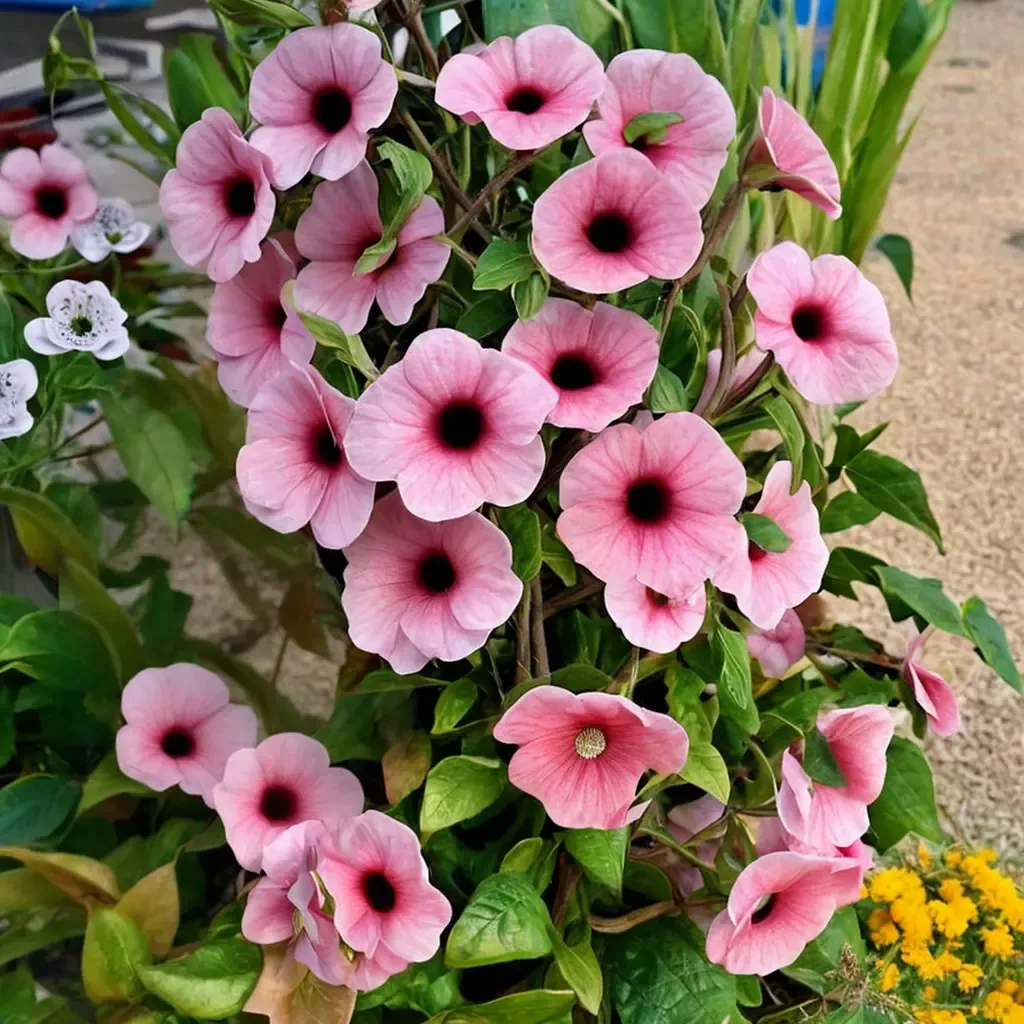
Rose Sensation Black-eyed Susan Vine
Thunbergia alata 'Rose Sensation'
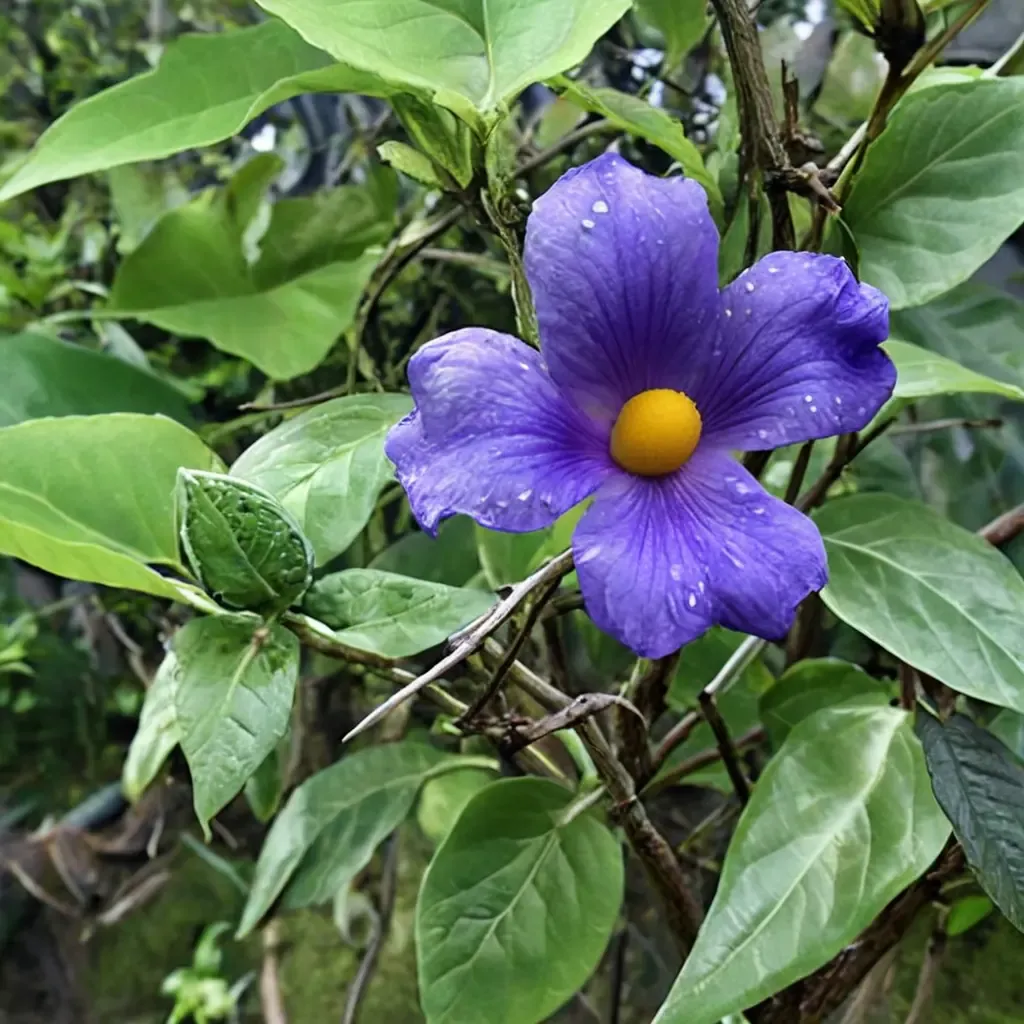
Blue Glory Vine
Thunbergia battiscombei
Keep exploring
Explore the genus
Hardy in your zone?
Grow Black-eyed Susan Vine with confidence
See it in a design of your actual yard, get zone-matched care reminders, and track it season by season in your garden journal.