The Story
Plant Bio
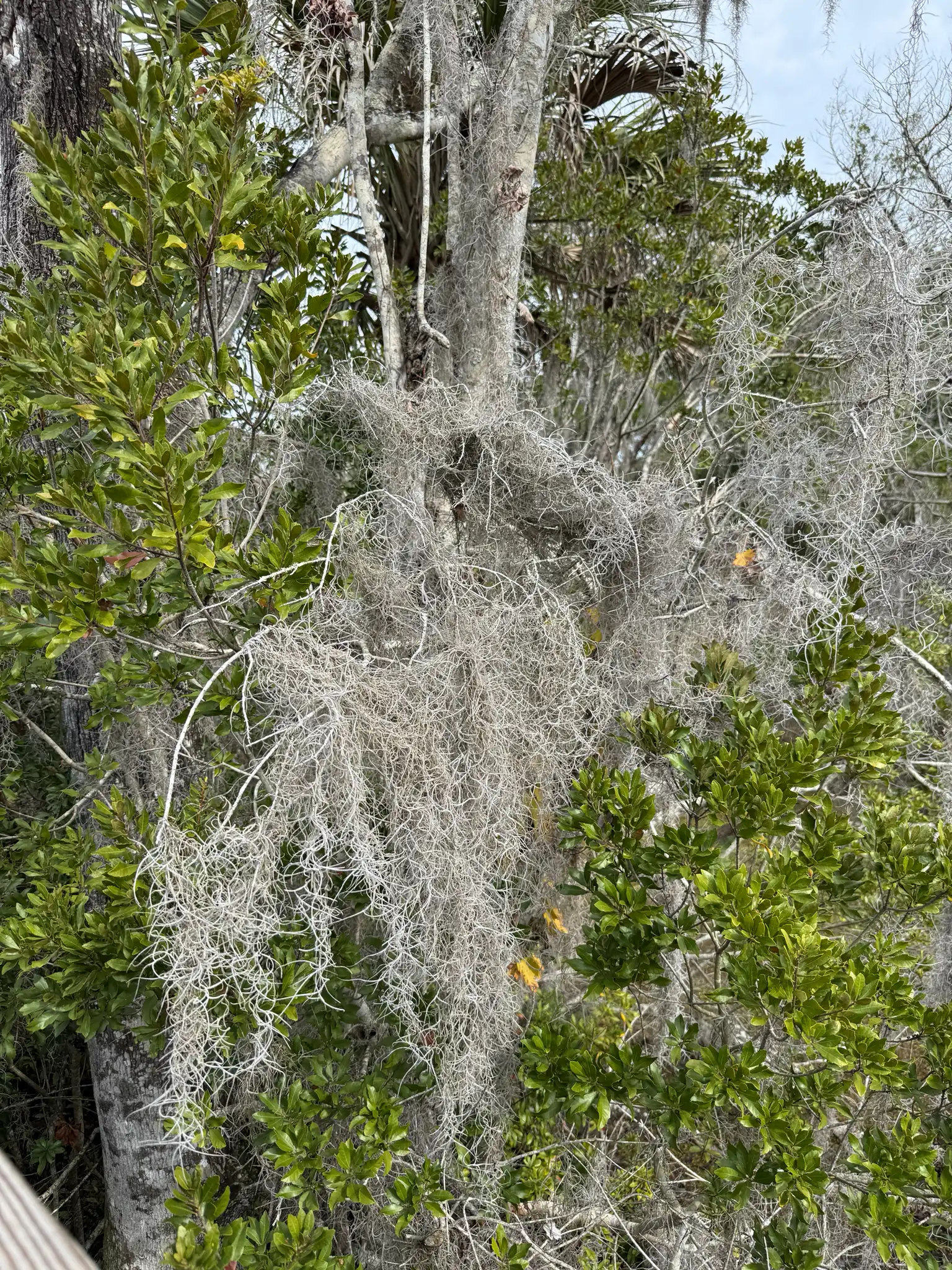
Tillandsia usneoides, commonly known as Spanish moss, is a rootless, pendulous epiphyte that grows in long, cascading chains draped over tree branches. The slender, branching stems are densely covered in specialized silvery-gray scales called trichomes, which absorb moisture and nutrients directly from the air.
This species produces tiny, inconspicuous pale green or blue flowers in the leaf axils during spring and summer. The interlocking, thread-like strands form dense, hanging curtains that can reach up to ten feet in length in optimal conditions.
Uses & Benefits:
Essentials
At a Glance
Plant Type
Tropical
Height
118"
Width
24"
Light
Partial Sun, Shade
Zones
8, 9, 10
Water
Moderate
Humidity
High
Lifespan
Perennial
Native To
The Americas
Toxicity
Non-toxic
Bloom period
Spring – Summer
In flower about 6 months of the year
Planting
How to Grow
- Hang the strands in a location that receives bright, indirect light or partial shade.
- Ensure the plant is suspended freely in the air, avoiding closed terrariums or stagnant corners.
- Mist or submerge the entire clump in water one to three times per week, depending on ambient humidity.
- Thoroughly shake off all excess water immediately after soaking to prevent moisture from pooling in the core.
Pro Tip
To prevent rot, ensure the strands dry completely within a few hours of watering; absolute, continuous air circulation is far more critical to survival than frequent misting.
Keep It Thriving
Care Guide
Do
- Provide continuous, active air movement around all parts of the hanging strands.
- Use a highly diluted, low-nitrogen liquid fertilizer once a month during spring and summer.
- Protect the plant from sustained freezing temperatures by moving it indoors during winter.
Don't
- Do not plant Spanish moss in soil, potting mix, or any heavy organic substrate.
- Do not allow the core of the clump to remain wet or soggy for extended periods.
- Do not prune heavily into old, leafless sections expecting new vegetative buds to form.
Seasonal Care Calendar
| Task | Jan | Feb | Mar | Apr | May | Jun | Jul | Aug | Sep | Oct | Nov | Dec |
|---|---|---|---|---|---|---|---|---|---|---|---|---|
| Fertilize | ||||||||||||
| Pest Check | ||||||||||||
| Prune | ||||||||||||
| Winter Prep |
Watch Out For
Pests & Diseases
Common Pests
Common Diseases
In the Garden
Landscape Uses & Companions
Landscape Uses
Companion Plants
Multiply
Propagation Methods
Good to Know
Common Questions
Spanish Moss questions
What zones can Spanish Moss grow in?
Spanish Moss is hardy in USDA Zones 8–10. Inside that range it survives winter in the ground; outside it, grow it as an annual or a container plant you protect.
Is Spanish Moss deer resistant?
Yes — Spanish Moss is rated deer-resistant. Deer typically pass it over, though extreme hunger can override any plant's defenses.
When does Spanish Moss bloom?
Spanish Moss typically blooms in spring through summer. Exact timing shifts a week or two with your zone — Sow's bloom calendar maps it to your garden.
Does Spanish Moss need full sun?
Spanish Moss does best in part shade.
Is Spanish Moss drought tolerant?
Yes — once established (usually after the first full season), Spanish Moss handles dry spells with minimal watering. Water deeply its first year to build the root system that makes that possible.
More Tillandsia to compare
Keep exploring
Explore the genus
Hardy in your zone?
Grow Spanish Moss with confidence
See it in a design of your actual yard, get zone-matched care reminders, and track it season by season in your garden journal.