Also known as Staghorn Fern · 3 saves
Platycerium
Platycerium, the genus most gardeners know as staghorn fern. We track 3 varieties; the ones most used by real gardeners.
The 3 most-saved Platycerium varieties
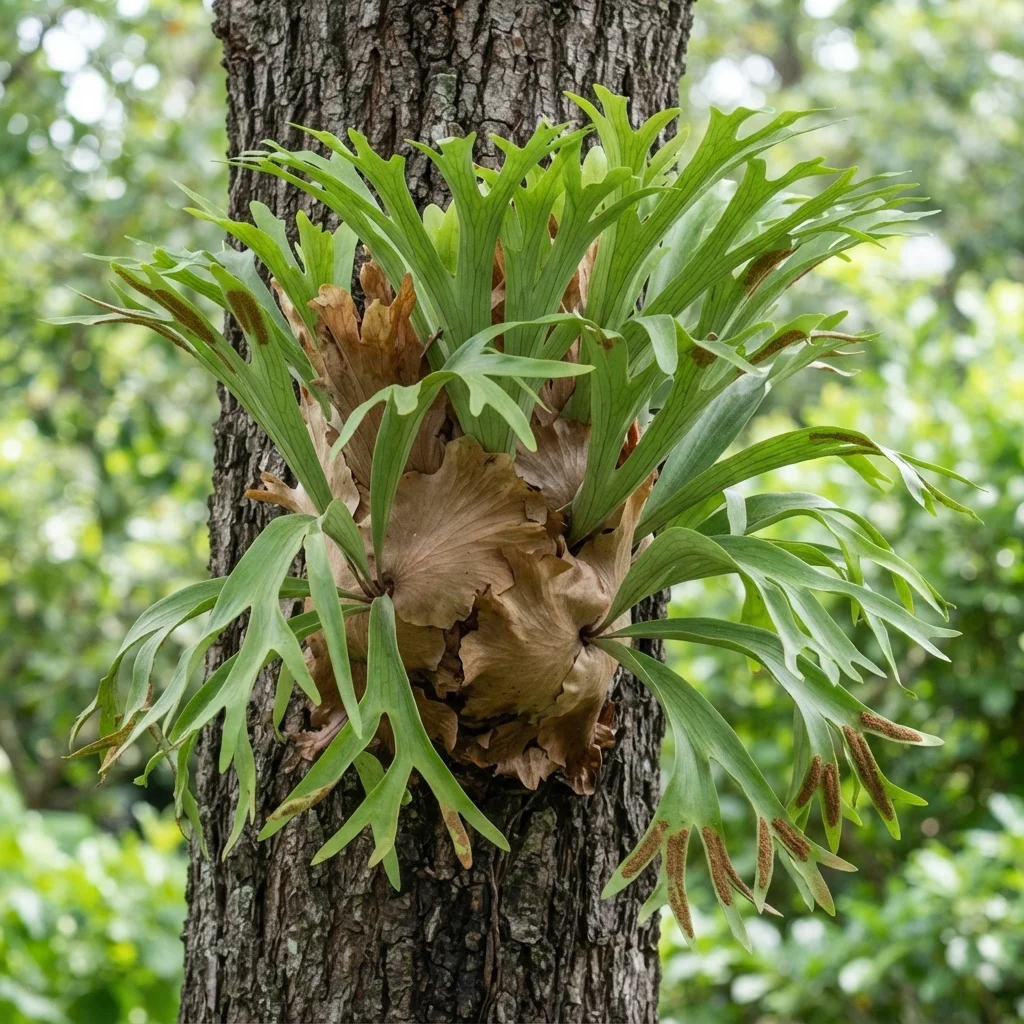
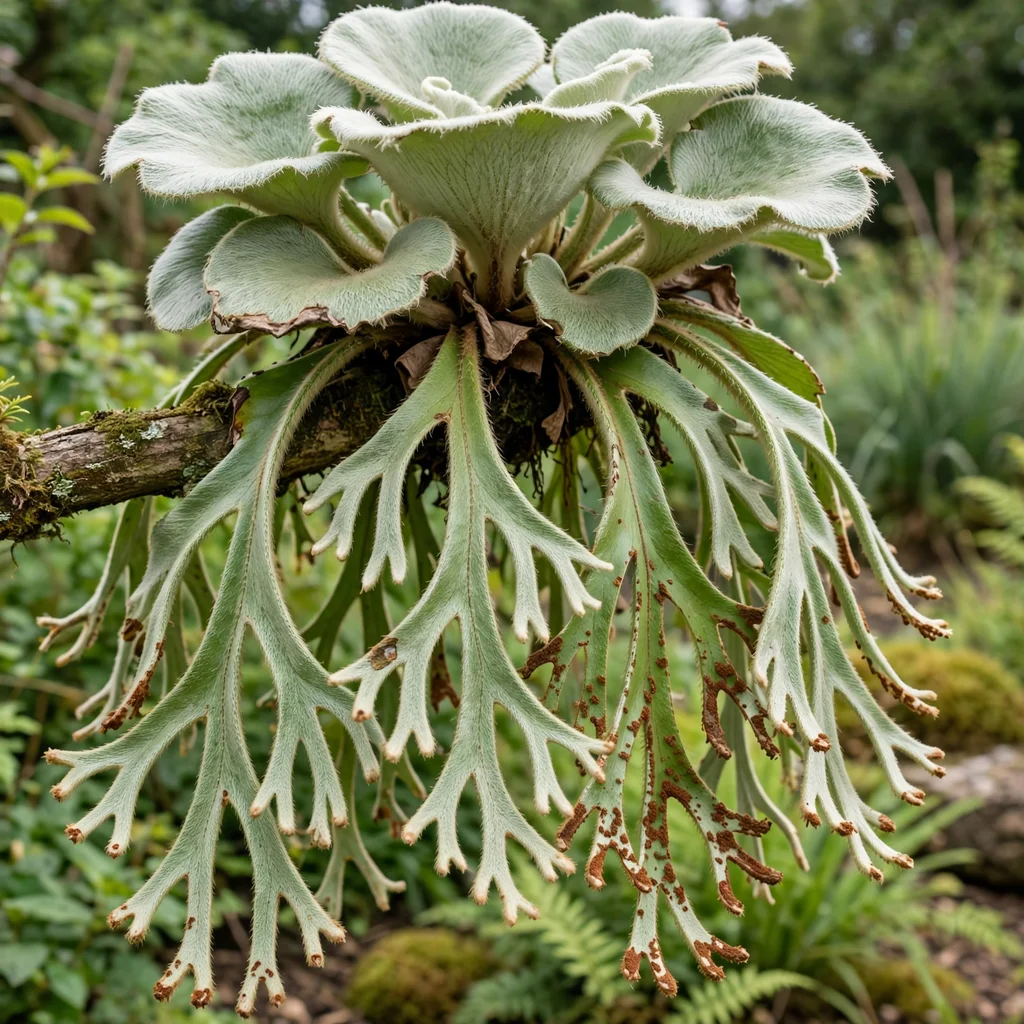
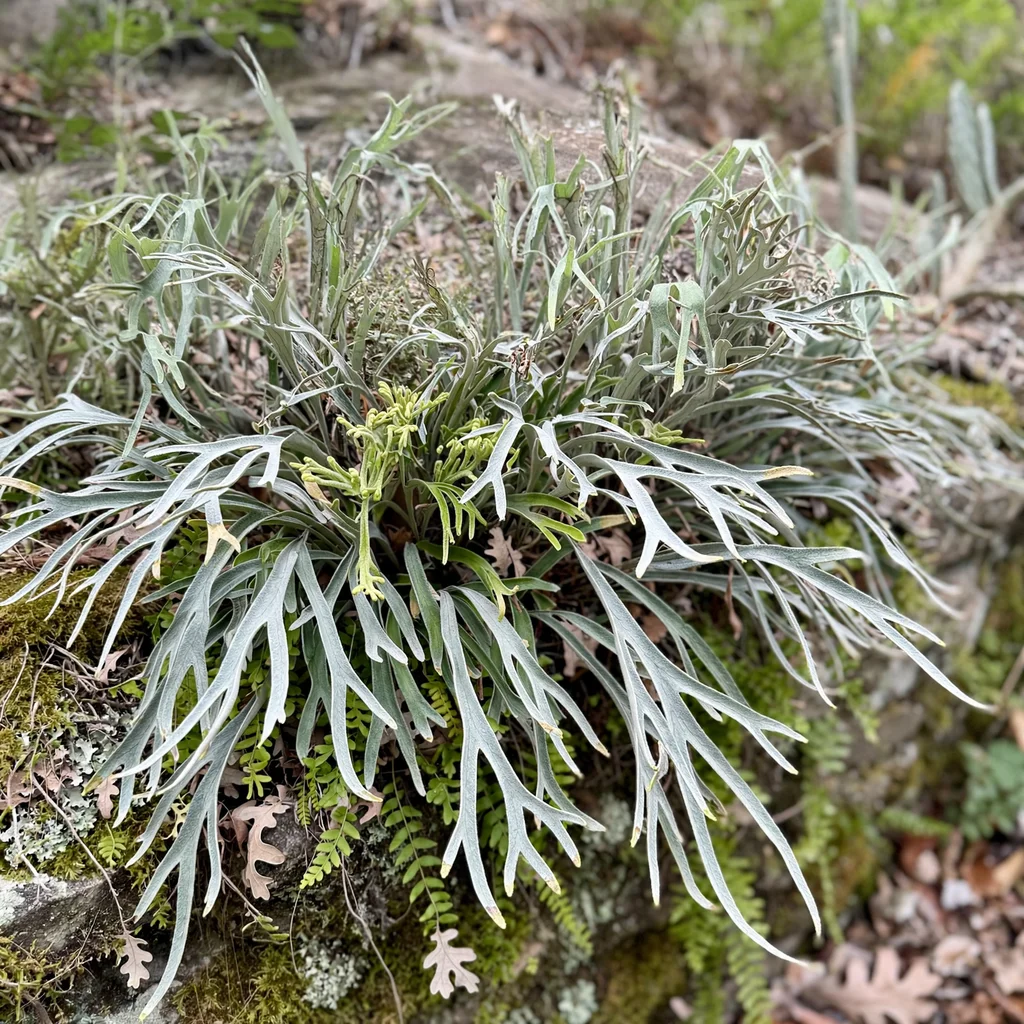
3 species of Platycerium
Each one is a parent of the varieties above.
Track your Platycerium in Sow
Save the Platycerium you grow and get care reminders timed to your zone.
How to grow Platycerium
Whats common across all Platycerium varieties in our catalog — drawn from the care records of the 3 most-grown of them.
The Platycerium year
- FertilizeApril–August100% of varieties
Apply a half-strength balanced liquid fertilizer to the nest core monthly through active warm growth.
- Check for PestsJune–August100% of varieties
Inspect shield frond undersides and core crevices for scale insects and mealybugs.
- Winter PrepOctober and November100% of varieties
Move outdoor mounted plants indoors to a frost-free location before ambient temperatures drop near freezing.
- PruneMarch and April67% of varieties
Trim off fully dry or decaying fertile fronds at their base; leave all shield fronds intact.


Do
- Mount on wood planks or in coarse epiphytic bark mixtures.
- Soak the root core thoroughly and allow it to dry slightly between waterings.
- Protect from freezing temperatures by keeping ambient temperatures above 35°F (2°C).
- Keep the central growth bud oriented upwards when mounting.
- Do soak the mount thoroughly, then let it dry between waterings.
Avoid
- Never cut away brown, paper-like shield fronds from the base.
- Never attempt to divide the plant, as it grows from a single non-pupping bud.
- Do not overwater or leave the core dripping wet during cold winter months.
- Do not plant in standard terrestrial garden soil.
What goes wrong with Platycerium
| Problem | What you'll see | What to do |
|---|---|---|
| Mealybugs | Cottony white waxy masses clustered in frond crevices | Wipe away visible pests with an alcohol-soaked swab or spray with insecticidal soap. |
| Scale insects | Small brown or white shell-like bumps on fronds and central core | Dab individual insects with a cotton swab dipped in rubbing alcohol or apply horticultural oil. |
| Spider mites | Fine webbing on frond undersides accompanied by pale stippling | Increase ambient humidity and wash fronds gently with lukewarm water. |
| Fern scale | White to brown oyster-shaped bumps on leaf undersides and hidden under shields, yellowing fronds | Dab insects with alcohol swab, then apply 1% horticultural oil or insecticidal soap; improve air flow |
| Rhizoctonia crown rot | Black, water-soaked rot spreading rapidly across shield fronds and central growth point | Reduce watering frequency immediately, improve air circulation, and allow the core to dry completely. |
| Bacterial wet rot | Dark, watery patches on the fronds with a foul odor | Trim damaged fertile fronds and keep foliage completely dry while increasing airflow. |
| Rhizoctonia leaf spot and root rot | Brown-black leaf spots and soft blackened base from overwatering | Allow mount to dry between soakings, improve air circulation, remove rotted tissue |
Making more Platycerium
Spore propagation
- Collect mature brown spores from the single spore patch on the underside of a fertile frond.
- Sow the spores evenly onto the surface of a moist, sterile peat or sphagnum moss medium.
- Cover the tray with a clear plastic dome to maintain near 100 percent humidity under indirect light.
- Mist carefully when gametophytes appear, keeping the medium moist until young fronds emerge.
Division
- Wait until a pup forms its own shield and small root mass beside the parent.
- Unwire the mount and cut the pup free with shield and roots attached.
- Tie the pup to a new sphagnum-packed slab with fishing line.
- Mist lightly and withhold soak for a week, then resume soak-and-dry watering.
Platycerium questions
How many types of Platycerium are there?
The Sow catalog tracks 3 distinct Platycerium varieties. The most popular — ranked by 3 real gardeners — are shown first above.
What zones does Platycerium grow in?
Across its varieties, Platycerium covers USDA Zones 9–10. Individual varieties differ — each plant page lists its exact range, and Sow filters the catalog to your zone automatically.
Which Platycerium should I choose?
Start from the most-saved varieties above — popularity across thousands of gardens is a strong signal of reliability — then filter by your zone and sun. In the Sow app you can preview any of them in a photo of your actual yard before you buy.