The Story
Plant Bio
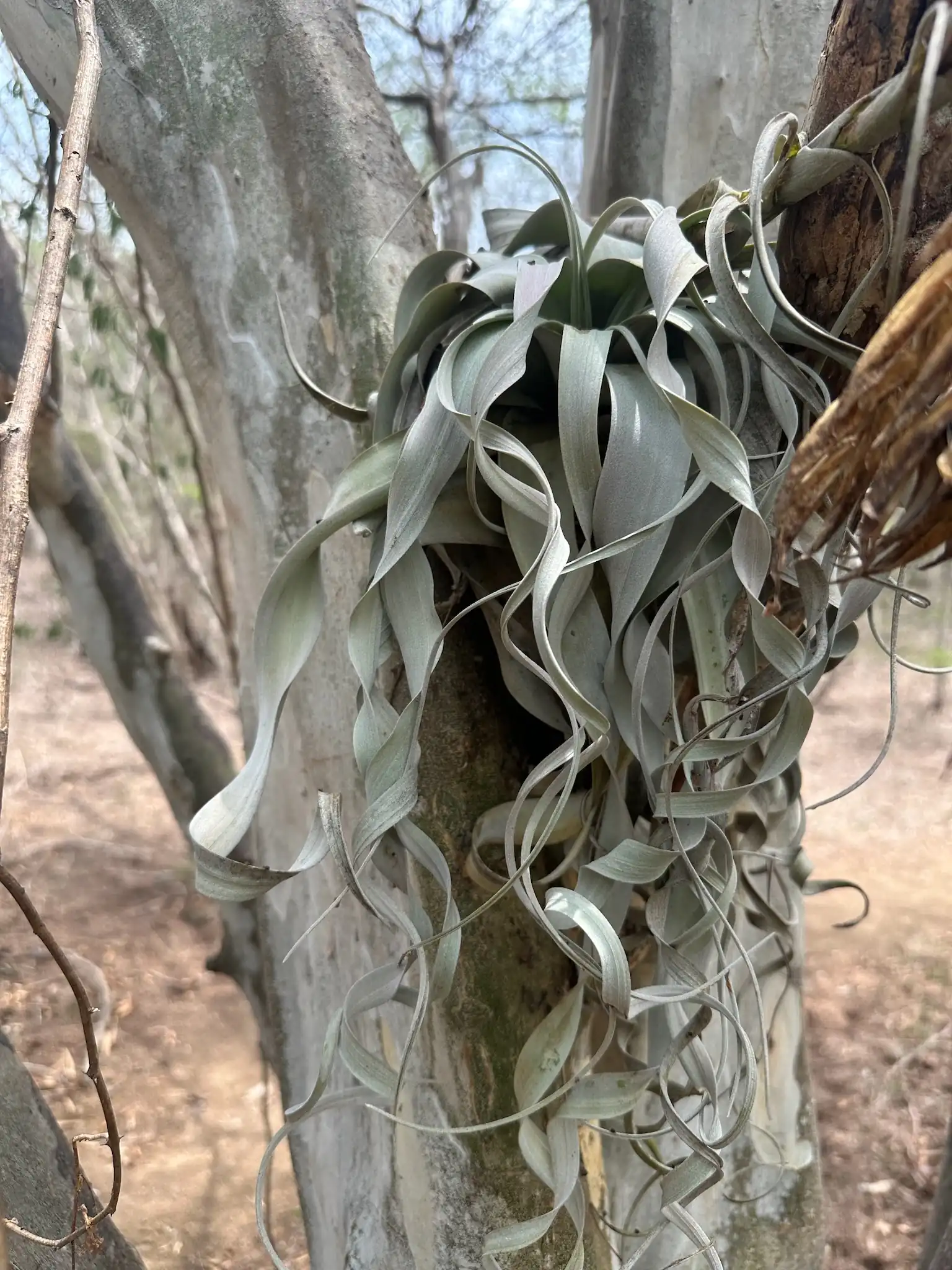
Tillandsia xerographica is an epiphytic, evergreen perennial that forms a dense, symmetrical rosette of broad, silvery-grey leaves tapering into gracefully curling, ribbon-like tips. Heavily covered in water-absorbing trichomes, the foliage has a frosted appearance and supports a highly branched, long-lasting inflorescence of rosy-red and chartreuse bracts with tubular purple flowers.
This species is distinguished by its exceptionally large size and high drought tolerance, adapting to dry scrub forests by storing moisture in specialized tissues. The curling, sculptural leaves tighten during dry periods and relax when hydrated, serving as a visual indicator of the plant's water status.
Uses & Benefits:
Essentials
At a Glance
Plant Type
Perennial
Height
12"
Width
16"
Light
Partial Sun, Shade
Zones
10
Water
Low
Humidity
Moderate
Lifespan
Perennial
Native To
Mexico, Central America
Toxicity
Non-toxic
Bloom period
Spring – Summer
In flower about 6 months of the year
Planting
How to Grow
- Mount the plant on cork, wood, or a wire holder in a location receiving bright, indirect or filtered sunlight.
- Submerge the entire plant in room-temperature water for 15 to 30 minutes every one to two weeks.
- Invert the plant immediately after soaking, shaking it gently to ensure no water remains trapped in the central cup.
- Mist the foliage with a highly diluted, low-nitrogen liquid fertilizer once every three to four weeks during spring and summer.
Pro Tip
Always invert the plant and shake it thoroughly after soaking; allowing water to pool inside the central rosette causes rapid, fatal crown rot.
Keep It Thriving
Care Guide
Do
- Shake the plant upside down after watering to drain the central rosette.
- Provide excellent air circulation to ensure the leaves dry completely within four hours of watering.
- Expose the plant to bright, filtered light or dappled shade.
Don't
- Do not plant the base in soil, peat, or any moisture-retaining substrate.
- Do not allow water to sit in the center of the rosette overnight.
- Do not expose the plant to freezing temperatures or harsh, direct midday sun.
Seasonal Care Calendar
| Task | Jan | Feb | Mar | Apr | May | Jun | Jul | Aug | Sep | Oct | Nov | Dec |
|---|---|---|---|---|---|---|---|---|---|---|---|---|
| Fertilize | ||||||||||||
| Pest Check | ||||||||||||
| Propagate | ||||||||||||
| Winter Prep |
Watch Out For
Pests & Diseases
Common Pests
Common Diseases
In the Garden
Landscape Uses & Companions
Landscape Uses
Companion Plants
Multiply
Propagation Methods
Good to Know
Common Questions
Giant Air Plant questions
What zones can Giant Air Plant grow in?
Giant Air Plant is hardy in USDA Zone 10. Inside that range it survives winter in the ground; outside it, grow it as an annual or a container plant you protect.
When does Giant Air Plant bloom?
Giant Air Plant typically blooms in spring through summer. Exact timing shifts a week or two with your zone — Sow's bloom calendar maps it to your garden.
Does Giant Air Plant need full sun?
Giant Air Plant does best in part shade.
Is Giant Air Plant drought tolerant?
Yes — once established (usually after the first full season), Giant Air Plant handles dry spells with minimal watering. Water deeply its first year to build the root system that makes that possible.
More Tillandsia to compare
Keep exploring
Explore the genus
Hardy in your zone?
Grow Giant Air Plant with confidence
See it in a design of your actual yard, get zone-matched care reminders, and track it season by season in your garden journal.