The Story
Plant Bio
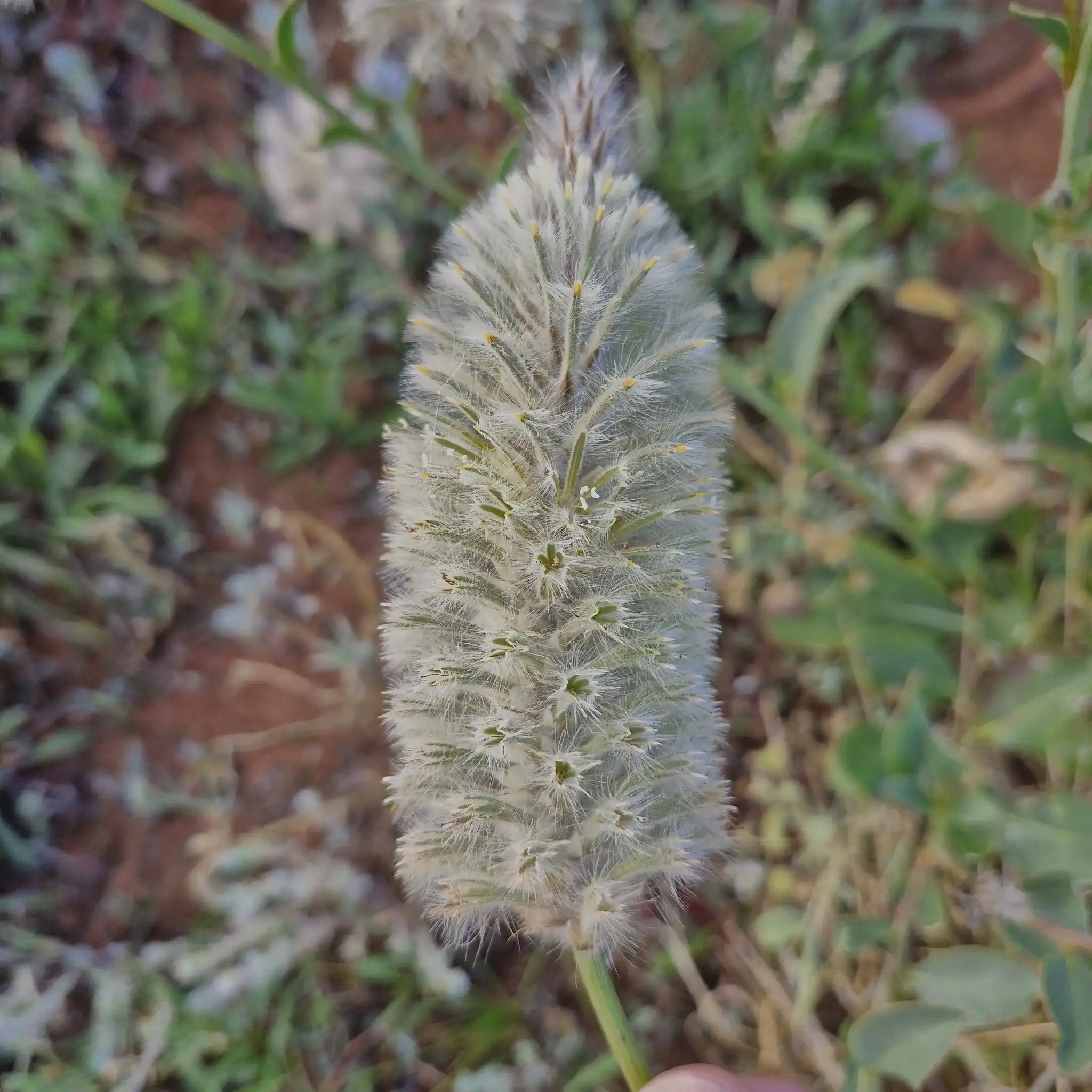
Ptilotus nobilis is an erect, deeply taprooted herb native to the arid interior of Australia, forming a neat clump of branching stems with thick, semi-succulent foliage. The species is highly adapted to low-fertility soils and extreme drought, requiring exceptional drainage to survive outside its native desert habitat.
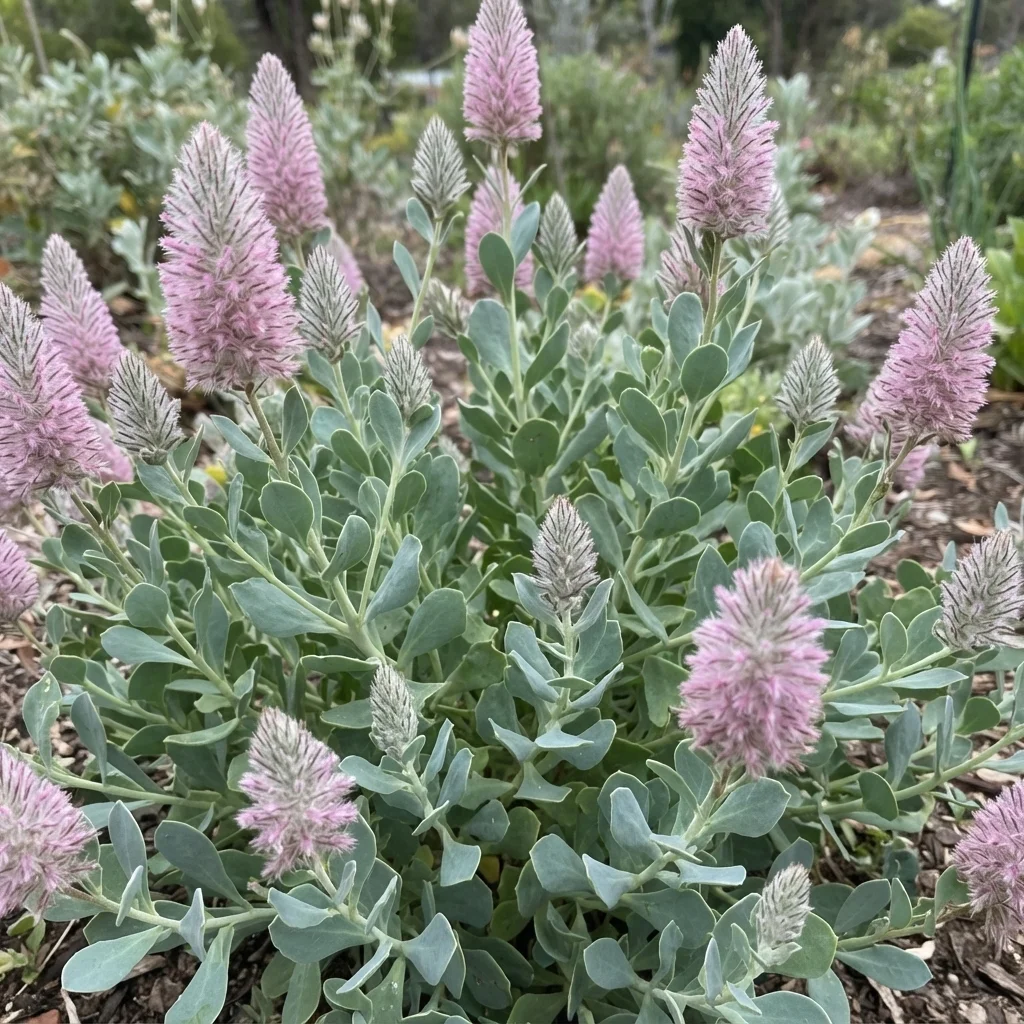
Unlike its popular pink-flowered relative Ptilotus exaltatus, this species produces dense, cylindrical spikes of yellowish-green to creamy-green flowers with heavily feathered, sweet-scented perianths. The upright flower heads stretch up to eight inches long on robust specimens, drying to an attractive silvery-green.
Uses & Benefits:
Essentials
At a Glance
Plant Type
Perennial
Height
40"
Width
20"
Light
Full Sun
Zones
9, 10
Water
Low
Humidity
Low
Lifespan
Short-lived perennial (grown as annual)
Native To
Australia
Toxicity
Non-toxic
Bloom period
Summer – Fall
In flower about 6 months of the year
Planting
How to Grow
- Select a planting site in full sun with exceptionally sharp-draining sandy loam or gravelly soil.
- Sow seeds shallowly in warm soil after all danger of frost has passed, or transplant plugs carefully to avoid disturbing the sensitive taproot.
- Water sparingly during establishment, then withhold regular watering once the root system is deep.
- Avoid applying heavy fertilizers, particularly those high in phosphorus, to prevent soft, weak stems.
Pro Tip
Avoid planting in heavy clay or standard moisture-retentive potting soils; excess moisture at the root collar triggers rapid, fatal fungal rot.
Keep It Thriving
Care Guide
Do
- Provide full, unobstructed sunlight for at least six hours daily.
- Use highly porous, sand- or grit-heavy potting mixes for container specimens.
- Deadhead spent flower spikes to maintain a tidy appearance.
Don't
- Do not overwater or allow the soil to remain saturated.
- Do not prune hard into the old, leafless woody stems at the base.
- Do not apply heavy doses of standard garden fertilizer.
Seasonal Care Calendar
| Task | Jan | Feb | Mar | Apr | May | Jun | Jul | Aug | Sep | Oct | Nov | Dec |
|---|---|---|---|---|---|---|---|---|---|---|---|---|
| Deadhead | ||||||||||||
| Fertilize | ||||||||||||
| Pest Check | ||||||||||||
| Plant |
Watch Out For
Pests & Diseases
Common Pests
Common Diseases
In the Garden
Landscape Uses & Companions
Landscape Uses
Companion Plants
Multiply
Propagation Methods
Good to Know
Common Questions
Regal-foxtail questions
What zones can Regal-foxtail grow in?
Regal-foxtail is hardy in USDA Zones 9–10. Inside that range it survives winter in the ground; outside it, grow it as an annual or a container plant you protect.
Is Regal-foxtail deer resistant?
Not reliably. Deer may browse Regal-foxtail, especially tender spring growth — plan on repellents or fencing where pressure is high.
When does Regal-foxtail bloom?
Regal-foxtail typically blooms in summer through fall. Exact timing shifts a week or two with your zone — Sow's bloom calendar maps it to your garden.
Does Regal-foxtail need full sun?
Regal-foxtail does best in full sun (6+ hours).
Is Regal-foxtail drought tolerant?
Yes — once established (usually after the first full season), Regal-foxtail handles dry spells with minimal watering. Water deeply its first year to build the root system that makes that possible.
More Ptilotus to compare
Keep exploring
Explore the genus
Hardy in your zone?
Grow Regal-foxtail with confidence
See it in a design of your actual yard, get zone-matched care reminders, and track it season by season in your garden journal.