The Story
Plant Bio
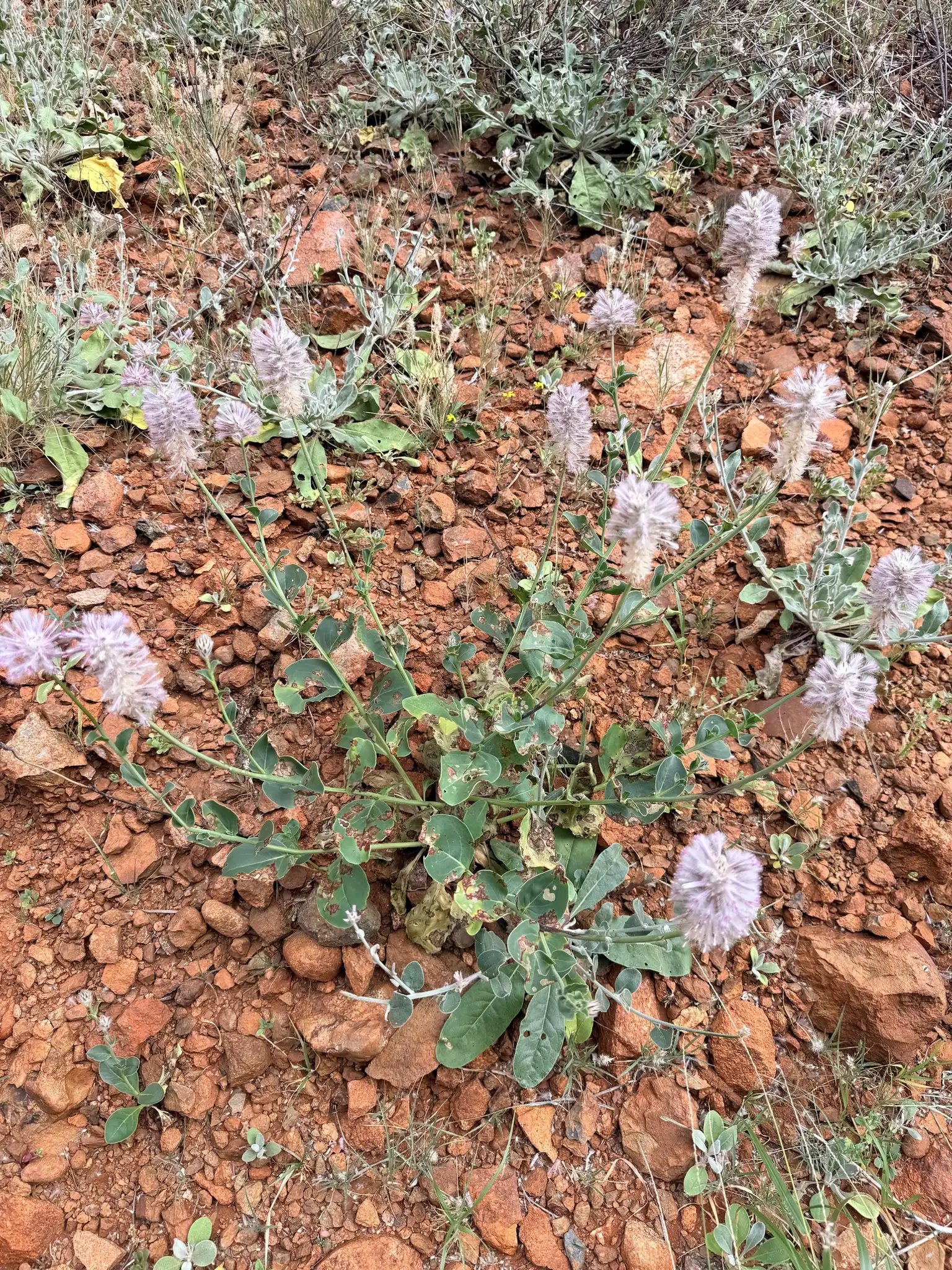
Ptilotus exaltatus is an upright, short-lived herbaceous perennial native to the arid interior of Australia, characterized by a basal rosette of fleshy, blue-green foliage. In summer, it produces dense, conical flower spikes up to six inches long, covered in feathery, silver-pink bracts with prominent magenta tips.
The species is highly adapted to low-nutrient, sandy soils and extreme heat, making it an exceptional choice for dry containers or gravel gardens. Its succulent-like leaves store moisture, allowing the plant to withstand prolonged dry spells once its root system is established.
Uses & Benefits:
Essentials
At a Glance
Plant Type
Perennial
Height
20"
Width
16"
Light
Full Sun
Zones
9, 10
Water
Low
Humidity
Low
Lifespan
Short-lived perennial (often grown as an annual)
Native To
Australia
Toxicity
Non-toxic
Bloom period
Summer – Fall
In flower about 6 months of the year
Planting
How to Grow
- Select a planting site that receives at least six to eight hours of direct sunlight daily.
- Amend the planting area with coarse sand, fine gravel, or perlite to guarantee rapid drainage.
- Settle the plant into the soil, keeping the crown slightly elevated above the surrounding soil level to prevent moisture accumulation.
- Water thoroughly immediately after planting, then withhold water until the top two inches of soil are completely dry.
Pro Tip
Treat this species like a desert succulent: plant in a lean, gritty mineral mix, maximize air circulation, and allow the potting medium to dry out completely between waterings to prevent root rot.
Keep It Thriving
Care Guide
Do
- Grow in unglazed terracotta pots to facilitate soil drying through evaporation.
- Deadhead spent flower spikes cleanly at the base to stimulate subsequent blooms.
- Provide wide spacing between plants to maximize air movement and reduce humidity levels.
Don't
- Do not use organic-rich composts or heavy clay soils that retain moisture.
- Never water overhead; wet foliage in stagnant air quickly triggers fungal diseases.
- Do not cut back into old, leafless woody stems, as they will not regenerate.
Seasonal Care Calendar
| Task | Jan | Feb | Mar | Apr | May | Jun | Jul | Aug | Sep | Oct | Nov | Dec |
|---|---|---|---|---|---|---|---|---|---|---|---|---|
| Deadhead | ||||||||||||
| Fertilize | ||||||||||||
| Pest Check | ||||||||||||
| Plant | ||||||||||||
| Winter Prep |
Watch Out For
Pests & Diseases
Common Pests
Common Diseases
In the Garden
Landscape Uses & Companions
Landscape Uses
Companion Plants
Multiply
Propagation Methods
Good to Know
Common Questions
Pink Mulla Mulla questions
What zones can Pink Mulla Mulla grow in?
Pink Mulla Mulla is hardy in USDA Zones 9–10. Inside that range it survives winter in the ground; outside it, grow it as an annual or a container plant you protect.
Is Pink Mulla Mulla deer resistant?
Not reliably. Deer may browse Pink Mulla Mulla, especially tender spring growth — plan on repellents or fencing where pressure is high.
When does Pink Mulla Mulla bloom?
Pink Mulla Mulla typically blooms in summer through fall. Exact timing shifts a week or two with your zone — Sow's bloom calendar maps it to your garden.
Does Pink Mulla Mulla need full sun?
Pink Mulla Mulla does best in full sun (6+ hours).
Is Pink Mulla Mulla drought tolerant?
Yes — once established (usually after the first full season), Pink Mulla Mulla handles dry spells with minimal watering. Water deeply its first year to build the root system that makes that possible.
More Ptilotus to compare
Keep exploring
Explore the genus
Hardy in your zone?
Grow Pink Mulla Mulla with confidence
See it in a design of your actual yard, get zone-matched care reminders, and track it season by season in your garden journal.