The Story
Plant Bio
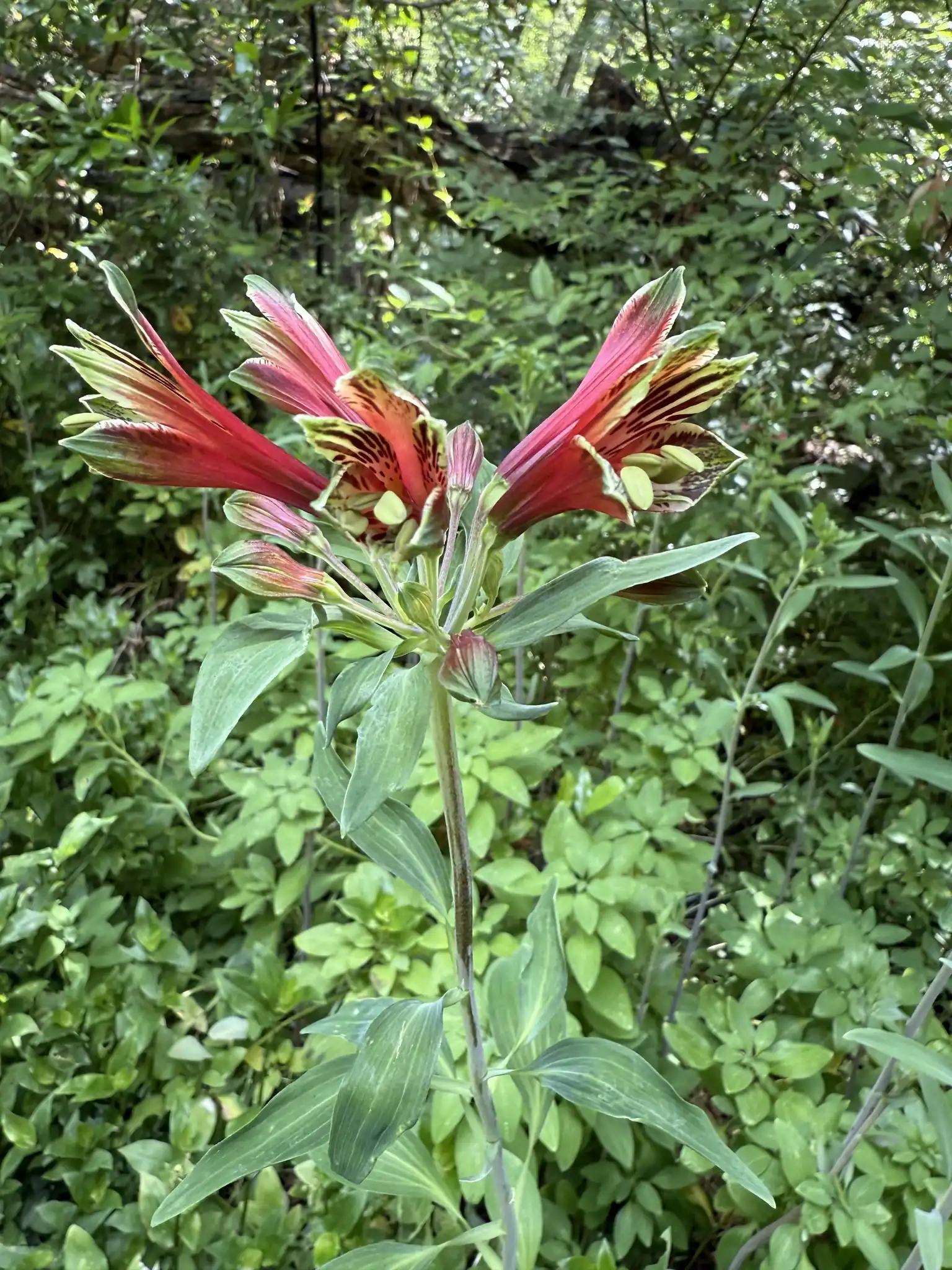
Alstroemeria psittacina, parrot lily, is an upright rhizomatous perennial from Brazil, Argentina and Paraguay, two to three feet in both directions. Lance-shaped leaves twist at the base so they appear upside down, and tubular flowers of deep red tipped and streaked with green open through summer and autumn.
The leaves twist through 180 degrees as they emerge, so what looks like the upper surface is anatomically the underside — a quirk shared across the genus. It runs strongly by rhizome and can colonise a border, which is why it has naturalised in parts of the Southeast. The flowers are unusually long-lasting cut, holding two weeks in water.
Uses & Benefits:
Essentials
At a Glance
Plant Type
Perennial
Height
30"
Width
30"
Light
Partial Sun, Shade
Zones
7, 8, 9, 10
Water
Moderate
Humidity
Moderate
Lifespan
Perennial
Native To
Brazil, Argentina and Paraguay
Toxicity
Sap may irritate skin
Planting
How to Grow
- Plant in full sun to partial shade in drained soil.
- Contain the rhizomes or give it room to run.
- Water while establishing, then moderately.
- Pull rather than cut stems for the vase.
- Cut spent stems down after flowering.
- Divide congested clumps in early spring.
Pro Tip
Pull flowering stems out with a twist rather than cutting them — that is how the plant is harvested commercially and it encourages more.
Keep It Thriving
Care Guide
Do
- Give it room or contain the rhizomes 🚧
- Pull stems rather than cutting 🌸
- Divide congested clumps in spring 🔁
- Use it as a long-lasting cut flower 💐
Don't
- Plant it loose in a small border ❌
- Let it seed near natural areas ❌
- Let it sit in waterlogged soil ❌
Seasonal Care Calendar
| Task | Jan | Feb | Mar | Apr | May | Jun | Jul | Aug | Sep | Oct | Nov | Dec |
|---|---|---|---|---|---|---|---|---|---|---|---|---|
| Divide | ||||||||||||
| Enjoy |
Watch Out For
Pests & Diseases
Common Pests
Common Diseases
In the Garden
Landscape Uses & Companions
Landscape Uses
Companion Plants
Multiply
Propagation Methods
Good to Know
Common Questions
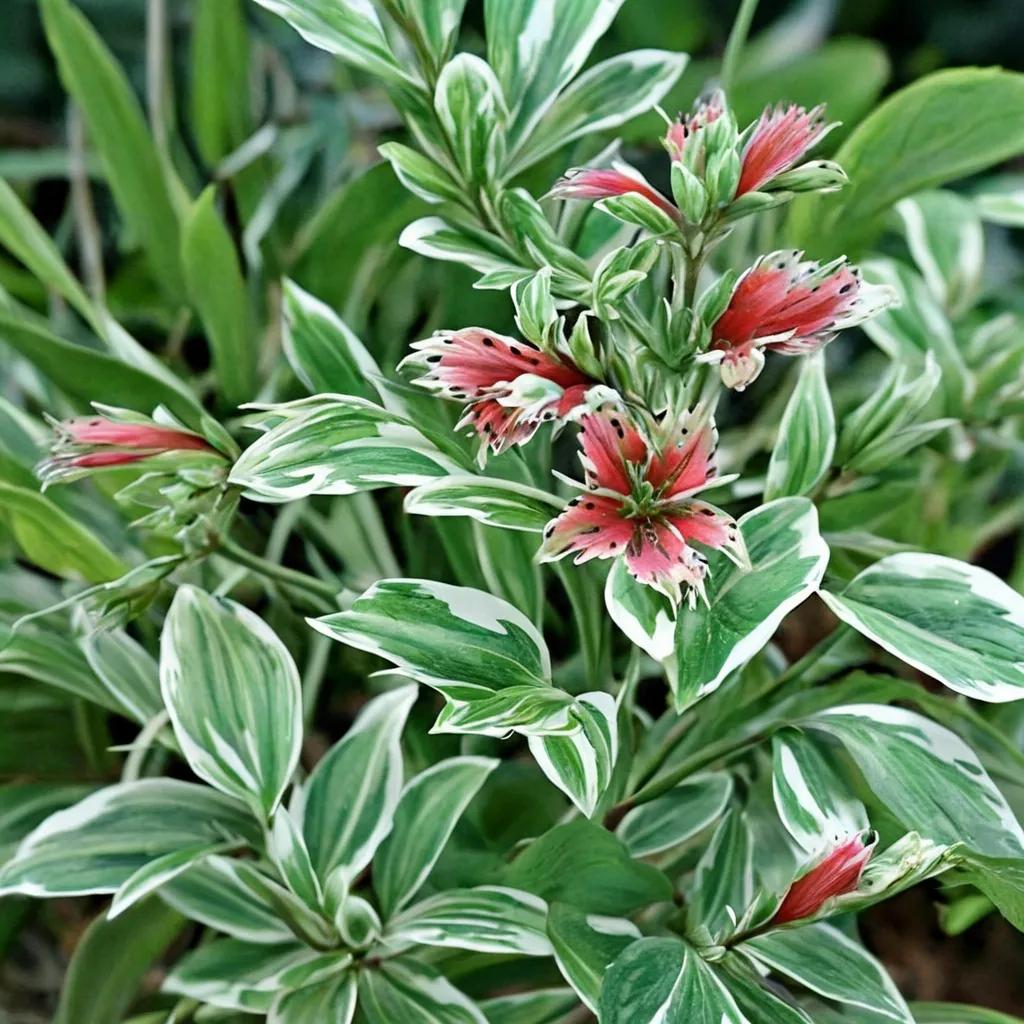
Variegated Peruvian Lily questions
What zones can Variegated Peruvian Lily grow in?
Variegated Peruvian Lily is hardy in USDA Zones 7–10. Inside that range it survives winter in the ground; outside it, grow it as an annual or a container plant you protect.
Is Variegated Peruvian Lily deer resistant?
Not reliably. Deer may browse Variegated Peruvian Lily, especially tender spring growth — plan on repellents or fencing where pressure is high.
When does Variegated Peruvian Lily bloom?
Variegated Peruvian Lily typically blooms in mid-summer to fall through late summer. Exact timing shifts a week or two with your zone — Sow's bloom calendar maps it to your garden.
Does Variegated Peruvian Lily need full sun?
Variegated Peruvian Lily does best in part shade.
More Alstroemeria to compare
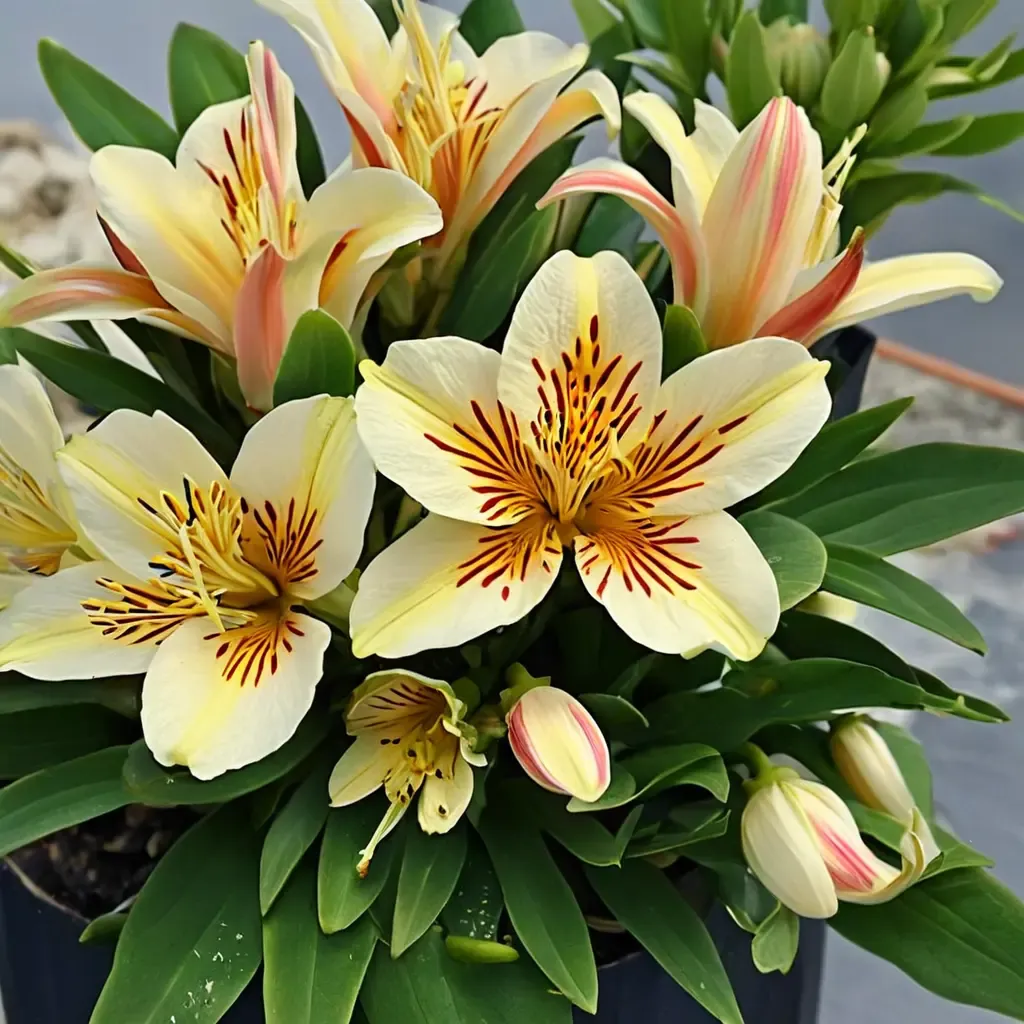
Inca Sundance Alstroemeria
Alstroemeria x hybrida 'Inca Sundance'
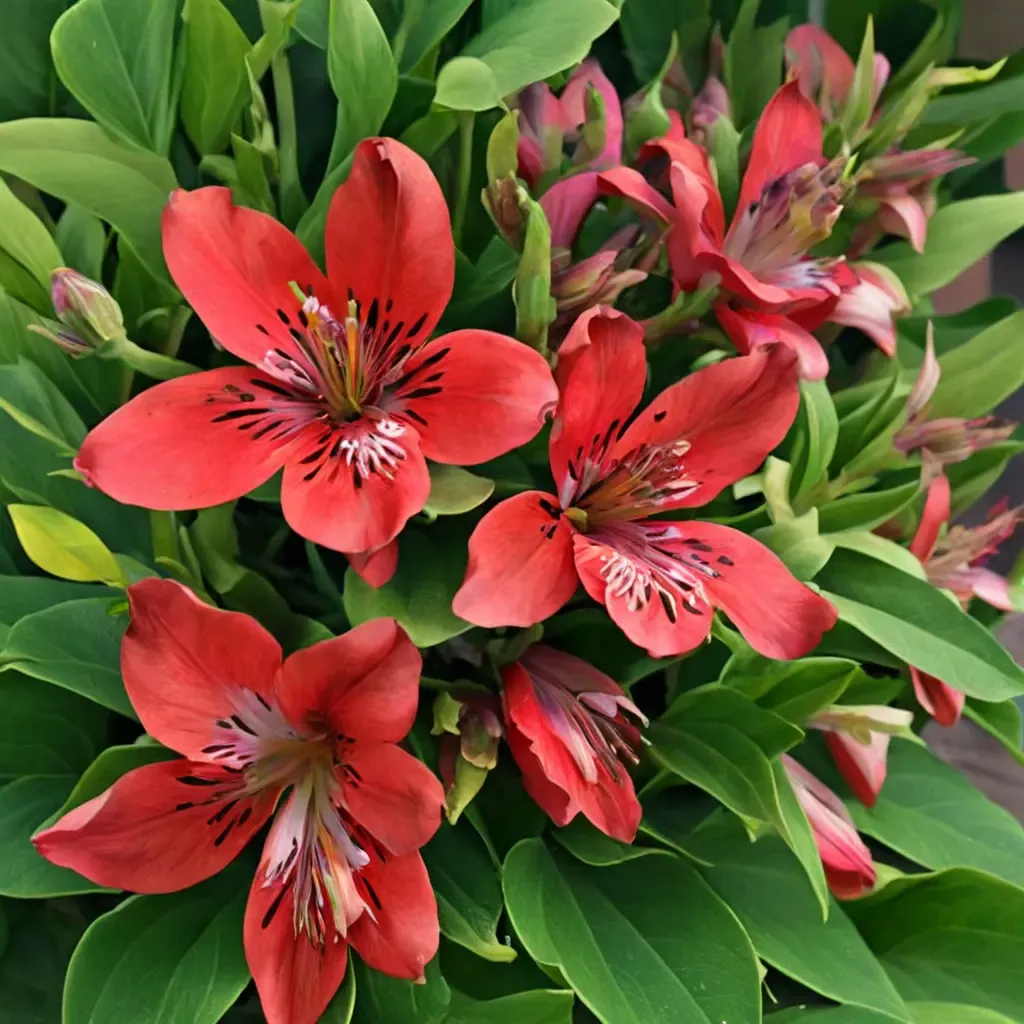
Inca Lolly Peruvian Lily
Alstroemeria x hybrida 'Inca Lolly'
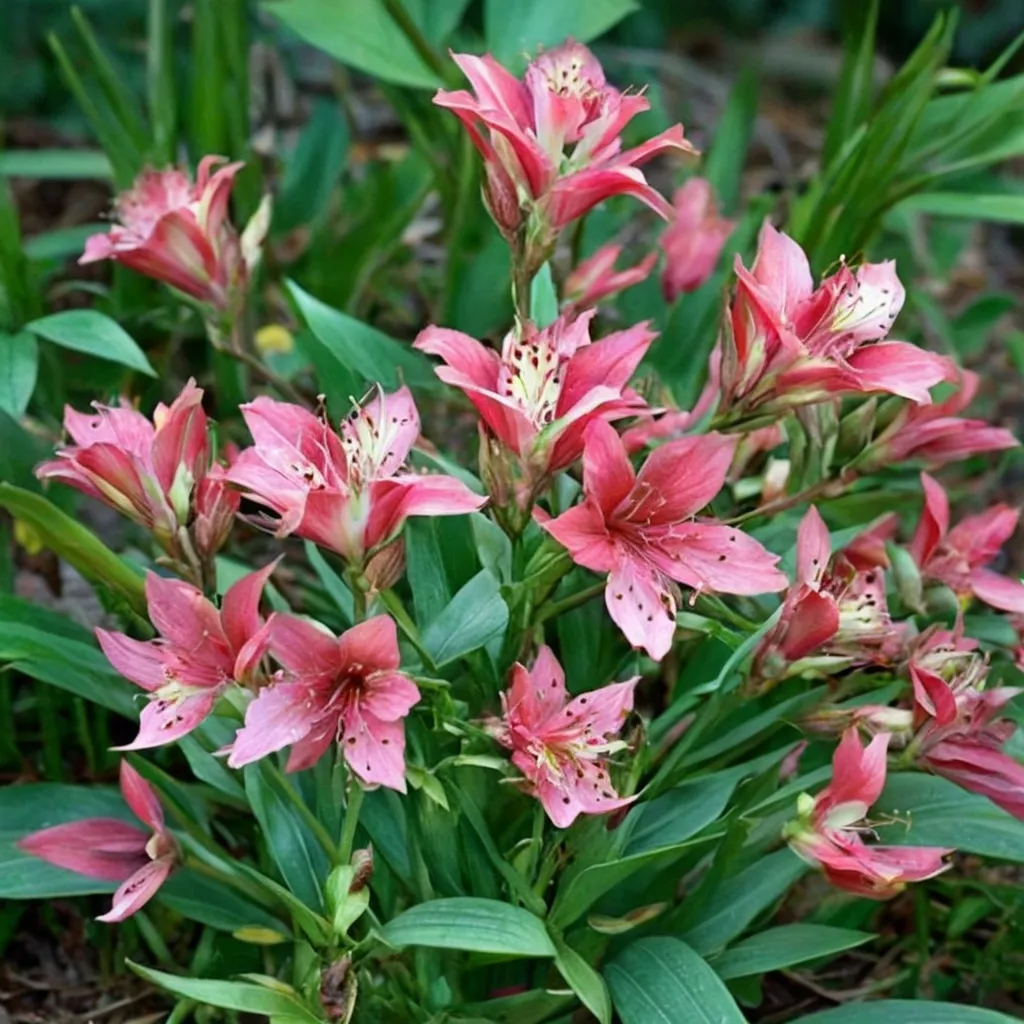
Peruvian Lily Freedom
Alstroemeria x hybrida 'Freedom'
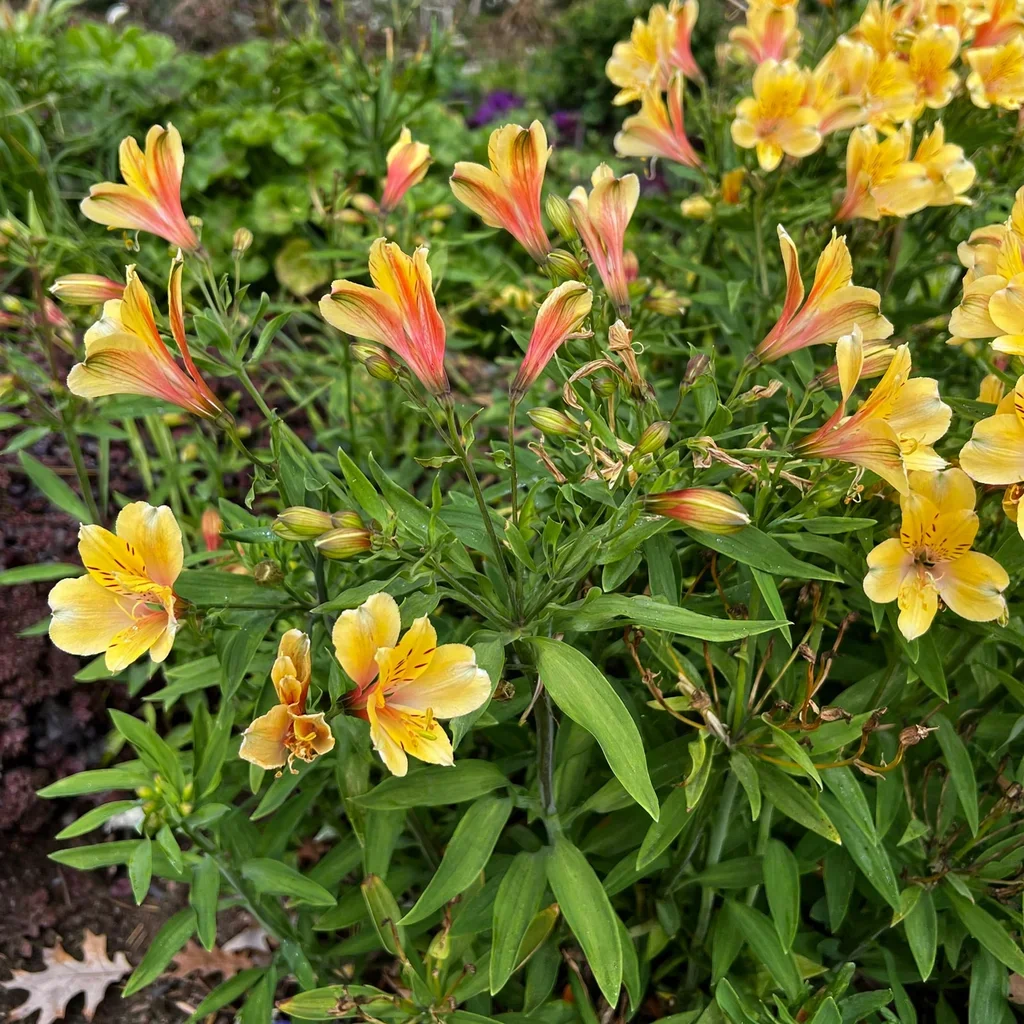
Golden Tiara Peruvian Lily
Alstroemeria x hybrida 'Golden Tiara'
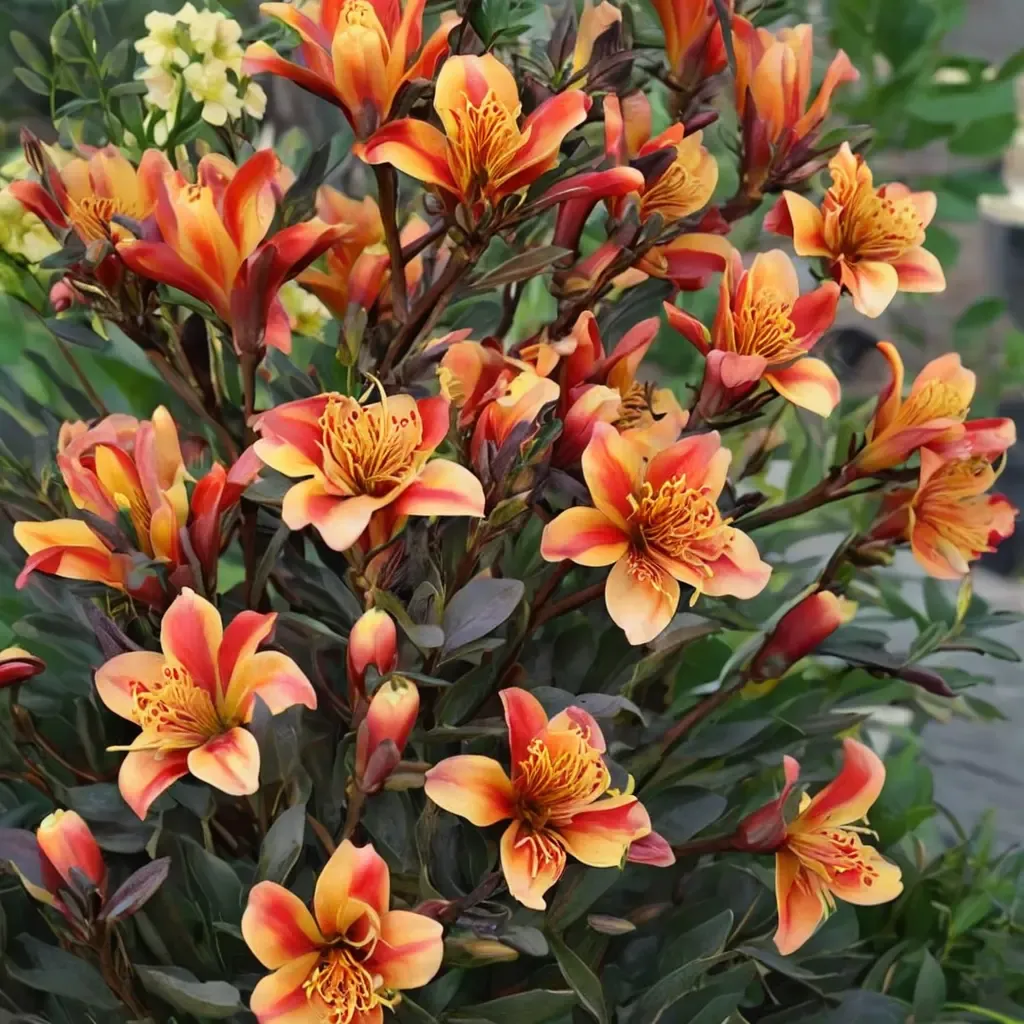
Indian Summer Peruvian Lily
Alstroemeria x hybrida 'Indian Summer'
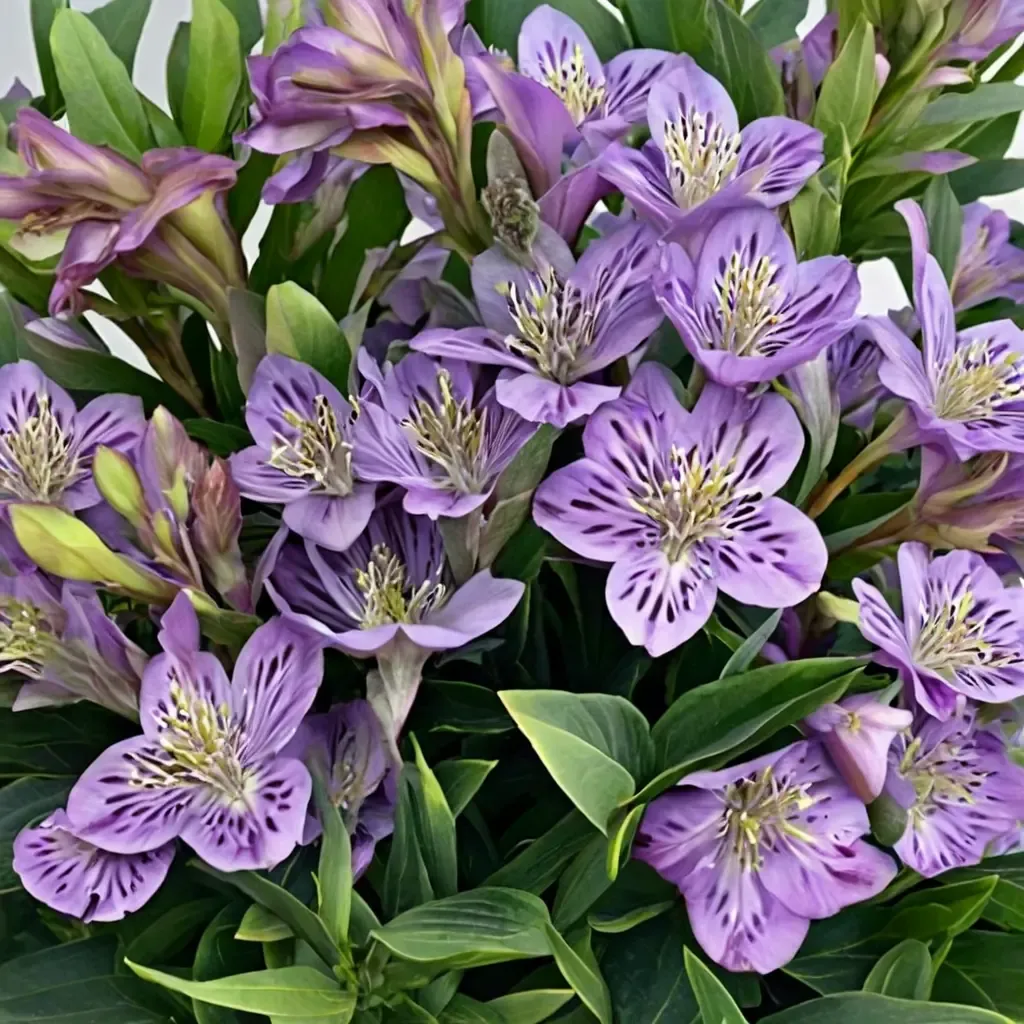
Inca Ocean Lily Peruvian Lily
Alstroemeria x hybrida 'Inca Ocean'
Keep exploring
Explore the genus
Hardy in your zone?
Grow Variegated Peruvian Lily with confidence
See it in a design of your actual yard, get zone-matched care reminders, and track it season by season in your garden journal.