
Species
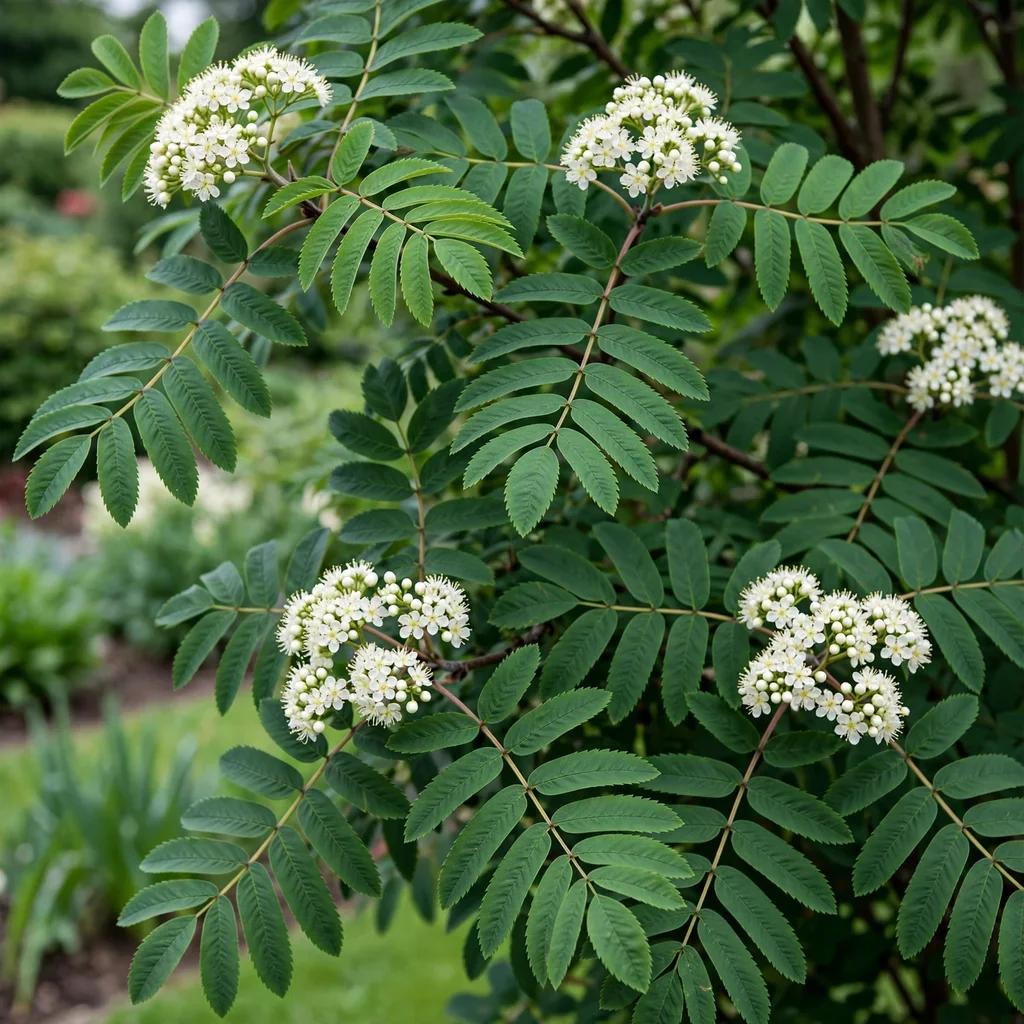 Sorbus aucupariaRowan Mountain Ash
1 other cultivar

The Story
Plant Bio
Sorbus aucuparia is a medium-sized deciduous tree native to temperate Eurasia, characterized by pinnate leaves and dense flat-topped clusters of white flowers. The species produces heavy clusters of red-orange pome fruits in fall that persist into winter, providing an important food source for birds.
'Sheerwater Seedling' is distinguished by its vigorous, narrow, and upright columnar habit with ascending branches that widen only slightly with age. The pinnate foliage features eleven to nineteen grey-green leaflets that turn vibrant shades of orange, gold, and deep red in fall.
Uses & Benefits:
Essentials
At a Glance
Plant Type
Tree
Height
472"
Width
236"
Light
Full Sun, Partial Sun
Zones
4, 5, 6
Water
Moderate
Humidity
Moderate
Lifespan
Decades
Native To
Europe and Asia
Toxicity
Mildly toxic if raw berries are ingested in large quantities
Bloom period
Late spring – Early summer
In flower about 2 months of the year
Planting
How to Grow
- Select a planting site in full sun to light shade with moist, well-drained, slightly acidic to neutral soil.
- Dig a hole twice as wide as the root ball and plant the tree at the same depth as it was in the container.
- Install a sturdy stake to support the narrow, upright crown against wind damage during the first two to three years.
- Apply a thick layer of organic mulch around the base, keeping it clear of the trunk, and water deeply.
Pro Tip
Stake the young tree securely for its first two to three years because the vigorous, narrow crown acts as a sail in high winds, and preserve lower branches to prevent sunscald on the thin bark.
Keep It Thriving
Care Guide
Do
- Water regularly during dry spells while the tree is establishing its root system.
- Mulch annually in spring to retain soil moisture and cool the root zone.
- Apply a balanced general fertilizer in early spring to support vigorous growth.
Don't
- Do not plant in heavy, poorly drained clay soils or waterlogged areas.
- Do not prune heavily into old, leafless wood, as this limits regrowth.
- Do not remove lower branches too quickly, which exposes the thin bark to sunscald.
Seasonal Care Calendar
| Task | Jan | Feb | Mar | Apr | May | Jun | Jul | Aug | Sep | Oct | Nov | Dec |
|---|---|---|---|---|---|---|---|---|---|---|---|---|
| Fertilize | ||||||||||||
| Mulch | ||||||||||||
| Pest Check | ||||||||||||
| Prune |
Watch Out For
Pests & Diseases
Common Pests
Common Diseases
In the Garden
Landscape Uses & Companions
Landscape Uses
Companion Plants
Multiply
Propagation Methods
Good to Know
Common Questions
European Mountain Ash questions
What zones can European Mountain Ash grow in?
European Mountain Ash is hardy in USDA Zones 4–6. Inside that range it survives winter in the ground; outside it, grow it as an annual or a container plant you protect.
Is European Mountain Ash deer resistant?
Not reliably. Deer may browse European Mountain Ash, especially tender spring growth — plan on repellents or fencing where pressure is high.
When does European Mountain Ash bloom?
European Mountain Ash typically blooms in late spring through early summer. Exact timing shifts a week or two with your zone — Sow's bloom calendar maps it to your garden.
Does European Mountain Ash need full sun?
European Mountain Ash does best in full sun to part shade. In hot climates, afternoon shade keeps blooms fresher longer.
More Sorbus to compare
Keep exploring
Explore the genus
Hardy in your zone?
Grow European Mountain Ash with confidence
See it in a design of your actual yard, get zone-matched care reminders, and track it season by season in your garden journal.