The Story
Plant Bio
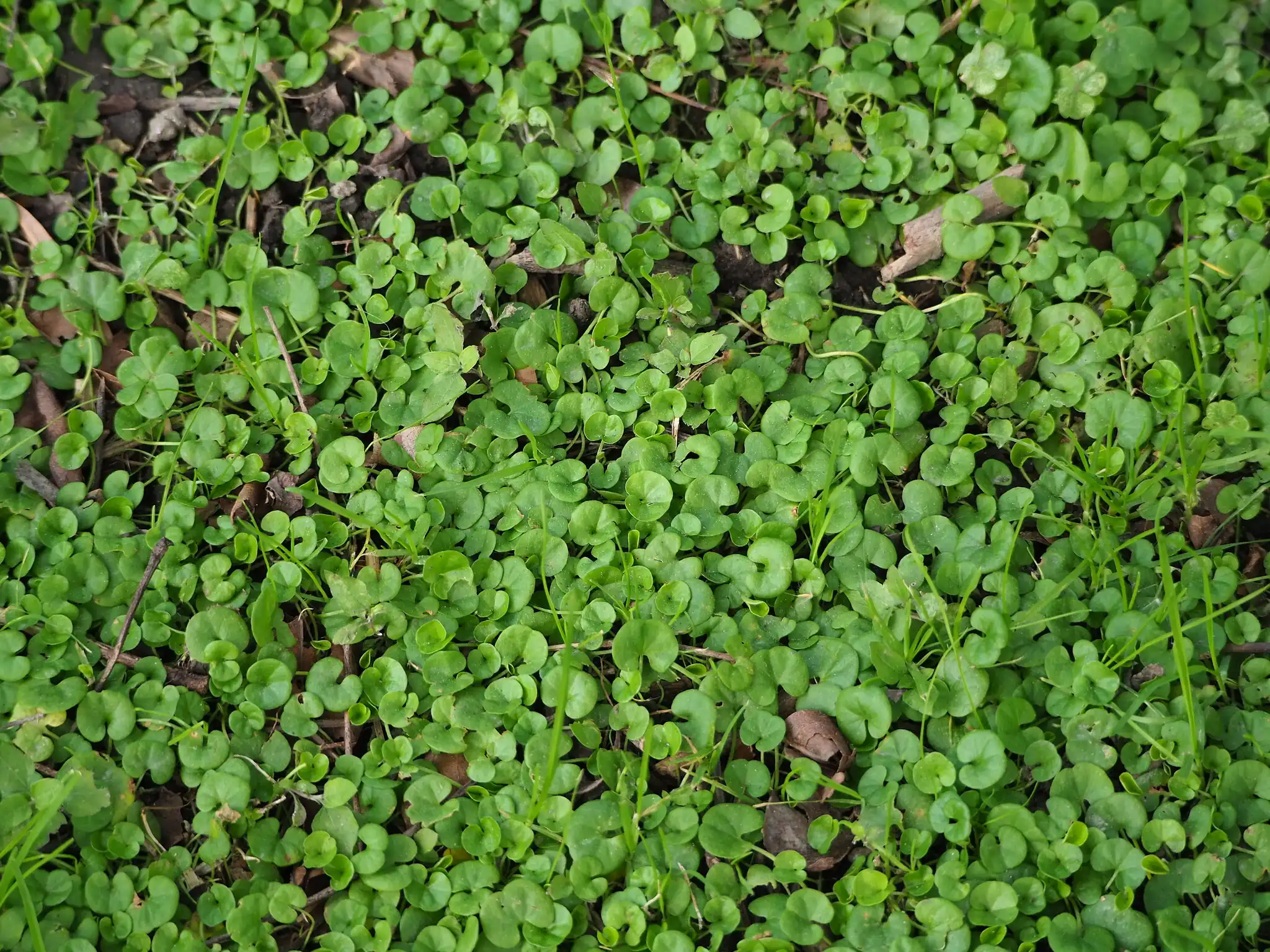
Dichondra micrantha is a prostrate, mat-forming perennial groundcover that spreads via creeping stems rooting freely at the leaf nodes. The bright green foliage consists of small, kidney-shaped to circular leaves that form a dense, low-growing carpet up to four inches tall.
This species produces tiny, inconspicuous greenish-yellow flowers on short stalks that curve downward as the fruit matures. It serves as an alternative to traditional turfgrass in warm-temperate regions, though it does not tolerate heavy foot traffic.
Uses & Benefits:
Essentials
At a Glance
Plant Type
Groundcover
Height
4"
Width
40"
Light
Full Sun, Partial Sun, Shade
Zones
8, 9, 10
Water
Medium
Humidity
High
Lifespan
Perennial
Native To
Asia, Mesoamerica
Toxicity
Non-toxic
Bloom period
Spring – Summer
In flower about 6 months of the year
Planting
How to Grow
- Select a site with moist, well-drained soil in full sun to partial shade, ensuring protection from scorching midday sun.
- Clear the planting area of all weeds and grass, as this low-growing groundcover is difficult to weed once established.
- Space plugs or potted divisions six to twelve inches apart to allow the creeping stolons to knit together into a solid mat.
- Water regularly to keep the soil consistently moist until the root system is fully established and the ground is covered.
Pro Tip
Establish physical borders or deep edging around garden beds, as the creeping stems root aggressively at every node and will quickly invade adjacent plantings.
Keep It Thriving
Care Guide
Do
- Keep the soil consistently moist, especially during hot summer dry spells.
- Install deep physical edging to contain the creeping stolons within designated borders.
- Apply a light, balanced slow-release fertilizer in spring if growing in poor soils.
Don't
- Do not subject this groundcover to heavy foot or vehicle traffic, as the delicate stems crush easily.
- Do not over-fertilize, as excess nutrients encourage weak, lush growth that is susceptible to disease.
- Do not allow aggressive weeds to establish within the mat, as they are difficult to remove without damaging the stolons.
Seasonal Care Calendar
| Task | Jan | Feb | Mar | Apr | May | Jun | Jul | Aug | Sep | Oct | Nov | Dec |
|---|---|---|---|---|---|---|---|---|---|---|---|---|
| Fertilize | ||||||||||||
| Pest Check | ||||||||||||
| Propagate | ||||||||||||
| Spring Cleanup |
Watch Out For
Pests & Diseases
Common Pests
Common Diseases
In the Garden
Landscape Uses & Companions
Landscape Uses
Companion Plants
Multiply
Propagation Methods
Good to Know
Common Questions
Asian Ponysfoot questions
What zones can Asian Ponysfoot grow in?
Asian Ponysfoot is hardy in USDA Zones 8–10. Inside that range it survives winter in the ground; outside it, grow it as an annual or a container plant you protect.
When does Asian Ponysfoot bloom?
Asian Ponysfoot typically blooms in spring through summer. Exact timing shifts a week or two with your zone — Sow's bloom calendar maps it to your garden.
Does Asian Ponysfoot need full sun?
Asian Ponysfoot does best in full sun to part shade. In hot climates, afternoon shade keeps blooms fresher longer.
More Dichondra to compare
Keep exploring
Explore the genus
Hardy in your zone?
Grow Asian Ponysfoot with confidence
See it in a design of your actual yard, get zone-matched care reminders, and track it season by season in your garden journal.