The Story
Plant Bio
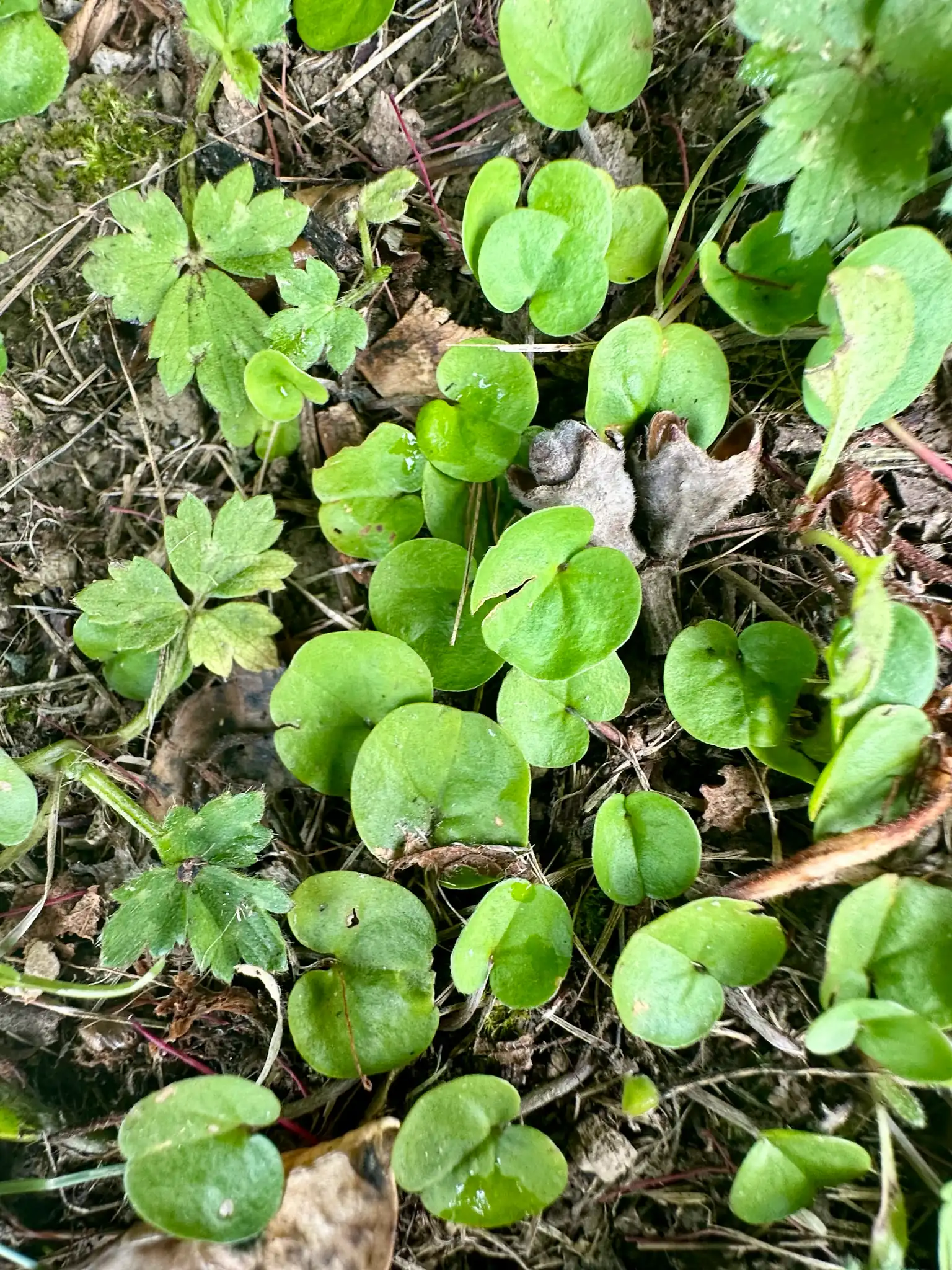
Dichondra repens, commonly known as kidney weed, is a prostrate, mat-forming perennial herb that spreads indefinitely via slender creeping stems rooting at the nodes. The dense foliage consists of small, kidney-shaped leaves that transition from bright jade green to a deep dark green, hiding tiny, inconspicuous greenish-white flowers beneath the leaf plane in spring and summer.
This species serves as an excellent low-growing groundcover for shaded areas where traditional turfgrass struggles to establish. Its tight, creeping habit allows it to weave closely around stepping stones and fill gaps in moist, well-drained soils.
Uses & Benefits:
Essentials
At a Glance
Plant Type
Groundcover
Height
3"
Width
60"
Light
Partial Sun, Shade
Zones
8, 9, 10
Water
Medium
Humidity
Moderate to high
Lifespan
Perennial
Native To
Oceania (Australia and New Zealand)
Toxicity
Non-toxic
Bloom period
Spring – Summer
In flower about 6 months of the year
Marketplace
Where to Buy
Shipping costs Year-round shipping Free shipping
Planting
How to Grow
- Select a planting site in partial to full shade with moist, well-drained loamy soil.
- Space plugs or container divisions 10 to 12 inches apart to allow the creeping runners room to spread and fill in.
- Water regularly to maintain consistent moisture, ensuring the soil does not become waterlogged or heavy.
- Apply a light, balanced fertilizer once in spring to support steady, dense growth without triggering leggy runners.
Pro Tip
Avoid planting this groundcover in high-traffic pathways, as the delicate stems cannot tolerate compaction and wear away quickly under foot traffic.
Keep It Thriving
Care Guide
Do
- Do plant in shaded or partially shaded areas to prevent the foliage from burning in hot afternoon sun.
- Do ensure the soil drains freely to prevent fatal fungal root and stem rots.
- Do trim back encroaching runners along pathways or borders to maintain clean edges.
Don't
- Don't subject the plant to heavy foot traffic or constant soil compaction.
- Don't overwater or allow the soil to remain waterlogged, especially in heavy clay soils.
- Don't shear hard into old, leafless wood, as it lacks the viable nodes needed to regenerate.
Seasonal Care Calendar
| Task | Jan | Feb | Mar | Apr | May | Jun | Jul | Aug | Sep | Oct | Nov | Dec |
|---|---|---|---|---|---|---|---|---|---|---|---|---|
| Fertilize | ||||||||||||
| Pest Check | ||||||||||||
| Propagate | ||||||||||||
| Prune |
Watch Out For
Pests & Diseases
Common Pests
Common Diseases
In the Garden
Landscape Uses & Companions
Landscape Uses
Multiply
Propagation Methods
Good to Know
Common Questions
Kidney Weed questions
What zones can Kidney Weed grow in?
Kidney Weed is hardy in USDA Zones 8–10. Inside that range it survives winter in the ground; outside it, grow it as an annual or a container plant you protect.
When does Kidney Weed bloom?
Kidney Weed typically blooms in spring through summer. Exact timing shifts a week or two with your zone — Sow's bloom calendar maps it to your garden.
Does Kidney Weed need full sun?
Kidney Weed does best in part shade.
More Dichondra to compare
Keep exploring
Explore the genus
Hardy in your zone?
Grow Kidney Weed with confidence
See it in a design of your actual yard, get zone-matched care reminders, and track it season by season in your garden journal.