
The Story
Plant Bio
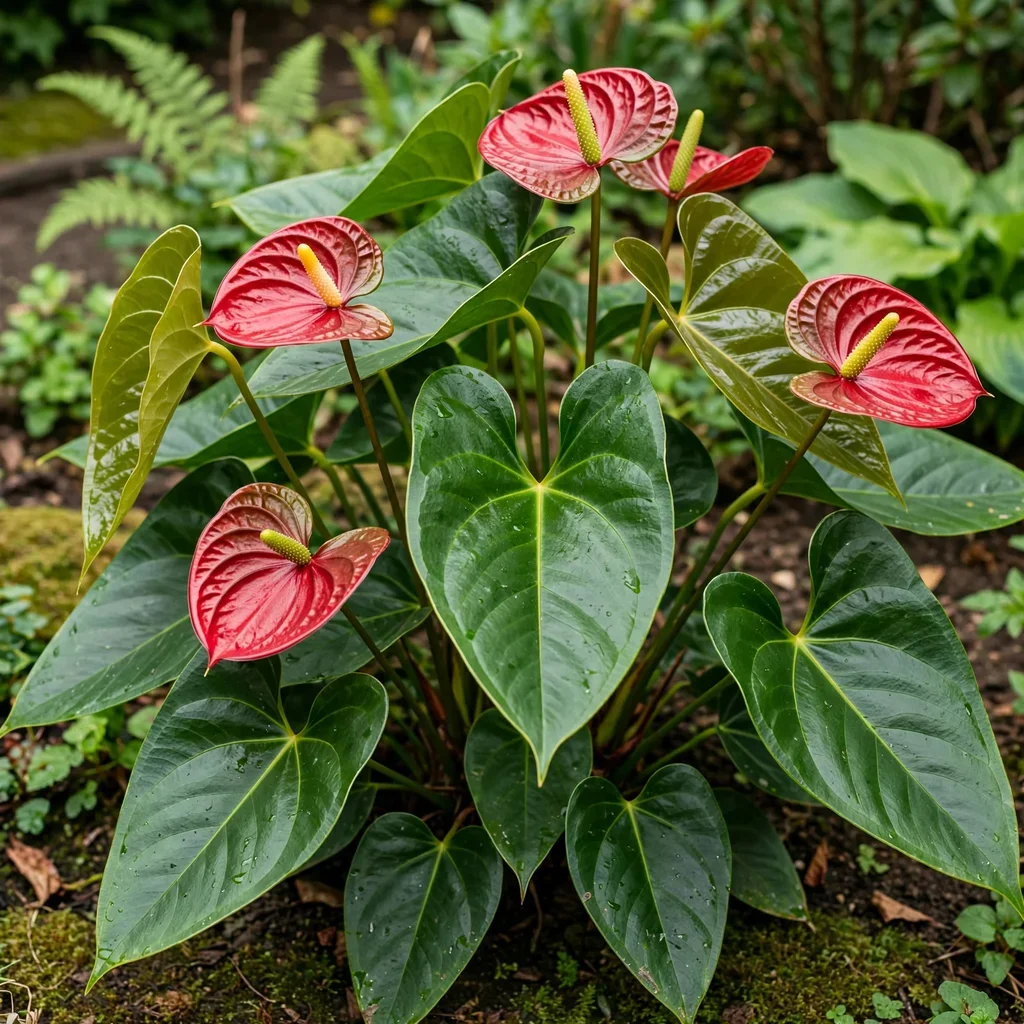
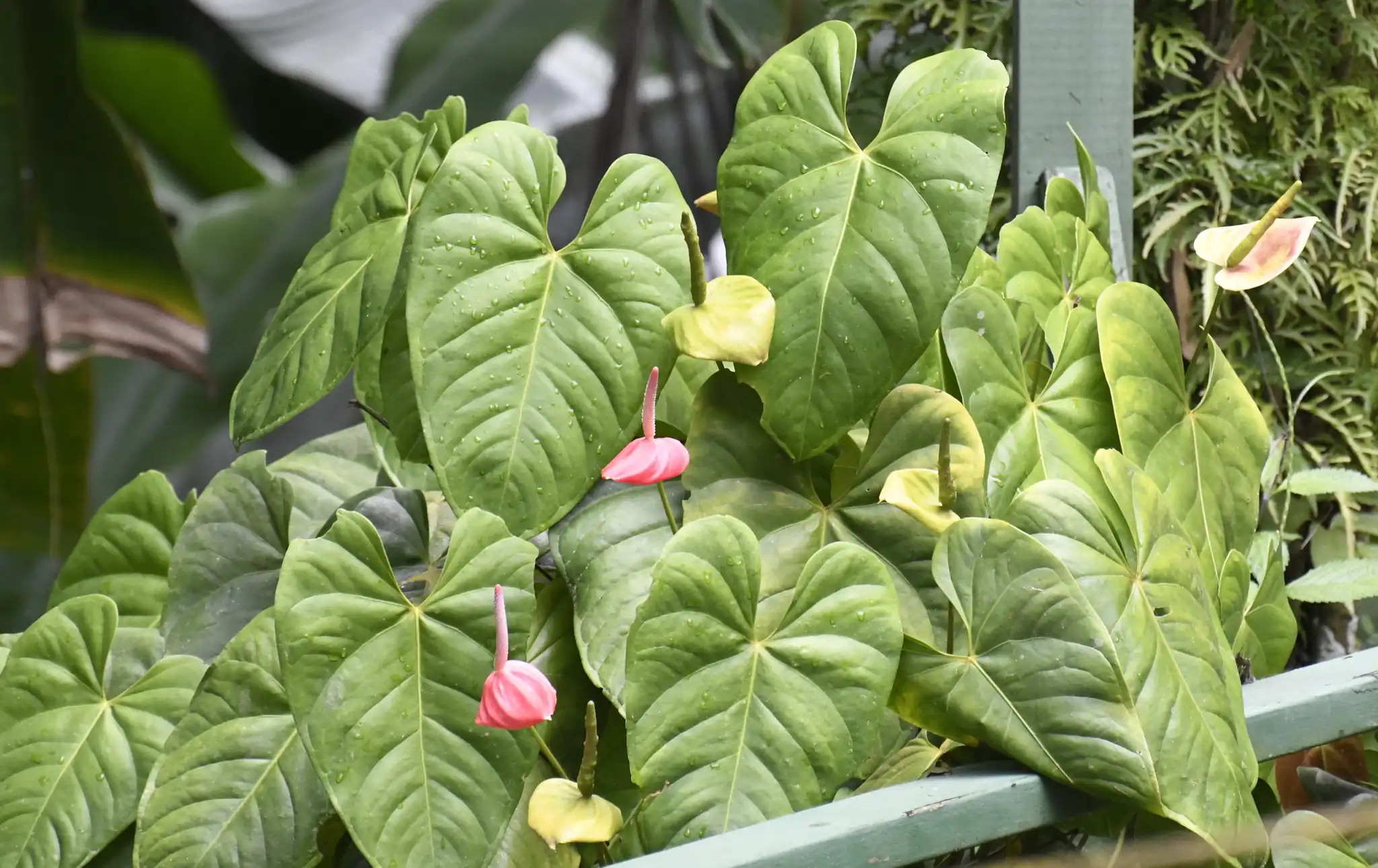
Anthurium crystallinum is an evergreen, clumping hemiepiphytic perennial native to the margins of Central and South American tropical rainforests. In cultivation, it is grown primarily as a container or indoor plant for its large, velvety, heart-shaped leaves.
This species is distinguished by its deeply contrasting, luminous silvery-white primary and secondary venation against dark matte green foliage. Newly emerging leaves exhibit a distinct bronze to reddish-purple tint before hardening to their mature coloration.
Uses & Benefits:
Essentials
At a Glance
Plant Type
Tropical
Height
35"
Width
35"
Light
Partial Sun, Shade
Water
Medium
Humidity
High (60%-80%)
Lifespan
Perennial
Native To
Central and South America
Toxicity
Toxic if ingested; skin irritant
Bloom period
Spring – Summer
In flower about 6 months of the year
Planting
How to Grow
- Select a highly aerated, chunky epiphytic substrate mix consisting of orchid bark, perlite, charcoal, and peat or coco coir.
- Position the plant in a location receiving bright, indirect or filtered light, strictly avoiding direct midday sun to prevent leaf scorch.
- Water thoroughly when the top inch of the medium begins to dry, ensuring the pot drains completely to prevent root rot.
- Maintain a warm environment above 50°F (10°C) with relative humidity levels consistently between 60% and 80%.
Pro Tip
Avoid direct leaf misting in low-airflow indoor environments, as trapped moisture on the velvety surface triggers fungal leaf spots; instead, maintain ambient humidity through a dedicated humidifier or cabinet enclosure paired with continuous, gentle air movement.
Keep It Thriving
Care Guide
Do
- Wipe the velvety leaves gently with a dry or slightly damp microfiber cloth to remove dust.
- Use a balanced, water-soluble liquid fertilizer diluted to half-strength during the active spring and summer growth periods.
- Ensure the container has excellent drainage holes to allow excess water to escape immediately.
Don't
- Do not use dense, standard potting soil, which compacts and suffocates the root system.
- Do not allow the plant to sit in standing water or waterlogged saucers.
- Do not cut into old, leafless woody stems when removing dead foliage.
Seasonal Care Calendar
| Task | Jan | Feb | Mar | Apr | May | Jun | Jul | Aug | Sep | Oct | Nov | Dec |
|---|---|---|---|---|---|---|---|---|---|---|---|---|
| Fertilize | ||||||||||||
| Pest Check | ||||||||||||
| Prune | ||||||||||||
| Winter Prep |
Watch Out For
Pests & Diseases
Common Pests
Common Diseases
In the Garden
Landscape Uses & Companions
Landscape Uses
Companion Plants
Multiply
Propagation Methods
Good to Know
Common Questions
Crystal Anthurium questions
When does Crystal Anthurium bloom?
Crystal Anthurium typically blooms in spring through summer. Exact timing shifts a week or two with your zone — Sow's bloom calendar maps it to your garden.
Does Crystal Anthurium need full sun?
Crystal Anthurium does best in part shade.
More Anthurium to compare
Keep exploring
Explore the genus
Grow Crystal Anthurium with confidence
See it in a design of your actual yard, get zone-matched care reminders, and track it season by season in your garden journal.