The Story
Plant Bio
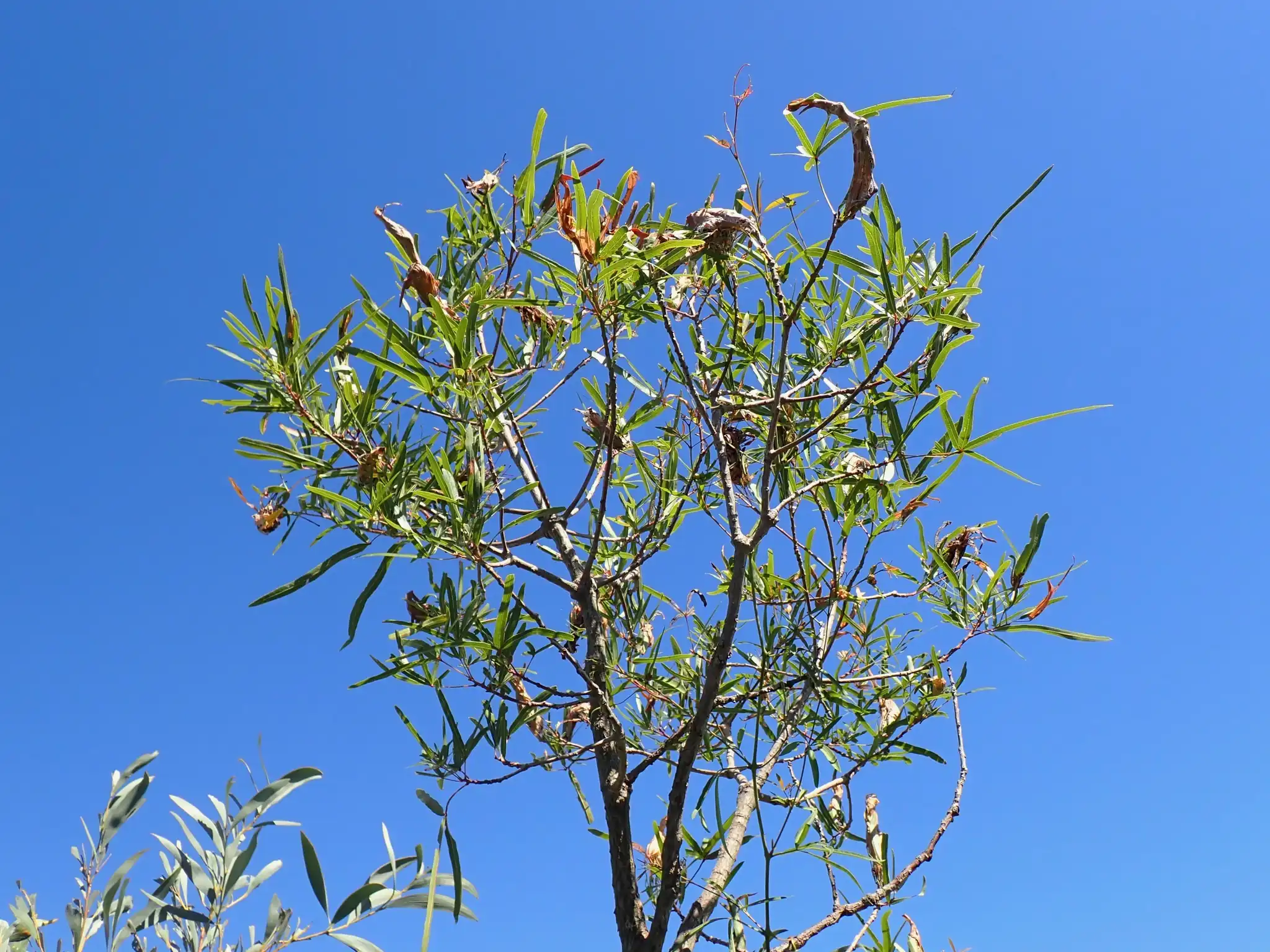
Brachychiton rupestris, the Queensland bottle tree, is a semi-deciduous Australian tree distinguished by its swollen, water-storing trunk that assumes a distinct bottle shape after five to ten years. The canopy carries highly variable foliage, transitioning from deeply lobed juvenile leaves to narrow, lance-shaped adult leaves.
This species is highly prized for its dramatic, sculptural silhouette and extreme drought tolerance once established in warm, dry climates. In spring and summer, it produces clusters of small, bell-shaped cream flowers at the branch tips, followed by woody seed follicles.
Uses & Benefits:
Essentials
At a Glance
Plant Type
Tree
Height
590"
Width
472"
Light
Full Sun
Zones
9, 10
Water
Low
Humidity
Low to Moderate
Lifespan
Long-lived
Native To
Australia
Toxicity
Toxic to livestock if ingested; skin irritant
Bloom period
Spring – Summer
In flower about 6 months of the year
Planting
How to Grow
- Select a planting site in full sun with excellent drainage, such as a sandy loam or a sloped, rocky position.
- Dig a hole twice as wide as the root ball but no deeper, ensuring the trunk flare sits level with or slightly above the surrounding soil.
- Water deeply immediately after planting to settle the soil, then allow the ground to dry out completely between waterings.
- Protect young trees from frost during their first few winters using burlap or frost cloth until they develop a woody trunk.
Pro Tip
Avoid pruning hard into old, leafless wood, as this tissue does not readily regenerate; restrict trimming to removing dead or crossing branches.
Keep It Thriving
Care Guide
Do
- Plant in a highly permeable soil mix to ensure rapid drainage away from the root zone.
- Provide full sun exposure to encourage the characteristic swelling of the trunk.
- Water sparingly once established, relying primarily on natural rainfall except during extreme droughts.
Don't
- Do not overwater during humid summer months, which triggers fatal root rot.
- Do not cut back into the main structural trunk or old, leafless branches.
- Do not allow livestock to graze on felled wood or damaged bark tissues.
Seasonal Care Calendar
| Task | Jan | Feb | Mar | Apr | May | Jun | Jul | Aug | Sep | Oct | Nov | Dec |
|---|---|---|---|---|---|---|---|---|---|---|---|---|
| Fertilize | ||||||||||||
| Pest Check | ||||||||||||
| Prune | ||||||||||||
| Winter Prep |
Watch Out For
Pests & Diseases
Common Pests
Common Diseases
In the Garden
Landscape Uses & Companions
Landscape Uses
Companion Plants
Multiply
Propagation Methods
Good to Know
Common Questions
Queensland Bottle Tree questions
What zones can Queensland Bottle Tree grow in?
Queensland Bottle Tree is hardy in USDA Zones 9–10. Inside that range it survives winter in the ground; outside it, grow it as an annual or a container plant you protect.
Is Queensland Bottle Tree deer resistant?
Not reliably. Deer may browse Queensland Bottle Tree, especially tender spring growth — plan on repellents or fencing where pressure is high.
When does Queensland Bottle Tree bloom?
Queensland Bottle Tree typically blooms in spring through summer. Exact timing shifts a week or two with your zone — Sow's bloom calendar maps it to your garden.
Does Queensland Bottle Tree need full sun?
Queensland Bottle Tree does best in full sun (6+ hours).
Is Queensland Bottle Tree drought tolerant?
Yes — once established (usually after the first full season), Queensland Bottle Tree handles dry spells with minimal watering. Water deeply its first year to build the root system that makes that possible.
More Brachychiton to compare
Keep exploring
Explore the genus
Hardy in your zone?
Grow Queensland Bottle Tree with confidence
See it in a design of your actual yard, get zone-matched care reminders, and track it season by season in your garden journal.