Also known as Kurrajong · 20 saves
Brachychiton
Brachychiton, the genus most gardeners know as kurrajong. We track 4 varieties; the ones most used by real gardeners.
The 4 most-saved Brachychiton varieties
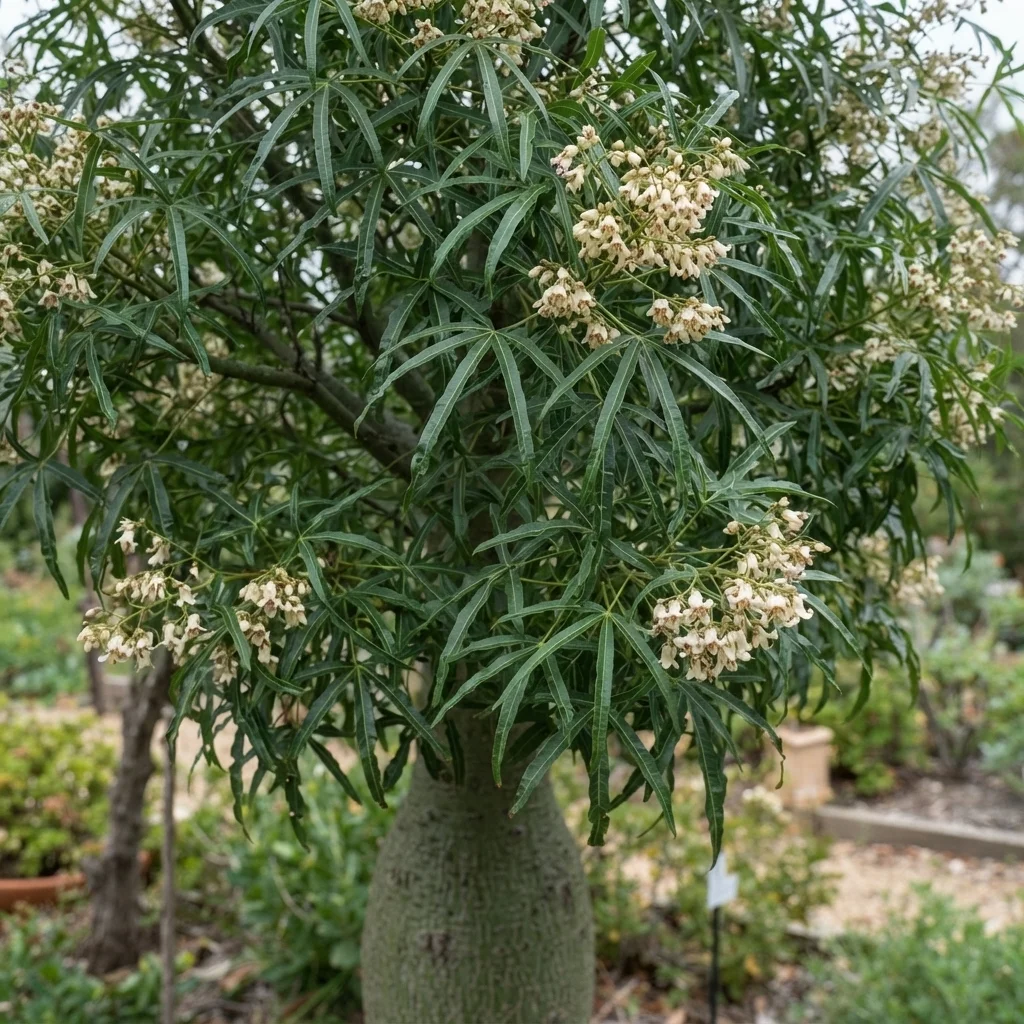
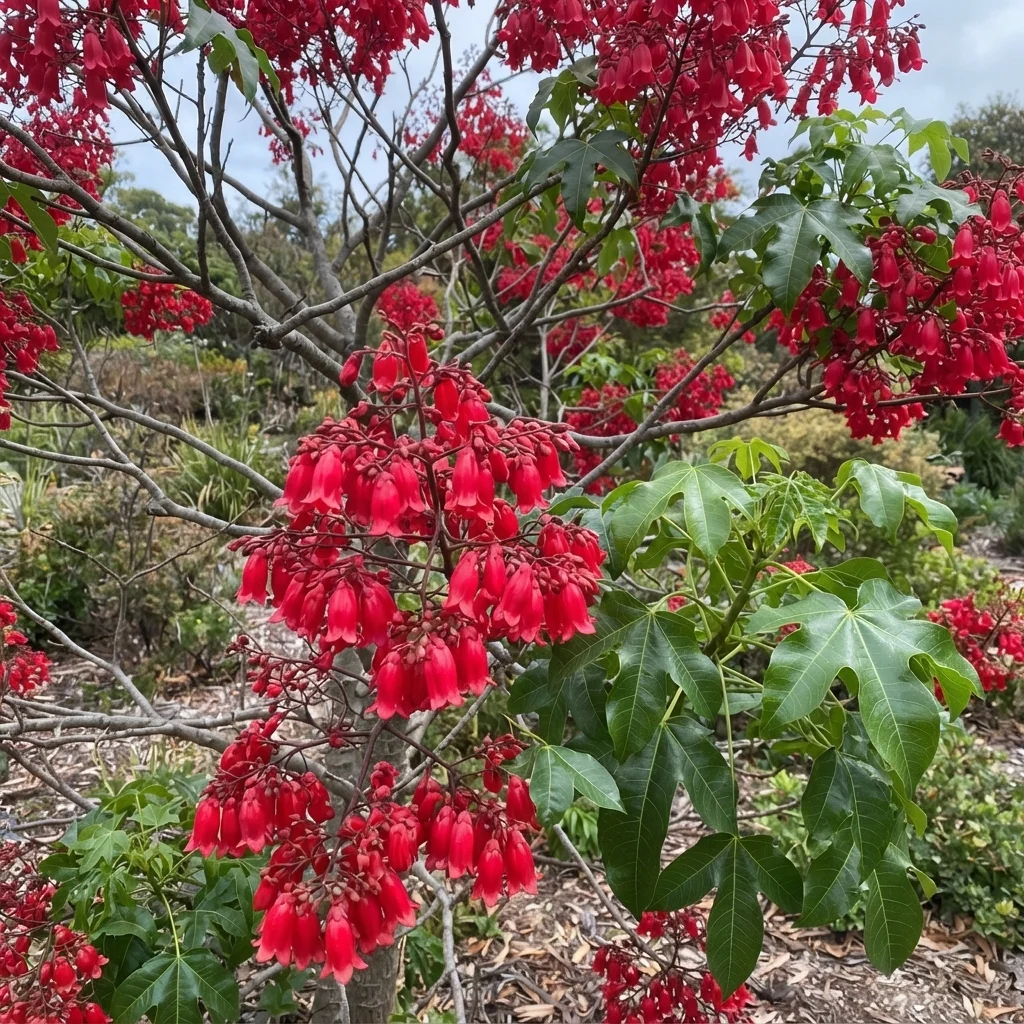
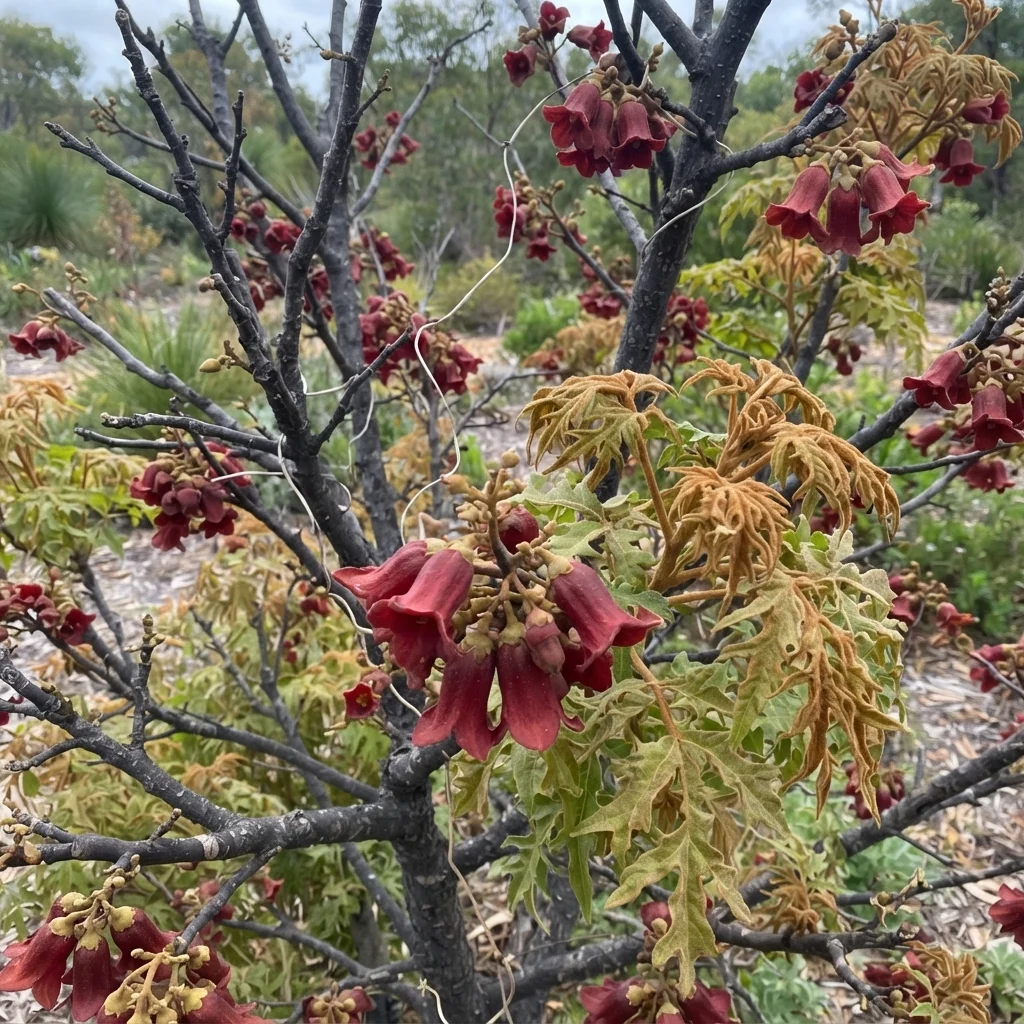
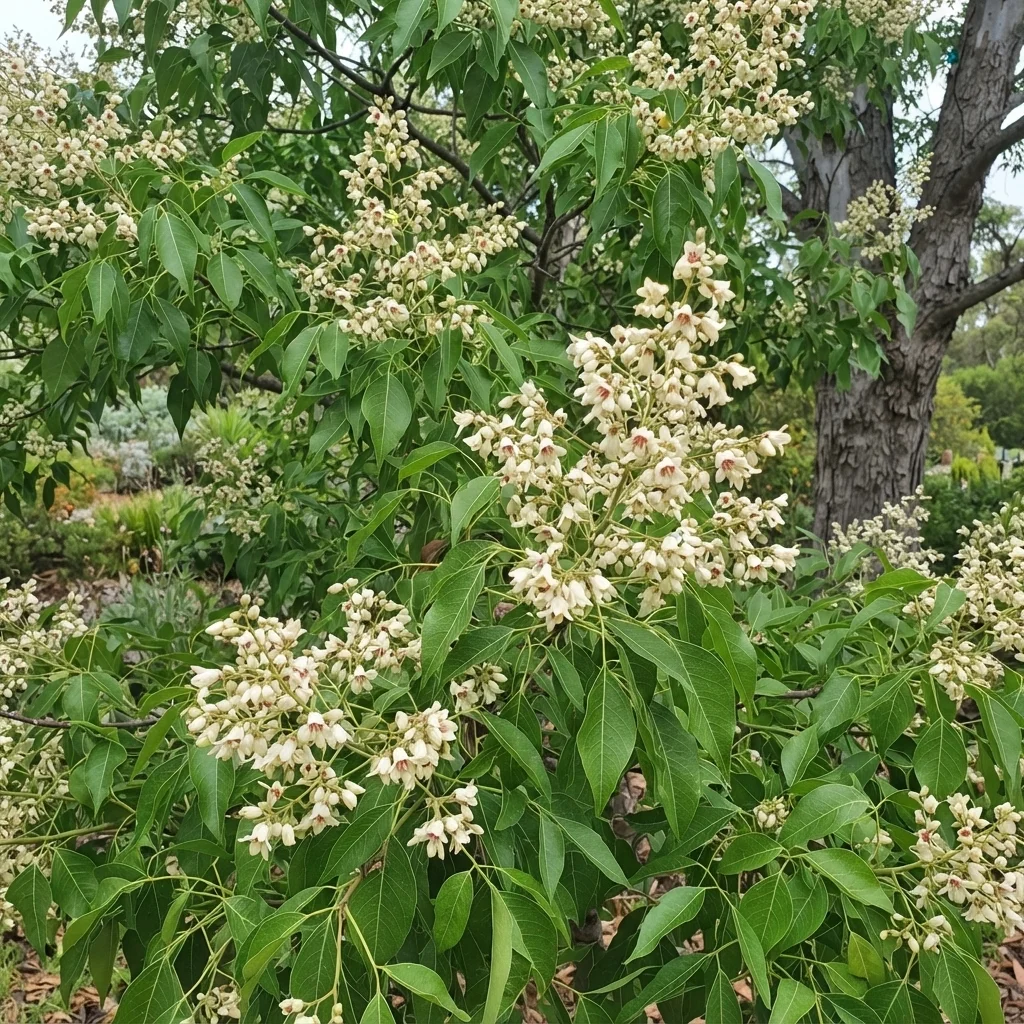
4 species of Brachychiton
Each one is a parent of the varieties above.
Track your Brachychiton in Sow
Save the Brachychiton you grow and get care reminders timed to your zone.
How to grow Brachychiton
Whats common across all Brachychiton varieties in our catalog — drawn from the care records of the 4 most-grown of them.
The Brachychiton year
- PruneMarch and April100% of varieties
Prune young trees to maintain a single central leader and remove co-dominant stems.
- FertilizeMarch and April100% of varieties
Apply a balanced slow-release fertilizer sparingly to young trees.
- Check for PestsJune and July100% of varieties
Inspect foliage for aphids, scale, and spider mites during hot, dry periods.
- Winter PrepNovember and December75% of varieties
Move container-grown specimens indoors or into a heated greenhouse before temperatures drop near freezing.


Do
- Prune young trees regularly to establish a single dominant leader.
- Wear gloves when handling mature seed pods to prevent skin irritation.
- Ensure the planting site has high-drainage soil to prevent root rot.
- Apply a balanced slow-release fertilizer sparingly in spring during establishment.
- Provide full sun and mandatory sharp drainage to prevent root rot.
Avoid
- Do not prune into old, leafless wood on mature specimens.
- Do not plant in low-lying areas prone to prolonged waterlogging.
- Do not make large pruning cuts that expose mature wood to decay.
- Do not panic when the tree drops all its leaves in spring, as this precedes flowering.
What goes wrong with Brachychiton
| Problem | What you'll see | What to do |
|---|---|---|
| Scale insects | Small, raised brown bumps on stems and leaf midribs, accompanied by sticky honeydew. | Apply horticultural oil during the dormant season or scrape off light infestations manually. |
| Spider mites | Fine webbing on leaf undersides and stippled, yellowing foliage under dry, warm conditions. | Increase air circulation and blast the undersides of leaves with a sharp stream of water, or apply insecticidal soap. |
| Aphids | Clusters of small, soft-bodied insects on tender new growth, accompanied by sticky honeydew. | Wipe off manually or spray with a diluted horticultural oil or insecticidal soap. |
| scale insects | Small, bumpy insects cluster on stems and leaves, sucking sap. | Apply horticultural oil or insecticidal soap during the crawler stage. |
| Root rot | Wilting, yellowing leaves, and dieback caused by Phytophthora or Pythium species in saturated soils. | Improve soil drainage, avoid overwatering, and ensure the planting site does not collect standing water. |
| Texas root rot | Sudden wilting and collapse of the canopy during hot, humid weather. | Ensure sharp drainage and avoid planting in known infected soils or overwatering. |
| Powdery mildew | A white, powdery fungal coating on leaves and young shoots in stagnant, humid air. | Prune nearby vegetation to improve air circulation and apply a copper-based fungicide if symptoms persist. |
Making more Brachychiton
Seed
- Wear thick gloves and protective eyewear to harvest the seed pods safely.
- Extract the seeds carefully, avoiding contact with the irritating, bristly hairs inside the pod.
- Sow fresh seeds directly into a well-draining seed-raising mix.
- Keep the medium moist but not wet in a warm, bright location until germination occurs.
Brachychiton questions
How many types of Brachychiton are there?
The Sow catalog tracks 4 distinct Brachychiton varieties. The most popular — ranked by 20 real gardeners — are shown first above.
What zones does Brachychiton grow in?
Across its varieties, Brachychiton covers USDA Zones 9–10. Individual varieties differ — each plant page lists its exact range, and Sow filters the catalog to your zone automatically.
When does Brachychiton bloom?
Most Brachychiton varieties bloom in spring, winter. Staggering early, mid, and late varieties extends the genus's season in one bed.
Which Brachychiton should I choose?
Start from the most-saved varieties above — popularity across thousands of gardens is a strong signal of reliability — then filter by your zone and sun. In the Sow app you can preview any of them in a photo of your actual yard before you buy.