The Story
Plant Bio
Brachychiton acerifolius is a large, upright deciduous tree native to the east coast of Australia, characterized by a swollen, water-storing bottle-like trunk base and a dense, rounded canopy. The tree sheds its glossy, green leaves entirely before producing a dense display of bright coral-red, bell-shaped flowers on large panicles.
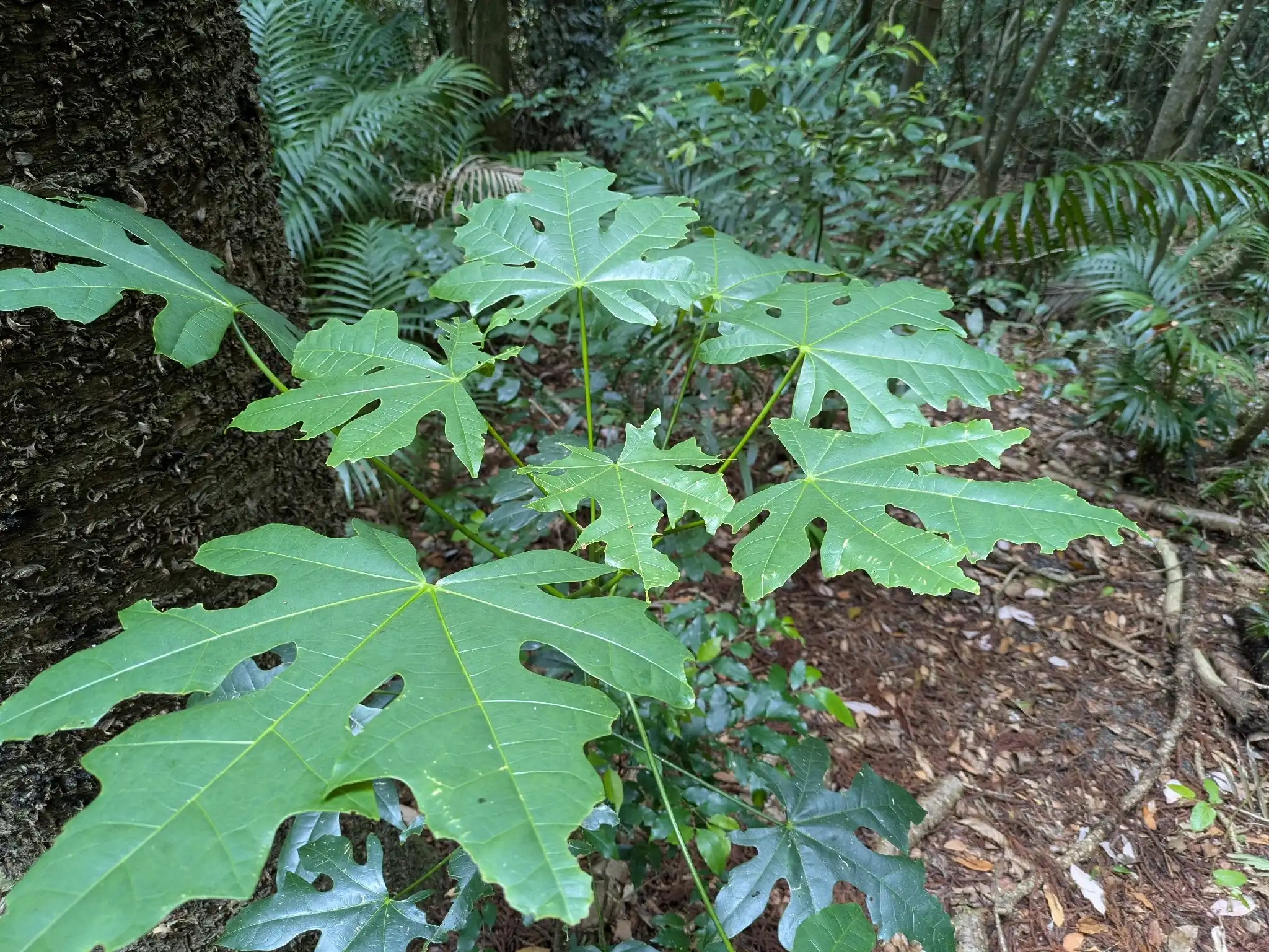
The adult foliage consists of leathery, shallowly lobed leaves up to twelve inches long, while juvenile leaves are deeply divided into five to seven lobes. New growth emerges bright green, contrasting with the smooth, pale green bark of younger branches.
Uses & Benefits:
Essentials
At a Glance
Plant Type
Tree
Height
1378"
Width
590"
Light
Full Sun, Partial Sun
Zones
9, 10
Water
Low to moderate
Humidity
Tolerates high humidity
Lifespan
Long-lived
Native To
Australia
Toxicity
Skin irritant (seed pod hairs)
Bloom period
Spring – Summer
In flower about 6 months of the year
Planting
How to Grow
- Plant in a full sun location with excellent drainage, as the water-storing trunk makes the tree highly susceptible to root rot in waterlogged soils.
- Water regularly during the first two growing seasons to establish the taproot, then reduce watering to rely on the tree's natural drought tolerance.
- Prune every three years for the first fifteen to twenty years to maintain a single dominant central leader and keep side branches small.
- Wear heavy gloves and protective clothing when handling the woody seed pods to avoid contact with the highly irritating, star-shaped hairs inside.
Pro Tip
Never top this tree or make large pruning cuts into mature wood; the soft, spongy wood has poor decay compartmentalization and rots rapidly when injured.
Keep It Thriving
Care Guide
Do
- Prune young trees regularly to establish a single dominant leader.
- Wear gloves when handling mature seed pods to prevent skin irritation.
- Ensure the planting site has high-drainage soil to prevent root rot.
- Apply a balanced slow-release fertilizer sparingly in spring during establishment.
Don't
- Do not prune into old, leafless wood on mature specimens.
- Do not plant in low-lying areas prone to prolonged waterlogging.
- Do not make large pruning cuts that expose mature wood to decay.
- Do not panic when the tree drops all its leaves in spring, as this precedes flowering.
Seasonal Care Calendar
| Task | Jan | Feb | Mar | Apr | May | Jun | Jul | Aug | Sep | Oct | Nov | Dec |
|---|---|---|---|---|---|---|---|---|---|---|---|---|
| Fertilize | ||||||||||||
| Pest Check | ||||||||||||
| Plant | ||||||||||||
| Prune |
Watch Out For
Pests & Diseases
Common Pests
Common Diseases
In the Garden
Landscape Uses & Companions
Landscape Uses
Companion Plants
Multiply
Propagation Methods
Good to Know
Common Questions
Illawarra Flame Tree questions
What zones can Illawarra Flame Tree grow in?
Illawarra Flame Tree is hardy in USDA Zones 9–10. Inside that range it survives winter in the ground; outside it, grow it as an annual or a container plant you protect.
Is Illawarra Flame Tree deer resistant?
Yes — Illawarra Flame Tree is rated deer-resistant. Deer typically pass it over, though extreme hunger can override any plant's defenses.
When does Illawarra Flame Tree bloom?
Illawarra Flame Tree typically blooms in spring through summer. Exact timing shifts a week or two with your zone — Sow's bloom calendar maps it to your garden.
Does Illawarra Flame Tree need full sun?
Illawarra Flame Tree does best in full sun to part shade. In hot climates, afternoon shade keeps blooms fresher longer.
Is Illawarra Flame Tree drought tolerant?
Yes — once established (usually after the first full season), Illawarra Flame Tree handles dry spells with minimal watering. Water deeply its first year to build the root system that makes that possible.
More Brachychiton to compare
Keep exploring
Explore the genus
Hardy in your zone?
Grow Illawarra Flame Tree with confidence
See it in a design of your actual yard, get zone-matched care reminders, and track it season by season in your garden journal.