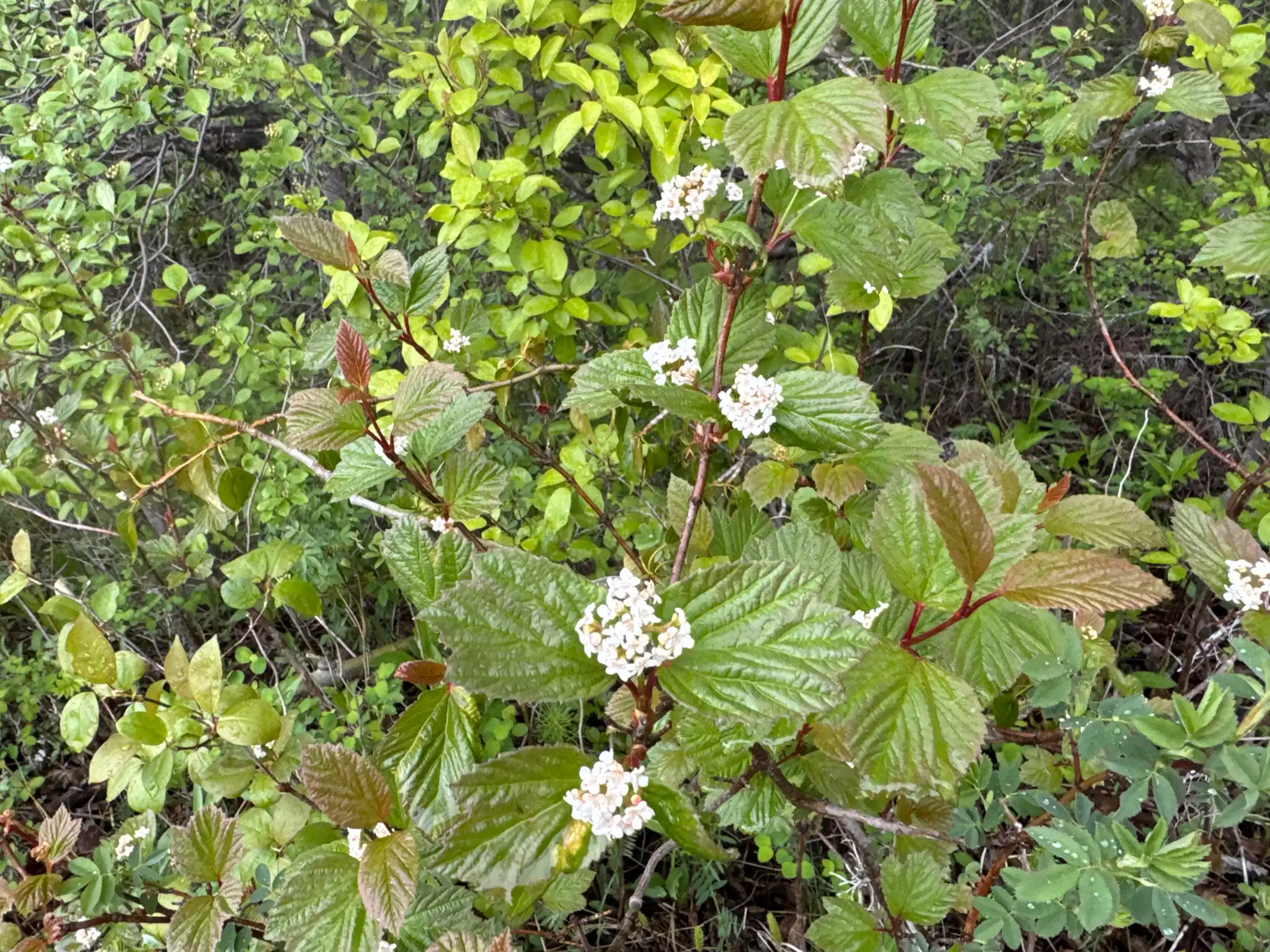
The Story
Plant Bio
Viburnum edule is a deciduous shrub native to cold northern regions of North America, reaching two to eleven feet in height with an open, arching growth habit. Small white flowers bloom in compact flat-topped clusters during spring, followed by bright red edible fruits that ripen in late summer.
Distinct from larger highbush cranberries, it features smaller flower clusters only one to three centimeters wide and shallowly lobed, finely toothed leaves. The tart berries are non-toxic and traditionally gathered for preserves, while providing a rich food source for native songbirds and mammals.
Uses & Benefits:
Essentials
At a Glance
Plant Type
Shrub
Height
138"
Width
138"
Light
Full Sun, Partial Sun
Zones
4, 5, 6, 7
Water
High
Humidity
High
Lifespan
Perennial
Native To
North America
Toxicity
Non-toxic
Bloom period
Spring – Early summer
In flower about 4 months of the year
Planting
How to Grow
- Select a planting location in full sun to partial shade with moist, rich, organic soil.
- Dig a planting hole twice as wide as the root ball and set the shrub at the same depth it grew in its container.
- Backfill with native soil mixed with compost, firm gently, and water thoroughly.
- Spread a 2- to 3-inch layer of organic mulch around the root zone, keeping it clear of the main stems.
Pro Tip
Maintain consistent soil moisture through summer dry periods; prolonged drought causes immediate defoliation.
Keep It Thriving
Care Guide
Do
- Keep soil consistently moist, especially during hot summer weather.
- Mulch heavily around the root zone to conserve soil moisture.
- Prune lightly right after flowering to control size and remove dead stems.
Don't
- Do not let the soil dry out completely during dry spells.
- Do not shear heavily or cut back into old leafless wood.
- Do not apply heavy doses of high-nitrogen synthetic fertilizers.
Seasonal Care Calendar
| Task | Jan | Feb | Mar | Apr | May | Jun | Jul | Aug | Sep | Oct | Nov | Dec |
|---|---|---|---|---|---|---|---|---|---|---|---|---|
| Fertilize | ||||||||||||
| Mulch | ||||||||||||
| Pest Check | ||||||||||||
| Prune |
Watch Out For
Pests & Diseases
Common Pests
Common Diseases
In the Garden
Landscape Uses & Companions
Landscape Uses
Multiply
Propagation Methods
Good to Know
Common Questions
Squashberry questions
What zones can Squashberry grow in?
Squashberry is hardy in USDA Zones 4–7. Inside that range it survives winter in the ground; outside it, grow it as an annual or a container plant you protect.
Is Squashberry deer resistant?
Not reliably. Deer may browse Squashberry, especially tender spring growth — plan on repellents or fencing where pressure is high.
When does Squashberry bloom?
Squashberry typically blooms in spring through early summer. Exact timing shifts a week or two with your zone — Sow's bloom calendar maps it to your garden.
Does Squashberry need full sun?
Squashberry does best in full sun to part shade. In hot climates, afternoon shade keeps blooms fresher longer.
More Viburnum to compare
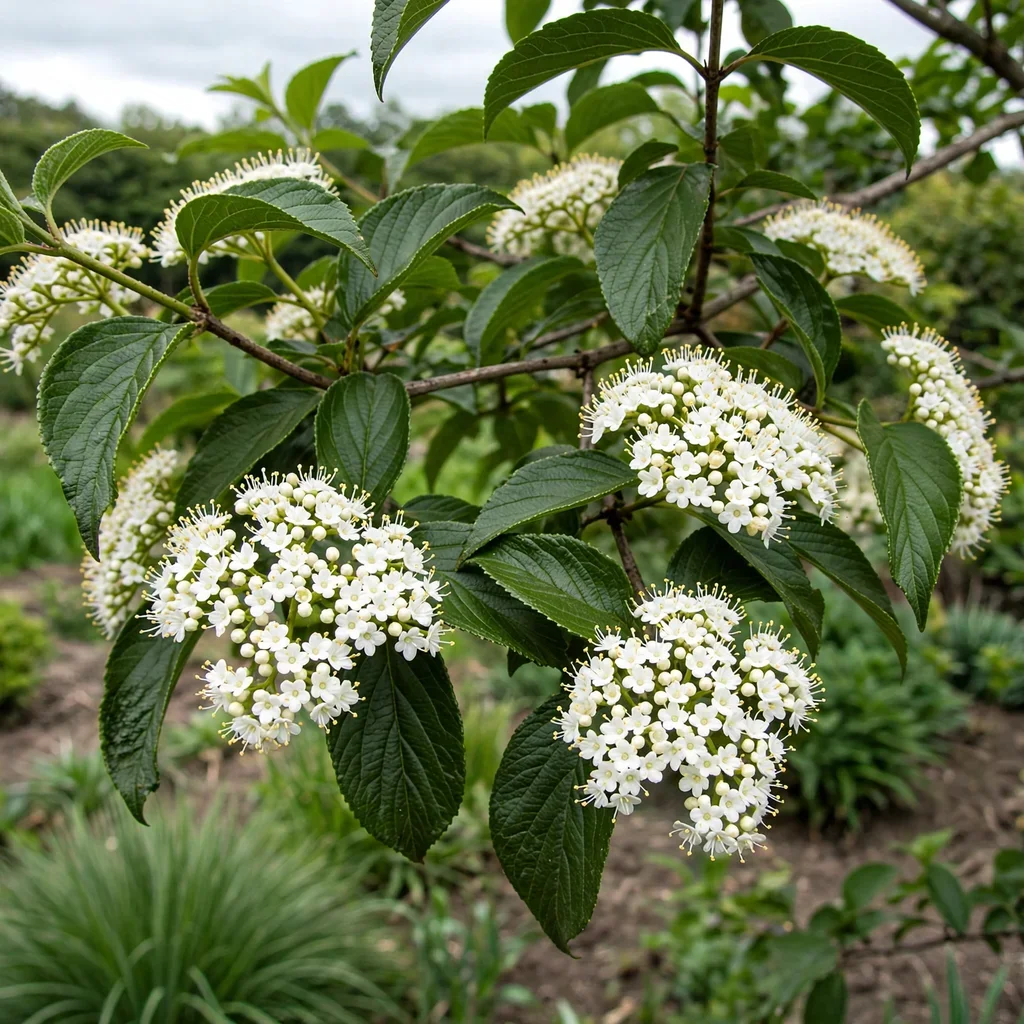
Nannyberry
Viburnum lentago
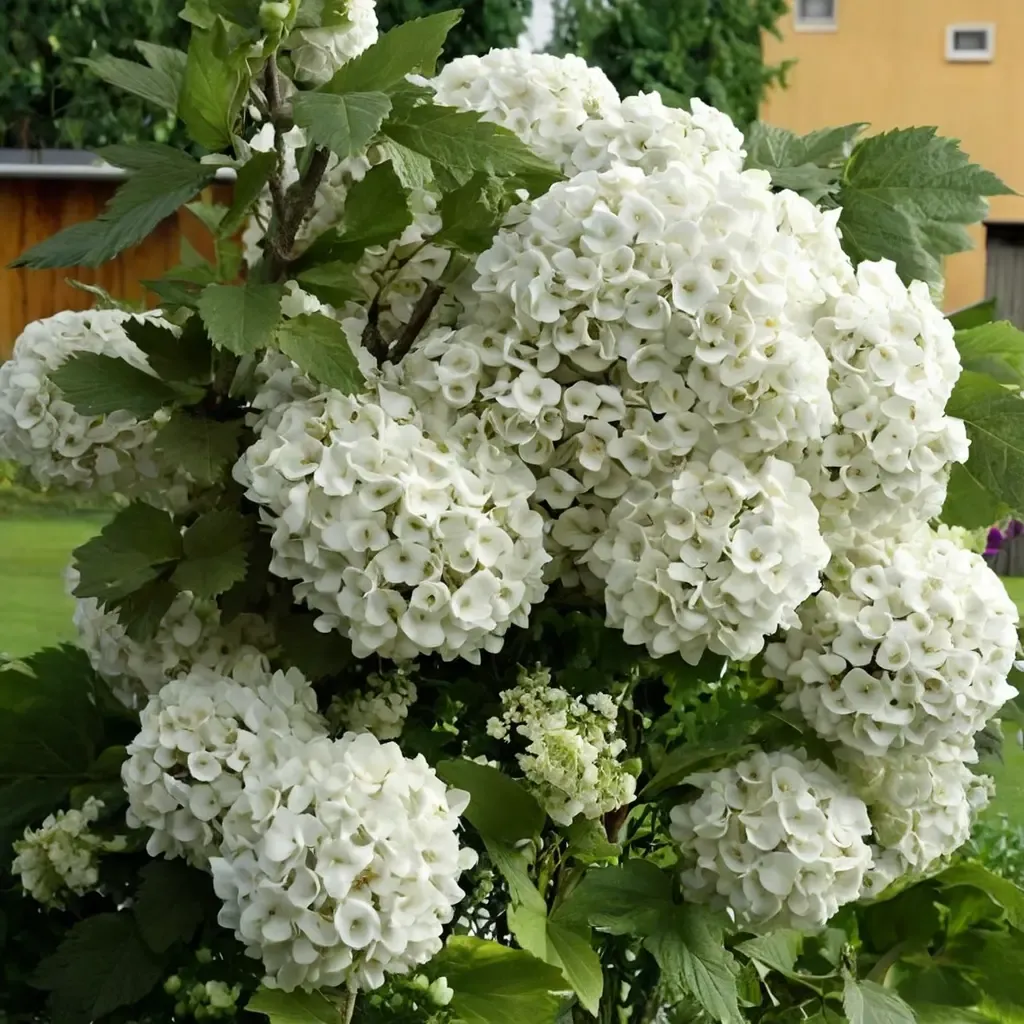
Snowball Viburnum
Viburnum opulus 'Sterile'
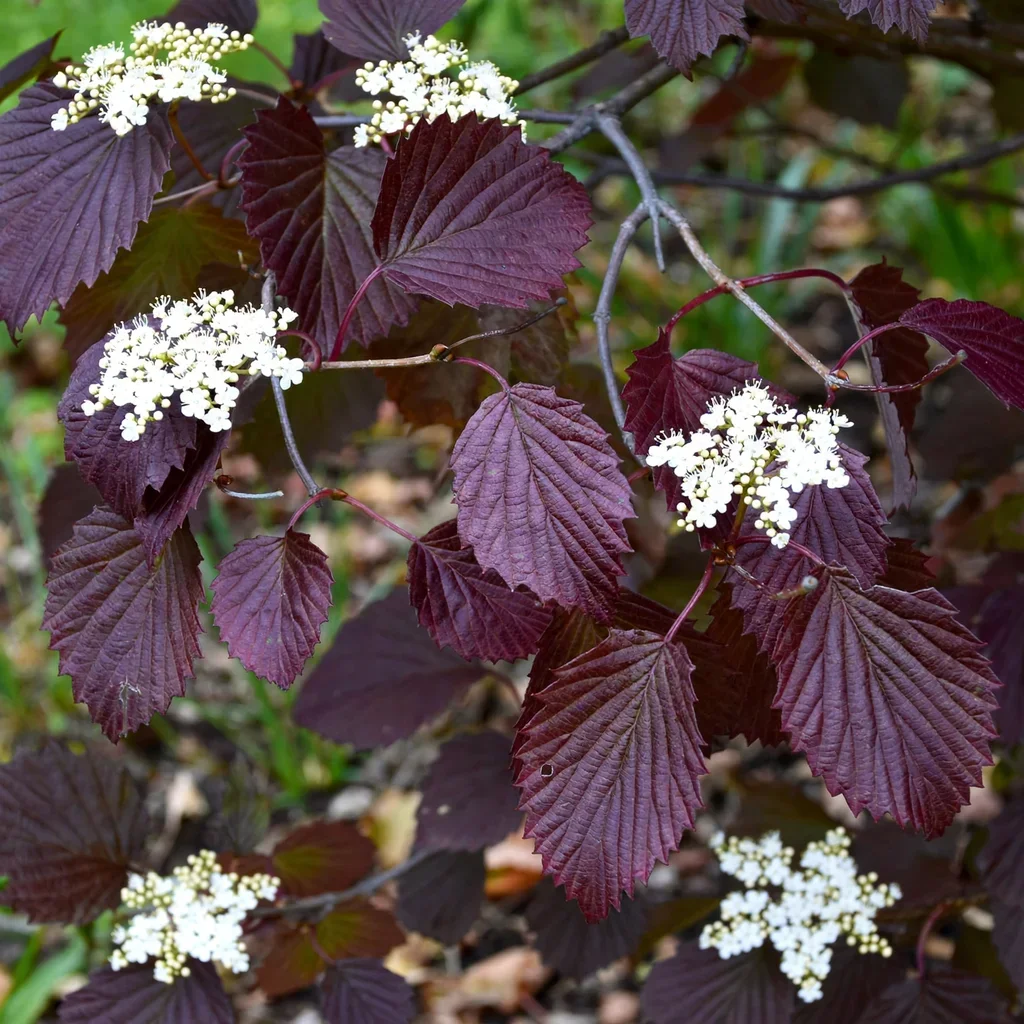
Autumn Jazz Arrowwood
Viburnum dentatum 'Autumn Jazz'
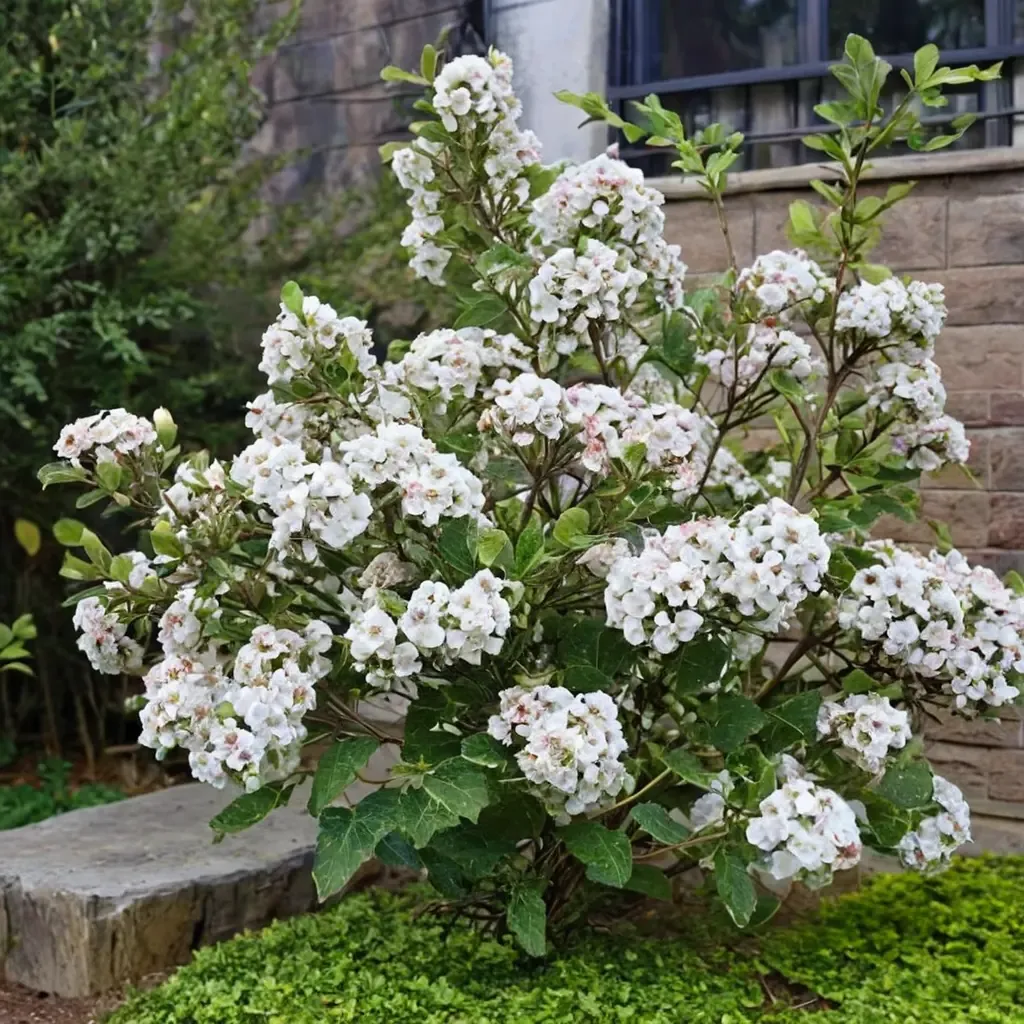
Korean spice viburnum
Viburnum carlesii
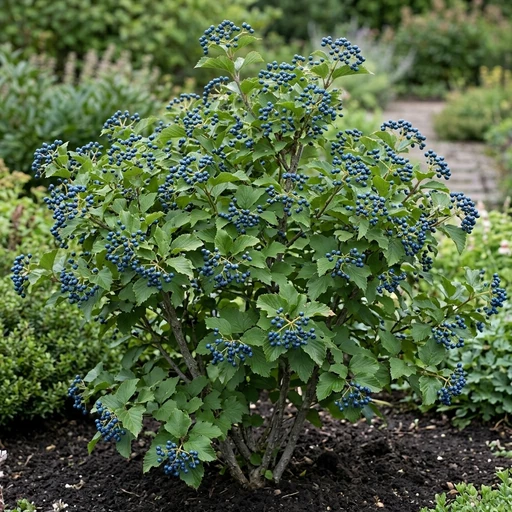
Blue Muffin Viburnum
Viburnum dentatum 'Christom'
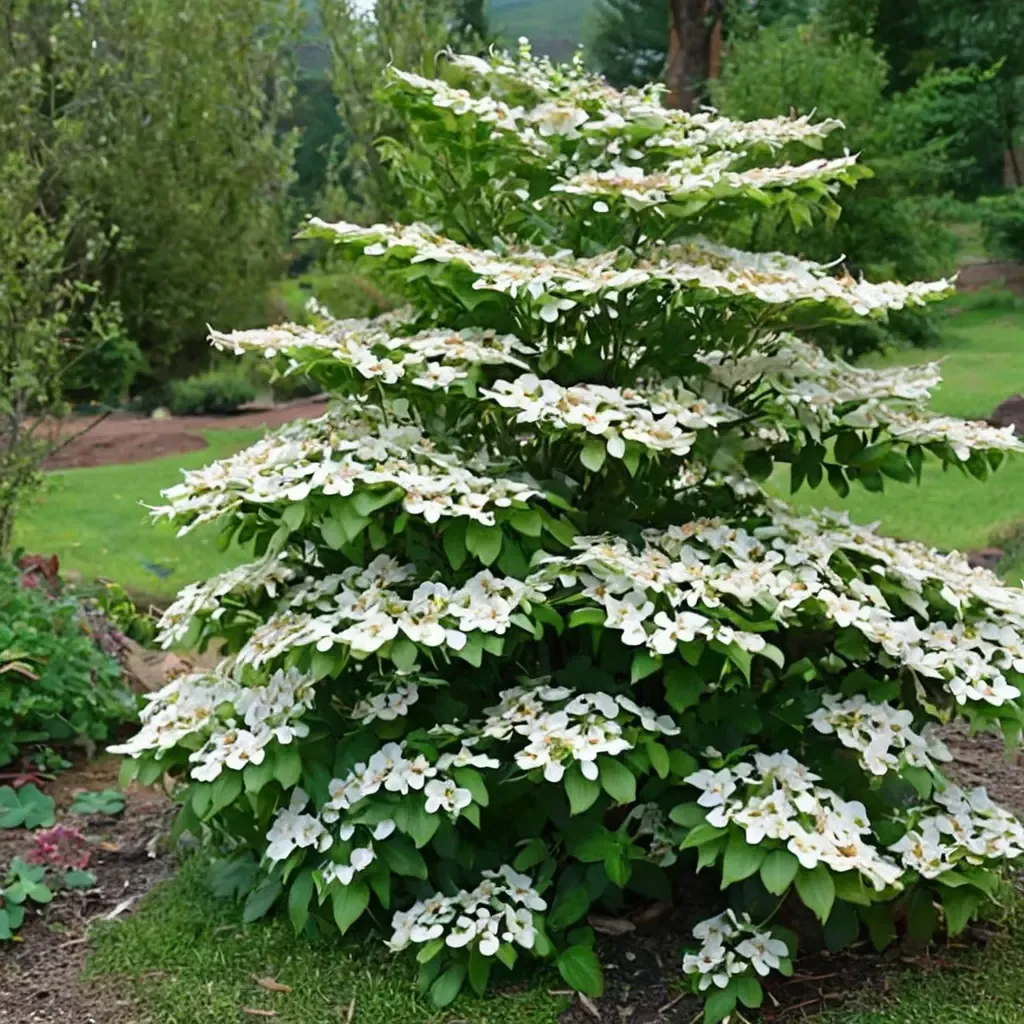
Mariesii Japanese Snowball
Viburnum plicatum 'Mariesii'
Keep exploring
Explore the genus
Hardy in your zone?
Grow Squashberry with confidence
See it in a design of your actual yard, get zone-matched care reminders, and track it season by season in your garden journal.