The Story
Plant Bio
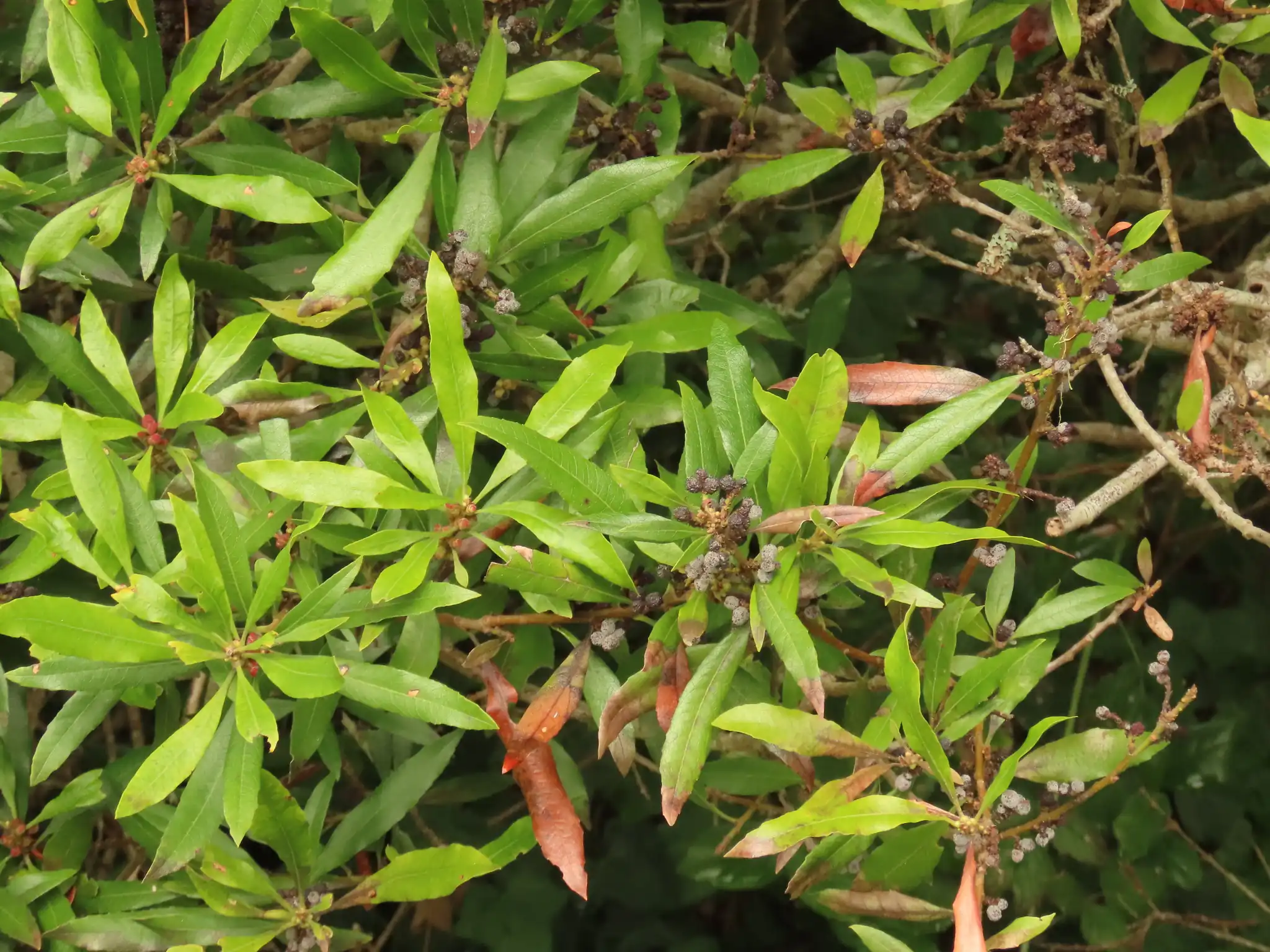
Morella californica is a densely bushy evergreen large shrub or small tree native to the coastal zones and moist inland canyons of western North America. The upright, multi-branched form features slender, ascending branches clothed in glossy, dark-green leaves that release a spicy aroma when crushed.
The species is distinguished by its exceptional tolerance to salt spray and strong maritime winds, making it a highly effective windbreak or hedge in coastal gardens. Small, discrete flowering catkins are followed by waxy, bumpy, dark purple-brown drupes that provide a critical food source for native wintering birds.
Uses & Benefits:
Essentials
At a Glance
Plant Type
Shrub
Height
180"
Width
120"
Light
Full Sun, Partial Sun
Zones
8, 9, 10
Water
Moderate
Humidity
High
Lifespan
Perennial
Native To
Western North America
Toxicity
Non-toxic
Bloom period
Spring – Early summer
In flower about 4 months of the year
Planting
How to Grow
- Select a planting site in full sun to partial shade with well-drained sandy, loamy, or organic soil.
- Dig a hole twice as wide as the root ball and set the plant at the same depth as its nursery container.
- Backfill with native soil and water deeply to settle the roots without adding supplemental fertilizer.
- Apply a thick layer of organic mulch around the base to conserve moisture and suppress weeds.
Pro Tip
Prune lightly in late winter or immediately after fruiting to maintain shape, taking care not to cut back into old, leafless bare wood which lacks adventitious buds and will fail to resprout.
Keep It Thriving
Care Guide
Do
- Water regularly during the first two growing seasons to establish a deep, resilient root system.
- Prune lightly after fruiting to maintain a dense, bushy habit or to shape into a formal hedge.
- Mulch annually to mimic the organic forest floor conditions of its native coastal habitat.
Don't
- Do not apply heavy nitrogen fertilizers, as the plant naturally fixes its own nitrogen via symbiotic root nodules.
- Do not cut back severely into old, bare wood, as the plant will fail to sprout new foliage from old stems.
- Do not plant in poorly drained, heavy clay soils where standing water can trigger root rot.
Seasonal Care Calendar
| Task | Jan | Feb | Mar | Apr | May | Jun | Jul | Aug | Sep | Oct | Nov | Dec |
|---|---|---|---|---|---|---|---|---|---|---|---|---|
| Mulch | ||||||||||||
| Pest Check | ||||||||||||
| Propagate | ||||||||||||
| Prune |
Watch Out For
Pests & Diseases
Common Pests
Common Diseases
In the Garden
Landscape Uses & Companions
Landscape Uses
Multiply
Propagation Methods
Good to Know
Common Questions
Pacific Wax Myrtle questions
What zones can Pacific Wax Myrtle grow in?
Pacific Wax Myrtle is hardy in USDA Zones 8–10. Inside that range it survives winter in the ground; outside it, grow it as an annual or a container plant you protect.
When does Pacific Wax Myrtle bloom?
Pacific Wax Myrtle typically blooms in spring through early summer. Exact timing shifts a week or two with your zone — Sow's bloom calendar maps it to your garden.
Does Pacific Wax Myrtle need full sun?
Pacific Wax Myrtle does best in full sun to part shade. In hot climates, afternoon shade keeps blooms fresher longer.
Is Pacific Wax Myrtle drought tolerant?
Yes — once established (usually after the first full season), Pacific Wax Myrtle handles dry spells with minimal watering. Water deeply its first year to build the root system that makes that possible.
More Morella to compare
Keep exploring
Explore the genus
Hardy in your zone?
Grow Pacific Wax Myrtle with confidence
See it in a design of your actual yard, get zone-matched care reminders, and track it season by season in your garden journal.