The Story
Plant Bio
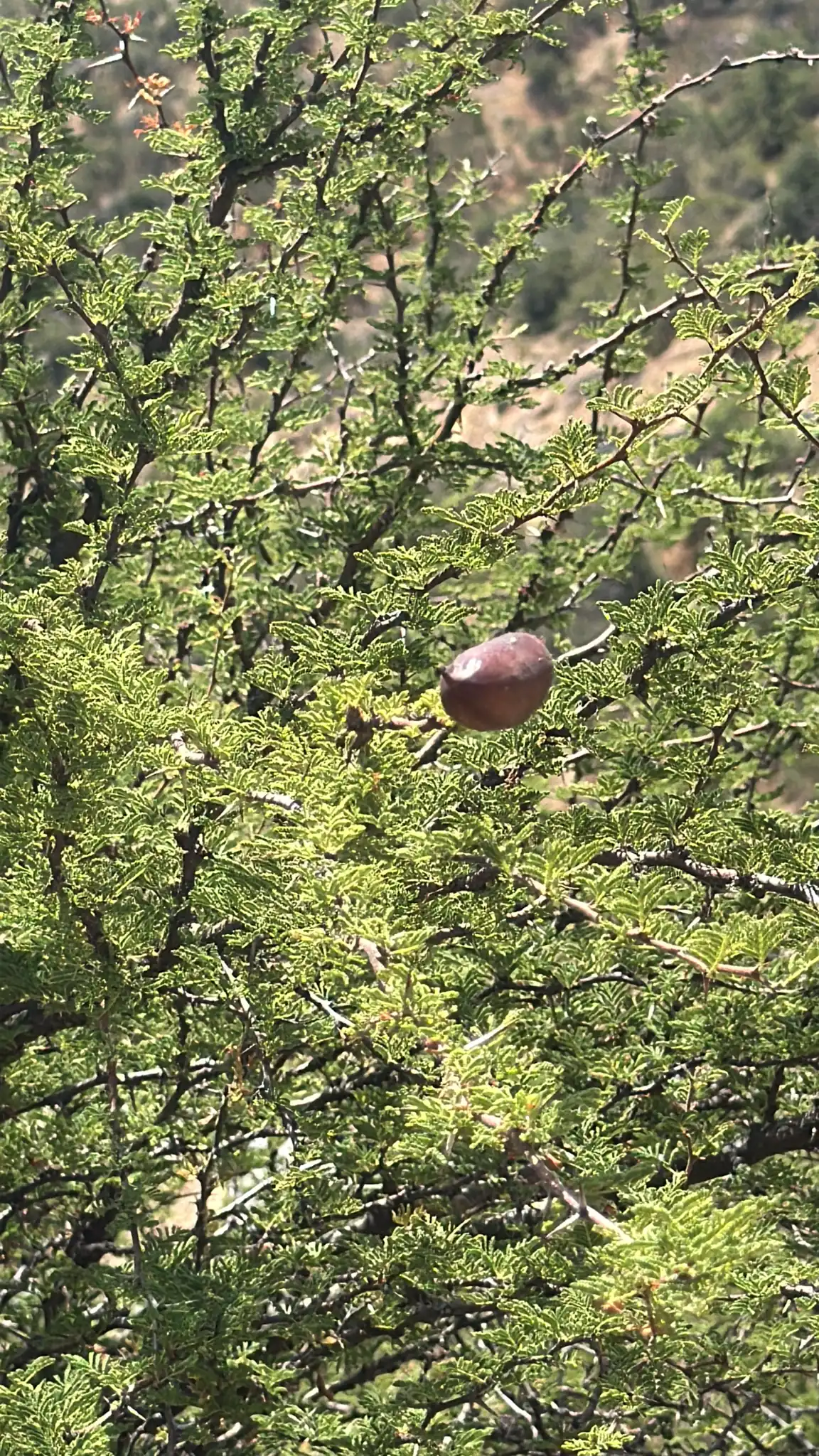
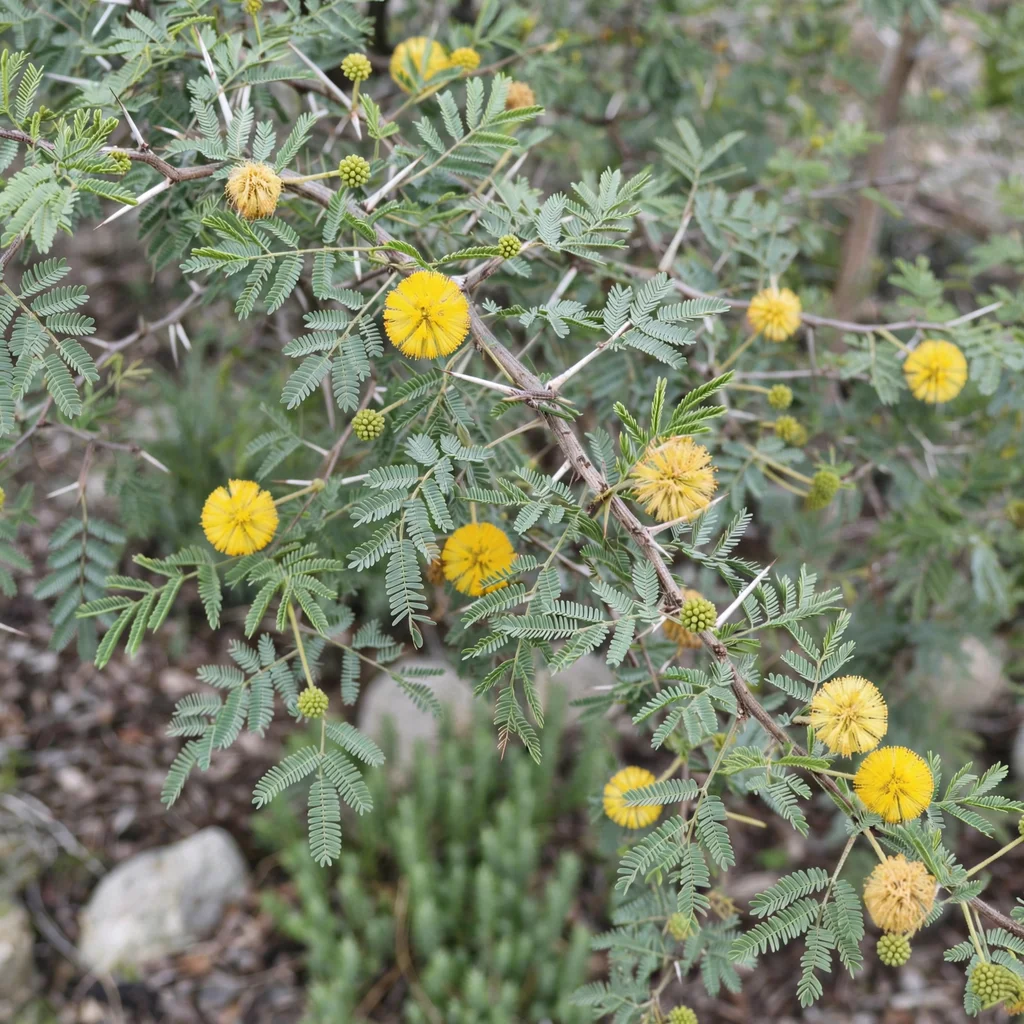
Vachellia caven is a densely branched, contorted deciduous to semi-deciduous shrub or small tree native to dry South American woodlands. The canopy is armed with stiff, sharp, whitish stipular spines up to 0.8 inches long, which contrast with the bright green, finely divided bipinnate foliage.
In spring, the branches erupt with highly fragrant, bright golden-yellow globular flower heads before or alongside the emerging new leaves. This species is exceptionally drought-tolerant and plays a vital role in resisting desertification in arid landscapes.
Uses & Benefits:
Essentials
At a Glance
Plant Type
Shrub
Height
275"
Width
196"
Light
Full Sun
Zones
8, 9, 10
Water
Low
Humidity
Low to Moderate
Lifespan
Long-lived
Native To
South America
Toxicity
Non-toxic but armed with sharp spines
Bloom period
Spring
In flower about 3 months of the year
Planting
How to Grow
- Select a planting site in full sun with excellent drainage, avoiding any low-lying areas prone to standing water.
- Dig a hole twice as wide as the root ball and of equal depth, backfilling with native soil without adding organic amendments.
- Water deeply immediately after planting to settle the soil, then reduce irrigation to a minimum once the root system is established.
- Apply a thin layer of organic mulch around the base to suppress weeds, keeping the mulch several inches away from the trunk to prevent rot.
Pro Tip
Prune minimally and never shear heavily into old, leafless wood, as the plant recovers poorly from deep cuts.
Keep It Thriving
Care Guide
Do
- Plant in full sun to maximize flowering and maintain a dense, balanced canopy.
- Ensure the soil drains rapidly, as the roots are highly intolerant of water-logged conditions.
- Use caution when handling the plant to avoid painful punctures from the sharp, rigid spines.
Don't
- Do not overwater or plant in heavy, poorly drained clay soils where standing water persists.
- Do not apply high-nitrogen fertilizers, which stimulate excessive, weak vegetative growth at the expense of flowers and drought hardiness.
- Do not shear the plant back into old, non-active wood that lacks foliage.
Seasonal Care Calendar
| Task | Jan | Feb | Mar | Apr | May | Jun | Jul | Aug | Sep | Oct | Nov | Dec |
|---|---|---|---|---|---|---|---|---|---|---|---|---|
| Pest Check | ||||||||||||
| Propagate | ||||||||||||
| Prune | ||||||||||||
| Winter Prep |
Watch Out For
Pests & Diseases
Common Pests
Common Diseases
In the Garden
Landscape Uses & Companions
Landscape Uses
Companion Plants
Multiply
Propagation Methods
Good to Know
Common Questions
Caven Thorn questions
What zones can Caven Thorn grow in?
Caven Thorn is hardy in USDA Zones 8–10. Inside that range it survives winter in the ground; outside it, grow it as an annual or a container plant you protect.
Is Caven Thorn deer resistant?
Yes — Caven Thorn is rated deer-resistant. Deer typically pass it over, though extreme hunger can override any plant's defenses.
When does Caven Thorn bloom?
Caven Thorn typically blooms in spring through spring. Exact timing shifts a week or two with your zone — Sow's bloom calendar maps it to your garden.
Does Caven Thorn need full sun?
Caven Thorn does best in full sun (6+ hours).
Is Caven Thorn drought tolerant?
Yes — once established (usually after the first full season), Caven Thorn handles dry spells with minimal watering. Water deeply its first year to build the root system that makes that possible.
More Vachellia to compare
Keep exploring
Explore the genus
Hardy in your zone?
Grow Caven Thorn with confidence
See it in a design of your actual yard, get zone-matched care reminders, and track it season by season in your garden journal.