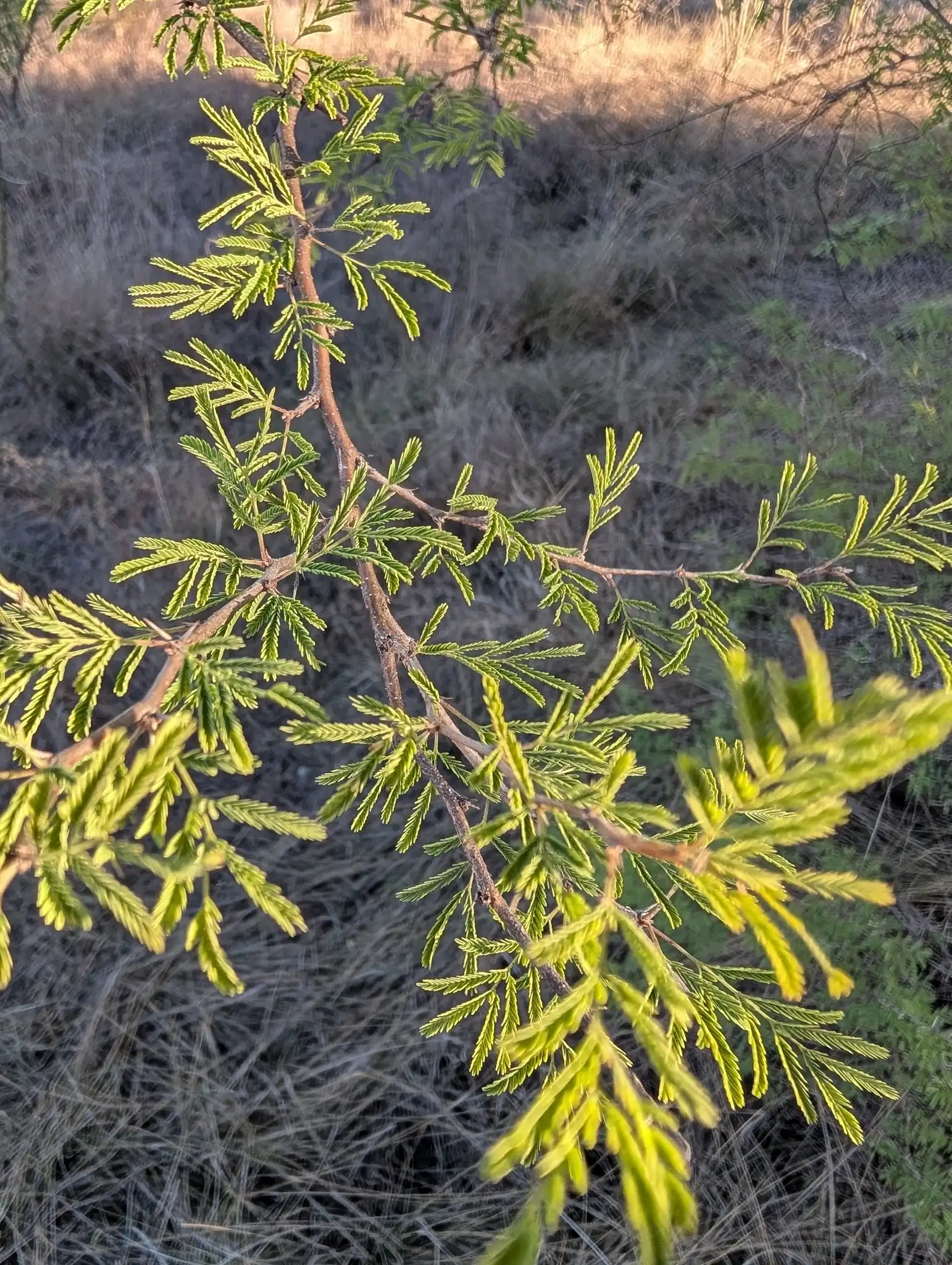
The Story
Plant Bio
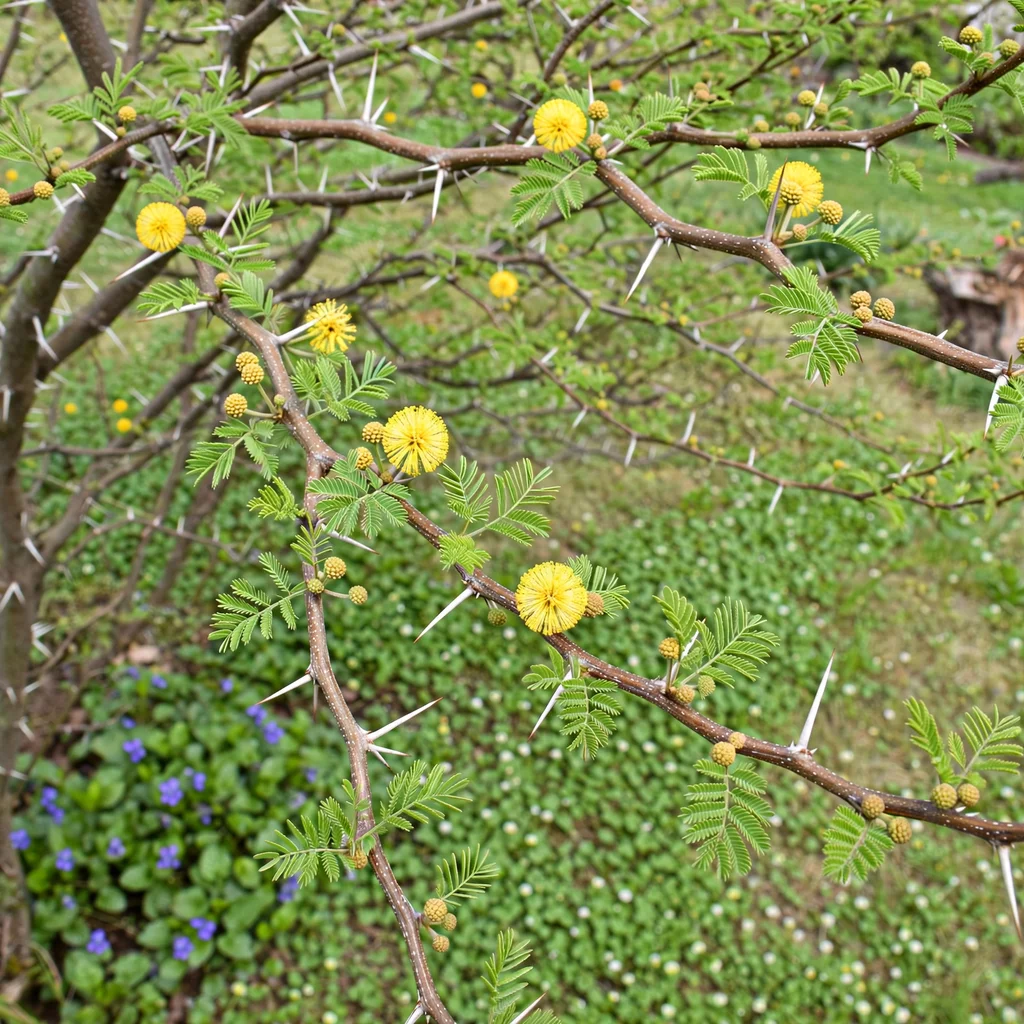
Vachellia farnesiana, commonly known as sweet acacia, is a multi-trunked deciduous to semi-evergreen shrub or small tree native to the southern United States and the Neotropics. It develops a rounded, spreading crown of twiggy, thorn-bearing branches clothed in delicate, bipinnately compound gray-green foliage.
The species is highly valued for its intensely fragrant, golden-yellow globose flower heads that cover the branches from winter into spring. Each fluffy, pom-pom-like flower head is packed with protruding stamens, releasing a sweet scent historically prized in perfume manufacture.
Uses & Benefits:
Essentials
At a Glance
Plant Type
Shrub
Height
295"
Width
295"
Light
Full Sun
Zones
8, 9, 10
Water
Low
Humidity
Medium
Lifespan
Moderate
Native To
The Americas
Toxicity
Toxic if Ingested
Bloom period
Winter – Spring
In flower about 6 months of the year
Planting
How to Grow
- Select a planting site in full sun with excellent drainage, avoiding low spots where water collects.
- Dig a hole twice as wide as the root ball but no deeper, ensuring the crown sits slightly above the soil line.
- Backfill with native soil without adding organic amendments or fertilizer, and water deeply to settle.
- Water sparingly once established, allowing the soil to dry out completely between waterings.
Pro Tip
Avoid planting in heavy, poorly drained soils or applying nitrogen-rich fertilizers, which stimulate weak, rapid growth and invite root rot. Prune minimally, focusing only on removing dead wood or shaping the thorny canopy, as heavy shearing into old wood results in poor recovery.
Keep It Thriving
Care Guide
Do
- Plant in full sun to maximize flowering density and maintain a tight crown.
- Ensure the soil drains rapidly to prevent root rot.
- Wear thick gloves when handling the plant to protect against the sharp stipular spines.
Don't
- Do not overwater or plant in boggy, chronically wet root zones.
- Do not fertilize, as excess nutrients cause weak, structurally unsound growth.
- Do not shear the plant heavily into old, leafless wood.
Seasonal Care Calendar
| Task | Jan | Feb | Mar | Apr | May | Jun | Jul | Aug | Sep | Oct | Nov | Dec |
|---|---|---|---|---|---|---|---|---|---|---|---|---|
| Mulch | ||||||||||||
| Pest Check | ||||||||||||
| Plant | ||||||||||||
| Propagate | ||||||||||||
| Prune |
Watch Out For
Pests & Diseases
Common Pests
Common Diseases
In the Garden
Landscape Uses & Companions
Landscape Uses
Companion Plants
Multiply
Propagation Methods
Good to Know
Common Questions
Sweet Acacia questions
What zones can Sweet Acacia grow in?
Sweet Acacia is hardy in USDA Zones 8–10. Inside that range it survives winter in the ground; outside it, grow it as an annual or a container plant you protect.
Is Sweet Acacia deer resistant?
Not reliably. Deer may browse Sweet Acacia, especially tender spring growth — plan on repellents or fencing where pressure is high.
When does Sweet Acacia bloom?
Sweet Acacia typically blooms in winter through spring. Exact timing shifts a week or two with your zone — Sow's bloom calendar maps it to your garden.
Does Sweet Acacia need full sun?
Sweet Acacia does best in full sun (6+ hours).
Is Sweet Acacia drought tolerant?
Yes — once established (usually after the first full season), Sweet Acacia handles dry spells with minimal watering. Water deeply its first year to build the root system that makes that possible.
More Vachellia to compare
Keep exploring
Explore the genus
Hardy in your zone?
Grow Sweet Acacia with confidence
See it in a design of your actual yard, get zone-matched care reminders, and track it season by season in your garden journal.