The Story
Plant Bio
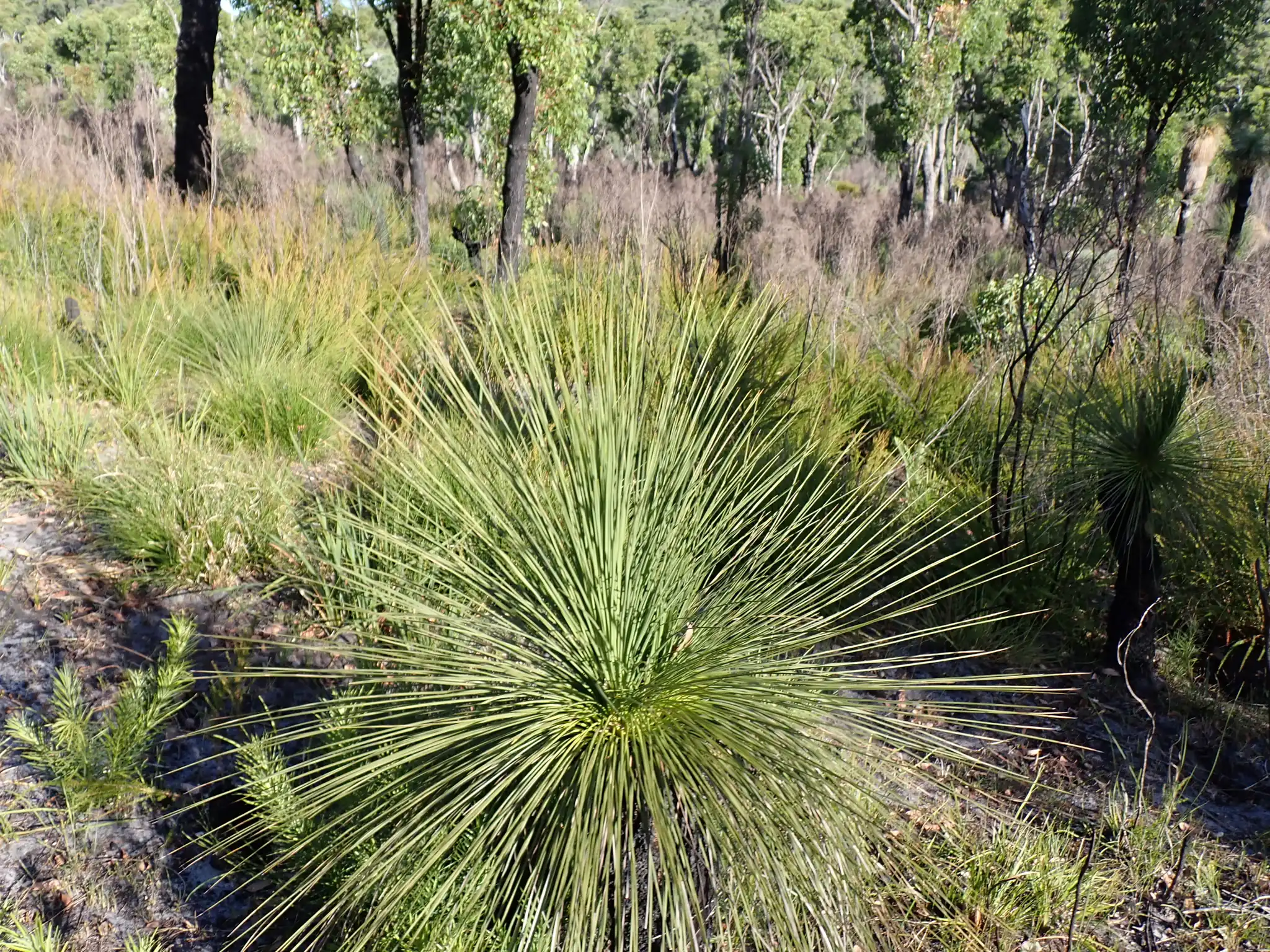
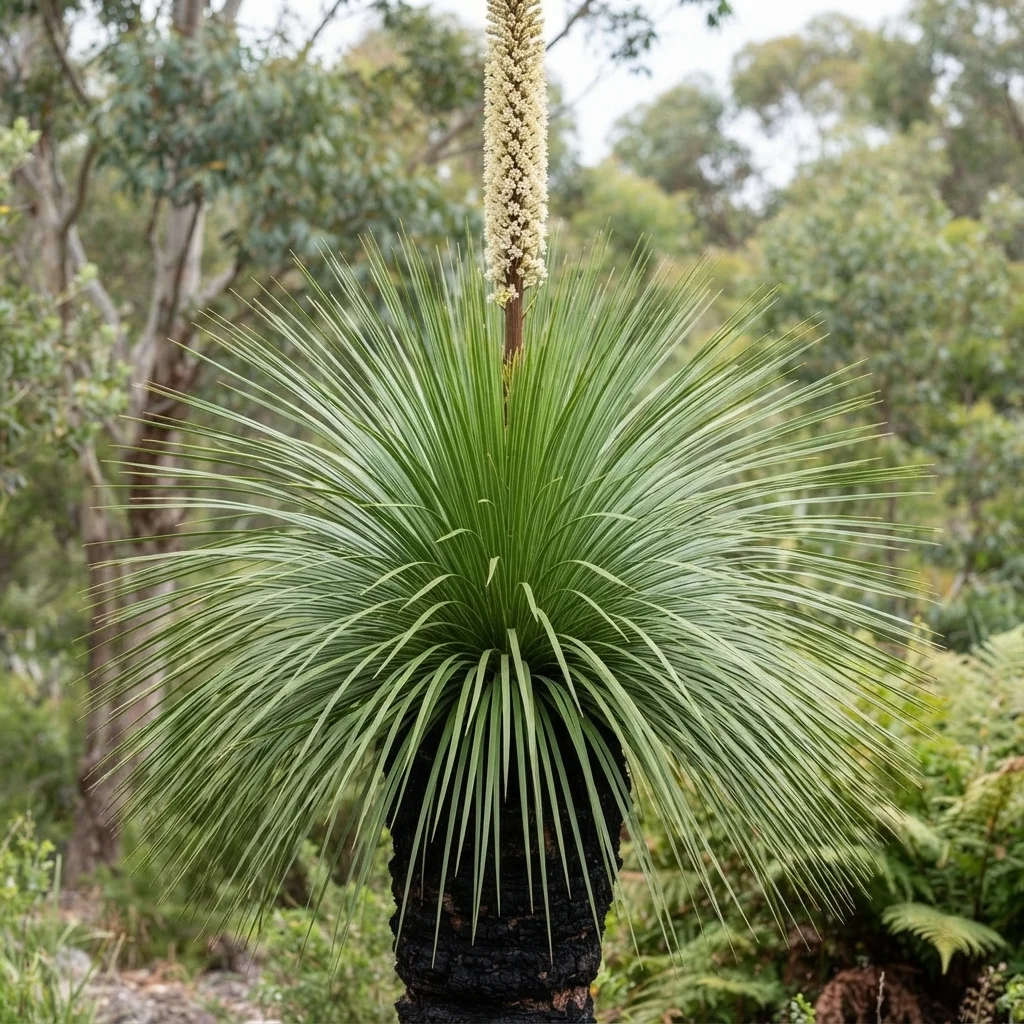
Xanthorrhoea preissii is a slow-growing, arborescent perennial native to Southwest Western Australia, characterized by a thick, resinous trunk topped by a dense, spherical crown of rigid, grass-like leaves. It exists as a trunkless basal rosette for several decades before slowly developing an above-ground trunk that grows only one to three centimeters annually.
The blue-green to dark green leaves are stiff and linear, radiating outward to form a highly architectural silhouette. In spring and summer, mature specimens produce a massive, rigid vertical spear topped by a long, cylindrical flowering spike covered in small, creamy-white flowers.
Uses & Benefits:
Essentials
At a Glance
Plant Type
Perennial
Height
196"
Width
94"
Light
Full Sun, Partial Sun
Zones
9, 10
Water
Low
Humidity
Moderate
Lifespan
Centuries
Native To
Southwest Western Australia
Toxicity
Non-toxic
Bloom period
Spring – Summer
In flower about 6 months of the year
Planting
How to Grow
- Select a planting site with full sun and exceptionally well-drained, sandy or gravelly soil.
- Dig a hole twice as wide as the container but no deeper, ensuring the plant sits at the exact same soil level as it did in the pot.
- Carefully slide the plant from its container, taking extreme care not to disturb or damage the sensitive root system.
- Backfill with native soil, water thoroughly to settle, and avoid applying any standard high-phosphorus fertilizers.
Pro Tip
Never cut into the green crown or prune the trunk, as this species possesses a single dominant apical meristem and any damage to this growing point is fatal.
Keep It Thriving
Care Guide
Do
- Provide exceptional soil drainage to prevent root rot.
- Wear thick gloves when handling the plant to avoid cuts from the sharp leaf margins.
- Allow the soil to dry out completely between waterings once the plant is established.
Don't
- Do not apply standard high-phosphorus garden fertilizers.
- Do not prune into the green leafy head or cut the trunk.
- Do not overwater or plant in heavy, poorly drained clay soils.
Seasonal Care Calendar
| Task | Jan | Feb | Mar | Apr | May | Jun | Jul | Aug | Sep | Oct | Nov | Dec |
|---|---|---|---|---|---|---|---|---|---|---|---|---|
| Fertilize | ||||||||||||
| Pest Check | ||||||||||||
| Prune | ||||||||||||
| Winter Prep |
Watch Out For
Pests & Diseases
Common Pests
Common Diseases
In the Garden
Landscape Uses & Companions
Landscape Uses
Companion Plants
Multiply
Propagation Methods
Good to Know
Common Questions
Grass Tree questions
What zones can Grass Tree grow in?
Grass Tree is hardy in USDA Zones 9–10. Inside that range it survives winter in the ground; outside it, grow it as an annual or a container plant you protect.
When does Grass Tree bloom?
Grass Tree typically blooms in spring through summer. Exact timing shifts a week or two with your zone — Sow's bloom calendar maps it to your garden.
Does Grass Tree need full sun?
Grass Tree does best in full sun to part shade. In hot climates, afternoon shade keeps blooms fresher longer.
Is Grass Tree drought tolerant?
Yes — once established (usually after the first full season), Grass Tree handles dry spells with minimal watering. Water deeply its first year to build the root system that makes that possible.
More Xanthorrhoea to compare
Keep exploring
Explore the genus
Hardy in your zone?
Grow Grass Tree with confidence
See it in a design of your actual yard, get zone-matched care reminders, and track it season by season in your garden journal.