The Story
Plant Bio
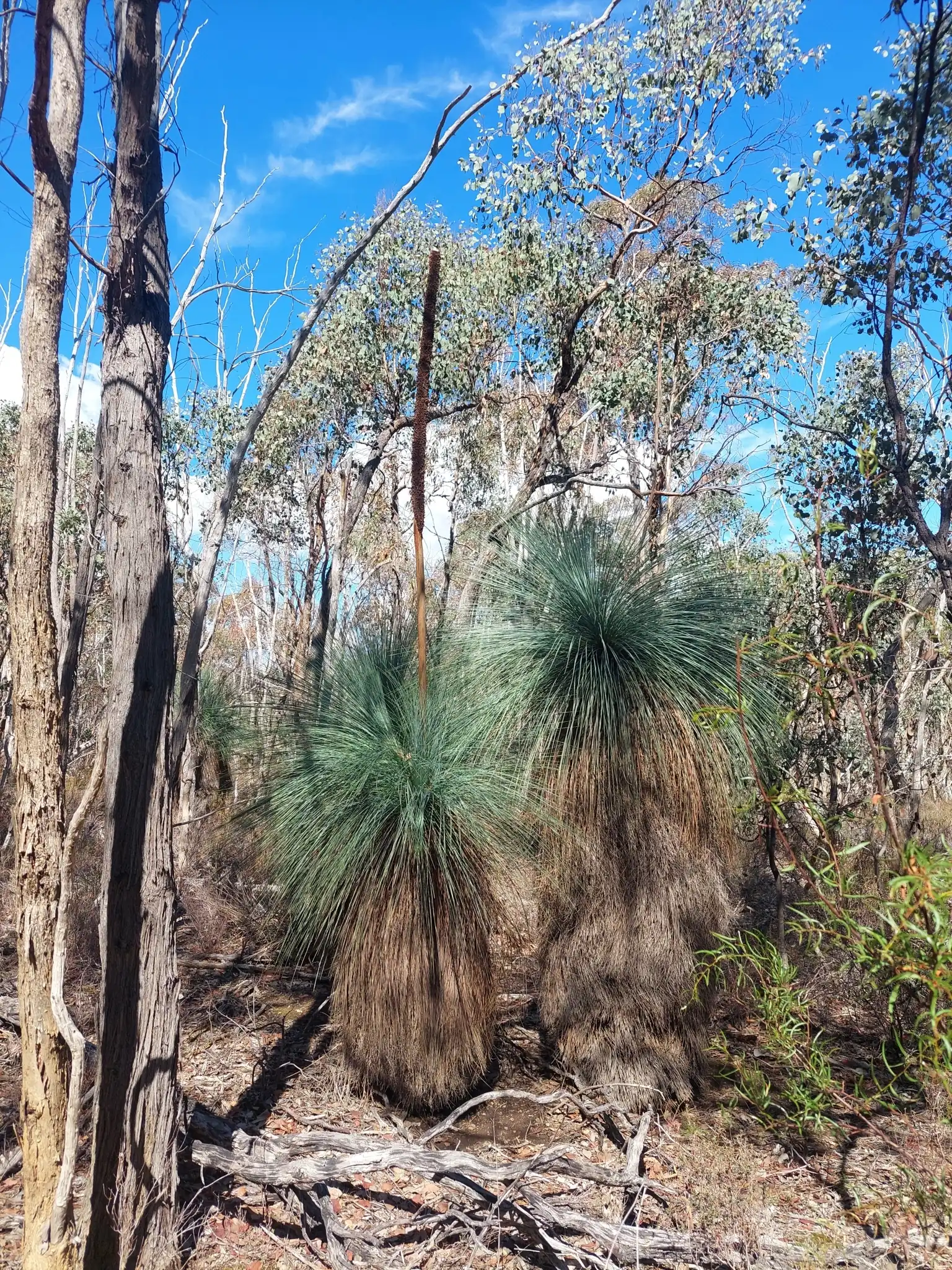
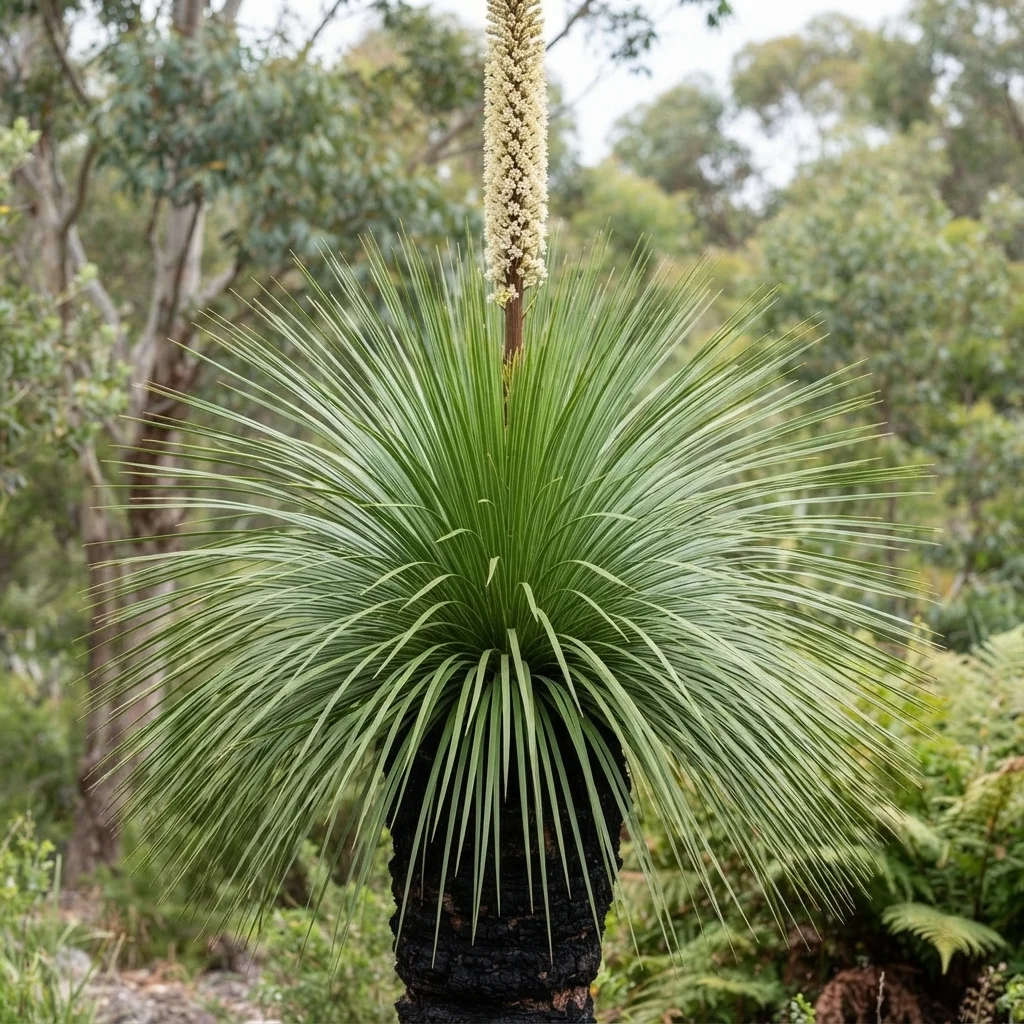
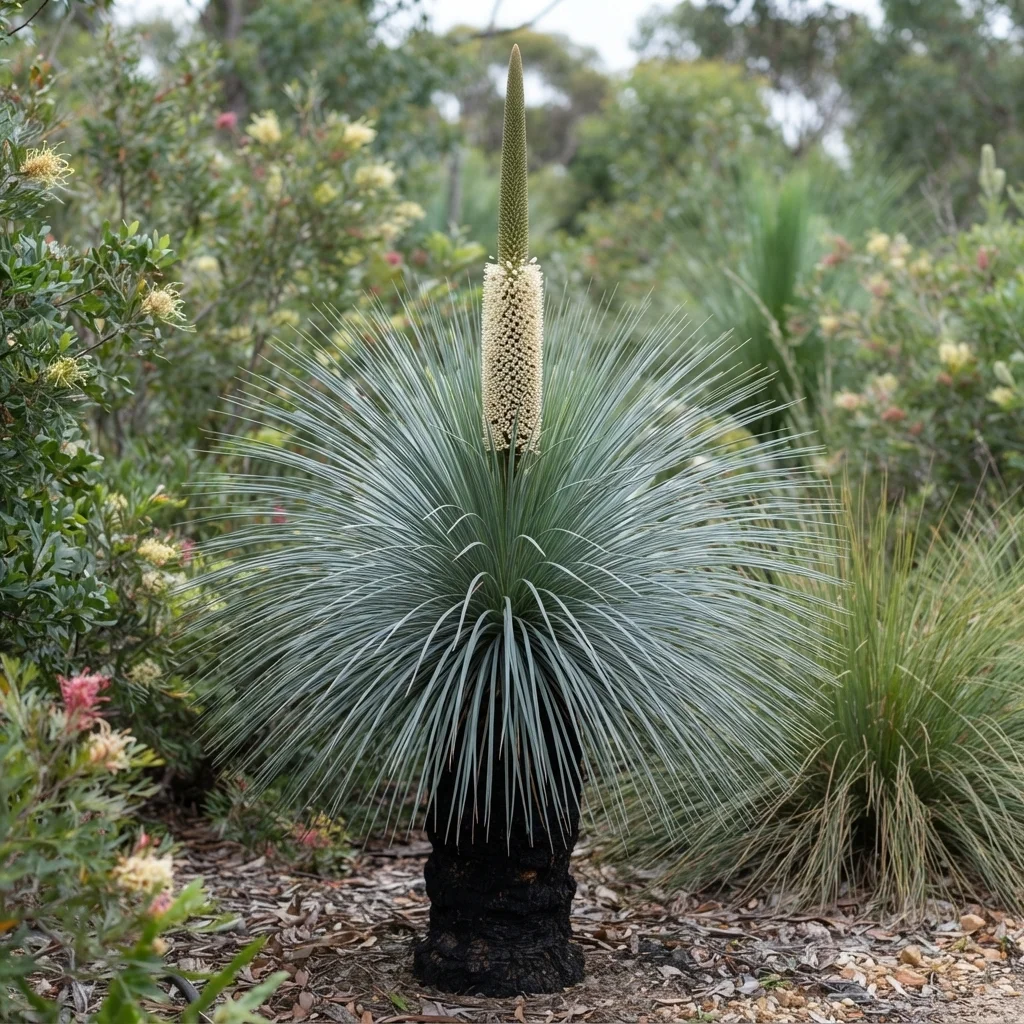
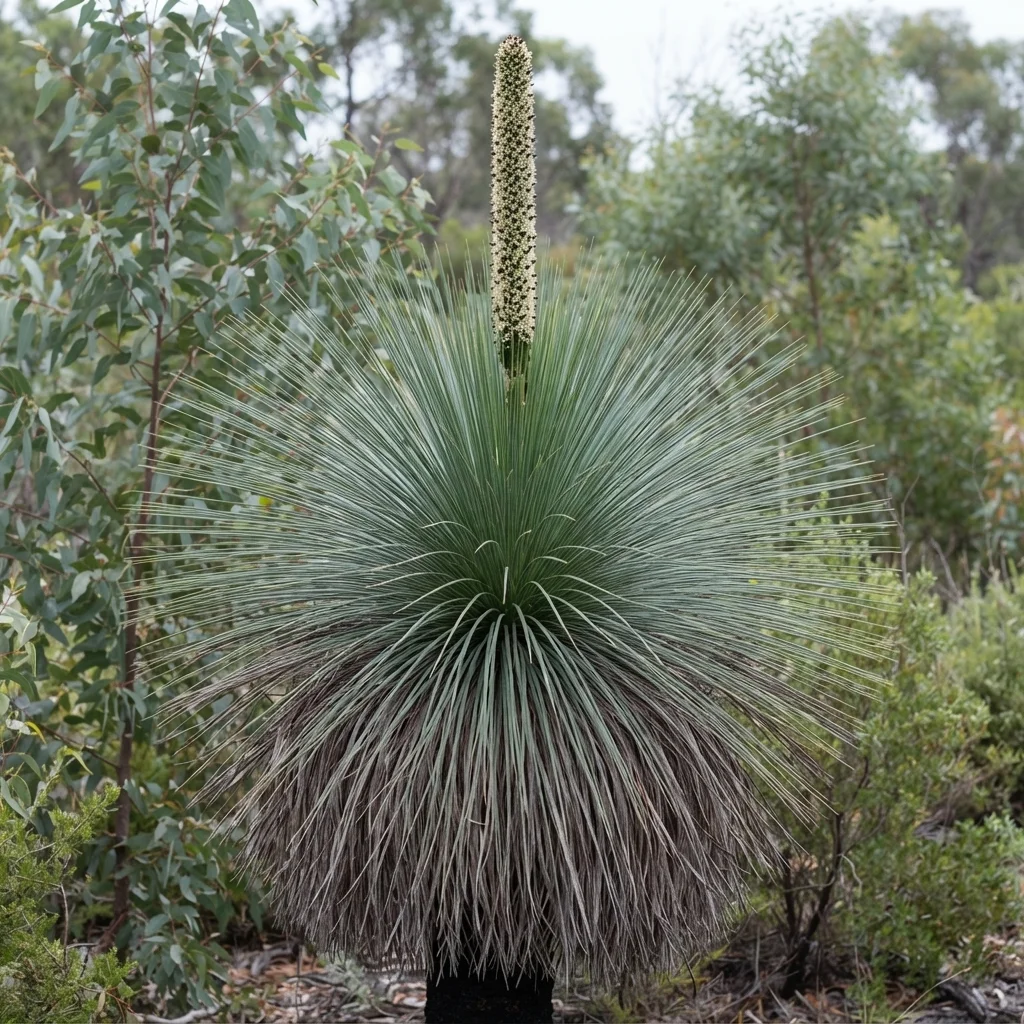
Xanthorrhoea glauca, the Queensland grass tree, is an exceptionally slow-growing, evergreen arborescent monocot native to eastern Australia that eventually forms a thick, charcoal-colored trunk topped by a dense, spherical crown of steel-blue to gray-green foliage. Over many decades, the trunk—constructed from old leaf bases cemented by natural resin—can reach up to sixteen feet, though garden specimens typically remain much shorter.
This species is distinguished by its highly glaucous, needle-like leaves that shimmer in bright sunlight and its massive, rod-like flower spikes that can rise up to six feet above the foliage. The creamy-white flowers emerge irregularly from dark brown bracts along the spike, primarily in spring, providing a dramatic architectural element.
Uses & Benefits:
Essentials
At a Glance
Plant Type
Cactus Succulent
Height
315"
Width
118"
Light
Full Sun, Partial Sun
Zones
8, 9, 10
Water
Low
Humidity
Low to Moderate
Lifespan
Long-lived (centuries)
Native To
Eastern Australia
Toxicity
Non-toxic (but sharp foliage)
Bloom period
Spring
In flower about 3 months of the year
Planting
How to Grow
- Select a planting site in full sun with exceptionally well-drained, sandy, gravelly, or rocky soil.
- Dig a hole twice as wide as the root ball but no deeper, ensuring the plant sits at the exact same soil level as it did in the container.
- Gently slide the plant from its pot without disturbing the fragile root system, as root damage is frequently fatal.
- Backfill with native soil or a low-nutrient, sandy mix, and water sparingly only until established.
Pro Tip
Never prune the skirt of dead leaves down to the bare trunk or cut into the green crown; this exposes soft, vulnerable stem tissue and can kill the plant.
Keep It Thriving
Care Guide
Do
- Plant in a raised bed or mound if your garden soil contains clay or drains slowly.
- Use a specialized, low-phosphorus fertilizer formulated for Australian native plants if feeding is necessary.
- Allow the soil to dry out completely between waterings once the root system is established.
Don't
- Never overwater or allow water to pool around the base, which triggers fatal root rot.
- Do not apply standard garden fertilizers, as excess phosphorus causes severe root damage.
- Never attempt to transplant an established specimen, as they do not tolerate root disturbance.
Seasonal Care Calendar
| Task | Jan | Feb | Mar | Apr | May | Jun | Jul | Aug | Sep | Oct | Nov | Dec |
|---|---|---|---|---|---|---|---|---|---|---|---|---|
| Deadhead | ||||||||||||
| Fertilize | ||||||||||||
| Pest Check | ||||||||||||
| Winter Prep |
Watch Out For
Pests & Diseases
Common Pests
Common Diseases
In the Garden
Landscape Uses & Companions
Landscape Uses
Companion Plants
Multiply
Propagation Methods
Good to Know
Common Questions
Queensland Grass Tree questions
What zones can Queensland Grass Tree grow in?
Queensland Grass Tree is hardy in USDA Zones 8–10. Inside that range it survives winter in the ground; outside it, grow it as an annual or a container plant you protect.
Is Queensland Grass Tree deer resistant?
Yes — Queensland Grass Tree is rated deer-resistant. Deer typically pass it over, though extreme hunger can override any plant's defenses.
When does Queensland Grass Tree bloom?
Queensland Grass Tree typically blooms in spring through spring. Exact timing shifts a week or two with your zone — Sow's bloom calendar maps it to your garden.
Does Queensland Grass Tree need full sun?
Queensland Grass Tree does best in full sun to part shade. In hot climates, afternoon shade keeps blooms fresher longer.
Is Queensland Grass Tree drought tolerant?
Yes — once established (usually after the first full season), Queensland Grass Tree handles dry spells with minimal watering. Water deeply its first year to build the root system that makes that possible.
More Xanthorrhoea to compare
Keep exploring
Explore the genus
Hardy in your zone?
Grow Queensland Grass Tree with confidence
See it in a design of your actual yard, get zone-matched care reminders, and track it season by season in your garden journal.