1 named cultivar
The Story
Plant Bio
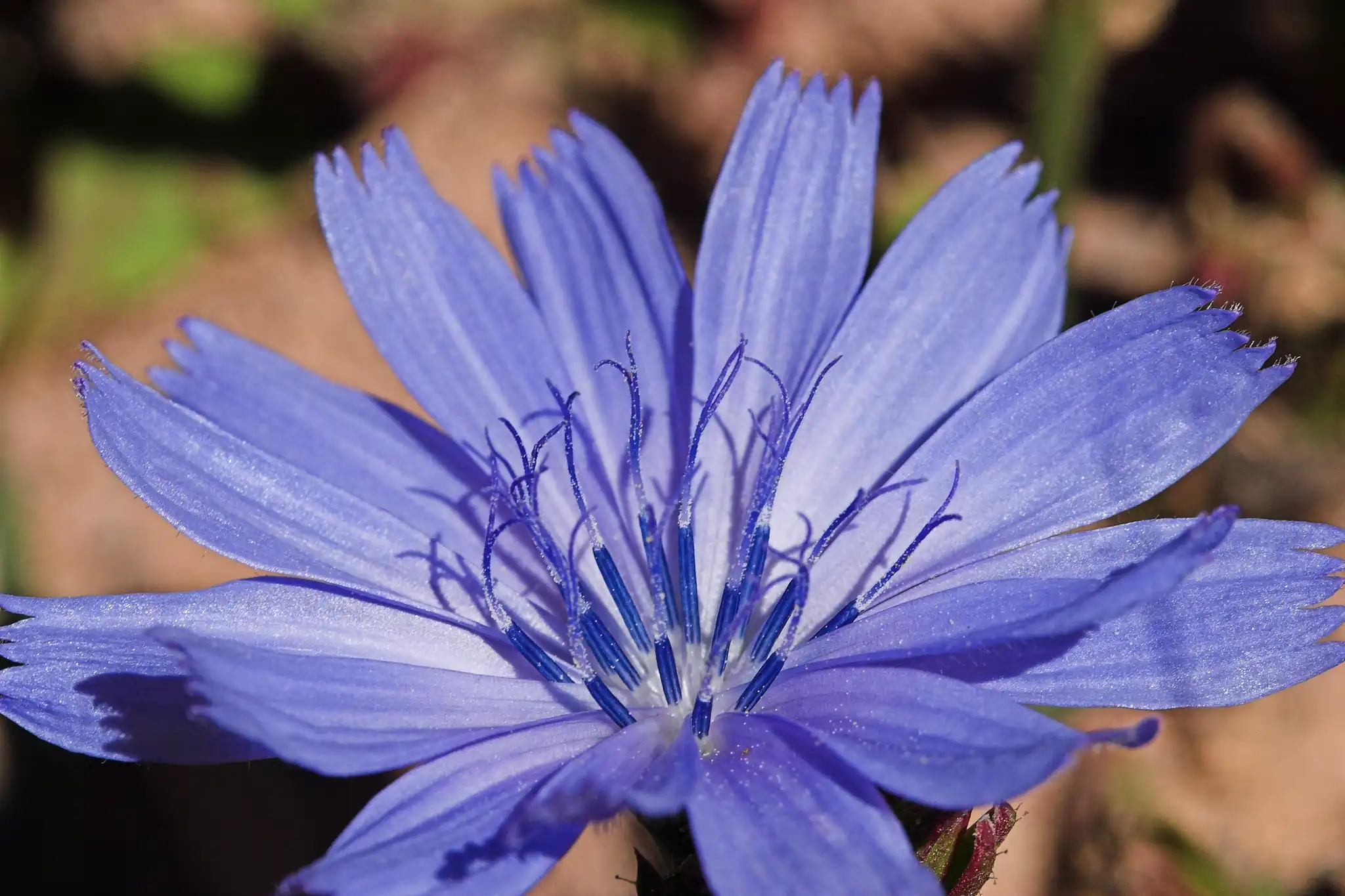
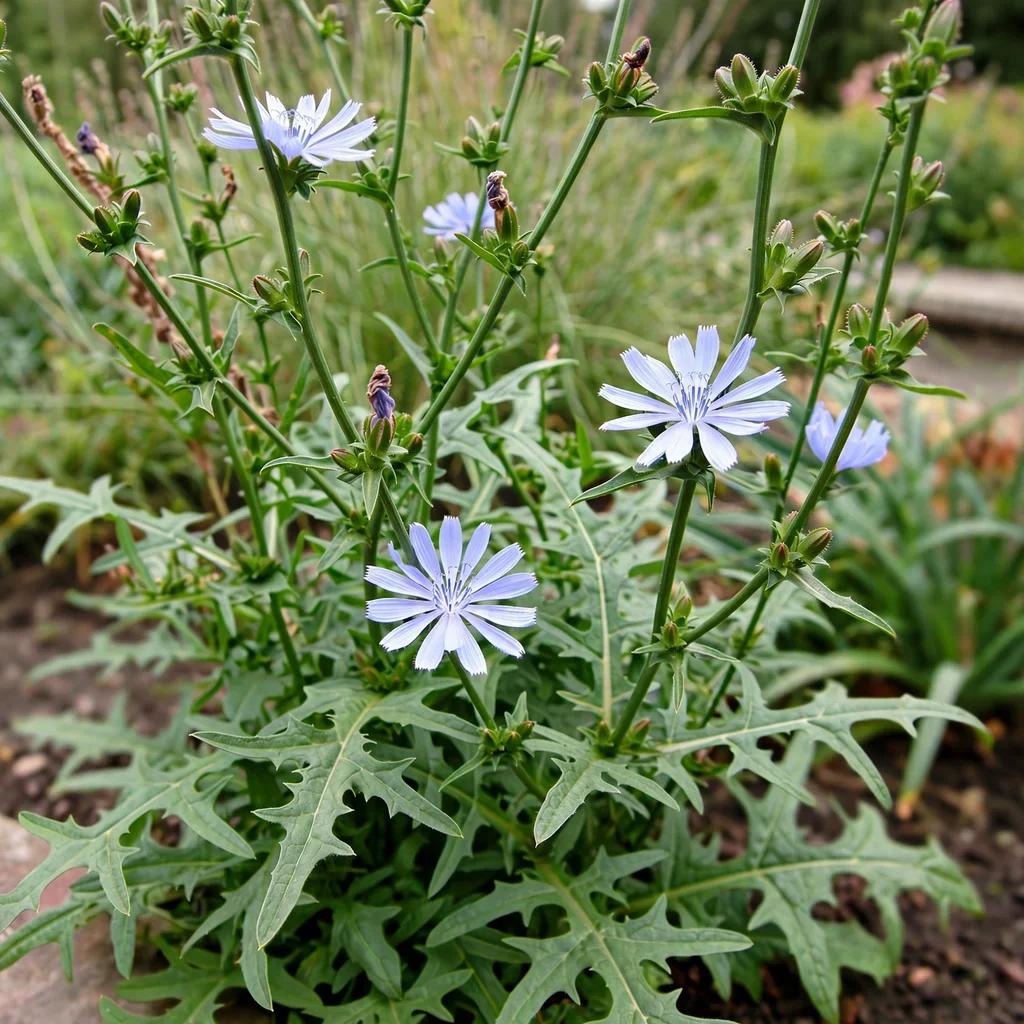
Cichorium intybus, chicory, is an upright perennial from Europe, three to four feet tall, with a deep taproot and a basal rosette of toothed dandelion-like leaves. Stiff, almost leafless branching stems carry saucer-shaped flowerheads of an unusually clear sky blue, each lasting a single morning through summer and autumn.
The flowers open at dawn and close by midday, so a roadside stand that looks spectacular at breakfast is bare by lunch. The roasted root is the traditional coffee substitute and the blanched shoots are Belgian endive — the same species, forced in darkness. It needs a deep, stone-free bed if you plan to lift the roots whole.
Uses & Benefits:
Essentials
At a Glance
Plant Type
Fruit Vegetable
Height
36"
Width
18"
Light
Full Sun, Partial Sun
Zones
4, 5, 6, 7, 8, 9
Water
Low
Humidity
Moderate
Lifespan
Perennial
Native To
Europe
Toxicity
Non-toxic; roots and leaves are edible
Planting
How to Grow
- Sow direct in spring; the taproot resents transplanting.
- Give it full sun and deep, freely drained soil.
- Thin seedlings to a foot apart.
- Water in drought, though it is tolerant once rooted.
- Lift roots in autumn for roasting or forcing.
- Deadhead to limit self-seeding.
Pro Tip
The flowers close by midday, so judge a chicory planting in the morning — an empty-looking bed at noon is behaving exactly as it should.
Keep It Thriving
Care Guide
Do
- Sow direct rather than transplanting 🌱
- Give it deep, stone-free soil ⛏️
- Lift roots in autumn for forcing 🥬
- Enjoy the flowers in the morning 🌅
Don't
- Transplant the taproot ❌
- Expect open flowers in the afternoon ❌
- Let it seed through a tidy border ❌
Seasonal Care Calendar
| Task | Jan | Feb | Mar | Apr | May | Jun | Jul | Aug | Sep | Oct | Nov | Dec |
|---|---|---|---|---|---|---|---|---|---|---|---|---|
| Harvest | ||||||||||||
| Sow |
Watch Out For
Pests & Diseases
Common Pests
Common Diseases
In the Garden
Landscape Uses & Companions
Landscape Uses
Companion Plants
Multiply
Propagation Methods
Good to Know
Common Questions
Chicory questions
What zones can Chicory grow in?
Chicory is hardy in USDA Zones 4–9. Inside that range it survives winter in the ground; outside it, grow it as an annual or a container plant you protect.
Is Chicory deer resistant?
Not reliably. Deer may browse Chicory, especially tender spring growth — plan on repellents or fencing where pressure is high.
When does Chicory bloom?
Chicory typically blooms in mid-summer through late summer. Exact timing shifts a week or two with your zone — Sow's bloom calendar maps it to your garden.
Does Chicory need full sun?
Chicory does best in full sun to part shade. In hot climates, afternoon shade keeps blooms fresher longer.
Is Chicory drought tolerant?
Yes — once established (usually after the first full season), Chicory handles dry spells with minimal watering. Water deeply its first year to build the root system that makes that possible.
More Cichorium to compare

Keep exploring
Explore the genus
Grow Chicory with confidence
See it in a design of your actual yard, get zone-matched care reminders, and track it season by season in your garden journal.