The Story
Plant Bio
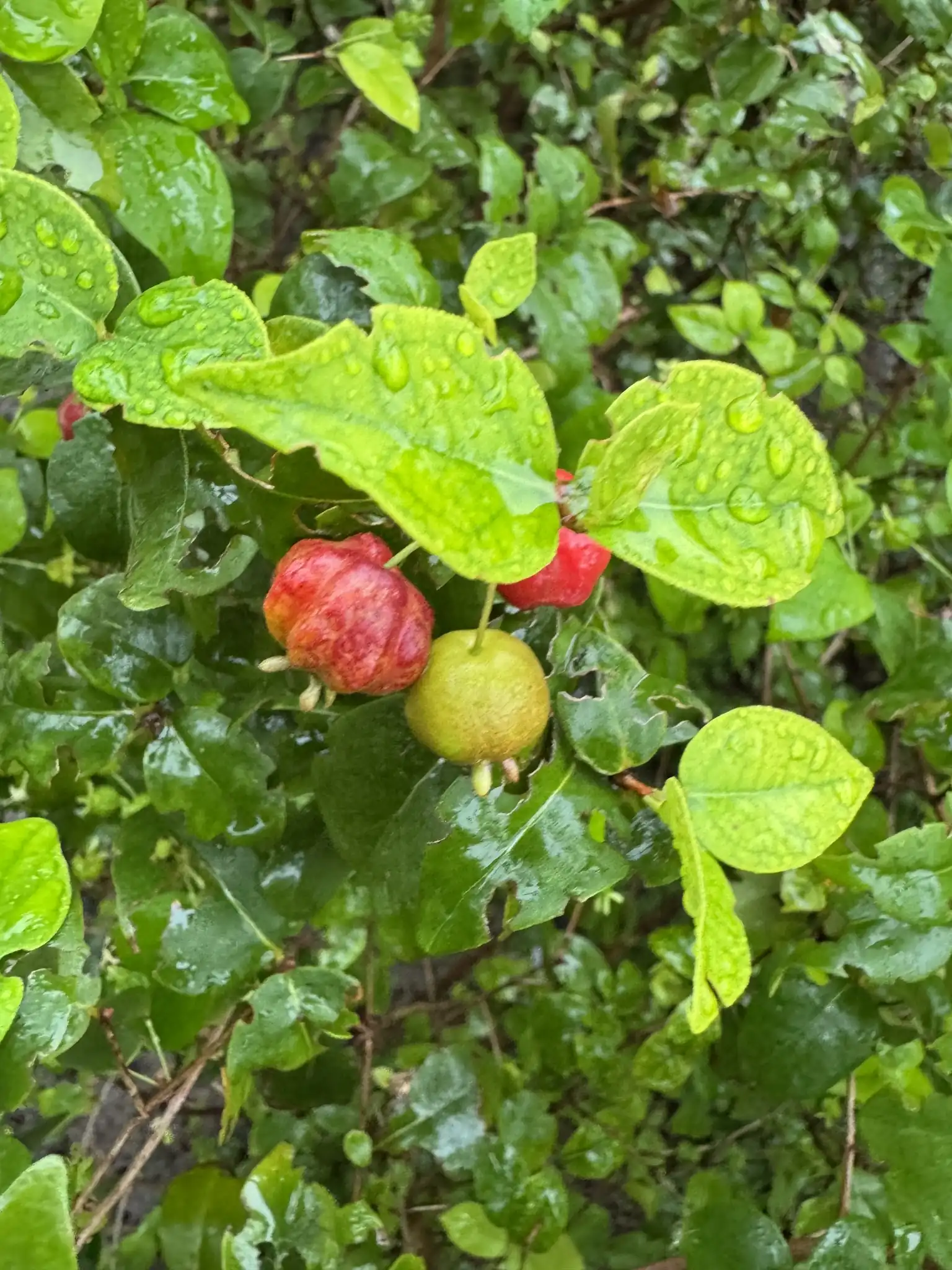
Eugenia uniflora, commonly known as the Surinam cherry, is a dense, rounded evergreen shrub or small multi-stemmed tree native to South America. It features glossy, deep green leaves that emerge with a coppery-red tint, followed by small, fragrant white flowers with prominent stamens.
The edible, ribbed fruits ripen from green to bright red and deep crimson, offering a sweet-tart flavor rich in vitamin C. In warmer regions of North America, particularly Florida, this species naturalizes readily and is classified as an invasive exotic.
Uses & Benefits:
Essentials
At a Glance
Plant Type
Shrub
Height
240"
Width
144"
Light
Full Sun, Partial Sun
Zones
9, 10
Water
Moderate
Humidity
High
Lifespan
Perennial
Native To
South America
Toxicity
Foliage may cause mild skin irritation
Bloom period
Spring – Summer
In flower about 6 months of the year
Planting
How to Grow
- Select a planting site in full sun to partial shade with well-drained soil.
- Water regularly during the first growing season to establish a deep, drought-tolerant root system.
- Apply a light, balanced slow-release fertilizer in early spring to support growth without over-stimulating foliage.
- Prune annually after the main fruiting cycle to maintain shape or manage hedge density.
Pro Tip
Avoid constant shearing if fruit production is desired, as flowers and subsequent cherries develop on both current and previous season's wood.
Keep It Thriving
Care Guide
Do
- Grow in full sun to maximize fruit production and maintain dense foliage.
- Ensure the soil drains freely to prevent root rot.
- Prune selectively after fruiting to preserve the next season's flower buds.
Don't
- Do not plant in low-lying areas prone to standing water or prolonged waterlogging.
- Do not apply high-nitrogen fertilizers, which stimulate excessive leaf growth at the expense of flowers.
- Do not plant in areas exposed to severe winter freezes, as temperatures below 26°F will kill topgrowth.
Seasonal Care Calendar
| Task | Jan | Feb | Mar | Apr | May | Jun | Jul | Aug | Sep | Oct | Nov | Dec |
|---|---|---|---|---|---|---|---|---|---|---|---|---|
| Fertilize | ||||||||||||
| Harvest | ||||||||||||
| Pest Check | ||||||||||||
| Prune |
Watch Out For
Pests & Diseases
Common Pests
Common Diseases
In the Garden
Landscape Uses & Companions
Landscape Uses
Multiply
Propagation Methods
Good to Know
Common Questions
Surinam Cherry questions
What zones can Surinam Cherry grow in?
Surinam Cherry is hardy in USDA Zones 9–10. Inside that range it survives winter in the ground; outside it, grow it as an annual or a container plant you protect.
When does Surinam Cherry bloom?
Surinam Cherry typically blooms in spring through summer. Exact timing shifts a week or two with your zone — Sow's bloom calendar maps it to your garden.
Does Surinam Cherry need full sun?
Surinam Cherry does best in full sun to part shade. In hot climates, afternoon shade keeps blooms fresher longer.
Is Surinam Cherry drought tolerant?
Yes — once established (usually after the first full season), Surinam Cherry handles dry spells with minimal watering. Water deeply its first year to build the root system that makes that possible.
Keep exploring
Explore the genus
Hardy in your zone?
Grow Surinam Cherry with confidence
See it in a design of your actual yard, get zone-matched care reminders, and track it season by season in your garden journal.