The Story
Plant Bio
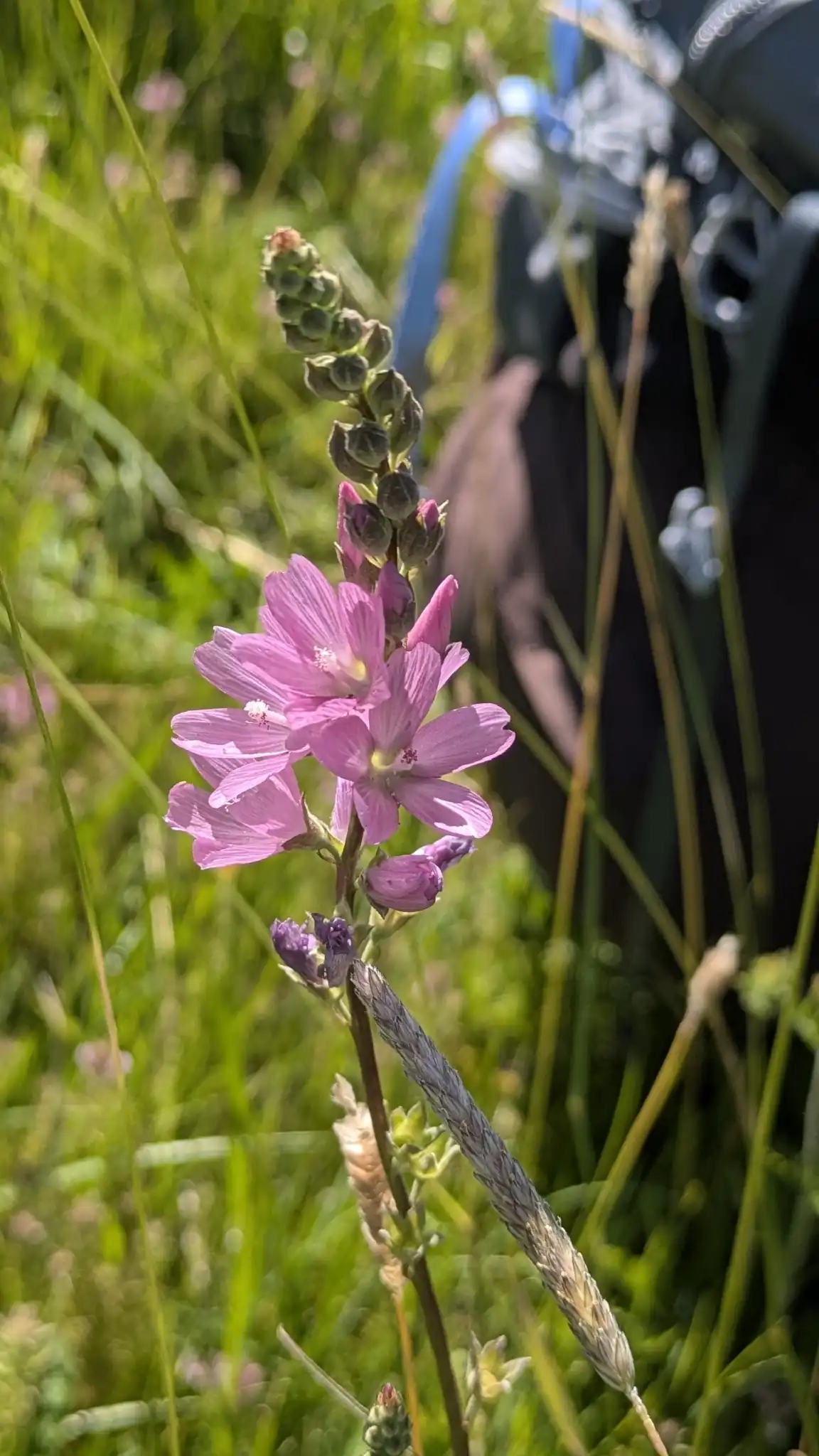
Sidalcea oregana is an upright herbaceous perennial native to western North America, growing from a thick woody taproot into erect, coarse-haired stems. In late spring and summer, loose spike-like racemes display five-petaled pink to deep rose mallow flowers surrounding a central staminal column.
The species exhibits sexual dimorphism, naturally producing both bisexual plants and all-female plants that bear smaller flowers without anthers. Deeply lobed lower leaves give way to sharply toothed upper stem leaves, giving the tall flowering stalks an open texture.
Uses & Benefits:
Essentials
At a Glance
Plant Type
Perennial
Height
48"
Width
24"
Light
Full Sun, Partial Sun
Zones
4, 5, 6, 7, 8
Water
Medium to High
Humidity
Moderate
Lifespan
Perennial
Native To
Western North America
Toxicity
Non-toxic
Bloom period
Late spring – Summer
In flower about 4 months of the year
Planting
How to Grow
- Select a site in full sun to partial shade with moist, well-drained loamy or sandy soil.
- Plant nursery stock or plugs in spring at the same depth as their original containers.
- Provide consistent moisture throughout the growing season to prevent drought-induced summer dormancy.
- Cut spent stems back to the basal foliage crown after flowering completes.
Pro Tip
Avoid moving established plants; disturbing the deep woody taproot usually results in severe transplant shock or plant loss.
Keep It Thriving
Care Guide
Do
- Keep soil consistently moist during spring and summer growth.
- Plant in light, well-draining soils with adequate organic content.
- Cut spent stalks to the ground after foliage dies back in autumn.
Don't
- Do not allow the root zone to dry out completely during summer.
- Do not attempt to divide or relocate established taprooted plants.
- Do not plant in heavy, unamended clay soils prone to waterlogging.
Seasonal Care Calendar
| Task | Jan | Feb | Mar | Apr | May | Jun | Jul | Aug | Sep | Oct | Nov | Dec |
|---|---|---|---|---|---|---|---|---|---|---|---|---|
| Deadhead | ||||||||||||
| Mulch | ||||||||||||
| Pest Check | ||||||||||||
| Plant | ||||||||||||
| Spring Cleanup |
Watch Out For
Pests & Diseases
Common Pests
Common Diseases
In the Garden
Landscape Uses & Companions
Landscape Uses
Multiply
Propagation Methods
Good to Know
Common Questions
Oregon Checkerbloom questions
What zones can Oregon Checkerbloom grow in?
Oregon Checkerbloom is hardy in USDA Zones 4–8. Inside that range it survives winter in the ground; outside it, grow it as an annual or a container plant you protect.
Is Oregon Checkerbloom deer resistant?
Not reliably. Deer may browse Oregon Checkerbloom, especially tender spring growth — plan on repellents or fencing where pressure is high.
When does Oregon Checkerbloom bloom?
Oregon Checkerbloom typically blooms in late spring through summer. Exact timing shifts a week or two with your zone — Sow's bloom calendar maps it to your garden.
Does Oregon Checkerbloom need full sun?
Oregon Checkerbloom does best in full sun to part shade. In hot climates, afternoon shade keeps blooms fresher longer.
More Sidalcea to compare
Keep exploring
Explore the genus
Hardy in your zone?
Grow Oregon Checkerbloom with confidence
See it in a design of your actual yard, get zone-matched care reminders, and track it season by season in your garden journal.