Garden hybrid
This is a garden hybrid, bred from more than one wild species, so it has no single species page of its own.
10 other cultivars





The Story
Plant Bio
Lagerstroemia species are deciduous shrubs and trees valued for crinkled summer blossoms, showy fall foliage, and smooth exfoliating bark. Native to warm areas of Asia, these woody plants require heat and direct sunlight to produce terminal panicles of flowers on current season growth.
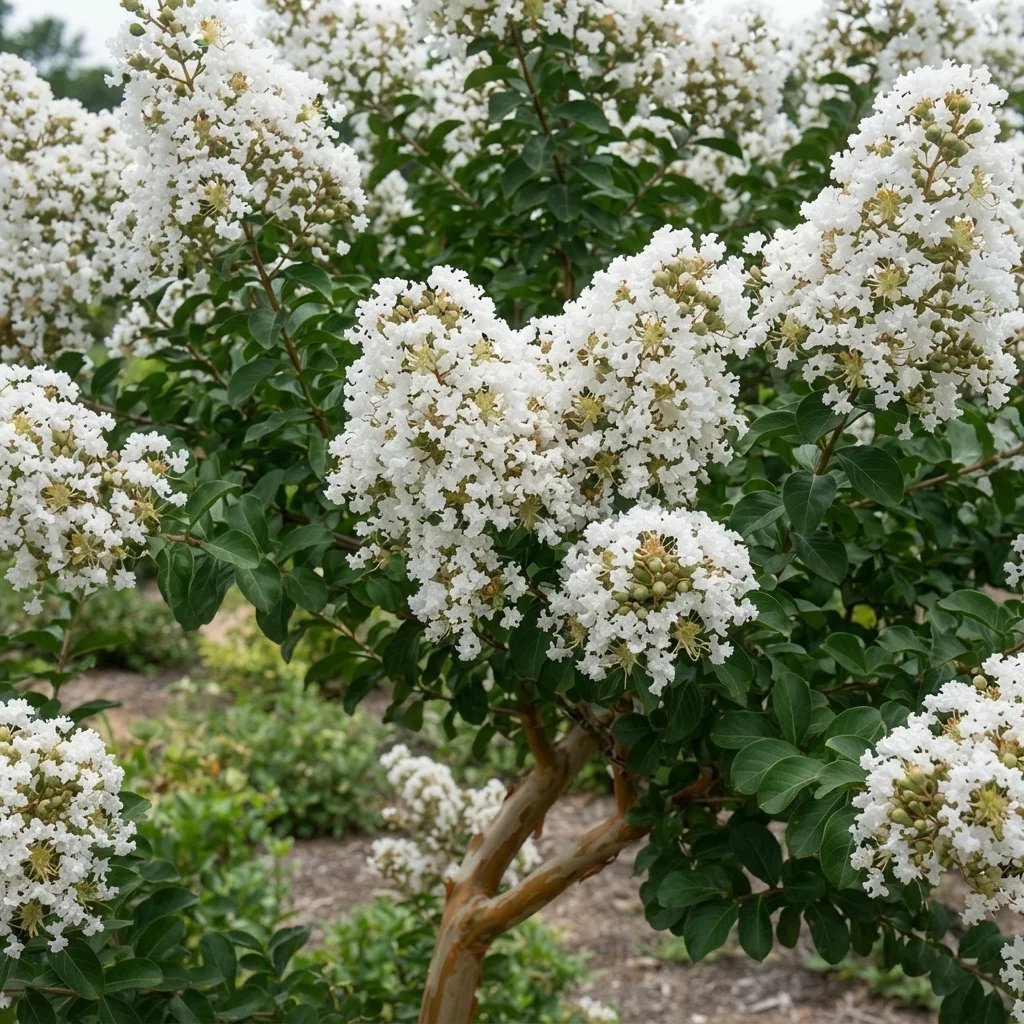
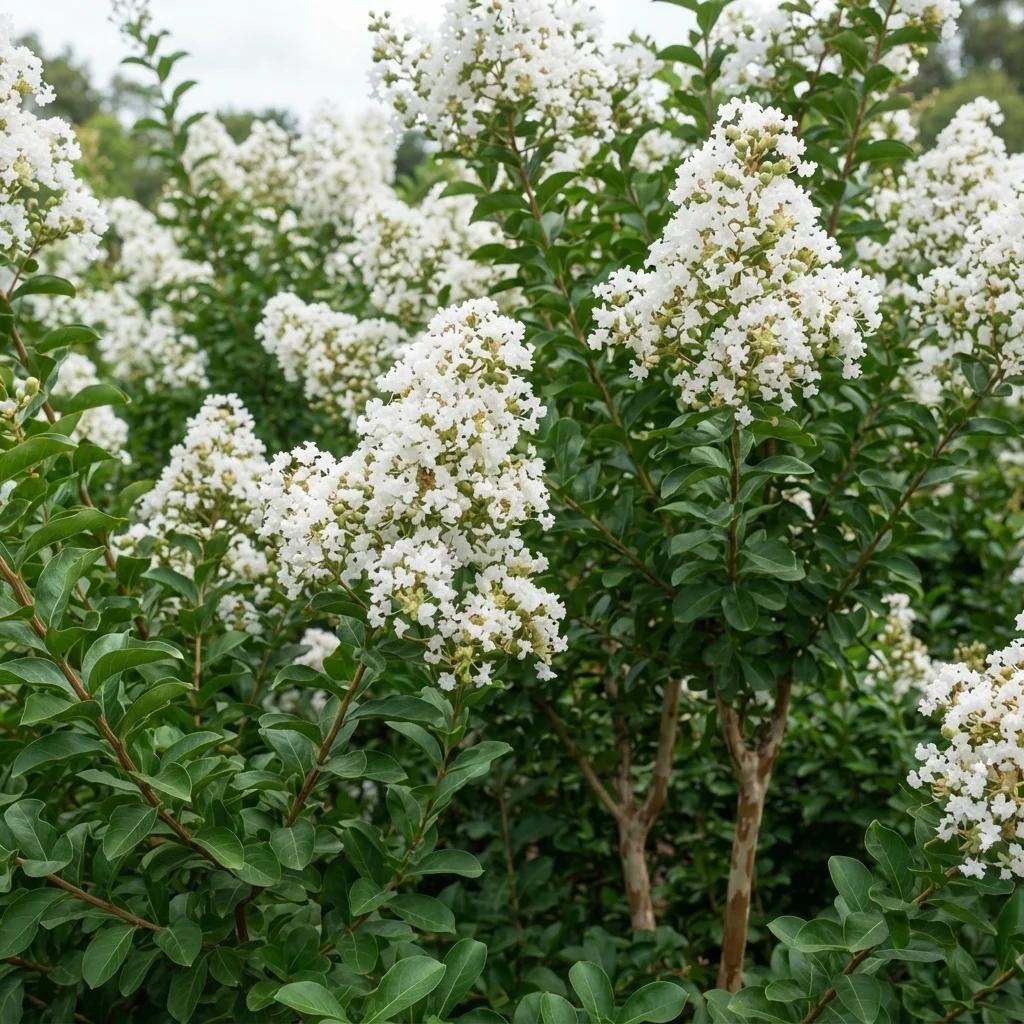
'Sarah's Favorite' is an upright, vase-shaped hybrid selection featuring crisp white flower trusses up to 18 inches long from summer into early fall. Its cinnamon-orange exfoliating bark peels cleanly to reveal smooth light wood, while oval foliage shifts from bronze in spring to dark glossy green in summer and bright red-orange in fall.
Uses & Benefits:
Bred from more than one wild species, so it has no species page of its own.
Essentials
At a Glance
Plant Type
Tree
Height
300"
Width
240"
Light
Full Sun
Zones
6, 7, 8, 9, 10
Water
Low to Moderate
Humidity
High
Lifespan
Perennial
Native To
Asia (parent species)
Toxicity
Non-toxic
Bloom period
Summer – Early fall
In flower about 4 months of the year
Planting
How to Grow
- Plant in a location receiving at least six hours of direct daily sun in fertile, well-drained soil.
- Water deeply twice weekly during the first growing season to establish the root system.
- Apply a 2-inch to 3-inch layer of organic mulch around the root zone, keeping it clear of the bark.
- Prune lightly in late winter while dormant to remove low suckers and rubbing branches.
Pro Tip
Prune only dead wood, crossing branches, and basal suckers in late winter; heading back structural branches ruins the natural vase habit and causes weak growth.
Keep It Thriving
Care Guide
Do
- Do plant in full sun to ensure optimal flowering and fungal disease resistance.
- Do prune lightly in late winter to maintain clear structural branching.
- Do mulch the root zone to conserve soil moisture during summer drought.
Don't
- Don't top or severely pollard major limbs.
- Don't plant in waterlogged or swampy ground.
- Don't over-fertilize with high-nitrogen formulas that promote weak foliage growth over flower production.
Seasonal Care Calendar
| Task | Jan | Feb | Mar | Apr | May | Jun | Jul | Aug | Sep | Oct | Nov | Dec |
|---|---|---|---|---|---|---|---|---|---|---|---|---|
| Fertilize | ||||||||||||
| Mulch | ||||||||||||
| Pest Check | ||||||||||||
| Prune |
Watch Out For
Pests & Diseases
Common Pests
Common Diseases
In the Garden
Landscape Uses & Companions
Landscape Uses
Multiply
Propagation Methods
Good to Know
Common Questions
Crape Myrtle 'Sarah's Favorite' questions
What zones can Crape Myrtle 'Sarah's Favorite' grow in?
Crape Myrtle 'Sarah's Favorite' is hardy in USDA Zones 6–10. Inside that range it survives winter in the ground; outside it, grow it as an annual or a container plant you protect.
Is Crape Myrtle 'Sarah's Favorite' deer resistant?
Not reliably. Deer may browse Crape Myrtle 'Sarah's Favorite', especially tender spring growth — plan on repellents or fencing where pressure is high.
When does Crape Myrtle 'Sarah's Favorite' bloom?
Crape Myrtle 'Sarah's Favorite' typically blooms in summer through early fall. Exact timing shifts a week or two with your zone — Sow's bloom calendar maps it to your garden.
Does Crape Myrtle 'Sarah's Favorite' need full sun?
Crape Myrtle 'Sarah's Favorite' does best in full sun (6+ hours).
Is Crape Myrtle 'Sarah's Favorite' drought tolerant?
Yes — once established (usually after the first full season), Crape Myrtle 'Sarah's Favorite' handles dry spells with minimal watering. Water deeply its first year to build the root system that makes that possible.
More Lagerstroemia to compare
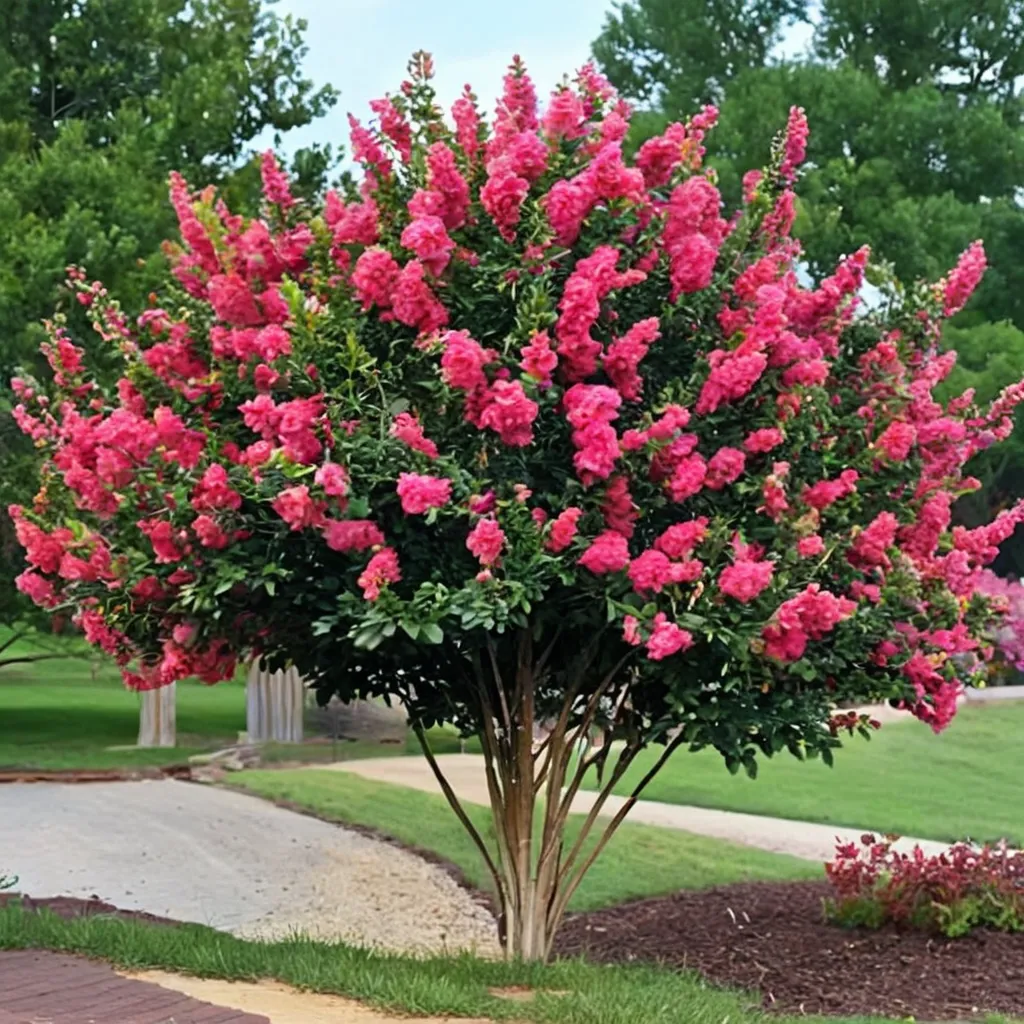
Indian Crapemyrtle
Lagerstroemia indica 'Tonto'
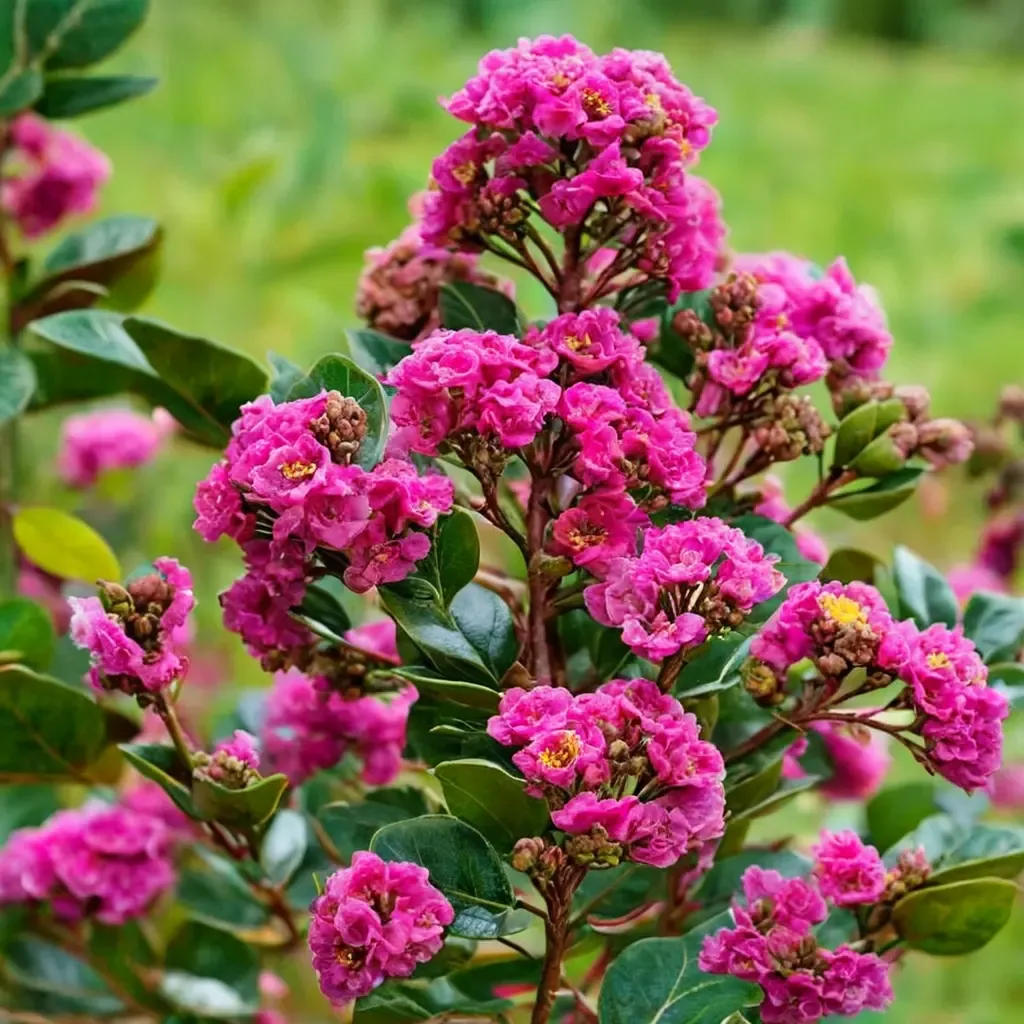
Northern Belle Crape Myrtle
Lagerstroemia indica 'Northern Belle'
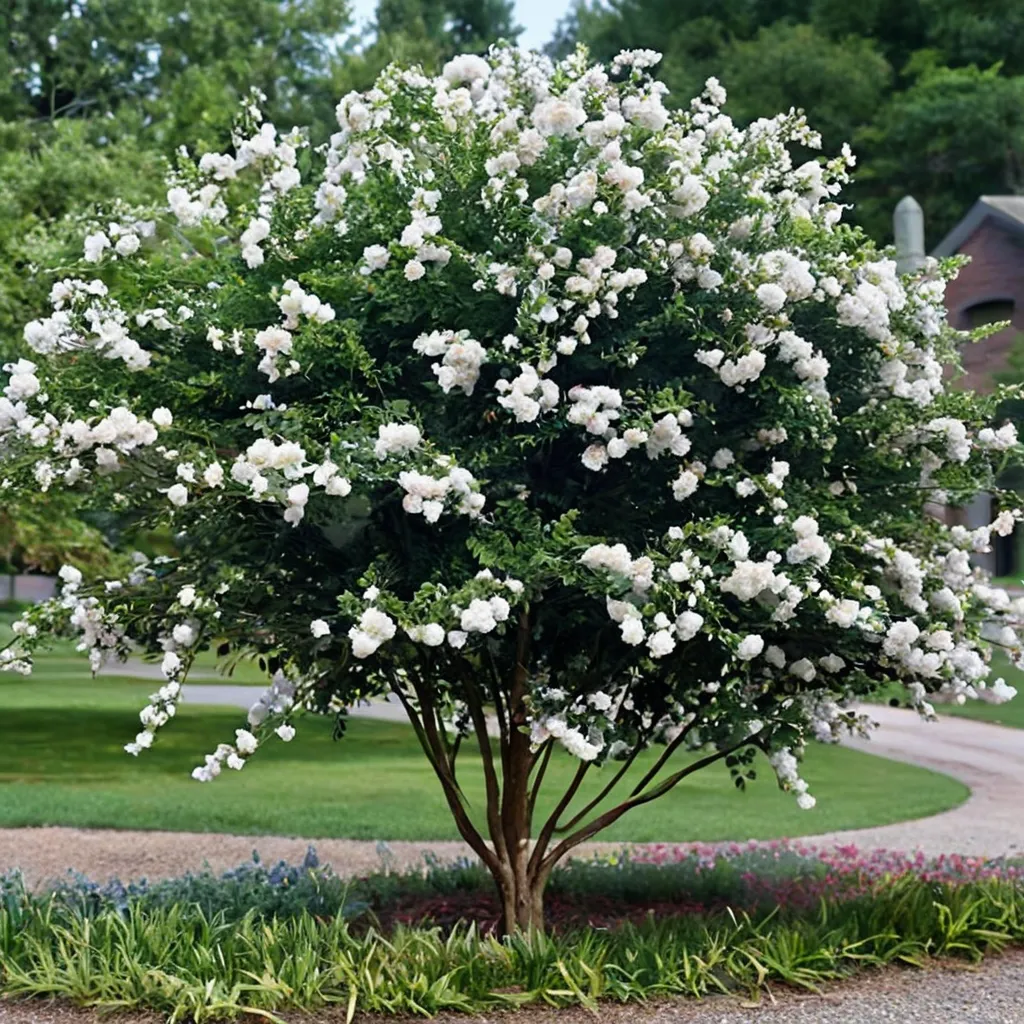
Acoma Crepe Myrtle
Lagerstroemia indica 'Acoma'
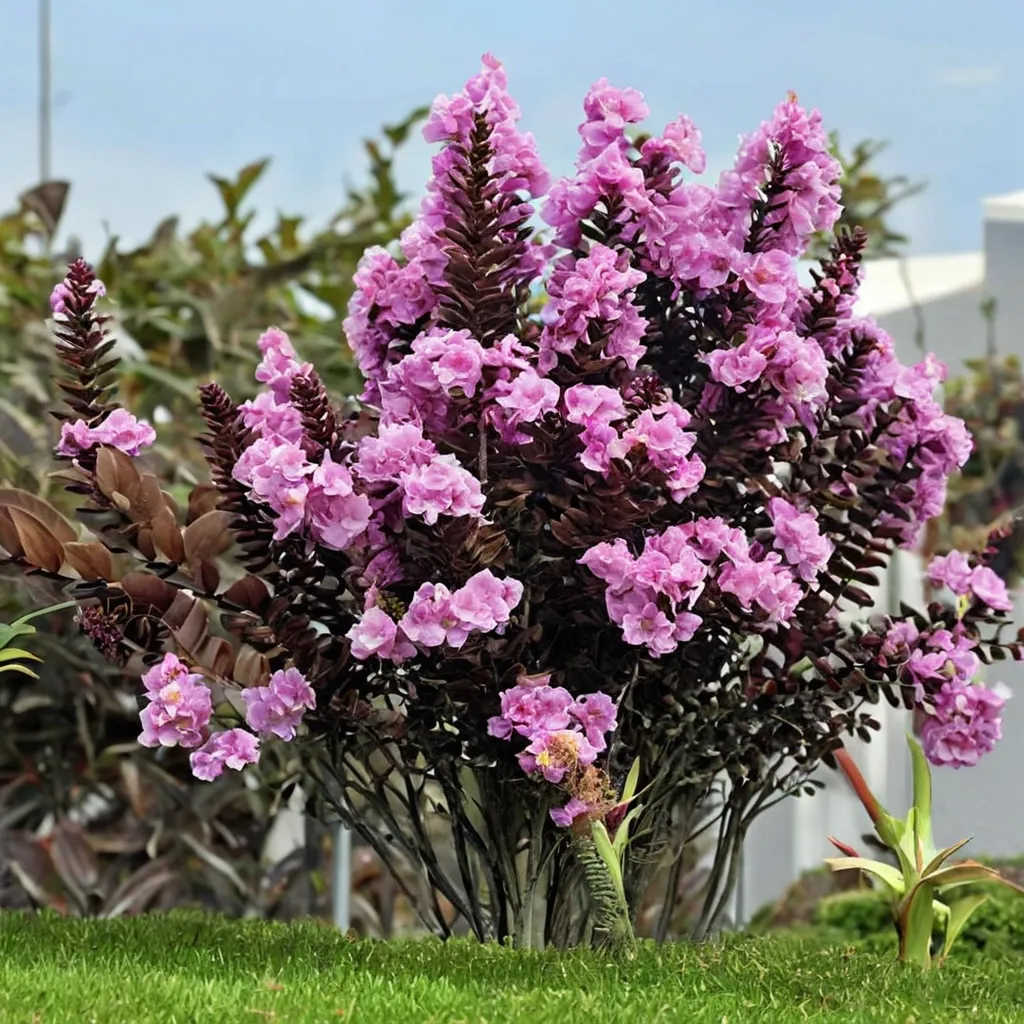
Crape Myrtle Delta Eclipse
Lagerstroemia indica 'Delta Eclipse'
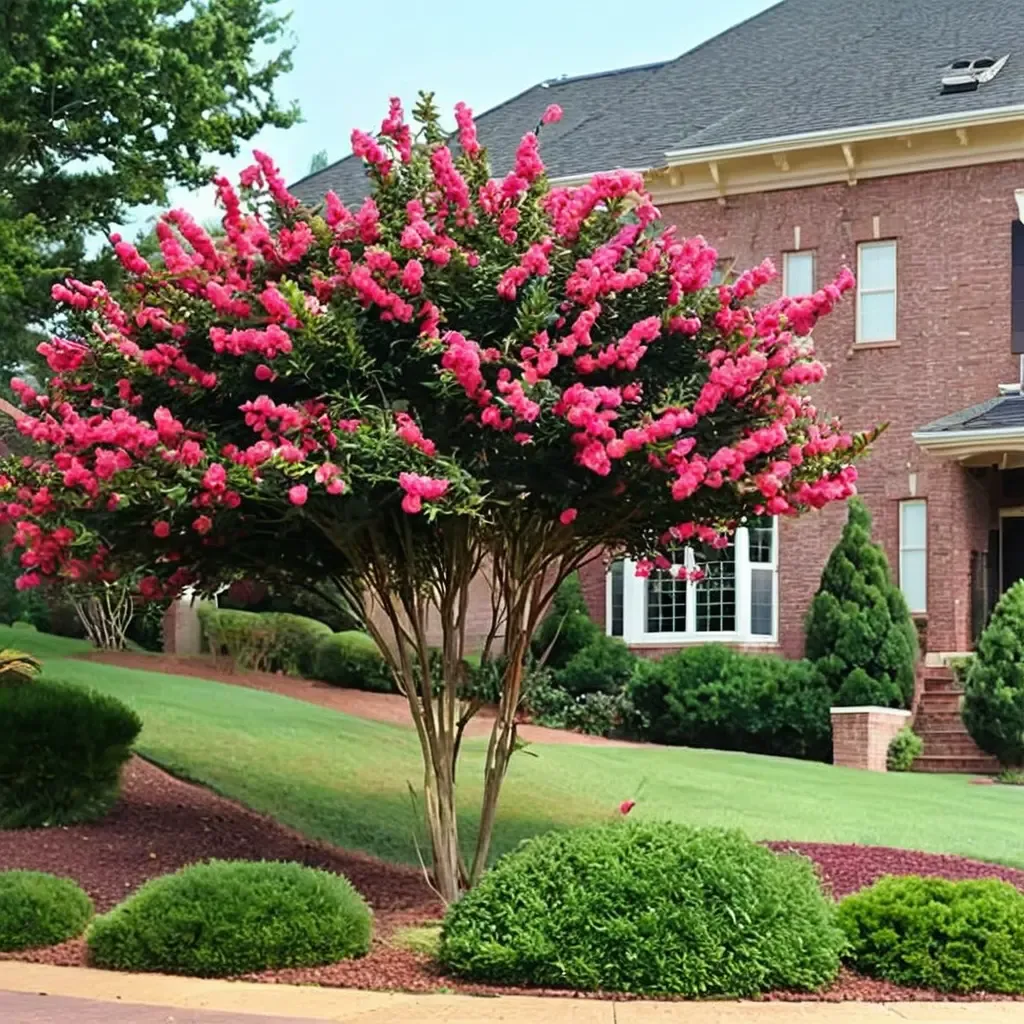
Tonto Crape Myrtle
Lagerstroemia indica 'Tonto Hardy'
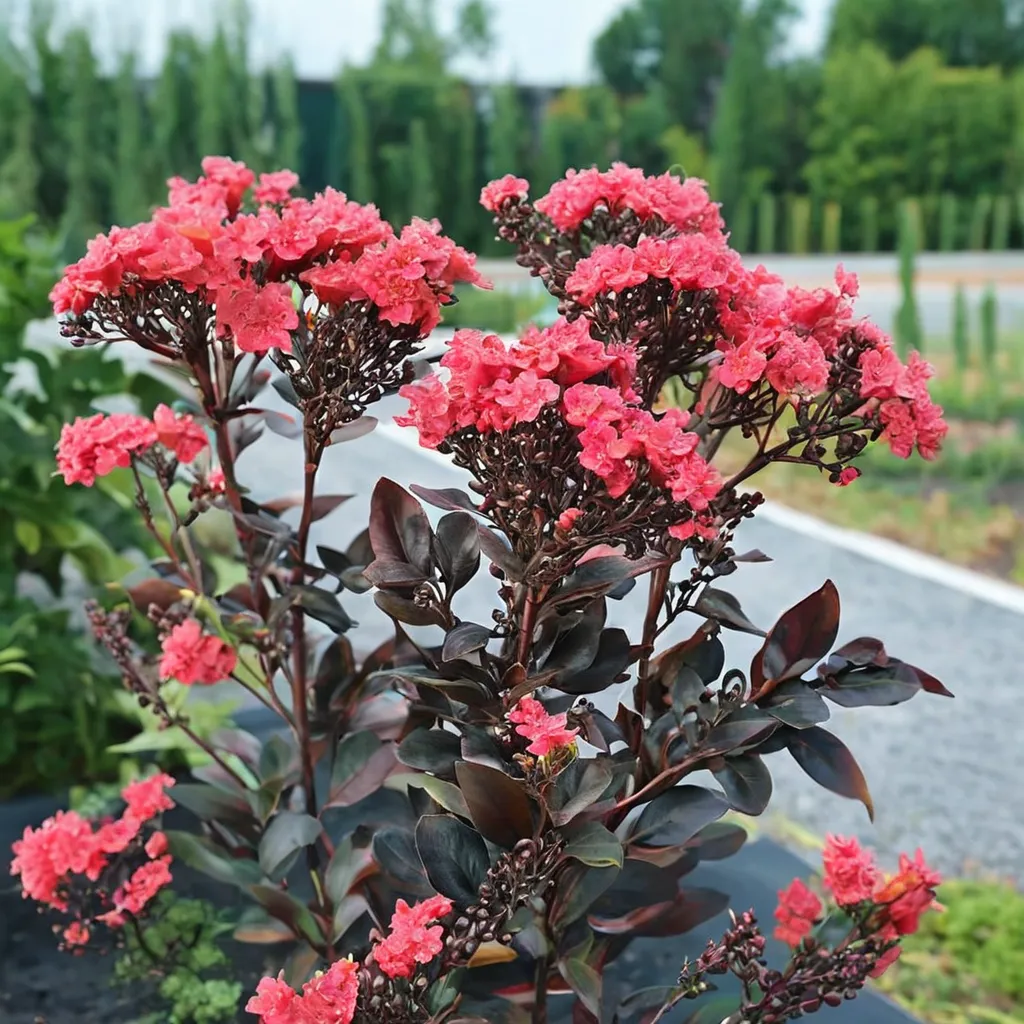
Center Stage Pink Crape Myrtle
Lagerstroemia indica 'Center Stage Pink'
Keep exploring
Explore the genus
Hardy in your zone?
Grow Crape Myrtle 'Sarah's Favorite' with confidence
See it in a design of your actual yard, get zone-matched care reminders, and track it season by season in your garden journal.