The Story
Plant Bio
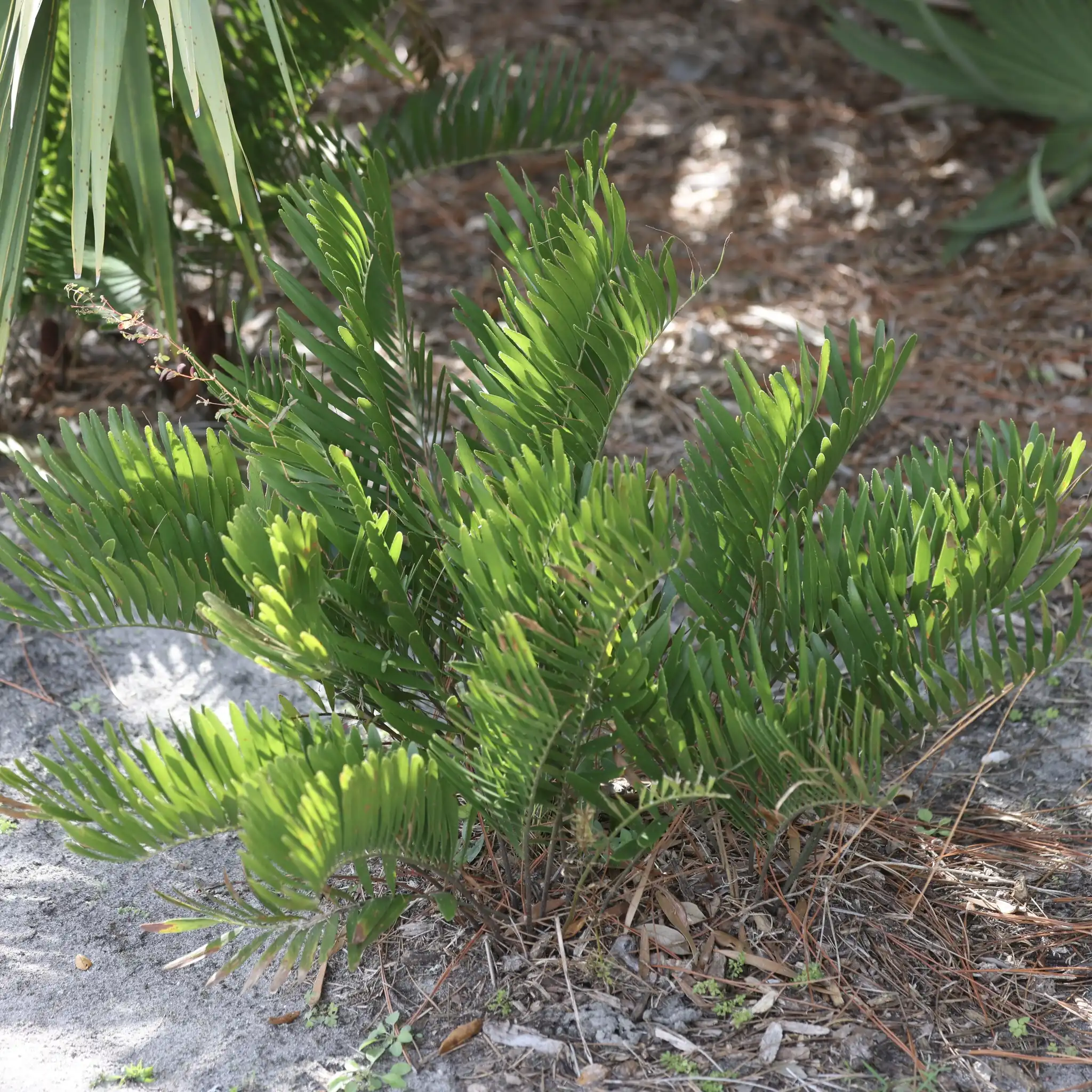
Zamia integrifolia, commonly known as coontie, is a low-growing, cycad-like evergreen shrub native to the southeastern United States, forming arching rosettes of fern-like foliage from a mostly subterranean stem. The pinnately compound leaves consist of leathery, dark green leaflets with smooth margins, while reproduction occurs via brown, cone-like strobili produced at the center of the plant.
This species is the only cycad native to North America, highly valued for its extreme drought tolerance and ability to thrive in nutrient-poor, sandy coastal soils. It serves as the exclusive larval host plant for the rare Florida Atala butterfly, making it a critical component of ecological restoration plantings in its native range.
Uses & Benefits:
Essentials
At a Glance
Plant Type
Shrub
Height
36"
Width
60"
Light
Full Sun, Partial Sun, Shade
Zones
8, 9, 10
Water
Low
Humidity
High
Lifespan
Long-lived
Native To
Southeastern United States
Toxicity
Highly toxic to humans and pets
Bloom period
Summer – Fall
In flower about 6 months of the year
Planting
How to Grow
- Select a planting site with excellent drainage, such as sandy or rocky soil, in full sun to partial shade.
- Dig a hole twice as wide as the root ball but no deeper, ensuring the top of the subterranean stem sits slightly above the soil line.
- Water thoroughly immediately after planting to settle the soil, then restrict watering to periods of prolonged dry weather.
- Apply a thin layer of organic mulch around the base to suppress weeds, keeping the mulch several inches away from the central crown.
Pro Tip
Never prune green fronds to shape the plant, as cycads grow slowly and rely heavily on energy stored in existing leaves; only remove completely dead, brown foliage at the very base of the stem.
Keep It Thriving
Care Guide
Do
- Plant in highly permeable, sandy, or gravelly soils to prevent waterlogging.
- Remove only completely dead, brown fronds at the base of the plant.
- Protect the crown from standing water or heavy clay soils.
Don't
- Do not over-water or plant in low-lying areas where water collects.
- Do not prune healthy green fronds under the misconception of shaping the plant.
- Do not bury the central crown or subterranean stem too deeply when planting.
Seasonal Care Calendar
| Task | Jan | Feb | Mar | Apr | May | Jun | Jul | Aug | Sep | Oct | Nov | Dec |
|---|---|---|---|---|---|---|---|---|---|---|---|---|
| Fertilize | ||||||||||||
| Pest Check | ||||||||||||
| Propagate | ||||||||||||
| Spring Cleanup |
Watch Out For
Pests & Diseases
Common Pests
Common Diseases
In the Garden
Landscape Uses & Companions
Landscape Uses
Multiply
Propagation Methods
Good to Know
Common Questions
Coontie questions
What zones can Coontie grow in?
Coontie is hardy in USDA Zones 8–10. Inside that range it survives winter in the ground; outside it, grow it as an annual or a container plant you protect.
Is Coontie deer resistant?
Yes — Coontie is rated deer-resistant. Deer typically pass it over, though extreme hunger can override any plant's defenses.
When does Coontie bloom?
Coontie typically blooms in summer through fall. Exact timing shifts a week or two with your zone — Sow's bloom calendar maps it to your garden.
Does Coontie need full sun?
Coontie does best in full sun to part shade. In hot climates, afternoon shade keeps blooms fresher longer.
Is Coontie drought tolerant?
Yes — once established (usually after the first full season), Coontie handles dry spells with minimal watering. Water deeply its first year to build the root system that makes that possible.
More Zamia to compare
Keep exploring
Explore the genus
Hardy in your zone?
Grow Coontie with confidence
See it in a design of your actual yard, get zone-matched care reminders, and track it season by season in your garden journal.