

The Story
Plant Bio
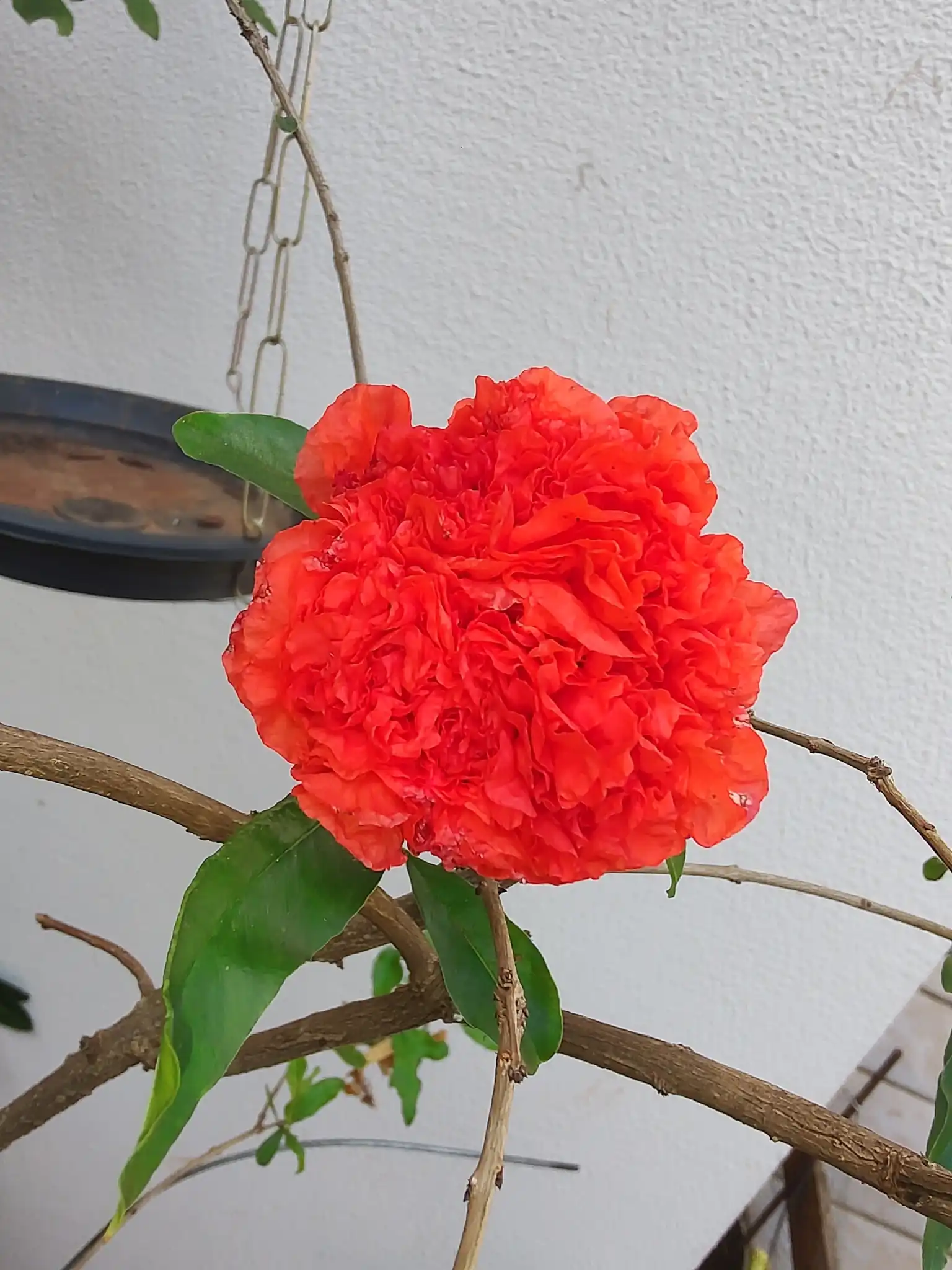
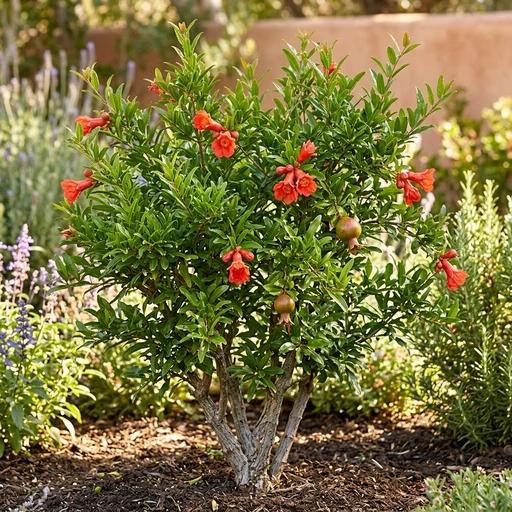
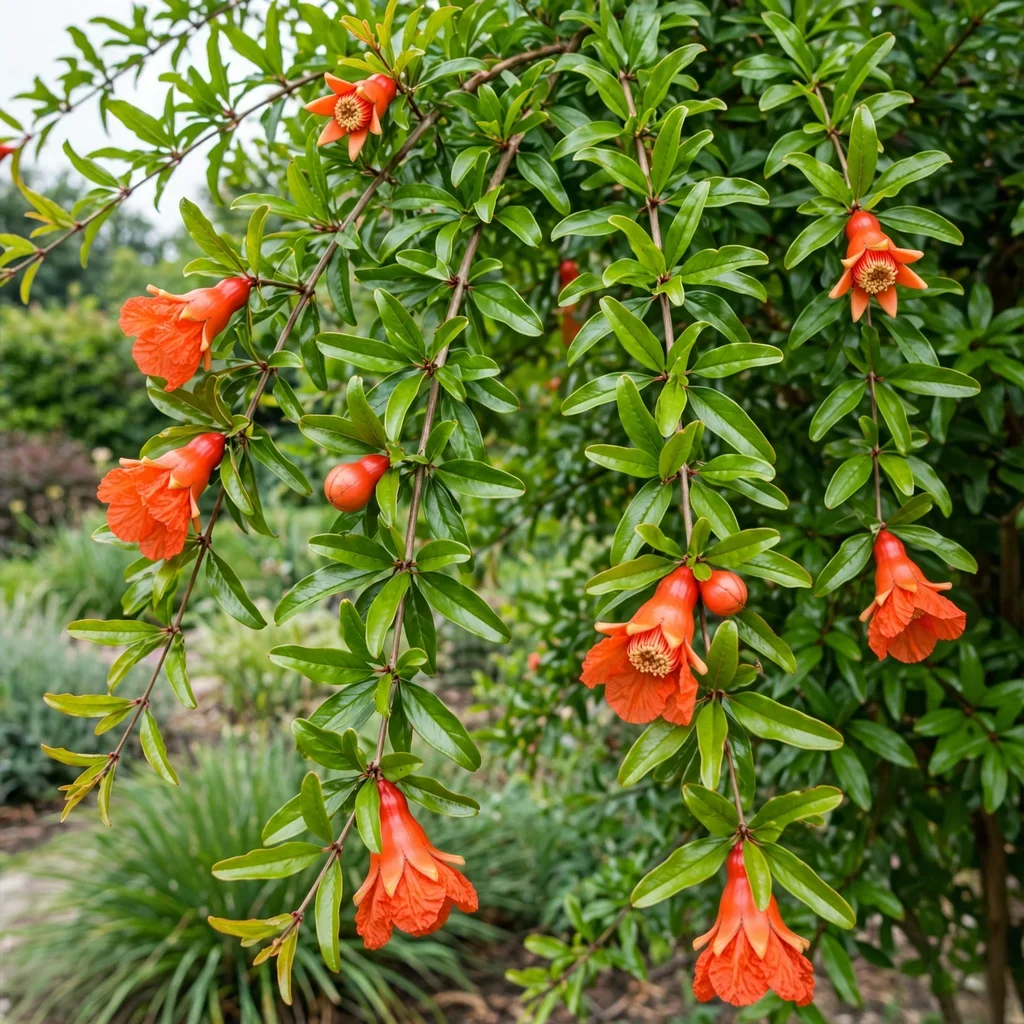
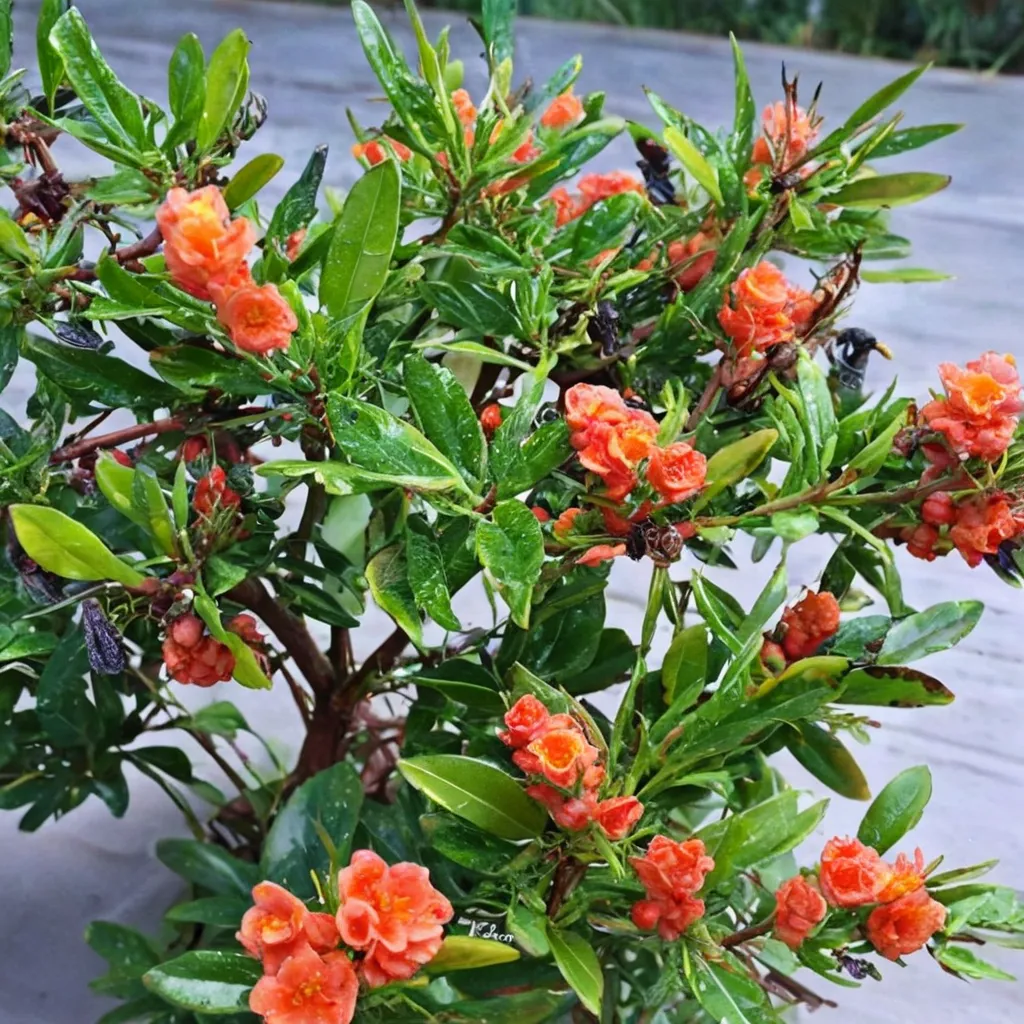
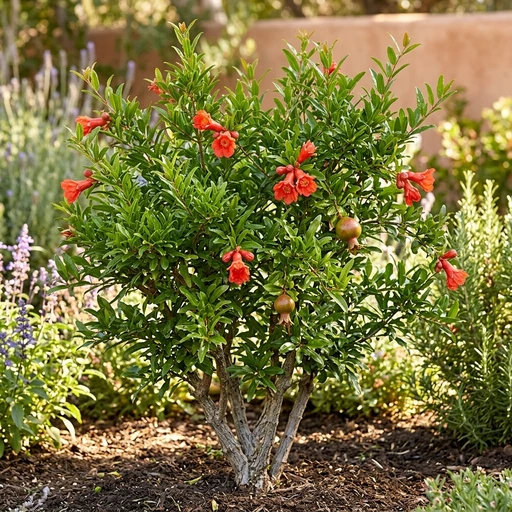
Punica granatum, the pomegranate, is a multi-stemmed deciduous shrub or small tree from northeastern Turkey through Iran to Afghanistan, reaching ten to twelve feet in open ground. Glossy narrow leaves turn yellow-green in autumn, and waxy orange-red trumpet flowers open over a long season, followed by the leathery red fruit.
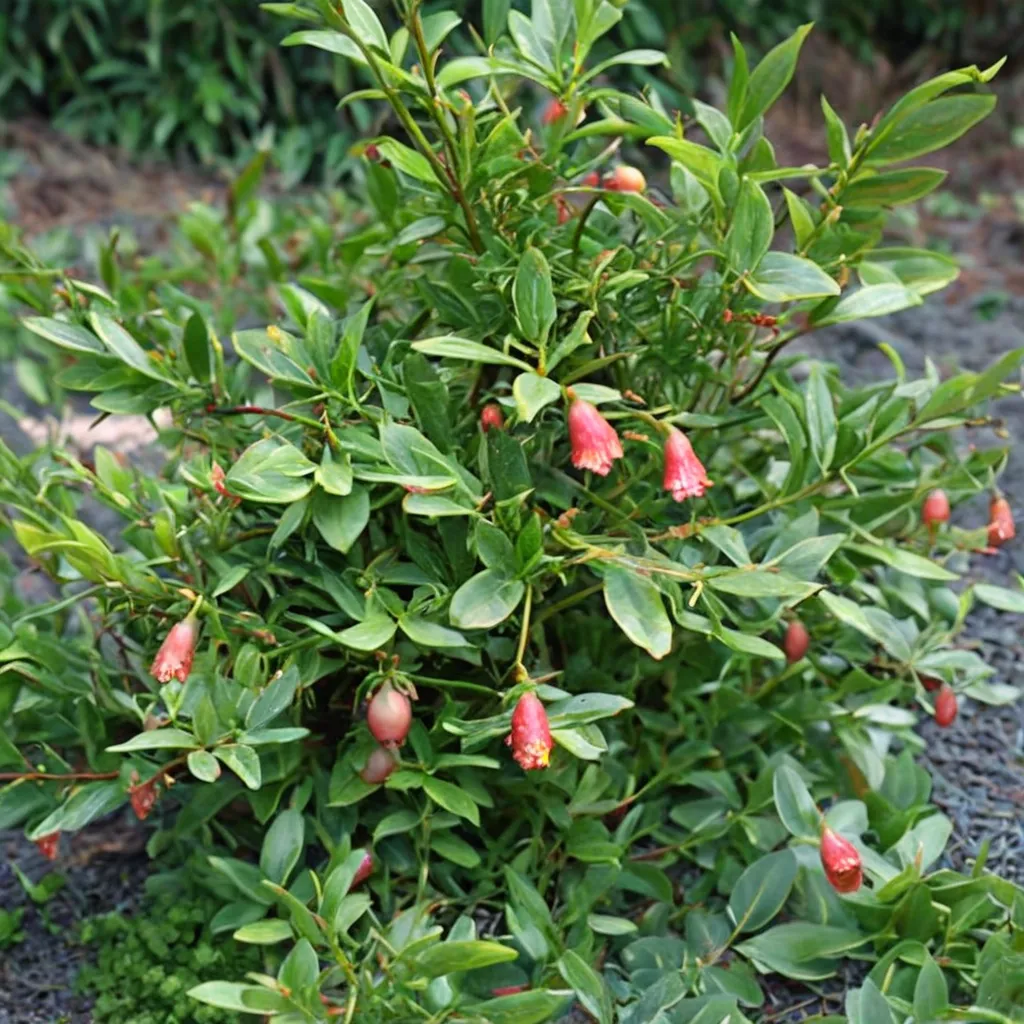
It flowers and fruits best where summers are long, hot and dry. In the humid Southeast the fruit commonly splits after rain and rots on the branch, so grow it there for the flowers rather than a crop and avoid 'Wonderful', which is bred for the dry West. The dwarf 'Nana' is hardier and flowers freely but sets only small, dry fruit.
Uses & Benefits:
Essentials
At a Glance
Plant Type
Fruit Vegetable
Height
132"
Width
108"
Light
Full Sun
Zones
7, 8, 9, 10
Water
Low once established
Humidity
Low
Lifespan
Perennial
Native To
Northeastern Turkey to Afghanistan
Toxicity
Fruit edible; bark and root are not
Marketplace
Where to Buy
Shipping costs Year-round shipping Free shipping
Planting
How to Grow
- Plant in the hottest, sunniest spot you have.
- Give it free-draining soil; it dislikes standing wet.
- Water regularly and evenly while the fruit swells.
- Remove suckers to keep it as a tree, or leave them for a shrub.
- Prune lightly in late winter for shape only.
- Expect the first real crop in the third or fourth year.
Pro Tip
Splitting is a watering fault, not a disease — fruit bursts when a dry spell breaks, so keep soil moisture steady as it ripens.
Keep It Thriving
Care Guide
Do
- Plant in the hottest position available ☀️
- Water evenly while the fruit is swelling 💧
- Thin crowded shoots for airflow ✂️
- Pick fruit as soon as it colours fully 🍎
Don't
- Let the soil swing between bone dry and soaked ❌
- Expect a heavy crop in a humid summer climate ❌
- Leave split fruit hanging on the branch ❌
Seasonal Care Calendar
| Task | Jan | Feb | Mar | Apr | May | Jun | Jul | Aug | Sep | Oct | Nov | Dec |
|---|---|---|---|---|---|---|---|---|---|---|---|---|
| Harvest | ||||||||||||
| Prune |
Watch Out For
Pests & Diseases
Common Pests
Common Diseases
In the Garden
Landscape Uses & Companions
Landscape Uses
Companion Plants
Multiply
Propagation Methods
Good to Know
Common Questions
Pomegranate questions
What zones can Pomegranate grow in?
Pomegranate is hardy in USDA Zones 7–10. Inside that range it survives winter in the ground; outside it, grow it as an annual or a container plant you protect.
Is Pomegranate deer resistant?
Yes — Pomegranate is rated deer-resistant. Deer typically pass it over, though extreme hunger can override any plant's defenses.
When does Pomegranate bloom?
Pomegranate typically blooms in spring to summer through late summer. Exact timing shifts a week or two with your zone — Sow's bloom calendar maps it to your garden.
Does Pomegranate need full sun?
Pomegranate does best in full sun (6+ hours).
Is Pomegranate drought tolerant?
Yes — once established (usually after the first full season), Pomegranate handles dry spells with minimal watering. Water deeply its first year to build the root system that makes that possible.
More Punica to compare
Keep exploring
Explore the genus
Hardy in your zone?
Grow Pomegranate with confidence
See it in a design of your actual yard, get zone-matched care reminders, and track it season by season in your garden journal.