
The Story
Plant Bio
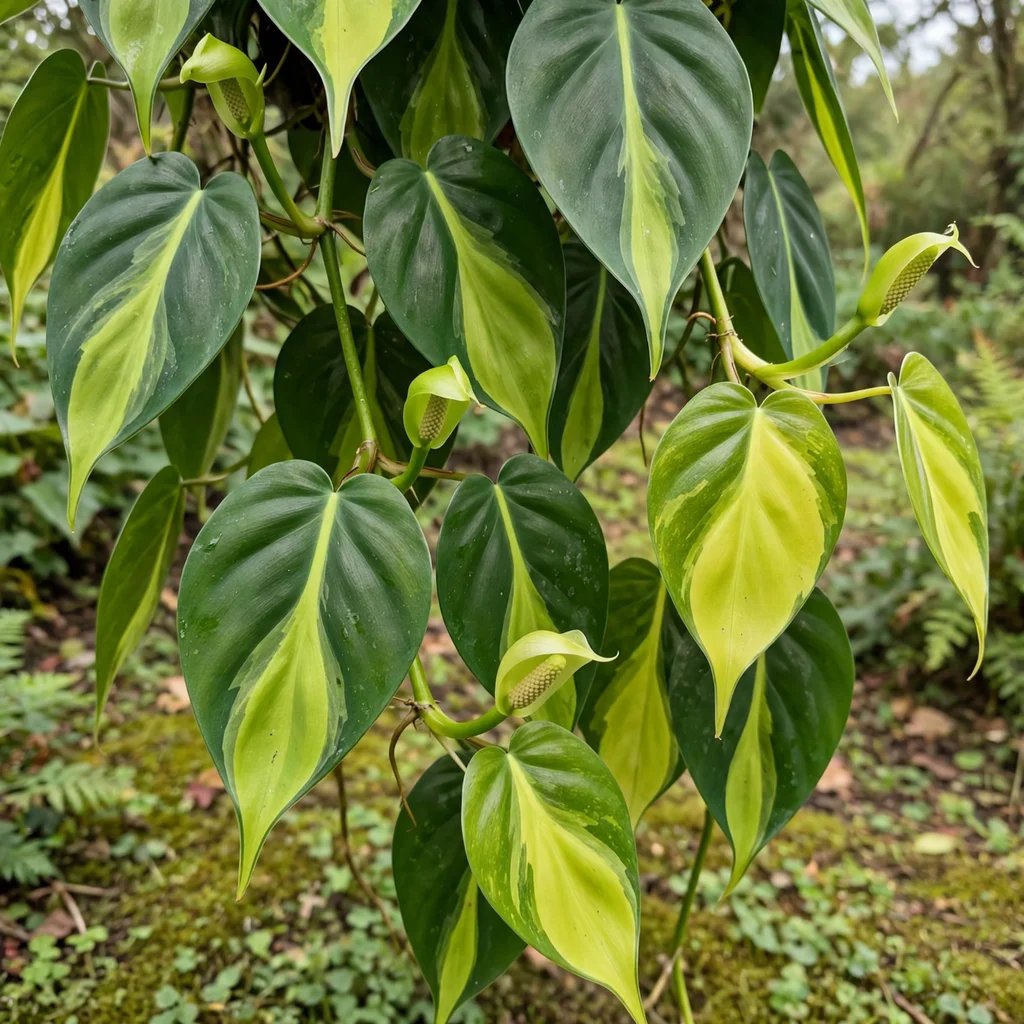
Philodendron hederaceum is an evergreen tropical climbing or trailing vine characterized by glossy, heart-shaped leaves with elongated tips and aerial roots along the stems. The species produces a pale green or whitish spathe surrounding a fleshy spadix, though flowering is extremely rare in indoor cultivation.
'Brasil' is a distinct cultivar distinguished by its stable variegation pattern featuring a central stripe of chartreuse to golden-yellow bordered by rich dark green. Young stems and petioles emerge with a reddish-pink to reddish-orange hue before maturing to light green.
Uses & Benefits:
Essentials
At a Glance
Plant Type
Vine
Height
150"
Width
35"
Light
Partial Sun, Shade
Zones
10
Water
Low to moderate
Humidity
Moderate to high (50% to 70%)
Lifespan
Perennial
Native To
Central America, South America, Caribbean
Toxicity
Toxic to cats, dogs, and humans
Bloom period
Spring – Summer
In flower about 6 months of the year
Marketplace
Where to Buy
Shipping costs Year-round shipping Free shipping
Planting
How to Grow
- Pot in a loose, highly organic, chunky aroid mix containing orchid bark, perlite, and peat or coir to ensure excellent drainage.
- Place in an indoor location receiving bright, indirect light while avoiding any direct midday sun.
- Water thoroughly only when the top few inches of soil dry out, keeping the medium moist but never waterlogged.
- Maintain moderate to high humidity levels between 50% and 70% for optimal leaf development.
Pro Tip
Maintain bright indirect light to preserve the vibrant yellow variegation; deep shade causes the leaves to revert to solid green, while direct hot sunlight quickly scorches the foliage.
Keep It Thriving
Care Guide
Do
- Use a balanced liquid houseplant fertilizer diluted to half-strength every 4 to 6 weeks during spring and summer.
- Prune stems selectively just above a leaf node to encourage bushier growth.
- Ensure the potting container has functional drainage holes to prevent root rot.
Don't
- Do not cut back into old, completely leafless woody stems where nodes are dead.
- Avoid overwatering or letting the pot sit in standing water, which triggers Pythium or Rhizoctonia root rot.
- Do not apply fertilizer during the autumn and winter months when growth slows.
Seasonal Care Calendar
| Task | Jan | Feb | Mar | Apr | May | Jun | Jul | Aug | Sep | Oct | Nov | Dec |
|---|---|---|---|---|---|---|---|---|---|---|---|---|
| Fertilize | ||||||||||||
| Pest Check | ||||||||||||
| Propagate | ||||||||||||
| Prune |
Watch Out For
Pests & Diseases
Common Pests
Common Diseases
In the Garden
Landscape Uses & Companions
Landscape Uses
Multiply
Propagation Methods
Good to Know
Common Questions
Brasil Philodendron questions
What zones can Brasil Philodendron grow in?
Brasil Philodendron is hardy in USDA Zone 10. Inside that range it survives winter in the ground; outside it, grow it as an annual or a container plant you protect.
When does Brasil Philodendron bloom?
Brasil Philodendron typically blooms in spring through summer. Exact timing shifts a week or two with your zone — Sow's bloom calendar maps it to your garden.
Does Brasil Philodendron need full sun?
Brasil Philodendron does best in part shade.
Is Brasil Philodendron drought tolerant?
Yes — once established (usually after the first full season), Brasil Philodendron handles dry spells with minimal watering. Water deeply its first year to build the root system that makes that possible.
More Philodendron to compare
Keep exploring
Explore the genus
Hardy in your zone?
Grow Brasil Philodendron with confidence
See it in a design of your actual yard, get zone-matched care reminders, and track it season by season in your garden journal.