Garden hybrid
This is a garden hybrid, bred from more than one wild species, so it has no single species page of its own.
The Story
Plant Bio
Members of the genus Philodendron are tropical, predominantly evergreen aroids characterized by glossy foliage and inflorescences consisting of a central spadix enclosed by a spathe. Derived from South and Central American species, hybrid selections are grown primarily as interior foliage plants suited to container culture.
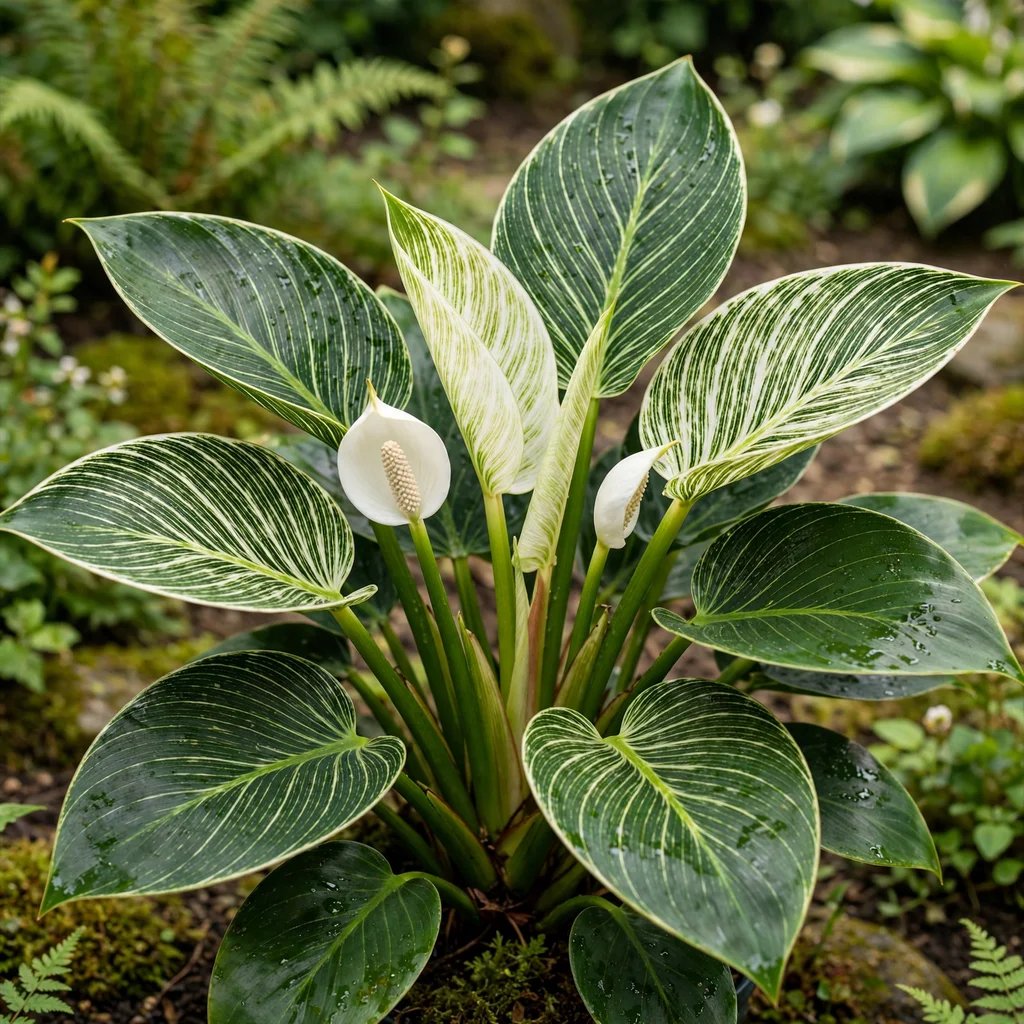
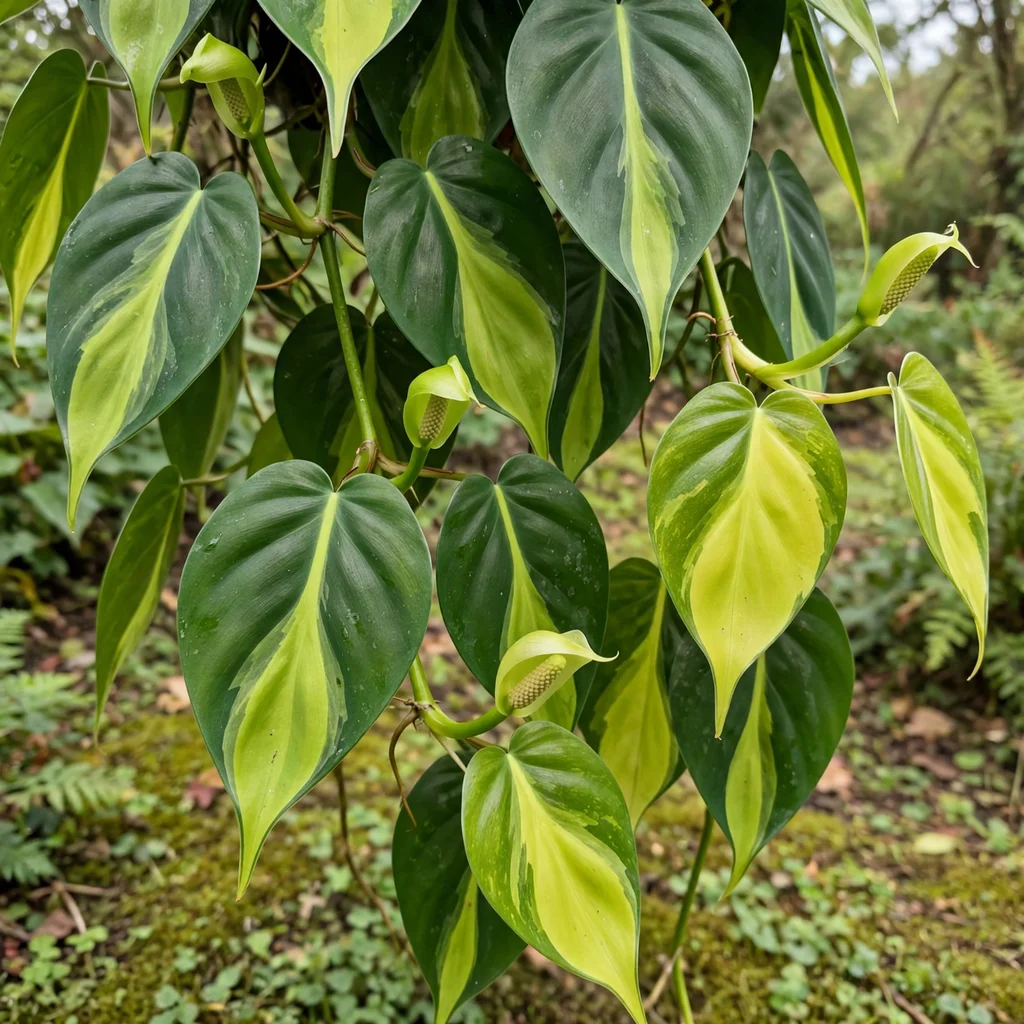
'Birkin' is a self-heading, non-climbing cultivar that forms a compact, upright mound of thick stems and broad, glossy leaves. The foliage exhibits creamy-white to pale yellow pinstripes radiating from the midrib, with newly emerging leaves opening near-white before darkening to deep green with age.
Uses & Benefits:
Bred from more than one wild species, so it has no species page of its own.
Essentials
At a Glance
Plant Type
Tropical
Height
35"
Width
35"
Light
Partial Sun, Shade
Zones
9, 10
Water
Moderate
Humidity
Moderate (50-60%)
Lifespan
Perennial
Native To
Cultivation origin
Toxicity
Toxic to pets and humans
Bloom period
Summer
In flower about 3 months of the year
Planting
How to Grow
- Pot in a porous, highly organic potting substrate composed of coarse peat, perlite, and fine pine bark.
- Place the container in a warm room receiving consistent bright, indirect sunlight, away from cold drafts below 55°F.
- Water thoroughly only when the top 2 inches of potting mix feel dry to the touch, allowing excess water to drain completely.
- Wipe the leaves monthly with a damp cloth to remove accumulated dust and maintain photo-absorption.
Pro Tip
Position in bright, indirect light to maintain defined leaf contrast; direct sun scorches the leaves, whereas low light causes new growth to revert to solid green.
Keep It Thriving
Care Guide
Do
- Do allow the upper layer of soil to dry out between waterings.
- Do maintain interior humidity around 50% to 60% using a room humidifier if indoor air is dry.
- Do prune away fully yellowed or damaged lower leaves near the stem base with sterile shears.
Don't
- Don't expose foliage to direct, unshaded sunlight, which bleaches and burns the leaf blades.
- Don't leave the pot sitting in standing drainage water, which promotes root rot.
- Don't apply full-strength fertilizer during the dormant fall and winter months.
Seasonal Care Calendar
| Task | Jan | Feb | Mar | Apr | May | Jun | Jul | Aug | Sep | Oct | Nov | Dec |
|---|---|---|---|---|---|---|---|---|---|---|---|---|
| Fertilize | ||||||||||||
| Pest Check | ||||||||||||
| Prune | ||||||||||||
| Winter Prep |
Watch Out For
Pests & Diseases
Common Pests
Common Diseases
In the Garden
Landscape Uses & Companions
Landscape Uses
Multiply
Propagation Methods
Good to Know
Common Questions
Birkin Philodendron questions
What zones can Birkin Philodendron grow in?
Birkin Philodendron is hardy in USDA Zones 9–10. Inside that range it survives winter in the ground; outside it, grow it as an annual or a container plant you protect.
When does Birkin Philodendron bloom?
Birkin Philodendron typically blooms in summer through summer. Exact timing shifts a week or two with your zone — Sow's bloom calendar maps it to your garden.
Does Birkin Philodendron need full sun?
Birkin Philodendron does best in part shade.
More Philodendron to compare
Keep exploring
Explore the genus
Hardy in your zone?
Grow Birkin Philodendron with confidence
See it in a design of your actual yard, get zone-matched care reminders, and track it season by season in your garden journal.